West End Autumn 2026: Tilda Swinton Is Sold Out, Sting Gets 12 Days at Drury Lane, and the £15 Monday Ticket That Still Gets You In
Every Monday at 9am the Royal Court puts every seat in the building on sale for £15, and for the rest of the autumn that includes Tilda Swinton. Man to Man, her return to the role she first played on that stage in 1988, is sold out until it closes on 24 October. So the cheapest ticket of the West End autumn 2026 season is also the hardest one to get, and that tells you more about how London theatre works right now than any of the names on the posters.
In This Article
And there are a lot of names. Josh O’Connor at the Almeida (sold out). Michelle Dockery at Stratford East. Gillian Anderson, Rory Kinnear, Christine Baranski and Richard E. Grant all opening within 48 hours of each other next week. Sting, in his own musical, for twelve days at Drury Lane. Five years ago a September like this would have felt like a special occasion. Now it’s just what the autumn looks like, and the interesting question isn’t who’s on but who can actually get in the room.
What’s already open, and what the critics actually said
Man to Man is the one everybody’s asking about, so let’s deal with it first. Manfred Karge’s play is 85 minutes, 28 short scenes and one performer: a working-class German woman who puts on her dead husband’s trousers in the 1930s to keep his job and never takes them off. Swinton did it at the Traverse and the Royal Court in 1988, and the same director (Stephen Unwin) and designer (Bunny Christie) have rebuilt it for the Court’s 70th anniversary season before it moves on to Edinburgh, the Berliner Ensemble and New York next spring. The reviews split in a way that’s worth reading properly rather than skimming the star ratings. The Arts Desk went to five and called it the play of the year. The Guardian, Telegraph, Time Out and The Stage all went to four. Mark Lawson in the Guardian credited “the performer’s verbal flexibility and perfect pacing” for making it work as theatre rather than performance art. But the Times found it “a test of endurance”, the Independent thought the character felt thin by 2026 standards, and the Evening Standard’s Nick Curtis landed on “a little bit boring”. Nobody doubted Swinton. Plenty doubted the play.
That’s the honest picture: a sensational performance in a text that some of the sharpest critics in London think hasn’t aged well. Worth knowing before you set a 9am alarm for it.
Golden Boy at the Almeida is the other sold-out one, and the reviews are less complicated. Josh O’Connor plays Clifford Odets’ violinist-turned-boxer in Sam Yates’ revival, which puts a live string quartet behind a wooden screen and lets it loose during the fight scenes. Time Out gave it four stars, was upfront that Odets isn’t O’Neill or Miller, and still called it “thoroughly alive”. The Stage called O’Connor’s performance a knockout, which I suspect the subeditor enjoyed. Daniel Mays, Hayley Squires and Zubin Varla are in it too, which matters, because a two-and-a-quarter-hour play needs more than one reason to exist. It runs to 31 October and there’s a four-tickets-per-booker cap, which is the Almeida telling you how the demand went.
Two more are open and getting less attention than they deserve. Bloodsport: After Helen of Troy at Stratford East is Ava Pickett’s new play about Helen coming home to Essex after the war fought in her name, with Michelle Dockery on a London stage for the first time since Network at the National in 2018. The Stage called it “electrifyingly vital”, the Times “vivid but erratic”, and both are probably right. And Thelma & Louise: A New Musical opened at the Young Vic on 16 September with Amy Lennox and Rachel Tucker as the road-tripping pair and a score by Neko Case. The early notices praise the two leads and wonder whether the show goes far enough. It’s on until 24 October, and it’s the one my sister, who hasn’t sat through a musical since Wicked, has already booked.
The West End autumn 2026 pile-up: five openings in six days
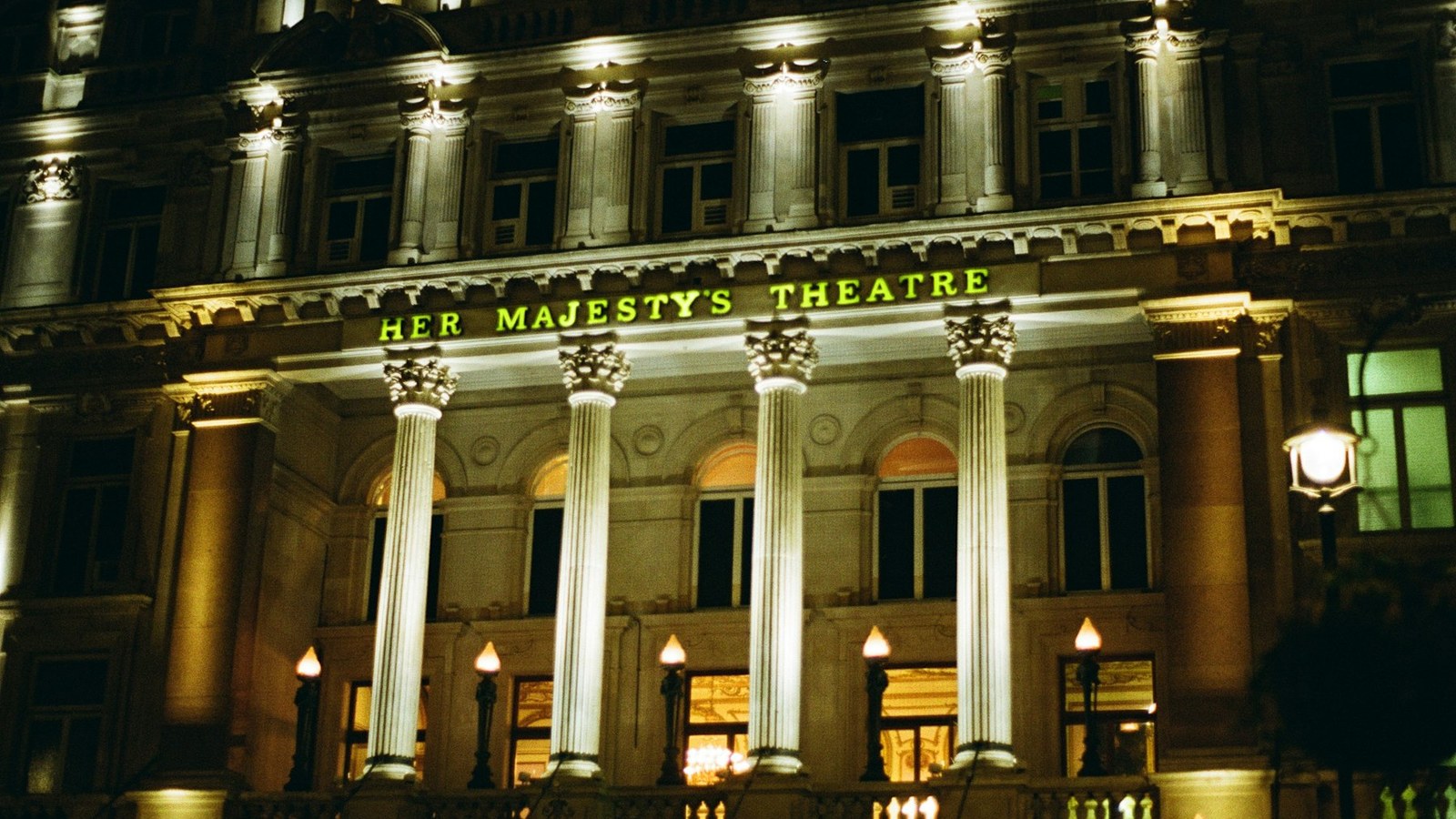
Then next week happens. Monday 21 September brings two openings at once. The Standard of Living at the Theatre Royal Haymarket is James Graham’s new play about John Maynard Keynes, with Rory Kinnear as the economist and Royal Ballet principal Natalia Osipova making her West End debut as his wife, the ballerina Lydia Lopokova. Nicholas Hytner directs, Bob Crowley designs, Jenny Beavan does the costumes. Previews run from the 21st, press night is 29 September, and it’s a strictly limited 12 weeks to 12 December. Tickets start at £25, and there’s a separate, limited pot of £25 “Keynes Tickets” for the under-30s. One caveat the theatre has published and most listings haven’t: Osipova isn’t appearing at eight performances across six dates in October and November, so check before you book for her.
The same night, Who’s Afraid of Virginia Woolf? starts previews at @sohoplace with Gillian Anderson as Martha and Billy Crudup as George, staged in the round by Marianne Elliott. It’s three and a half hours including the interval. Tickets are from £40 and the theatre’s own page says supply is limited and to check daily for returns, which is theatre-speak for “sold most of it already”. Press night is 30 September, so no reviews until then. The last West End Martha was Imelda Staunton in 2017; Anderson has done Blanche DuBois and Margot Channing in London already, so the casting isn’t a gamble.
Tuesday 22 September is the real pile-up. Hay Fever opens at Wyndham’s with Christine Baranski making her West End debut at 74 and Richard E. Grant back on a London stage after two decades, in Noël Coward’s country-house comedy about a family who can’t host. Emily Burns directs and it runs to 12 December. Into the Woods transfers from the Bridge to the Noël Coward Theatre, Kate Fleetwood still playing the Witch, the first West End run of the Sondheim since 1991, booking through to 9 January. And Sting docks at Drury Lane.
The Last Ship deserves its own paragraph because the terms are so unusual. It’s Sting’s musical about the Wallsend shipyard he grew up beside, rebuilt this year with a new book by Barney Norris and a company of more than 50, and he’s playing the foreman Jackie White in every performance. The London run is 22 September to 3 October. Twelve days. It’s been through Amsterdam, Brisbane, Paris and the Met Opera in New York already, so this isn’t a try-out; it’s a touring production passing through a 2,000-seat house for a fortnight. Tickets start at £38 according to London Theatre, and Shaggy turns up for two performances, which is either a selling point or a warning depending on how you feel about Shaggy.
Rent follows on 26 September at the Tom Stoppard Theatre (the Duke of York’s, renamed), with Gaten Matarazzo from Stranger Things as Mark for the 30th anniversary. Jesse Tyler Ferguson’s Capote solo show Tru opens at the Menier on the 19th. Both fine. Neither is the story of the season.

The price ladder, from £15 to “check daily for returns”
Line the entry prices up and a pattern jumps out. Royal Court: £15 on Mondays, £15 to £74.50 the rest of the week. Almeida: sold out, but a free performance for the under-25s on 15 October. Haymarket: £25, and £25 for the under-30s every night. Drury Lane: from £38. Soho Place: from £40. Wyndham’s and the Noël Coward: no published cheap-seat scheme that I could find.
The subsidised houses are the ones doing the work on access, and they’re also the ones that are sold out. The commercial houses have seats and no floor price worth mentioning. That’s not a coincidence. A theatre with an Arts Council grant and a charitable remit can afford to give away a Monday; a producer paying for a Hollywood name in a rented West End building can’t, and the ticket price reflects who’s carrying the risk.
There’s a cheeky calculation to do here as well. Man to Man’s top price is £74.50 for 85 minutes, which is about 88p a minute. Virginia Woolf’s cheapest seat is £40 for 210 minutes, or 19p a minute. By that logic the Albee is the bargain of the season and Swinton is the luxury good. I’d still rather have the 85 minutes, because the scarce thing this autumn isn’t time, it’s a seat in Sloane Square.
It’s the same logic we saw with the £55 Coliseum seat for Sam Smith: the cheap ticket exists, it’s just not where the demand is.
Getting into a sold-out show without paying a tout
The Royal Court has written its rules down, which is more than most venues manage, so here’s how they stand this week. Every Monday, all tickets are £15, released online at 9am for that day’s performance only. On the other days, at midday, it releases returns online for that day and the next. TodayTix runs a £25 Rush at 10am, Tuesday to Saturday. And there’s an in-person returns queue at the box office where standing tickets and last-minute returns get sold. The theatre’s page also says it can’t guarantee tickets bought through Viagogo and will refuse duplicated ones. Believe them.
The Almeida’s version is similar but lower-tech. Returned tickets go back online as they come in. Anything returned just before curtain-up goes to a queue at the door, first come first served, and the theatre’s own advice is to bring cash. The under-25 night on 15 October is booked through its 16-25 mailing list. And if none of that works, the production is being filmed for National Theatre Live and lands in cinemas from 5 November, which for the price of a cinema ticket isn’t the consolation prize it sounds like.
For the commercial shows, the tools are blunter: the venue’s own site for returns, the Keynes Tickets link at the Haymarket if you’re under 30, and patience. What I’d avoid is the resale market entirely. We wrote about why the £1 ticket levy matters for British music last month, and the theatre version of that argument is simpler still: a returned Man to Man ticket at £15 is worth more to the ecosystem than a resold one at £300, and the Court will cancel the latter if it can trace it.
Why the season looks like this
Look at the run lengths. Standard of Living: 12 weeks. Hay Fever: 12 weeks. Virginia Woolf: 13. The Last Ship: 12 days. Man to Man: seven weeks, then Berlin, then New York. The open-ended West End run, the thing that made Phantom and Les Mis, is a musical’s model now. Plays have become limited engagements built around a name who has a film to shoot in January, and “strictly limited” has stopped being marketing and started being a contractual fact.
The second thing is where the shows come from. Into the Woods was made at the Bridge, where nine critics averaged 4.4 stars, and it’s arriving in the West End pre-approved. Man to Man is a co-production with the Berliner Ensemble. Golden Boy will exist longer as an NT Live film than as an Almeida run. The subsidised and the not-for-profit houses are doing the research and development, and the commercial West End is increasingly a distribution channel for work that has already proved itself somewhere cheaper. That’s efficient. It’s also why the cheap seats are in Islington and Sloane Square and not on St Martin’s Lane.
Which brings me to the contrarian bit. The safest ticket of the West End autumn 2026 season has no film star in it. Into the Woods arrives with a five-star Times review and an Olivier already on the shelf, in a production Time Out called “pure magic” when it opened at the Bridge. The starriest tickets, by contrast, are the least certain: Virginia Woolf and Hay Fever don’t have a review between them yet, and Man to Man has a stack of them that disagree. If you’ve got one night in London and one budget, the Sondheim is the boring, correct answer.
The same shift is visible on screen, incidentally. The cancel calendar we mapped out this month works because the good stuff arrives in fixed windows now, and theatre has quietly adopted the same rhythm.
What I’d book, and what I’d let go
Book Into the Woods for a date in October, before the Christmas price bump, and sit in the stalls if you can stretch to it, because the Tom Scutt design is half the point. Book The Standard of Living if you’re under 30, because £25 for Kinnear, Osipova and a Hytner production is the best deal on the list by a distance, and I’d take the gamble on a new James Graham play over a revival every time. Set the Monday alarm for Man to Man once, and if you miss it, let it go; it’ll be filmed or it’ll come back, and the reviews suggest you’re paying for a performance rather than a play.
Try the returns queue at the Almeida on a wet Wednesday matinee. That’s not a joke. It’s the performance most people can’t get to.
And the Sting show? I’d go, but not at premium price. It’s a touring production that happens to be in London, and the cheapest seats in a house that size are a long way from the stage. If you’re a Soul Cages person you already know you’re going. If you’re not, the £38 seat is the right amount to risk on a musical that has been rebuilt more than once since 2011.
Hay Fever is the one I can’t call. Baranski and Grant in Coward is either the funniest night of the autumn or an expensive way to watch two brilliant people wait for the play to get going, and nobody will know which until the reviews land on the 30th. Wait for them. There are seats.
If you’re coming in from outside London, the maths changes again. We did the same sums on the £6 London Film Festival seat earlier this month, and the honest answer is that a theatre trip is a train fare plus a ticket plus a night, and a £15 Monday only works if you’re already here. For everyone else, the NT Live screening of Golden Boy at your local Everyman might be the smartest West End ticket of the year.
So here’s the question I keep coming back to. What’s the most you’d pay to sit twenty feet from Gillian Anderson for three and a half hours, and what’s the least you’d accept to see Tilda Swinton for 85?