
Kids Week 2026: 60 London Shows, a Free Child Seat, and 14 Days Left to Use It
The most interesting number in British theatre this summer isn’t £303.83, the price of the best seat in the house for Moulin Rouge! The Musical at the Piccadilly. It’s nothing. Zero. Kids Week 2026 has been running since 20 July, it closes on 31 August, and for the fortnight that’s left a child of 17 or under can sit in a West End theatre for free.
In This Article
- What Kids Week 2026 Actually Gets You
- The £0 Seat Sits Next Door To a £303 One
- Sixty Titles, and Not All of Them Deserve Your Tuesday
- The Workshops Are the Bit Nobody Books
- Why SOLT Keeps Paying For This
- Broadway Has Just Noticed
- Two Weeks, and a Calendar Problem Nobody Mentions
- The Bargain Is Real. The Framing Isn’t.
Sixty productions are taking part. That’s the published list, and the Society of London Theatre has said more may be added. The deal is simple enough to explain in one line: buy one full-price adult ticket, take one child free, then add up to two more children at half price. No booking fees on any of it.
And after a summer of £125 Sunday festival tickets and a record-breaking July at the cinema, it’s worth stopping on the one thing in the British cultural calendar where the marginal cost of a child is nought. Manchester’s rebuilt Pride is pulling the same trick this bank holiday – £28 day tickets and a free Monday. At the other extreme sits autumn’s hottest cultural ticket – the Bayeux Tapestry’s British Museum run, which took £2.5m and sold out to New Year’s Eve on day one.
What Kids Week 2026 Actually Gets You
The mechanics matter here, because a lot of the coverage flattens them into “free theatre tickets” and that isn’t quite what this is.
A child aged 17 or under goes free with every adult paying full price. Each of those adults can then buy up to two additional children’s tickets at half price. Tickets cover selected performances between 20 July and 31 August, and they’re only bookable through OfficialLondonTheatre.com – not through the theatres, not through the usual discount sites. Theatre Tokens can be redeemed against them.
The catch, and it’s a real one, is the phrase “full price”. You can’t stack this on a day seat, a Monday-night reduction or a TodayTix rush ticket. So a family of two adults and two children at a big musical is still paying two full adult prices, which at the top end of the market is not a small evening out. The saving is genuine, the entry cost isn’t zero, and anyone budgeting for this should look at the adult price first and work backwards.
Families coming from further out can fold the travel into the outing too – the sleeper trains from Cornwall and Scotland arrive in London before breakfast, which is a hotel night saved.
What that means in practice: at a show where full-price stalls are £85, a family of four pays £170 rather than £340. At a show where they’re £55, you’re looking at £110 for the four of you, which is roughly the cost of taking the same four people to a Premier League match and considerably less faff than the queue for the concourse pies.
The £0 Seat Sits Next Door To a £303 One
Here’s where it gets interesting, because two sets of numbers about West End pricing came out this year and they tell opposite stories.
The Stage‘s annual ticketing survey, published in May, found the average most expensive seat across West End shows had climbed to £173.74, up 6.84% on the £162.61 recorded a year earlier. The single dearest ticket in the survey was that £303.83 for Moulin Rouge!. For a play, Stranger Things: The First Shadow at the Phoenix topped out at £278.80. The average cheapest ticket, meanwhile, moved barely at all, from £30.55 to £31.17. There are still bargains buried in there if you know where to look – the cheapest seat anywhere in the survey was £9 for the ballet La Fille Mal Gardée at the Royal Opera House, and both My Neighbour Totoro and the second part of Harry Potter and the Cursed Child had £15 tickets on sale.
Then there’s the Society of London Theatre’s own box office data, which points the other way. West End attendance hit 17.64 million in 2025, up 3.16% year on year – over two million more admissions than the entire Premier League, and nearly three million more than Broadway. The median price actually paid by audiences stayed at £56 for the second year running, a real-terms fall of about 3.4%. Average prices are 8.9% lower in real terms than in 2019 and below where they sat in 2016.
Claire Walker and Hannah Essex, co-chief executives of SOLT and UK Theatre, put it bluntly: “These official figures show what audiences actually paid, not just the highest prices advertised… More than a quarter of West End tickets sold for under £35, almost three-quarters sold for under £85, and fewer than 4% sold for more than £150.”
Both things are true, which is the problem. The top of the market is getting dearer and the middle isn’t, so the headline price of a West End ticket rises while the typical price paid doesn’t move. SOLT is statistically correct and also, I’d argue, slightly slippery about it. A median of £56 is a reasonable price for two and a half hours of live performance in central London. It is not a reasonable price multiplied by four on a wet Tuesday in the school holidays, and the family market is the one segment where the maths genuinely breaks. Which is precisely why Kids Week exists, and why it should be read as an admission rather than a gift.
Sixty Titles, and Not All of Them Deserve Your Tuesday
The list is long and it is not evenly good. Worth saying out loud, because “over 50 shows are taking part” is the sort of line that flattens a very uneven field into one recommendation.
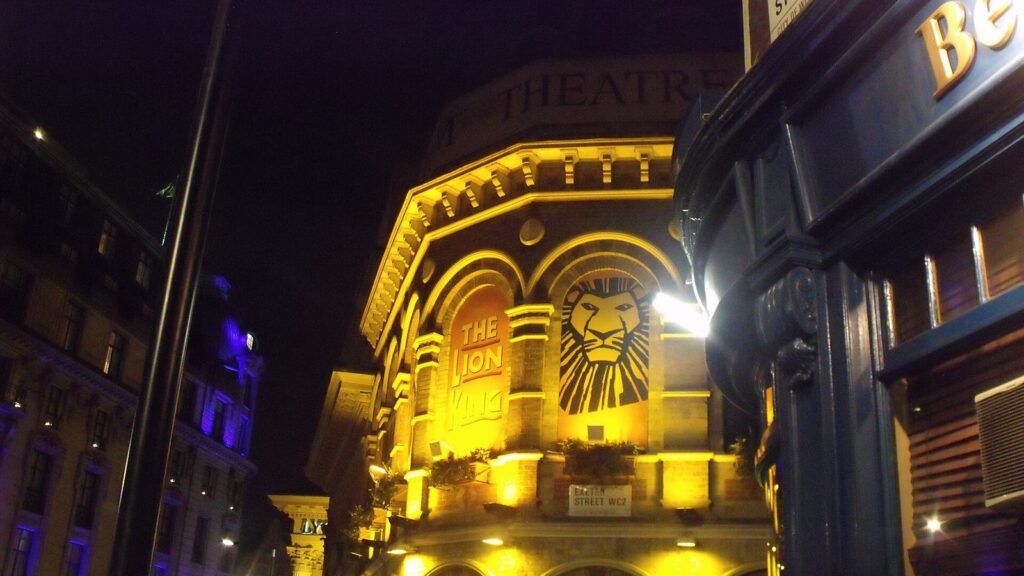
The genuinely strong end: the RSC’s My Neighbour Totoro at the Gillian Lynne, which is an Olivier-winning production and the best-looking piece of family theatre in London by a distance. Matilda The Musical, still sharper than it has any right to be after all these years. Disney’s The Lion King at the Lyceum, which survives on the strength of ten minutes of puppetry that no amount of familiarity dulls. Six, which at eighty minutes with no interval is the correct length for a nine-year-old and the correct length for the rest of us too. Hadestown, if your teenager has any patience for a slow build.
The Enormous Crocodile and The Gruffalo do exactly what they promise for the under-sevens, and the Leicester Square Theatre end of the list – Horrible Histories: Barmy Britain, Zog, The Tiger Who Came To Tea – is reliably fine. Nothing to write home about, but no child has ever come out of Zog disappointed.
Now the bit that will annoy someone. A meaningful chunk of this list isn’t theatre in any interesting sense. Be Like Blippi, Monopoly Lifesized, The Paddington Bear Experience, Now You See Me Live, Brainiac Live! – these are branded attractions with a running time, and they’re on the list because they need the footfall, not because a free child ticket opens the door to something remarkable. The Mousetrap belongs in the same paragraph for different reasons: it’s an institution, it’s been coasting for decades, and taking a child to it as their first play is a decision I’ve never understood. If the free seat is the reason you’re going, spend it on Totoro or Matilda instead.
One more thing about the top end. Harry Potter and the Cursed Child and Stranger Things: The First Shadow are both participating, and both are the sort of show where the full adult price is high enough that the free child ticket represents the biggest cash saving on the entire list. If you were ever going to do Cursed Child as a family, this is the window.
The Workshops Are the Bit Nobody Books
Buried under the ticket offer is a programme of activities that most families never look at, and it’s the part of Kids Week I’d actually plan around. There are two kinds: “Curtain Calls”, where every Kids Week booker at that performance stays behind for a post-show Q&A or demonstration, and workshops in things like dance, singing, puppetry, illusions and game design.
With the offer closing on 31 August, here’s what’s still ahead as of mid-August:
- The Paddington Bear Experience – dance workshop, Tuesday 18 August
- ‘Come Alive!’ The Greatest Showman Circus Spectacular – Q&A and sing-along, Thursday 20 August
- Hot Mess: A New Musical – post-show Q&A, Thursday 20 August
- Monopoly Lifesized – game creation workshop, Tuesday 25 August
- Disney’s The Lion King – dance and singing workshops, Tuesday 25 and Wednesday 26 August
- Wicked – singing and acting workshop, Wednesday 26 August
- Harry Potter and the Cursed Child – illusions workshop, Friday 28 August
The Harry Potter illusions workshop on the 28th is the one I’d chase. Whatever you think of the play, the technical work in it is the best sleight-of-hand currently running in London, and an hour of someone explaining how a bit of it is done is worth more to a curious twelve-year-old than the show itself.
Why SOLT Keeps Paying For This
Kids Week isn’t philanthropy and SOLT has never really pretended otherwise. It’s the longest-running audience development scheme of its kind in the country, it started in 1998, and it has now generated more than 2.7 million theatre visits. That’s a customer acquisition programme with a very long payback period.
Emma D’Souza, who founded it and now serves as SOLT and UK Theatre’s Executive Director for Audiences and Commercial, said something in the launch announcement that gives the game away, in a good way: “Having founded the initiative in 1998, I’m incredibly proud that Kids Week is now inspiring a second generation of theatre fans, with many who attended as children in the earlier years now returning to share the experience with their own children.”
Read that as a business plan and it’s a smart one. The parents booking free child tickets this month are, in a fair number of cases, the children who got free tickets in 2003. Theatre has an unusually long habit-formation curve, and an industry whose median ticket is £56 needs people who decided at nine that this was something they do.
The commercial pressure behind that is real. This has been a strange year in British theatre: Equity members ratified a new three-year West End agreement at the end of July, ATG Entertainment – which operates a large slice of West End venues – is the subject of an acquisition by Mari, and Trainspotting: The Musical pulled a planned UK tour in early August after poor sales. Producers are looking hard at where the next decade of ticket buyers comes from, and 2.7 million introductory visits is a decent answer.
Broadway Has Just Noticed
It’s taken New York a while to work this out. In the middle of this month, Broadway announced its own scheme to hand free and discounted tickets to students, which is the same logic arriving twenty-eight years late.
The comparison is flattering to London, and worth dwelling on, because the numbers underneath it are not what most people assume. The West End sold nearly three million more tickets than Broadway last year. It did so at a lower median price. And it has been running a structured free-ticket pipeline for children since Tony Blair’s first term, while New York has relied largely on lotteries, rush tickets and the goodwill of individual productions. Whatever else you want to say about how SOLT presents its pricing data, this specific piece of institutional patience has no real equivalent anywhere else, and the 2.7 million figure is the proof.
The Fringe has spent this month making a version of the same argument in Edinburgh – our piece on why the best ticket at Britain’s biggest arts festival costs nothing covered the free-entry model in some detail, and the Book Festival’s £21 ceiling is another version of it. Britain is, on the whole, unusually good at this. It just doesn’t shout about it in a way that translates into bookings.
Two Weeks, and a Calendar Problem Nobody Mentions
Here’s a wrinkle that gets left out of every Kids Week write-up I’ve read. The offer runs to 31 August, which sounds generous until you remember that Scottish schools went back in the middle of the month. For a family in Glasgow or Edinburgh, the last fortnight of Kids Week is functionally useless – the kids are already in class, and a Tuesday matinee in London isn’t happening. The scheme’s back end really only works for England, Wales and Northern Ireland.
If you’re in that group, the practical position is straightforward. Availability at this stage of the run is patchy and skewed towards weekday matinees, which is fine if you’re already planning a day in town and awkward if you’re not. Book direct through Official London Theatre, check the specific performance rather than the show, and be flexible about the title. The families who get the most out of this are the ones who pick a day first and a show second.
And if London in late August feels like more logistics than you can face, the same money buys a decent amount elsewhere. Our roundup of this summer’s best London exhibitions covers a fair few things that cost less and demand less of a nine-year-old’s attention span, and Notting Hill Carnival over the bank holiday weekend costs nothing at all.
The Bargain Is Real. The Framing Isn’t.
I want to be clear that I think Kids Week is good. It’s the most useful thing SOLT does, it demonstrably works, and a free seat for a seventeen-year-old at Six or Totoro is one of the better things on offer in a British summer that has otherwise been an exercise in £300 wristbands.
But there’s a sleight of hand in how it gets talked about. Every year the scheme is presented as evidence that the West End is affordable, and every year The Stage‘s survey shows the expensive seats getting more expensive. A six-week window in which children are free is not the same thing as a family market that works, and the reason SOLT has to run this campaign for twenty-eight years running is that, left alone, the pricing doesn’t get families through the door.
The fix isn’t more Kids Weeks. It’s more shows priced like Six – eighty minutes, no interval, a stalls seat that doesn’t need a payment plan – and fewer productions where the entry-level seat at a commercial theatre averages £33.51 while the best one costs more than a return flight to Dublin. The West End sold 17.64 million tickets last year. It doesn’t have a demand problem. It has a distribution problem, and free child tickets in August are a patch rather than a repair.
Still. Two weeks left, sixty shows, and a free seat sitting there unclaimed. If you had one of them to spend on a child this month, which show would you pick, and what would you be hoping they came out talking about?
And once the summer deals end, the next window worth planning is the autumn one – our October half term guide runs from a £49 caravan to a £1,500 lodge.