
Bayeux Tapestry Tickets: 21 October Is the Next Release Date, With Member Windows Full and 2027 Slots Still to Come
On 1 July, the British Museum put Bayeux Tapestry tickets on sale for the first time. By the end of the day it had taken £2.5m, the online queue had peaked above 80,000 people, and every date from the 10 September opening to New Year’s Eve was gone. For a 950-year-old strip of embroidered linen, that’s the kind of first-day performance Glastonbury would recognise.
In This Article
- Bayeux Tapestry ticket dates at a glance
- The 80,000-person queue for a piece of embroidery
- How to approach the 21 October release
- Three Bayeux Tapestry ticket myths worth dropping
- Is the £82 membership still worth it?
- The prices, and the one genuine bargain
- What 40 minutes actually buys you
- Four scenes worth planning your 40 minutes around
- If you miss out anyway
- Is it worth the fuss? Pros and cons
Most of the coverage stopped there, at “sold out”, which is the least useful thing you can tell anyone. As of this week the picture has moved on: the next public release is 21 October, covering 1 January to 31 March 2027, and the museum’s member windows for October to March are already fully booked. April to July 2027 is still to come, and there is a legal route in that doesn’t depend on luck. It depends on a calendar, which is why this page now starts with one.
Bayeux Tapestry ticket dates at a glance
These are the release dates on the British Museum’s booking page, checked on 13 October 2026. The museum says prices and dates may change, so treat the booking page as the final word.
| Visit dates | Who can book | Status |
|---|---|---|
| 10 Sept – 31 Dec 2026 | Everyone | Sold out |
| 1 Jan – 31 Mar 2027 | Patrons and supporters | Priority window opened 29 September |
| 1 Jan – 31 Mar 2027 | Members | Window fully booked |
| 1 Jan – 31 Mar 2027 | General public | On sale 21 October 2026 |
| Apr – Jul 2027 | Members | Final priority window in January 2027 |
| Apr – Jul 2027 | General public | On sale in early 2027 |
The 80,000-person queue for a piece of embroidery
Start with why this happened, because British museums don’t normally generate ticket crushes. The Bayeux Tapestry has never been displayed in Britain. Not once. It was stitched in England in the 1070s – by English embroiderers, most likely in Canterbury, working for a Norman patron – then spent nine centuries in Normandy telling the story of England’s defeat to anyone who visited Bayeux. The loan agreement between Britain and France brings it to the British Museum’s Sainsbury Exhibitions Gallery from 10 September 2026 to 11 July 2027, while its home museum is rebuilt. After that it goes back, and nobody alive today should expect a second chance.
The politics behind the loan are their own small drama. The move was agreed at the highest level between London and Paris after years of on-off talk – an earlier version of the idea was floated in 2018 and quietly died on conservation grounds – and it comes with traffic in the other direction: treasures from the Sutton Hoo ship burial and the Lewis chessmen are heading to France in exchange. Conservators fretted publicly about moving something so old and so fragile at all. The compromise is the display itself: the embroidery lies flat rather than hanging, the light is kept low, and the whole show is built around protecting it.
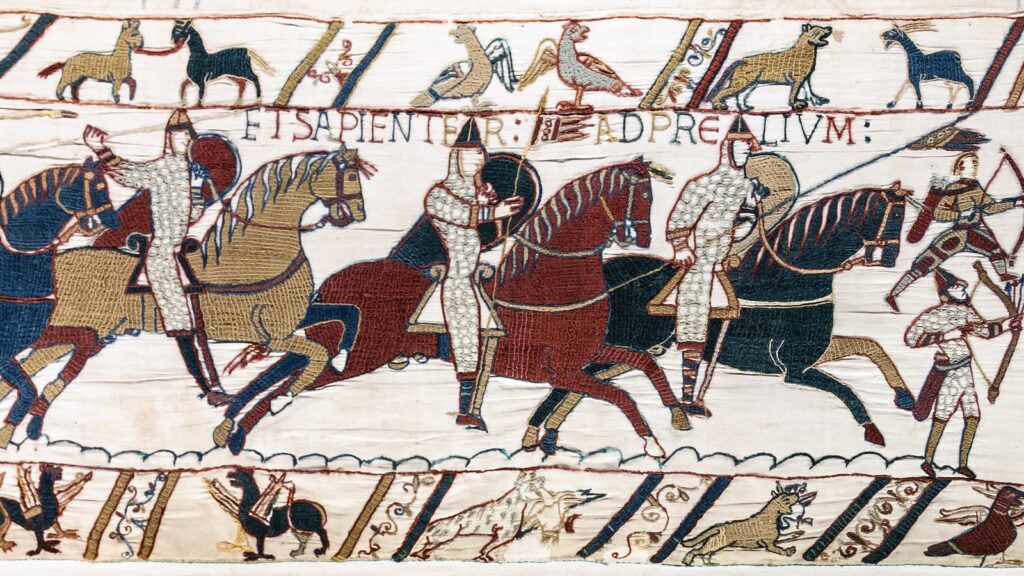
One pedantic pleasure to deploy at dinner: it isn’t a tapestry. Tapestry is woven; this is embroidery, wool stitched onto linen, roughly 70 metres of it, probably made within a decade of the battle it depicts. The French have called it “la Tapisserie” for centuries and nobody is relitigating the name now.
So the demand isn’t hype. It’s arithmetic: the single most famous object in English history, available for ten months, once in a millennium. The museum’s director Nicholas Cullinan has said standing in front of it produces “a sense of absolute awe”, which is the sort of thing directors say, except this time the booking figures back him up – the Museums Association called it record ticket sales, and The Art Newspaper put the first day’s takings at £2.5m.
And it fits a pattern. Britain’s appetite for the big cultural occasion is running unusually hot this year – cinema just posted a record £178m July, and every major live event of the summer has sold through. The tapestry is simply the sharpest example: unlimited demand meeting a room that holds a fixed number of people per hour.
How to approach the 21 October release
Everything from 10 September to 31 December 2026 is gone, and three months of 2027 go on sale on 21 October. That is roughly a quarter of the total run, and the July experience suggests it will not last. The remaining months, April to July 2027, follow in early 2027, which makes them the real prize for anyone who can’t get a winter slot.
The preparation takes five minutes. Sign up to the museum’s newsletter so the release lands in your inbox rather than in a news story after the good slots have gone. Create your account before the day, not during the queue. Decide your dates and a fallback in advance, because the July sale rewarded people who knew exactly what they wanted and punished browsers. If you can, aim for off-peak: a standard adult slot is £33, but the off-peak price is £27 and the super off-peak band is £25.
A word about the secondary market: don’t. Bookings are capped at ten tickets, multiple bookings from the same email are cancelled, tickets are only valid for the person who booked them, and the museum says ID may be checked. A tout’s Bayeux ticket is a piece of paper with someone else’s name on it.
Three Bayeux Tapestry ticket myths worth dropping
“It’s sold out, so it’s over.” Only the 2026 dates have gone. The run continues to 11 July 2027, and the bulk of the unreleased dates sit in the spring.
“Membership gets you in.” It gets you an earlier place in a queue, and for this winter that window has closed: the member allocations for October to March are fully booked. What membership still offers is priority for April to July, in January, plus two visits to the show at no extra cost and 10% off after that.
“Resale is the safety net.” It isn’t. With named tickets and possible ID checks, a resold slot may simply be refused at the door.
Is the £82 membership still worth it?
British Museum membership costs from £82 a year. It includes two visits to the Tapestry at no extra cost, against a £33 standard adult ticket, then 10% off further visits, plus the rest of the exhibition programme. On price alone, two visits at face value is £66, so the £16 difference buys you everything else.
The honest update is about timing. The October to December 2026 and January to March 2027 member windows are fully booked, so joining now does not help you for the winter. It matters only if you are aiming for April to July 2027, where the final member priority window runs in January. If you can get a slot on 21 October as a member of the public, you probably don’t need it. If you can’t, joining in time for January is a defensible plan B, though not a guarantee.
| Route | Cost | Best for | Catch |
|---|---|---|---|
| Public sale, 21 October | £25 – £33 | Anyone free in Jan – Mar 2027 | Queue, limited slots |
| Public sale, early 2027 | £25 – £33 | Spring and summer visitors | Date not yet confirmed |
| Membership, January window | From £82 a year | Repeat visitors, April – July | Priority, not a guarantee |
| National Art Pass | £12.50 – £16.50 on the day | Existing pass holders | Still needs a slot |
The prices, and the one genuine bargain
Is £33 a lot? For 40 minutes, on paper, yes – it’s at the top end of anything a British museum has charged, and well past what the same money buys at a festival with a £21 ceiling. In practice it sits below a mid-week West End stalls seat, below a Premier League away day, and miles below what touts would charge if the museum’s ID rules gave them any room. Scarce things in Britain usually cost whatever the market will bear. This one, unusually, doesn’t.
When tickets are on sale, a standard adult slot is £33, dropping to £27 off-peak and £25 for the super off-peak band – term-time weekdays, 3.30pm to 4.20pm, which is the museum quietly admitting that an empty-ish gallery on a wet Tuesday in November is the best way to see anything.
The structural bargain is for families: under-16s go free, up to four of them per paying adult. A parent taking three children on an off-peak day pays £27 total for something those kids will be taught about for the rest of their school lives. Set that against what a family cinema trip costs and it’s absurd value – the same instinct that makes Kids Week the smartest fortnight in the West End calendar. Students, 16-18s and jobseekers pay £25, disabled visitors £25 with a free assistant ticket, and a National Art Pass roughly halves the adult price to £16.50.
The one thing I’d skip: the £50 online lectures running alongside the show. They’ll be good – the museum’s Bayeux curator knows this object as well as anyone alive – but there’s a £6 online talk on Harald Hardrada in November covering the year 1066 from its most neglected angle, and the free Bayeux Lates in October and December get you medieval workshops in the building itself. Fifty pounds for a livestream is a lot when the £6 ticket exists.
What 40 minutes actually buys you
Be clear-eyed about the format before you fight for a slot. This is a timed, one-way, 40-minute route past a textile displayed flat at 80cm in low conservation light, with an animation running behind it and staff keeping things moving. Photography without flash is allowed; sketching, oddly, is not. Bags and buggies stay in the cloakroom. Thursday to Saturday the galleries run to 9pm, which makes a late slot the closest thing this show has to a quiet one.
Some people will call that a conveyor belt, and the grumbling about “processed culture” has already started in the usual places. The grumblers are wrong. A fixed 40 minutes in front of 70 metres of narrative is roughly a minute per metre of the most consequential comic strip ever made, and the alternative – an unticketed scrum where the confident linger and everyone else sees the back of a head – is how blockbusters used to work, and it was worse. The timed slot is the reason a shortish person or an eight-year-old will actually see the thing.
Forty minutes is also, frankly, about right. It’s a story with a beginning, a comet and a body count, not an encyclopaedia. You walk it at the pace of the narrative, and you leave while it’s still vivid.

Four scenes worth planning your 40 minutes around
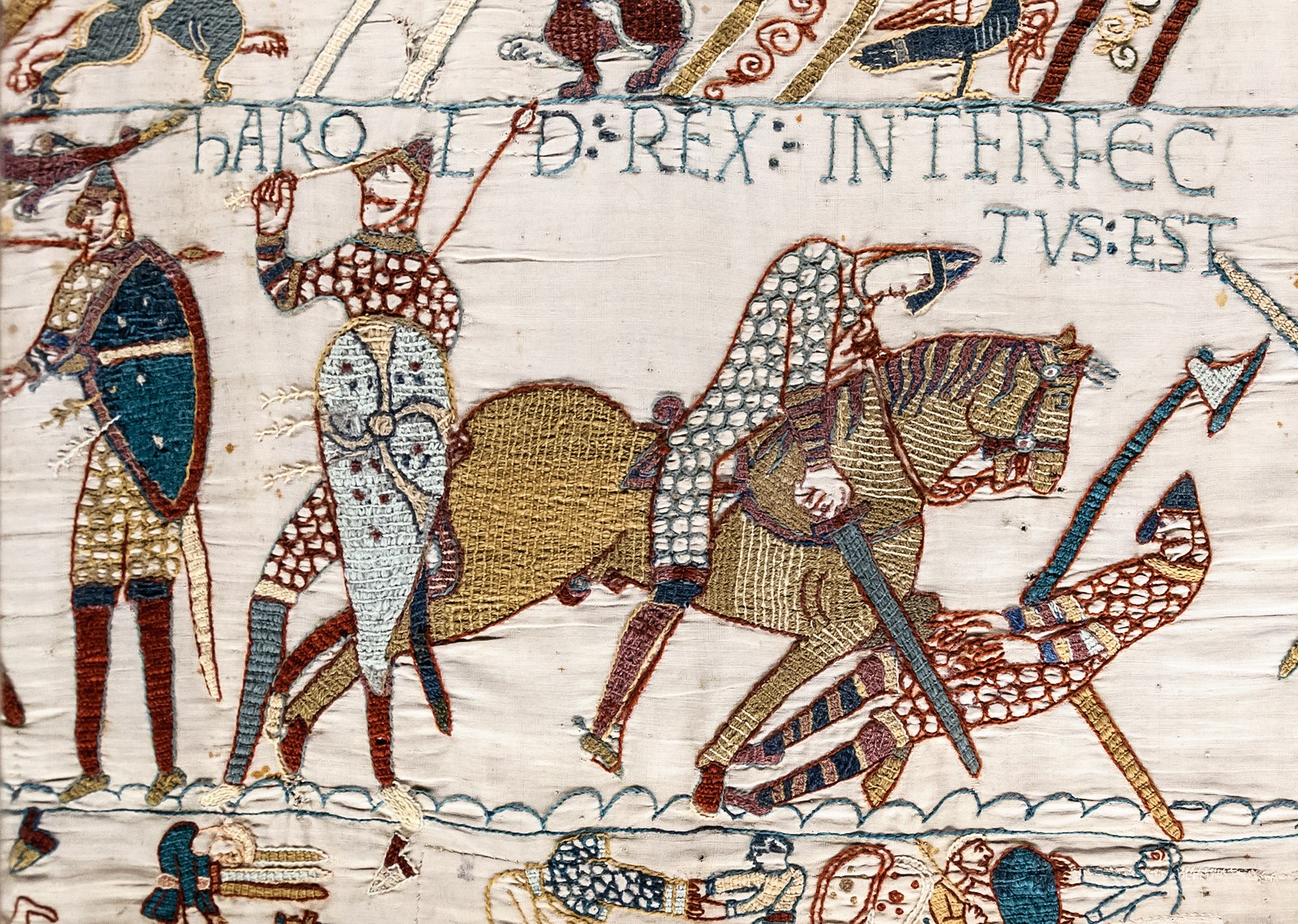
Everyone slows down for the death of Harold near the end – the arrow, the falling king, the caption that has kept historians arguing for two centuries about which figure is actually him. Fair enough. But the piece rewards knowing where else to spend your seconds.
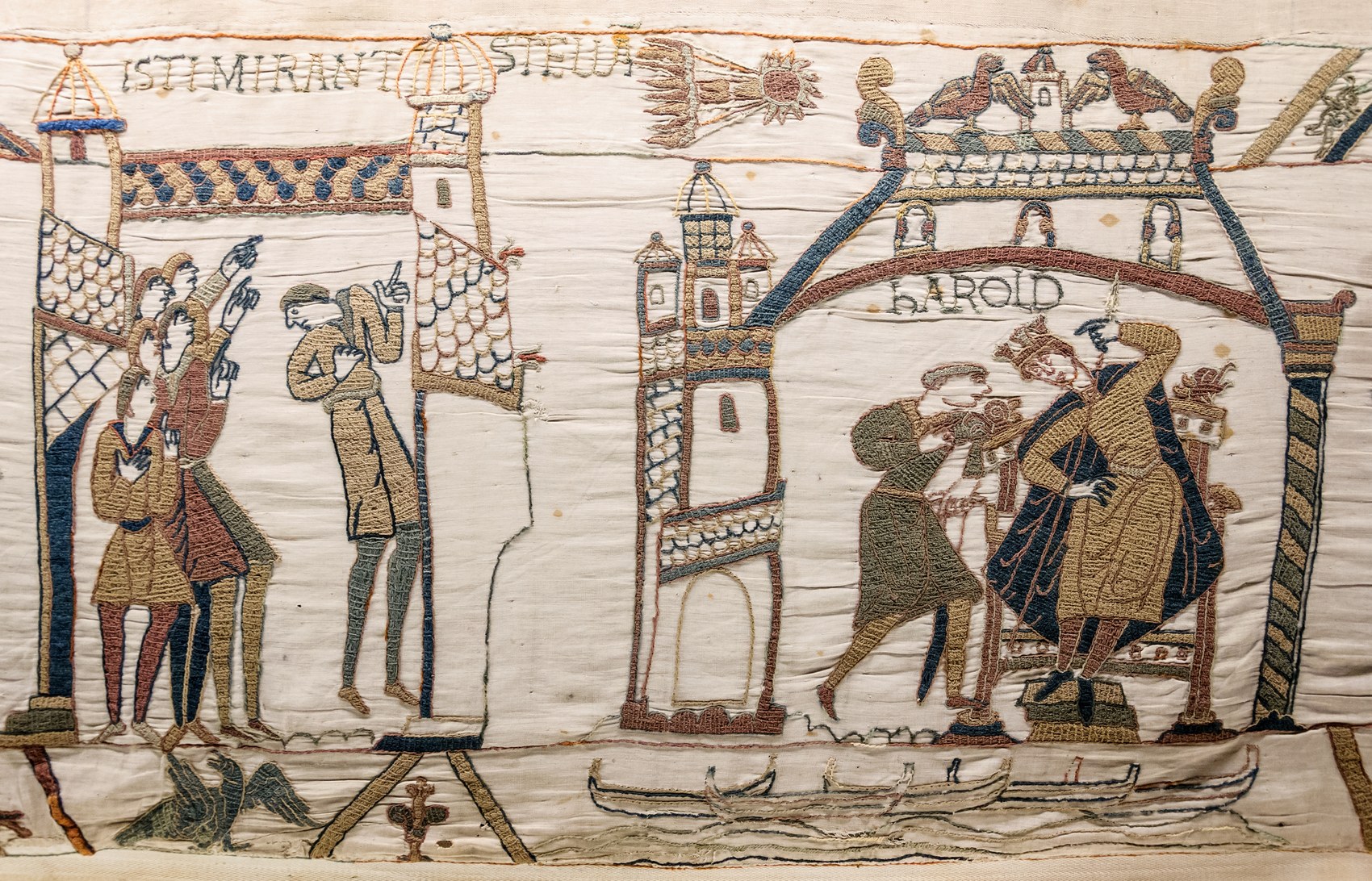
The comet is the one to watch for. Halley’s Comet crossed the sky in the spring of 1066 and the embroiderers stitched it in – a spiky star trailing fire while courtiers point and a freshly crowned Harold receives the news like a man reading a bad omen, which is exactly what medieval England took it to be. It’s the earliest known depiction of the comet anywhere, and it turns the whole work briefly into science fiction: doom arriving from the sky, ghost ships stitched faintly in the border below.
Then there’s the oath scene at Bayeux, where Harold swears on holy relics – the moment the whole Norman case for invasion rests on, staged with the confidence of the winning side’s lawyers. The shipbuilding sequence is the tapestry at its most cinematic, trees felled and hulls rising in a dozen frames. And keep an eye on the borders the whole way along: fables, farm work, fallen soldiers stripped of their armour, and a few scenes frank enough that Victorian copyists censored them. The margins are where the embroiderers, English women recording their country’s catastrophe, seem most willing to editorialise.
That’s the real answer to the 40-minute worry. You won’t be short of time if you arrive knowing what you’re looking for; you’ll be short of time if you spend the first half wondering where to look.
If you miss out anyway
Say October comes and goes and the 2027 dates evaporate too. You’re still not out of options. The Bayeux Lates are free evening events built around the exhibition’s themes, in the museum, with no exhibition ticket required; the 9 October one has passed, and 4 December is the next date listed in our earlier check. The rest of the building remains free every day, Sutton Hoo helmet included, which is more 1066-adjacent wonder than most countries own. London does free culture better than its ticket queues suggest – Open House London 2026 opened around 800 buildings without a booking, which is worth remembering for next year.
And the autumn calendar is unusually kind to anyone priced out of blockbusters. Heritage Open Days throws open hundreds of normally closed buildings for nothing in September, and there’s still a £48 route into the Last Night of the Proms for those who missed every ballot. Scarcity is having a moment; so is the workaround.
Is it worth the fuss? Pros and cons
For: it is the first time the embroidery has been in Britain; under-16s go free (up to four per paying adult); off-peak slots start at £25; and the timed entry means you actually see it. Against: 40 minutes is short; the best slots go in hours; and photography rules and cloakroom queues add friction.
Put 21 October in your diary first. A thousand years is a long time to wait for a home fixture – what would you queue behind 80,000 people to see, if not this?