
The Best UK Seaside Towns For Summer 2026 – And The Famous Ones To Skip
The British seaside is having its best run in decades, and almost nobody planned it. Beach saunas are multiplying along the coast, wild swimmers have colonised every cove with parking, and towns that were written off in the 1990s are opening wine bars in old amusement arcades. So if you are weighing up the best UK seaside towns 2026 has to offer, the honest answer is that the field has rarely been stronger – or more uneven. The gap between a great British seaside weekend and a disappointing one is now enormous, and it has very little to do with the weather.
In This Article
- What separates the best UK seaside towns 2026 has crowned from the also-rans
- Bamburgh, Northumberland: the quiet winner that keeps winning
- Folkestone, Kent: the regeneration story that actually delivered
- The Welsh trio: Tenby, St Davids and Portmeirion
- Whitby, North Yorkshire: the one that earns its crowds
- North Berwick, East Lothian: the smartest day trip in Scotland
- Beer and Falmouth: two different answers to the same question
- The famous ones to think twice about in August
- Reaching the coast without the car park misery
The latest Which? survey of UK seaside towns makes the point neatly. Nearly 4,000 of its members rated around 9,000 trips to the British coast, and the results split sharply in two: small, well-kept towns with proper beaches scored in the 80s, while several of the famous old resorts languished near 40 per cent. The coast is not one product. Some of it is world class. Some of it will eat a tank of petrol and a day of your holiday for very little in return.
What follows is a curated shortlist for summer 2026 – the towns we would actually book, what each one does best, and the honest catches nobody puts in the brochure. Plus the famous names where, in peak season at least, you should think twice.
What separates the best UK seaside towns 2026 has crowned from the also-rans
Four things, broadly. First, a beach that is pleasant at high tide as well as low – more towns fail this test than you would think. Second, food that does not begin and end with a chip-shop monopoly; the towns thriving right now all have independent kitchens doing serious work. Third, an answer to rain, because it will rain, probably on the Tuesday. And fourth, a way to arrive that does not involve a 45-minute crawl for a car park space.
The towns below each clear at least three of those four hurdles. None of them clears all four perfectly, and we have said so where it matters.
One more thing before the list: timing matters more than destination this year. The school summer holidays compress the entire British coast into six brutal weeks, and the difference between the same town in late June and mid-August is the difference between a holiday and an endurance event. If you have any flexibility at all, the back end of June and the first half of July – right now, in other words – is the sweet spot: long days, warming sea, and accommodation that has not yet hit peak pricing. September is the connoisseur’s choice, with the warmest sea temperatures of the year and the crowds gone by the second week.
Bamburgh, Northumberland: the quiet winner that keeps winning
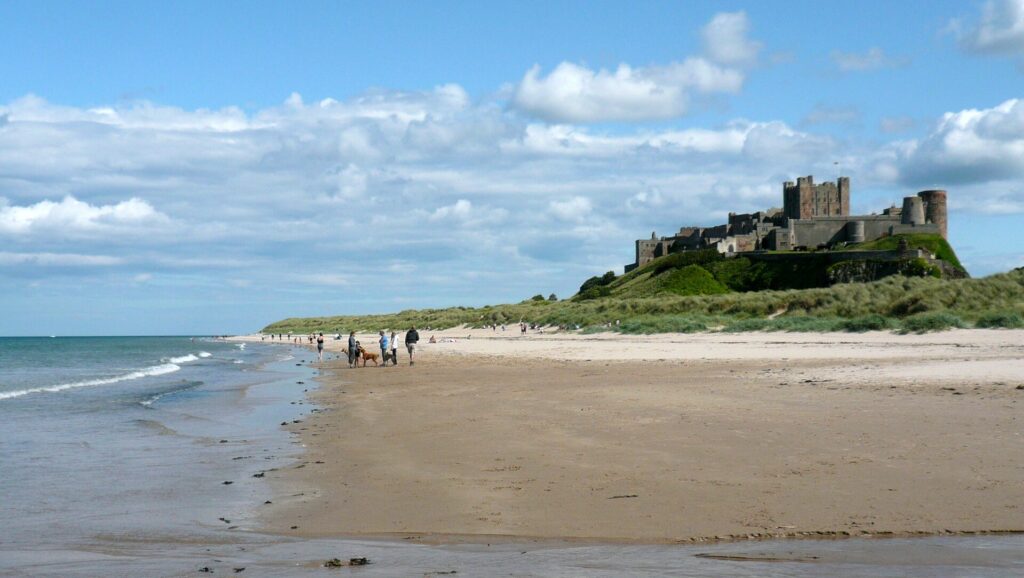
Bamburgh topped the Which? table for the fifth year running, with a destination score of 84 per cent and five stars for its beach, seafront, scenery and peace and quiet. Spend an hour there and the result stops being surprising. The beach is vast, pale and usually close to empty, and it sits beneath a genuinely dramatic medieval castle rather than the usual crazy golf. If your idea of the seaside is space, sky and a long walk that ends in crab sandwiches, this is the best version of it in Britain.
The catches are real, though. Bamburgh is a village of roughly 400 people, not a resort. Accommodation is limited and books out months ahead for school holidays, there is no nightlife to speak of, and on a wet day your options are the castle, the Grace Darling museum and a pub. Treat it as a base for the wider Northumberland coast – boat trips to the Farne Islands run from Seahouses ten minutes down the road – and it rewards you. Turn up expecting entertainment to be laid on and it will feel like a beautiful field.
Folkestone, Kent: the regeneration story that actually delivered
Plenty of seaside towns have announced their renaissance over the past decade. Folkestone is one of the few where it visibly happened. The Harbour Arm – once the railway pier where ferries left for Boulogne and soldiers departed for the Western Front – has been rebuilt as a promenade of independent food stalls, bars and live music, with close to 70 outlets now trading where there was dereliction in the early 2000s. Add the Creative Quarter’s steep streets of studios and the long boardwalk along the shingle, and you get a seaside town with an actual pulse rather than a heritage plaque.
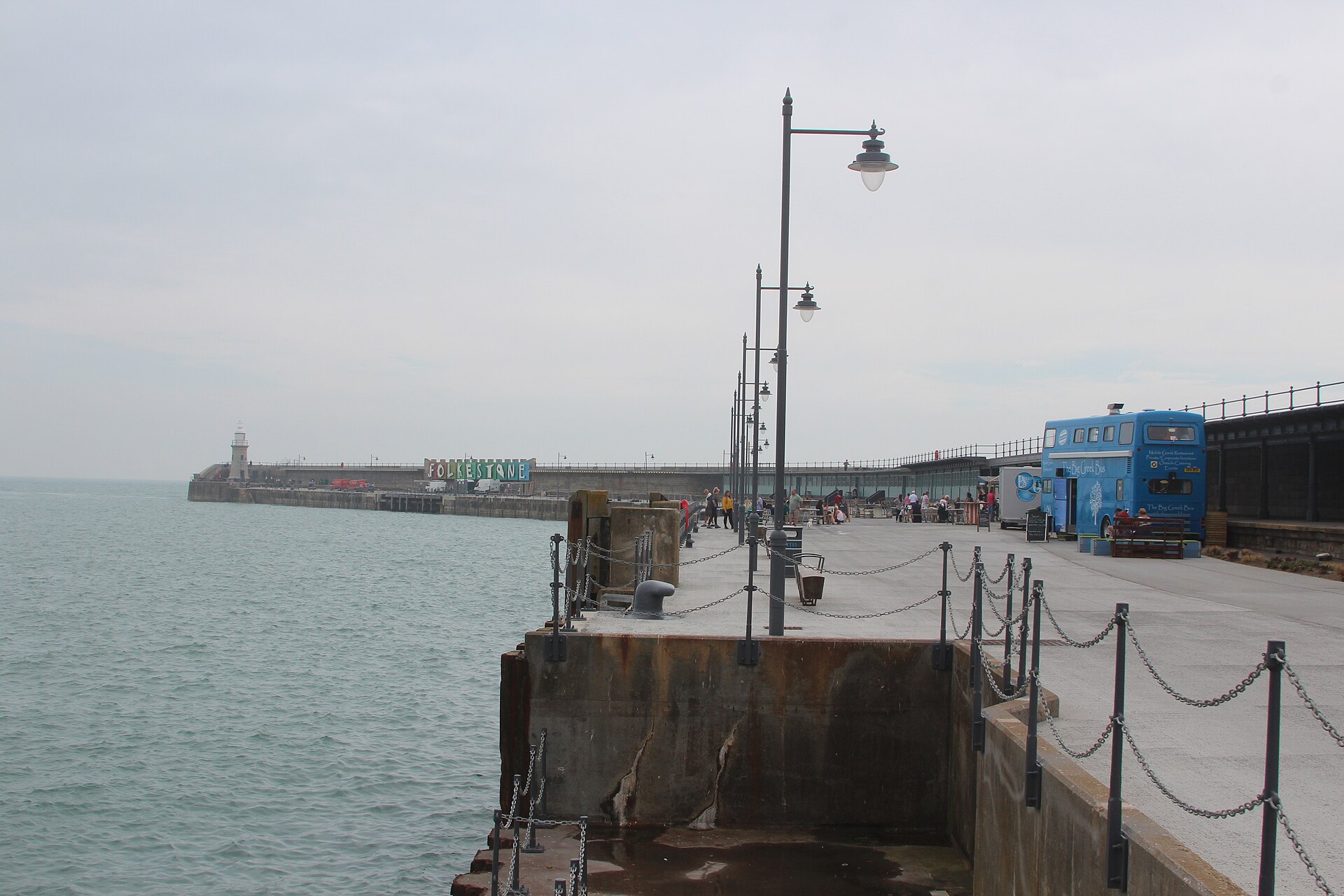
Two honest caveats. The main beach is shingle – the sandy Sunny Sands bay is lovely but small and fills fast on hot weekends. And Folkestone’s secret is long out: Saturdays in July can feel like a transplanted East London food market. The compensation is the journey. The high-speed train from London St Pancras gets you there in under an hour, which makes Folkestone the rare seaside town that works as a spontaneous day trip without a car. Go on a weekday if you can.
If you’re flying budget to the coast rather than taking the train, the right underseat cabin bag keeps the whole trip cheap.
The Welsh trio: Tenby, St Davids and Portmeirion
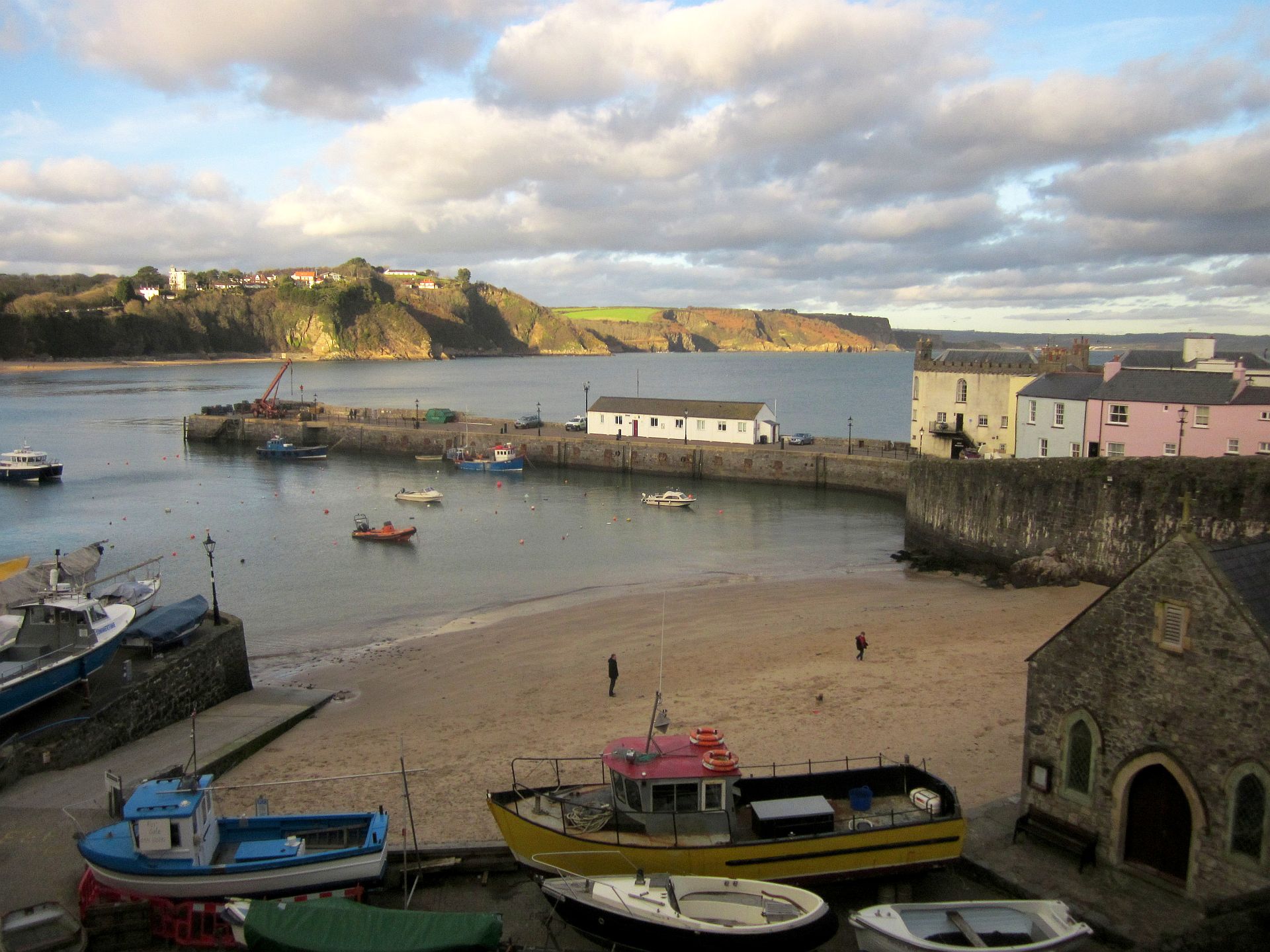
Three Welsh entries made the Which? top ten this year, and they make a tidy itinerary if you are heading west. Tenby is the family pick: a walled medieval town in pastel colours with three proper sandy beaches and boat trips across to Caldey Island, where the monks sell their own chocolate. It is as close as Britain gets to an Italian harbour town, and in August it knows it – parking is grim and the centre is saturated by mid-morning, so stay in town or arrive by train and walk everywhere.
St Davids, Britain’s smallest city, is the walker’s choice – Whitesands Bay is one of the finest beaches in Wales and the coast path either side of it is spectacular. And Portmeirion deserves a clarification rather than a recommendation: it is a privately owned, ticketed Italianate village rather than a town you simply wander into. It is gorgeous and slightly surreal, but check entry prices before you build a day around it, and do not expect a beach holiday.
Whitby, North Yorkshire: the one that earns its crowds
Whitby is the busiest town on this list, and we are recommending it anyway, because almost nowhere else on the British coast packs in this much character per square mile. The ruined abbey on the East Cliff – the one that gave Bram Stoker his Dracula setting – looms over a working harbour, a swing bridge, and a tangle of cobbled streets that have somehow kept their fishing-town texture despite a century of visitors. The fish and chips are a legitimate destination in their own right, the West Cliff beach is broad and sandy, and the fossil hunting along the shore towards Saltwick Bay gives children a mission beyond the sandcastle.
It also answers the rainy-day question better than most: the abbey, the Captain Cook Memorial Museum and the jet workshops in the old town will absorb a wet afternoon without anyone sulking. The honest catches are the ones you would guess. Parking is dire, the 199 steps to the abbey are non-negotiable, and on an August Saturday or a goth weekend the old town moves at shuffle pace. The fix is timing rather than avoidance: arrive before ten, or come midweek, and Whitby is everything the postcards promise. It is also one of the few towns here where the off-season is arguably the best season – a clear, cold October day with the abbey against a hard blue sky beats most summer afternoons further south.
North Berwick, East Lothian: the smartest day trip in Scotland
Half an hour on the train from Edinburgh Waverley puts you in a town with two sandy beaches, a working harbour, a lobster shack and a view of the Bass Rock, home to one of the world’s largest northern gannet colonies. The Scottish Seabird Centre covers the rainy-day problem, the golf is famous if that is your thing, and the water is busier than you might expect – this stretch of coast has become a hub for the cold-water crowd we covered in our piece on the UK wild swimming boom, and the beach-hut sauna movement has taken root here too.
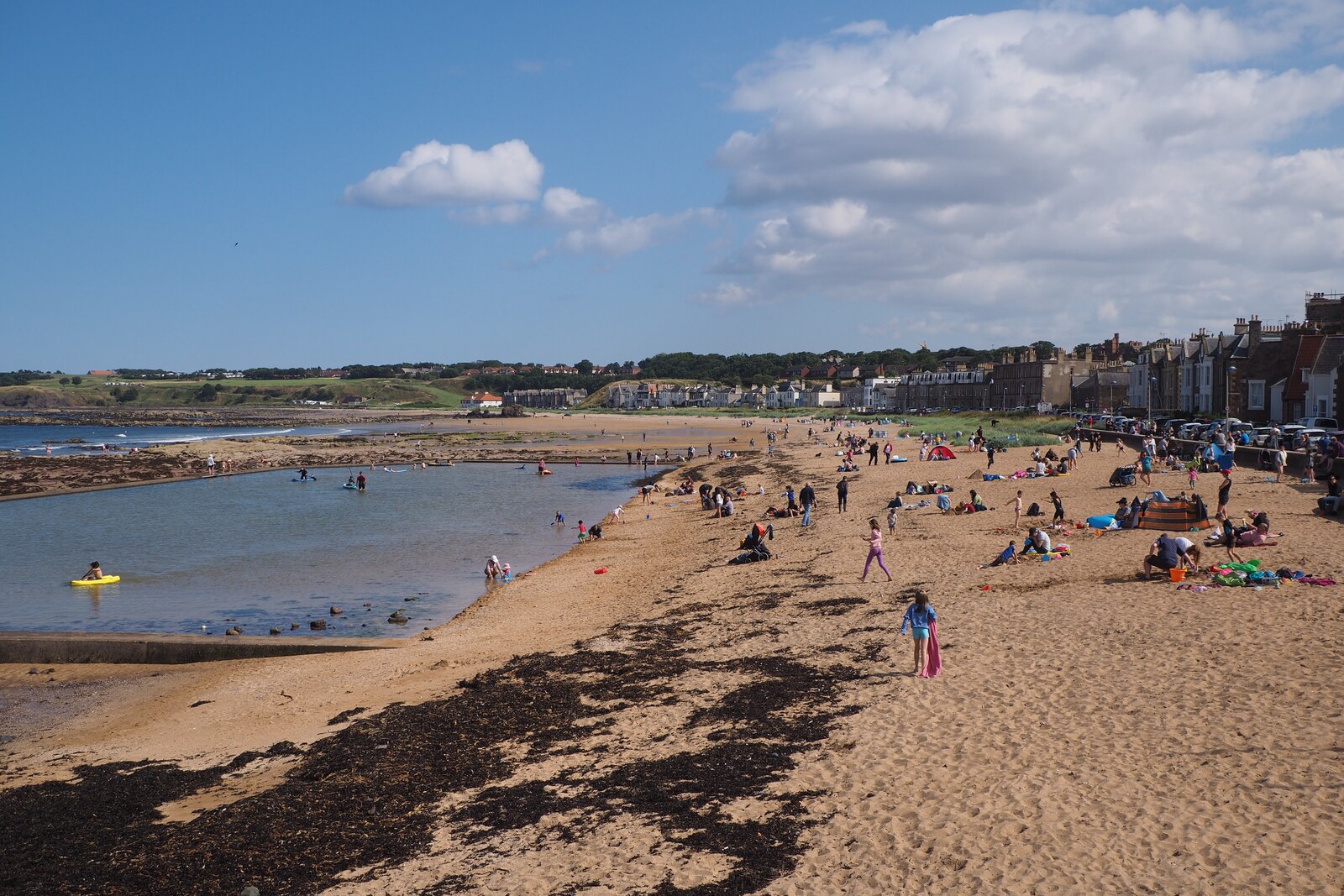
The catch is money. North Berwick has become Edinburgh commuter territory, and cafe and accommodation prices increasingly reflect that. As a day trip it is close to unbeatable; as a week-long base it can sting. If the budget is tight, the Which? researchers maintain a separate list of cheaper seaside alternatives that score well without the premium.
Beer and Falmouth: two different answers to the same question
Beer, the Devon fishing village that came in just behind Bamburgh in the rankings, is the purist’s choice. A shingle cove between white chalk cliffs, fishing boats winched up the beach, deckchairs for hire and mackerel trips from the shore – and that is more or less the complete list. There is nothing to do in the evening. That is the entire point. If you need a second restaurant option, look elsewhere; if you want the 1950s seaside with better coffee, this is it.
Falmouth is the opposite proposition: a proper year-round town on one of the deepest natural harbours in the world, kept lively by its university and ranked by Which? members – alongside Looe, Padstow and St Ives – as top of the table for food and drink. The National Maritime Museum Cornwall sorts out the wet afternoon, and the beaches on the town’s south side are sandy and sheltered. The honest warning: driving into Cornwall on a summer Saturday is a self-inflicted wound. Falmouth works far better as a place you stay for several nights, arriving by the branch line from Truro, than as a day-trip destination.
The famous ones to think twice about in August
St Ives is on every list, including the food one above, and it earns the praise – the light, the Tate, the Barbara Hepworth garden, Porthmeor beach. But in August it is shoulder-to-shoulder by 11am, and the experience you queued for quietly evaporates. If it is on your list, go in September, or at minimum leave the car at St Erth and take the branch line in, because the train ride along the coast is better than the parking experience by a distance.
Brighton is a different case: a great city that happens to have a beach, rather than a great seaside town. The pebbles are unforgiving, a day out runs at city prices, and on summer weekends the seafront is heaving. For nightlife, shopping and a big-venue gig it remains superb. For a classic bucket-and-spade day with children, it is the wrong answer when Camber Sands and West Wittering are within reach.
And at the bottom of the Which? table sits Bognor Regis, with several of the old giants – Blackpool, Skegness, Clacton-on-Sea – not far above it. These towns are cheap, and some are slowly improving, but the survey scores reflect something visitors consistently report: tired seafronts and not enough to do beyond the beach. If the budget points that way, you will usually get a better week in a cheaper town that scores well – Llandudno being the obvious example – than in a famous one that does not.
Reaching the coast without the car park misery
A word on cost, since a British seaside week is no longer automatically the cheap option. The pattern across this list is that you pay for accommodation and save on everything else: once you are in Bamburgh or Beer, a good day costs little more than a parking ticket, crab sandwiches and an ice cream. The reverse is true in the big-name destinations, where the entry price looks low but the day quietly empties your wallet – parking, attraction tickets, surge-priced fish and chips. Budgeting honestly for the whole day, the quiet five-star villages are frequently cheaper than the famous resorts they outscore.
A pattern worth noticing: almost every town on this list is better arrived at by train. Folkestone is under an hour from St Pancras, North Berwick is half an hour from Edinburgh, Tenby sits on the Pembroke Dock branch line, and St Ives has the prettiest railway approach in England. Book ahead and the train is often cheaper than coastal parking charges, and you arrive on the beach rather than in a queue.
Two final practicalities. UV on the open coast is fiercer than the same forecast inland, so pack properly – our guide to the best British sunscreen brands of 2026 covers options that survive a swim. And if a heatwave does land, the coast is reliably several degrees cooler than an overheating living room – we have written about why British homes turn into greenhouses, and sometimes the smartest cooling strategy is simply leaving the house. For those plotting something further afield instead, our round-up of the best travel destinations for 2026 has you covered.
The British seaside spent thirty years as a punchline and has come out the other side as one of the most interesting parts of a UK summer. Which stretch of the coast gets your vote this year – and which famous name do you think is coasting on reputation?
If you would rather a quiet bolthole than a busy seafront, our pick of the best UK hideaway hotels under £200 a night is the natural companion to this.
Read next: if you’d rather wake up at the coast than drive to it, some of these spots are reachable on the night services still running from the UK.
If you’re driving to the coast, it’s worth having a camera on the windscreen first: see our pick of the best dash cams under £100. Hiring a car instead? Skip the £25-a-day excess cover at the rental desk – our car hire excess insurance guide explains the £2 alternative.
Several of these towns sit within striking distance of a heated open-air pool – see the best lidos in the UK for 2026 for the ones worth planning a day around.