
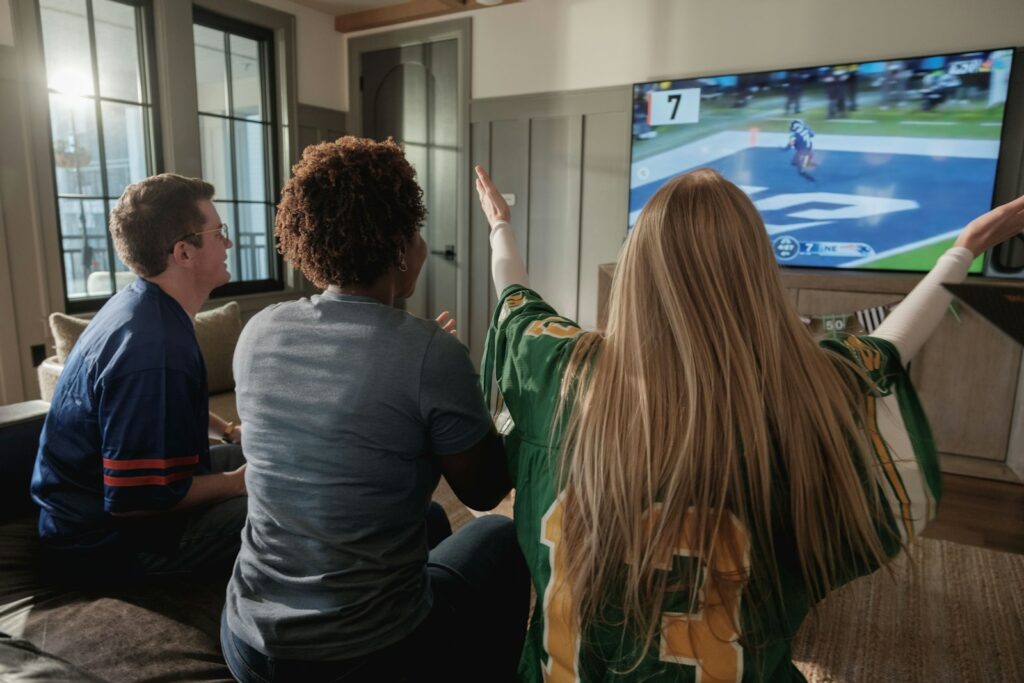
Best TV For Sport Under £500 UK 2026: What To Buy Before The World Cup Final – And The Specs To Skip
Somewhere between the last-16 ties and the final on 19 July, thousands of British households will decide their living room telly isn’t up to the job. Retailers know it, which is why the sub-£500 shelf at Currys is currently the most fought-over territory in consumer tech. The good news: the best TV for sport under £500 in the UK right now is a better machine than a £900 set was three years ago. The bad news: the spec sheets are written to confuse you, and half the numbers on them make no difference to how a football match looks.
In This Article
- Why sport breaks cheap TVs
- Best TV for sport under £500 UK: the current shortlist
- The two specs that earn their money
- The specs you’re paying for and shouldn’t
- The viewing angle problem nobody warns you about
- Turn the motion smoothing on. Yes, on.
- Aerial or app? The 40-second problem
- Last year’s model is this year’s bargain
- Should you wait for prices to drop?
- Where the £500 should actually go
This guide cuts it down to what matters. Sport is the hardest thing a cheap TV does, and the gap between a good budget set and a bad one is wider on a fast counter-attack than it will ever be on a Netflix drama.
Why sport breaks cheap TVs
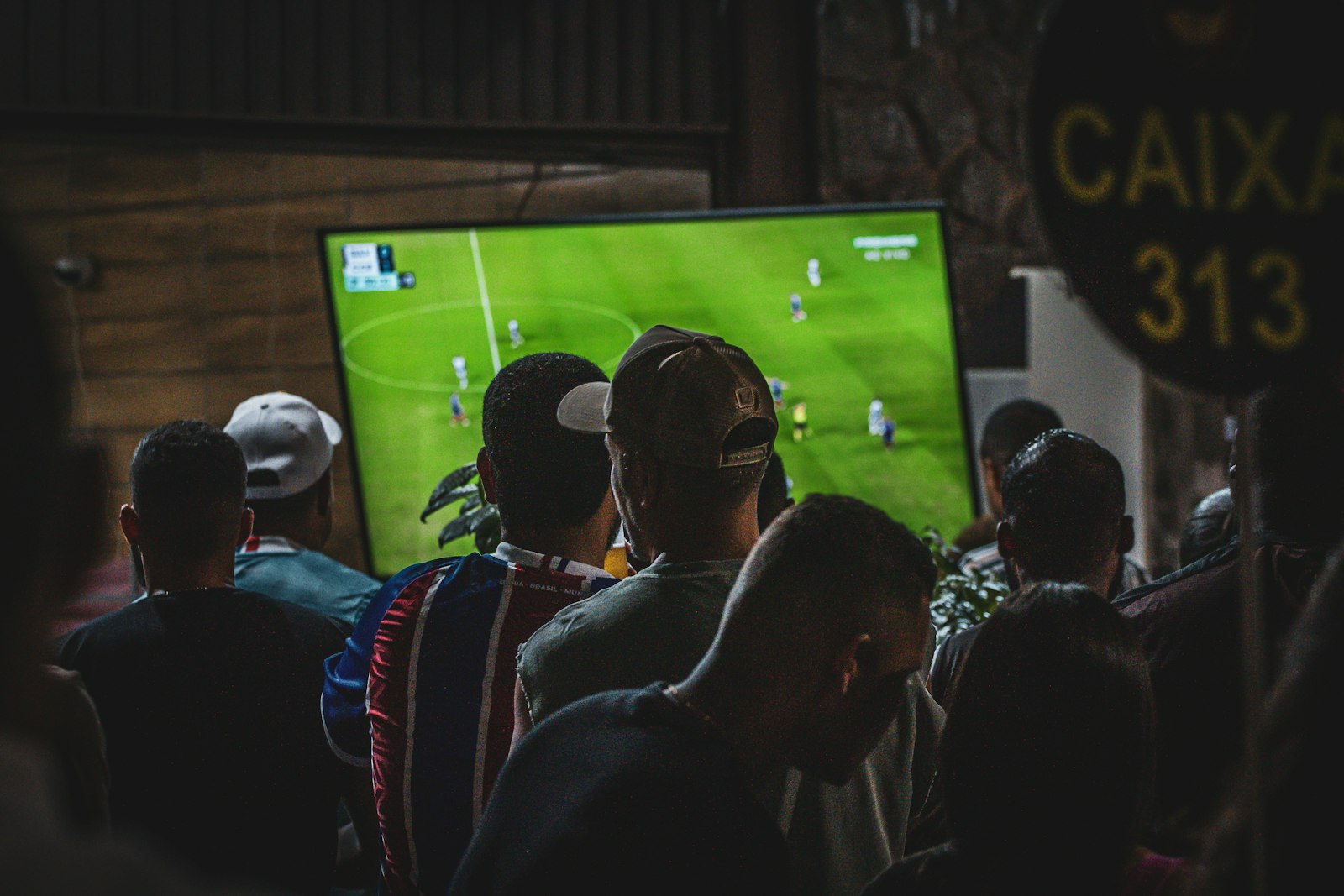
A film gives a television an easy life. The camera moves slowly, the grading hides flaws, and most scenes hold still long enough for the processor to catch up. Live football is the opposite – a wide shot of a full pitch, twenty-two players moving in different directions, constant panning, and grass that turns into a smeared green carpet the moment a cheap panel runs out of talent.
There’s a second problem nobody mentions in the showroom. UK coverage of the World Cup is split between BBC and ITV, and the broadcast signal is still HD at 50 frames per second – not the pristine 4K demo loop the shop floor runs. Your new 4K set spends the whole tournament upscaling, and upscaling quality varies enormously at this end of the market. A set that looks stunning playing native 4K can make a 1080i broadcast look soft and blocky. We covered the kick-off times and channel split in our guide to watching the 2026 World Cup from the UK – the short version is that the knockout games run late into the night, so you’ll be watching in a dark room, where blooming and backlight flaws are at their most visible.
Size makes all of this harder, not easier. The same broadcast stretched across a 65in panel shows every upscaling shortcut, and the temptation at £500 is always to buy the biggest diagonal the budget allows. Resist it slightly. A very good 55in set beats a mediocre 65in one for sport, because the flaws scale up with the screen. The old sofa-distance rule still works as a sanity check: if you’re sitting less than about two metres away, 55in is plenty, and the leftover cash buys the sound the match deserves.
If that’s the route you take, our guide to the best soundbar under £150 was written with the new season in mind.
So the job description is: handle fast motion without smearing, upscale HD broadcast cleanly, and control its backlight in a dim room. Everything else is secondary.
Best TV for sport under £500 UK: the current shortlist
Names first, caveats after. Prices move weekly in July, so treat these as street prices at the time of writing rather than gospel.
Hisense E7 series QLED (55in, around £450-£500). The one to beat at this money. It’s the cheapest route to a native high-refresh panel – the thing that matters most for motion – plus full-array backlighting and proper HDR format support. TechRadar’s sport TV round-up rates the step-up E7 Pro models for exactly this use: bright, colourful, smooth in motion, and big for the money. If the 55in Pro version creeps over budget, the standard E7 undercuts it and keeps most of what counts.
TCL P7K (55in, around £350). The value pick. You give up the fancier backlight and some brightness, but TCL’s motion processing has quietly become very good, and T3’s best-under-£500 list has it as one of the strongest cheap 55-inchers on sale. At this price you can add a soundbar and still come in under budget – which, for match atmosphere, is a better split of £500 than spending it all on the panel.
Samsung CU8000 (55in, comfortably under £500). The safe pair of hands. Samsung’s upscaling of HD broadcast is the best of this group, which matters more this month than any other spec. But it’s a 60Hz panel, so pure motion resolution trails the Hisense. Buy it if your viewing is half sport, half everything else, and you want the polish of Samsung’s interface.
Hisense A6 (55in, around £300). The “it’s only for the tournament” option. Solid colour, 4K, all the apps. And genuinely weak viewing angles – fine for two people straight-on, rough for a room full of mates on kick-off night. Know what you’re buying.
The two specs that earn their money
First: native refresh rate. A 120Hz panel redraws the picture twice as often as a 60Hz one, and while no UK broadcast is transmitted at 120 frames, the faster panel gives the processor room to insert frames cleanly, so a cross-field pass stays a ball rather than a comet. RTINGS’ sports testing keeps reaching the same conclusion: motion handling is the headline number for sport, and a native high-refresh panel beats a 60Hz set faking it with software. That’s the single biggest reason the Hisense E7 leads this list.
Second: backlight control and brightness. Full-array local dimming – lights behind the whole screen in zones, rather than strips along the edge – keeps the white kit and floodlit pitch from blowing out into a glow. And brightness matters even for night games, because a punchy panel keeps colours solid when the room lamp is on.
That’s it. Two specs. If a set under £500 has a native 120Hz panel and full-array dimming, it’s a sport TV. If it has neither, it’s a very nice screen for Sunday-night drama.
The specs you’re paying for and shouldn’t
The marketing sheet will try to sell you the rest. Ignore most of it.
8K is irrelevant – there’s no 8K broadcast, and there won’t be one for years. “AI picture processors” is branding for the upscaler every TV already has; judge the result, not the acronym. 144Hz over 120Hz matters only for PC gaming, never broadcast. And the audio wattage number is close to meaningless: 40 watts through downward-firing speakers in a 5cm-deep chassis still sounds like a crowd cheering inside a biscuit tin. If big-match sound matters to you, our home cinema piece makes the case for putting money into audio before panel size – a £129 soundbar transforms a match more than £129 of extra television.
Voice assistants, solar remotes, ambient art modes – nice, fine, whatever. None of them will help you see whether the ball crossed the line.
The viewing angle problem nobody warns you about
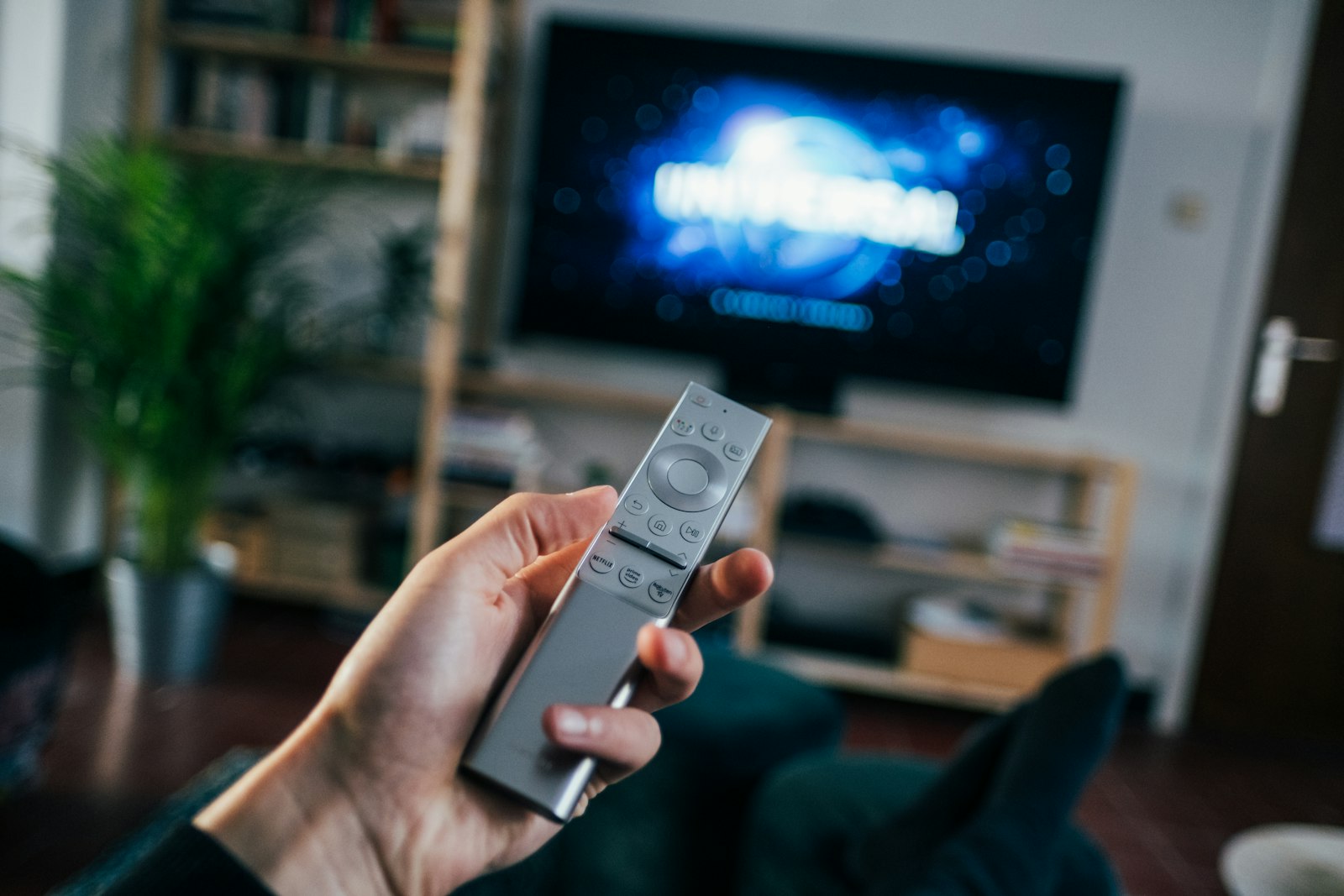
Most TVs at this price use VA-type panels. Deep contrast, great straight-on – and colours that wash out as you move off-centre. In normal use that’s a footnote. On a night when six people are wedged around a three-seat sofa, the two on the beanbag at the side are watching a different, greyer match.
There’s no perfect answer under £500; the wide-angle tech lives in dearer sets. But you can shop around it. The Samsung holds its colour off-axis a touch better than the cheapest Hisense panels, and whatever you buy, mount it as central to the seating as the room allows rather than shoved into the alcove the old set lived in. It’s a free upgrade.
Turn the motion smoothing on. Yes, on.
Received wisdom says motion interpolation – the setting that makes films look like daytime soap – should be switched off the moment the TV comes out of the box. For films, agreed. For sport, the received wisdom is wrong, and I’ll die on this hill.
A 50fps broadcast on a modern panel judders on long pans without some interpolation. The trick is the half setting: dig into the picture menu (Hisense calls it Motion Enhancement, Samsung calls it Picture Clarity), set blur reduction high and judder reduction to a third or half, and turn off the aggressive “smooth” preset. You get a stable, readable pitch without the soap-opera sheen. The one-button “Sports Mode” preset, on the other hand, is usually a lurid oversaturated mess with the smoothing cranked to maximum – skip it and set the picture yourself. Ten minutes, once, and the TV is better for four weeks of football.
While you’re in the menus: if you watch with subtitles on – and as we found earlier this year, half of Britain now does – check the broadcaster app rather than the TV settings. Subtitle lag on live sport is an app problem, not a panel one.
Aerial or app? The 40-second problem
One more decision before kick-off, and it has nothing to do with which TV you bought: how the picture reaches it. A live stream through iPlayer or ITVX typically runs somewhere between 30 seconds and a couple of minutes behind the terrestrial broadcast. That’s the gap between you watching a corner swing in and the neighbours – on an aerial – already celebrating through the wall. If your street has form for this, plug the aerial in.
The apps fight back with picture quality; for recent tournaments the BBC has streamed selected matches in UHD through iPlayer, which an aerial feed can’t match. So the choice is sharper-but-late versus softer-but-live. For a match you care about, live wins. And whichever route you take, wire the TV to the router with an ethernet cable if it’s remotely practical – a 90th-minute buffering wheel has ended more household harmony than any refereeing decision.
Last year’s model is this year’s bargain
The dirty secret of the TV business is that the annual refresh is mostly a badge change. A 2025-range set from the same series is usually 90 per cent of the 2026 version at 70 per cent of the price, and July is when retailers clear them out to make shelf space. If you spot last year’s equivalent of the E7 or the step-up TCL C-series drifting down towards £450, that’s frequently a better buy than anything with this year’s model number on it.
Finding them takes five minutes of decoding. Manufacturers bury the year in the model code – the letter or digit changes annually while the series name stays put – so search the series name plus “2025” and compare. Richer Sounds runs ex-display and clearance stock through its stores with the same six-year guarantee, and manufacturer refurbished sets on eBay’s official outlet stores carry a year’s warranty. Both routes regularly put a set from the shelf above into a £500 budget.
The one thing to check on an older set is the app situation. Broadcast apps get updated for years on major brands, but the bargain-basement badges (the supermarket own-brands and the labels you’ve never heard of) sometimes lose app support alarmingly fast. Stick to the names in this piece and it’s a non-issue.
Should you wait for prices to drop?
The honest answer: a little, but not much, and the timing is against you. Amazon’s July sale usually lands mid-month, and the big retailers price-match it – but that’s cutting it fine for the final, and the discounted stock at this end of the market sells through fast. TV prices then drift down again in late August once the summer stock shifts, which is lovely if you don’t mind watching the final on the old set.
Two buying tips that outlast any sale. Richer Sounds includes a six-year guarantee on TVs and John Lewis a five-year one – cover the discount sheds don’t match, and on a £450 television it’s worth a modest price premium. And measure before you click: the jump from 55in to 65in in the same range is usually £150-£200 at this level, money that’s better spent on sound unless your sofa really is three metres back.
If the weather holds, of course, there’s a rival option for the group-stage replays: skip the living room entirely. Our look at Britain’s outdoor cinema boom covers the projector route – though for a 2am kick-off, the sofa wins.
Where the £500 should actually go
Buy the Hisense E7 if motion is everything and you want the most sport-shaped TV £500 buys. Buy the TCL P7K plus a soundbar if you want the best complete match-night for the money – that’s where my £500 would go. Buy the Samsung if the TV has a day job beyond football. And whichever one lands in your living room, spend the ten minutes in the picture menu before kick-off rather than during half-time.
The bigger question is what you’ll want from the set on 20 July, when the bunting comes down and it goes back to being furniture. Which is worth thinking about now – because the difference between a TV you bought for a tournament and one you bought for the next six years is usually one spec, and it’s never the one on the sticker.
What’s your budget actually buying this month – the panel, or the badge on the front of it?