Reformer Pilates UK 2026: Why Britain Queues for a £32 Machine Class – And What the Mat Does Better
The hardest fitness booking in Britain right now isn’t a Hyrox heat or a boutique spin bike. It’s a bed on springs. Reformer Pilates UK bookings have gone from niche physio territory to the single most oversubscribed slot on studio timetables, with 6.45am classes in Manchester and Leeds carrying waiting lists that would embarrass most restaurants. ClassPass’s latest Look Back report had Pilates as the most-booked workout in the world for the third year running, with reformer bookings up 71% year on year.
In This Article
- What’s actually driving the reformer Pilates UK boom
- What the machine does that a mat can’t
- What a first class actually feels like
- The evidence is decent – just not the way studios sell it
- What you’ll actually pay, studio by studio
- The cheaper routes people actually take
- The £32 problem
- Who should book one anyway
- The £149 machine in your spare room
- Booking a class that earns its price
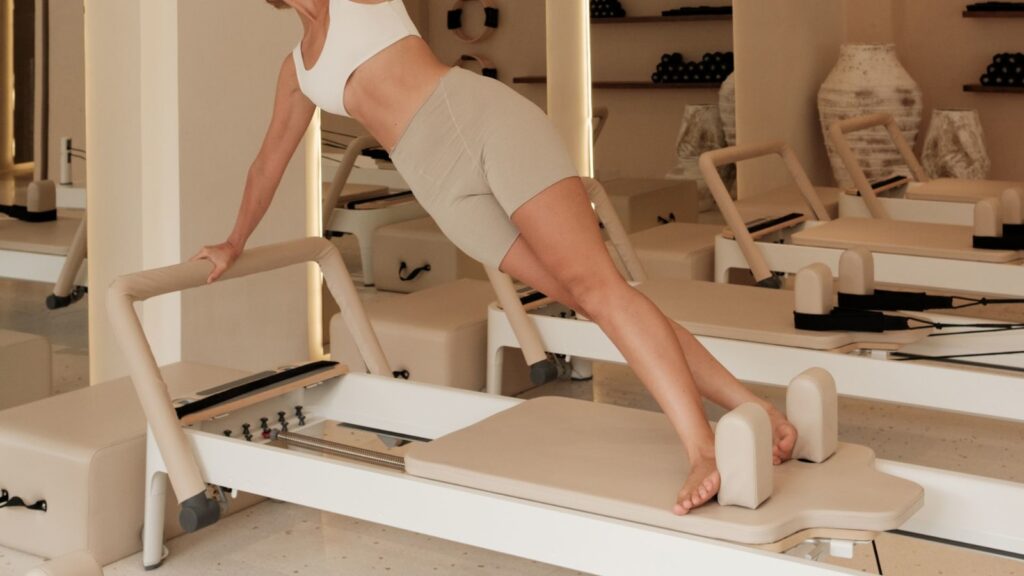
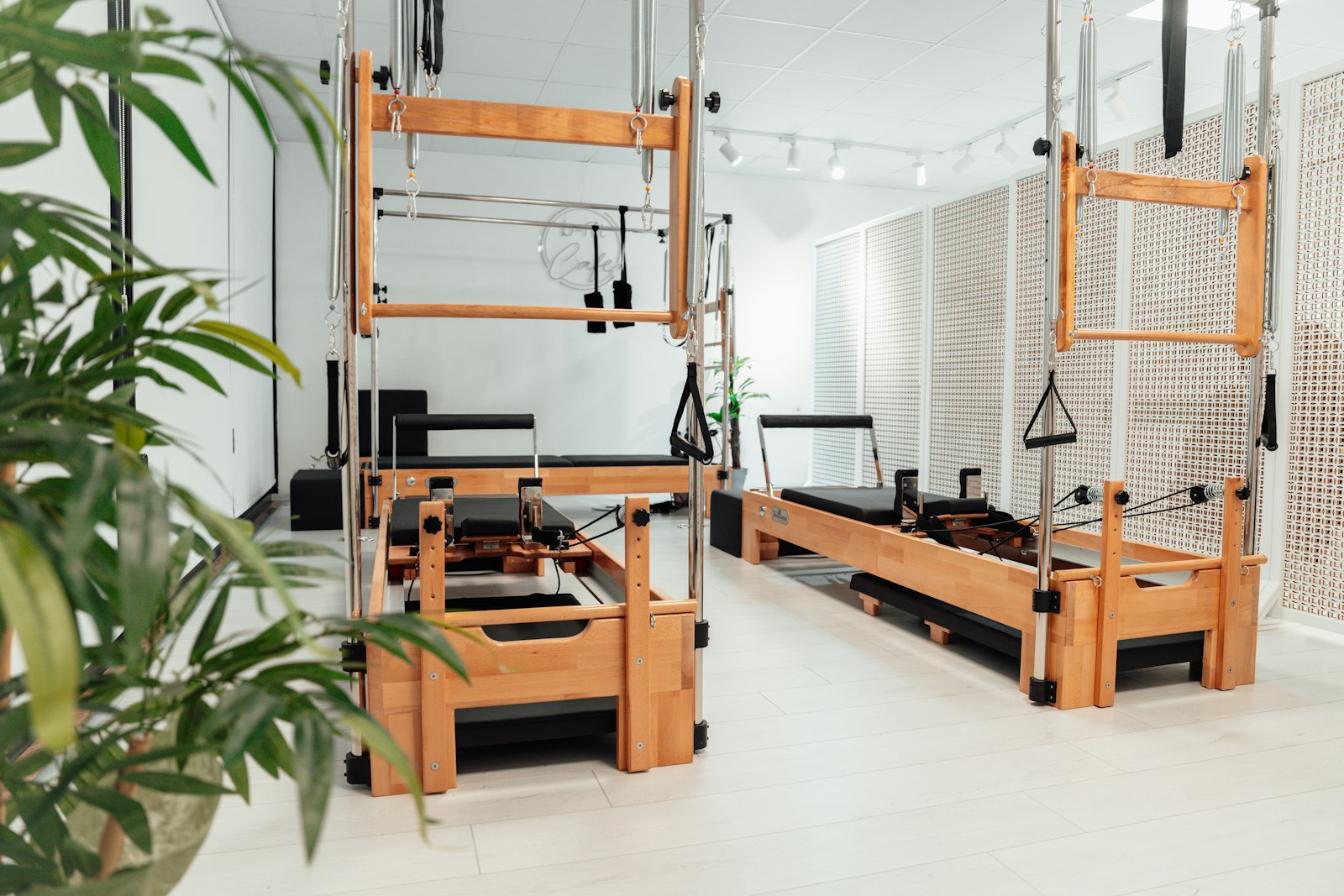
And the machine at the centre of it all is over a century old. Joseph Pilates – a German boxer and circus performer interned on the Isle of Man during the First World War – rigged the first versions from hospital bed springs so injured fellow internees could push against resistance without leaving bed, and the modern reformer – a sliding carriage, a set of colour-coded springs, a footbar and some straps – hasn’t changed in any way that would confuse him.
What has changed is the price. A single reformer class now runs £28 to £38 in London and rarely dips under £18 anywhere else. That makes it, per hour, one of the most expensive mainstream ways to exercise in this country. The machine is brilliant for some people and a £130-a-month indulgence for others, and almost nobody selling classes will tell you which one you are. So let’s do that.
What’s actually driving the reformer Pilates UK boom
Part of it is honest economics. A reformer costs anywhere from £2,000 to £5,000 and takes up more floor space than a sofa, so unlike spin or HIIT it never migrated into spare bedrooms during the home-workout years. If you want the machine, you have to book the machine. Studios noticed.
Part of it is the wider shift in what exercise is for. The past few years have seen strength quietly replace thinness as the goal that sells – the same current behind the creatine surge among UK women – and reformer Pilates sits in a sweet spot: it’s strength work that doesn’t feel like lifting, low-impact enough to do on a bad knee, and it photographs beautifully. Instagram has done more for the carriage and straps than any physiotherapist ever managed.
And part of it is scarcity doing what scarcity does. A reformer studio physically can’t pack more than eight to twelve machines into a room. Every class is small, so every class fills, so every class has a waiting list, so everyone assumes the thing must be extraordinary. It’s the same mechanism that keeps wellness trends circulating long after the evidence has been checked. A full booking sheet is not a clinical trial.
The demographics have shifted too. Five years ago the average UK reformer class was overwhelmingly women in their thirties and forties. Walk into one now and you’ll find retired men sent by their physios, twenty-two-year-olds who found it on TikTok, and a striking number of runners nursing something. The machine has gone from specialist kit to default aspiration, the way spin bikes did around 2016. Studios are opening in market towns that couldn’t sustain a coffee chain.
What the machine does that a mat can’t
Credit where it’s due: the reformer is a genuinely clever bit of kit, and the cleverness is in the springs.
On a mat, you work against your own bodyweight and that’s the end of the menu. If a movement is too hard, tough. The springs change that in both directions. Load them heavy and a leg press on the carriage becomes proper resistance work; load them light and the same springs assist you, holding part of your weight so someone who can’t yet do a controlled roll-up on the floor can do one with help. Counterintuitively, less spring often means harder work for your core, because there’s less supporting you.
The moving carriage adds instability, which forces the deep stabilising muscles around your trunk and hips to fire constantly rather than in bursts. And the machine gives you feedback a mat never will: if the carriage clunks home, you’ve lost control of the movement and you know it instantly.
That combination – scalable resistance, assistance for beginners, built-in feedback – is real and it’s why physiotherapists were using these machines decades before boutique studios put neon signs above them.
What a first class actually feels like
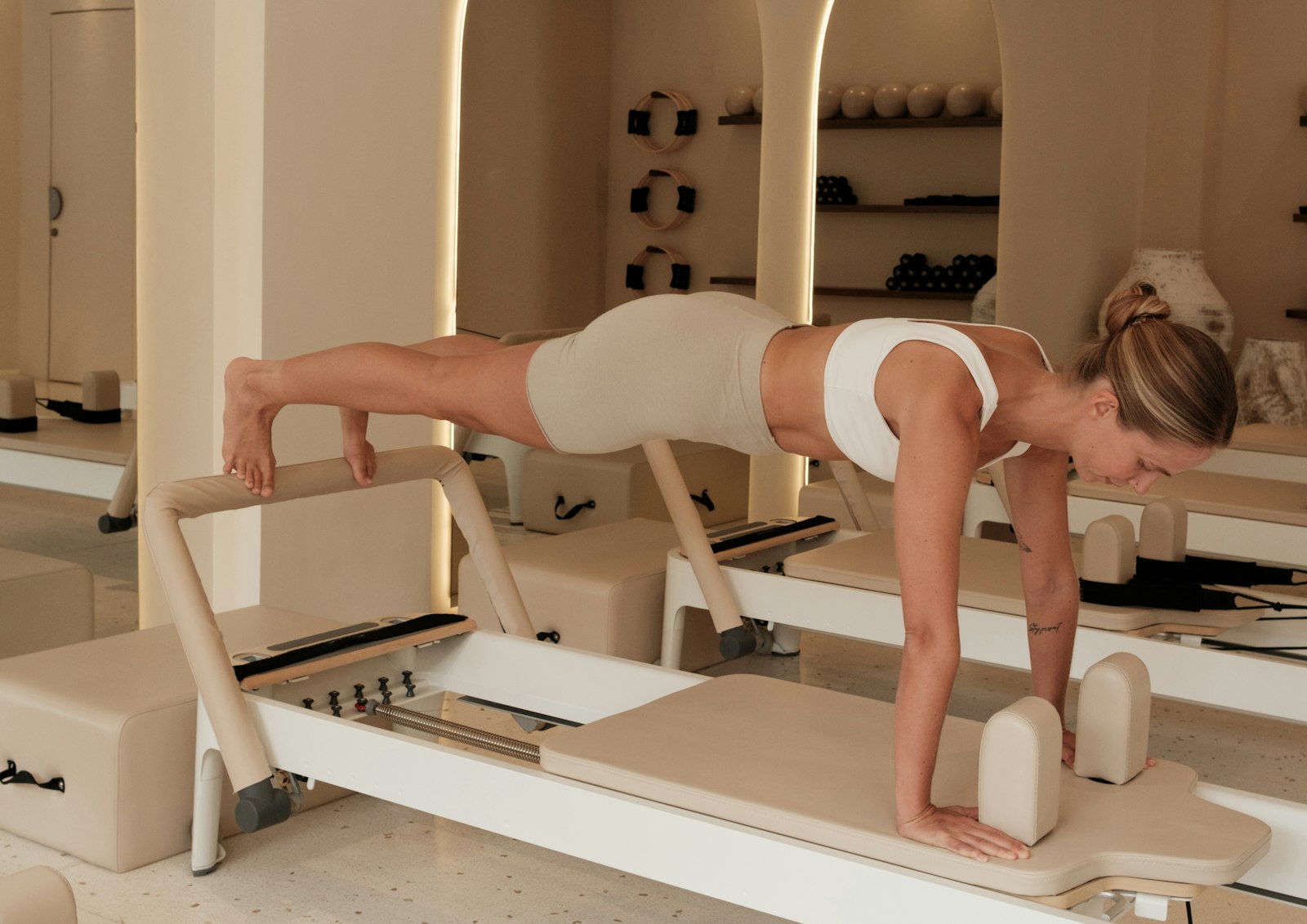
If you’ve never been, here’s the honest preview. You’ll arrive at a studio that smells faintly of eucalyptus, be sold the grip socks you forgot, and be shown to a machine that looks like a rowing boat crossed with a hospital bed. The instructor will say the word “carriage” roughly forty times in fifty minutes.
The first ten minutes are confusing. Every exercise involves a decision about springs – red, blue, yellow, some combination – and until you learn the code you’ll be copying your neighbour and hoping. Footwork comes first in most classes: lying on your back, pressing the carriage out through heels, then toes, then arches. It feels like nothing. Then, around minute fifteen, it starts feeling like quite a lot.
What surprises most first-timers is where the difficulty lives. The big pressing movements are manageable. It’s the small, slow ones – a lunge held while the carriage drifts, an arm circle against one light spring – that leave you shaking. I watched a man who clearly deadlifts twice my bodyweight get visibly humbled by a series of side-lying leg springs in a class this spring, and he wasn’t enjoying the discovery.
You’ll be sore in odd places the next day. Not the quads-and-chest soreness of the gym, but deep in the sides of your hips, between your shoulder blades, through your feet. That’s the stabiliser story from earlier, written on your body.
And you’ll probably want to go back. The format is moreish in a way that’s hard to explain and commercially very convenient.
The evidence is decent – just not the way studios sell it
Pilates does have a proper evidence base, mostly for low back pain. A Cochrane review covering ten trials and 510 participants found low-to-moderate quality evidence that Pilates beats doing next to nothing for pain and disability. The NHS says much the same: good for strength, flexibility and posture, with some evidence of help for lower back pain.
But read the Cochrane conclusion to the end and you hit the sentence the marketing leaves out: there’s no conclusive evidence Pilates is superior to other forms of exercise. It works because it’s structured, progressive movement done consistently – not because the carriage is magic.
The claims worth binning outright are the aesthetic ones. “Long, lean muscles” is the big offender. You can’t lengthen a muscle through exercise; its ends are attached to your bones and they’re staying there. What people call “toned” is simply a bit more muscle with a bit less fat over it, and any resistance work delivers that. Reformer Pilates doesn’t sculpt a different shape of body than dumbbells do. It just costs more per session.
One practical note on the Government-issue basics: NHS guidelines ask adults for strengthening work across all major muscle groups at least twice a week. A decent reformer class counts. But if it’s your only strength work, you’ll plateau within months, because classes rarely add load the way a progressive lifting programme does. Your grip, for one, does almost nothing on a reformer – and grip strength is one of the better health markers we have. Plenty of reformer regulars believe their classes tick that box, and for the first couple of months they roughly do – almost anything strengthens a body unaccustomed to work. Then the springs run out of road. Strength keeps improving only while the resistance keeps progressing, and a reformer has nowhere left to progress to. A barbell does. So do resistance bands, at about a fiftieth of the price. Say that at the studio and watch the room go quiet.
What you’ll actually pay, studio by studio
Studios are cagey about single-class prices, and you can see why. Lined up in a row they look ridiculous.
So here is the row. These are the rates advertised in August 2026; they move, and the London ones move upwards.
| Studio or category | Single class | Cheaper route |
|---|---|---|
| Ten Health & Fitness (London) | £38 | £30–£35 in packs |
| Heartcore (London) | £35 | Block booking; privates run £130–£220 |
| Frame (London) | £19–£23 | One of the few honest London prices |
| Central London drop-in, typical | £28–£45 | Chelsea, Mayfair and Notting Hill sit at the top of that band |
| Outer London and commuter towns | £25–£38 | Off-peak slots usually £3–£5 less |
| Regional cities | £18–£28 | Intro offers of three classes for £30 are common |
| Mat Pilates, community hall | £8–£12 | No booking app, no eucalyptus, same principles |
Now do the arithmetic the studio does. Ten’s £38 buys fifty minutes, which is £45.60 an hour of instruction that you are sharing with seven other people. Fill eight machines and that hour brings in a little over £300. Reformer studios are not opening in market towns because Britain suddenly discovered its transverse abdominis.
The cheaper routes people actually take
Intro-offer hopping is the open secret. Three studios, three introductory blocks, and you have got most of a term’s training at roughly mat prices while working out which instructor you like. Studios hate it and price for it anyway.
Off-peak is the other one. The 6.45am and 6.30pm slots are the ones with waiting lists; the 11am Tuesday class is often half empty and a few quid cheaper, and you get corrected properly because the instructor has time. Aggregator apps like ClassPass work out cheaper per class than most studio drop-ins, though the good studios cap how many aggregator spots they release and the popular times go first.
The £32 problem
Here’s the position this magazine is prepared to take: for most healthy people under 50, reformer Pilates is not worth the money as a primary workout, and the industry knows it.
Run the numbers. Three reformer classes a week at £30 is £360 a month – £4,300 a year, roughly a used car. For that you could have a full gym membership, a monthly block of mat Pilates at £8 to £12 a class, and a physio appointment every quarter, with change. The NHS even publishes free Pilates videos that cover the fundamentals for nothing.
Mat Pilates is not reformer-lite, either. Instructors will quietly tell you the mat is often harder, because there are no springs helping you. What the mat lacks is the theatre – and the theatre, if we’re honest, is a decent chunk of what £32 buys. The dim lights, the machine that looks like it belongs in a Bond villain’s gym, the eight-person class that feels like a private appointment. None of that is worthless. It’s just not physiology.
If the waiting list vanished tomorrow, a fair few regulars would too.
There’s also a quieter gap in what the reformer offers, and it matters more the older you get. Because the machine is deliberately low-impact, it does little for bone density – bones adapt to impact and heavy loading, not to smooth spring resistance. For women approaching or past menopause, when bone loss accelerates, a reformer habit is a lovely supplement but a poor substitute for lifting something heavy or putting some impact through your skeleton. The same gap shows up in the other direction among the people doing Hyrox training, who get plenty of load and not much of the slow control the reformer teaches. And if you are building muscle at all, the springs are only half the job – the protein side of it matters more than most studios ever mention. No studio brochure mentions this. Plenty of physiotherapists will.
Who should book one anyway
Having said all that – there are people for whom the reformer is worth every penny, and it’s worth being precise about who they are.
People coming back from injury, or nervous of pain, top the list. The assistance springs let you strengthen through ranges you couldn’t manage against gravity alone, which is exactly why physio-led equipment classes exist. Complete beginners with poor body awareness get more from the machine’s feedback in a month than from a year of guessing on a mat. Older adults do well for the same reason, plus the reformer’s kindness to joints. It sits alongside the other low-impact habits Britain has taken to this year, including the Japanese walking method and a Saturday parkrun, both of which cost nothing at all. And desk workers with locked-up hips and rounded shoulders tend to feel dramatically better within weeks, because the reformer forces thoracic and hip mobility that a spin bike never asks for.
Runners and cyclists using it as their cross-training day are making a reasonable choice too – it pairs well with the slow-burn zone 2 work half of Britain’s runners have adopted this year.
There’s one more group, and it might be the biggest: people who simply won’t do strength work any other way. If the aesthetics and the booking app and the £32 sunk cost are what get you training twice a week, that beats the cheaper programme you never start.
The £149 machine in your spare room
The most interesting thing that happened to reformer Pilates this year had nothing to do with studios. Lidl put a Crivit reformer in the middle aisle at £149, or £99.99 with a Lidl Plus card, and the online preorder went in a matter of hours.
Home machines now run from that £100-ish middle-aisle price up through Amazon’s Nexace at around £499.99 and a crop of foldable steel-frame models near £525 that arrive with a box, footbar and straps included. At the top of the market, FOLD’s Original goes after studio kit properly – wooden frame, five springs, two-person delivery, a showroom in Notting Hill – and prices accordingly.
A £149 reformer is not a £4,000 studio reformer. The carriage is shorter, the springs are lighter, the frame flexes, and folding it away every night is exactly the faff it sounds like. Nobody is correcting your form either, which on a machine with real pinch points is not a small thing.
And yet. Here is a view most fitness writing won’t give you: for a lot of people the cheap home reformer is the better buy. The thing standing between you and twice-weekly Pilates is almost never equipment quality. It is a 6.45am booking, a twenty-minute drive and £30 a pop. Five studio classes pay for the Lidl machine. Eighteen pay for the £525 one. Everything after that is free.
The sensible order is to do four or five studio classes first so somebody qualified tells you what a neutral spine feels like and which spring does what, then buy the machine and use the studio occasionally to reset your technique. Doing it the other way round – machine first, YouTube second – is how people end up with a folded reformer under the bed by November and a hip flexor problem to go with it.
Booking a class that earns its price
Quality varies wildly, because “reformer instructor” is not a protected title. Some teachers have 450+ hours of equipment training; others did a weekend mat conversion course and were on the timetable by Monday. Ask. A good studio will answer proudly.
Class size matters more than brand. Eight to ten machines with an instructor who walks the room and touches in corrections is a different product from fourteen machines and a teacher on a headset performing choreography. The “Pilates HIIT” hybrid classes that jump the carriage around to a playlist are cardio with props – fun, but don’t book them expecting the motor-control benefits above.
Watch the pricing structure as well. Nearly every studio runs a generous intro offer – three classes for £30 is common, sometimes an unlimited fortnight – and the business model relies on converting you to a monthly block before the novelty wears off. Take the intro offer at two or four different studios before committing anywhere. The difference between a good instructor and an indifferent one is bigger in reformer than in almost any other class format, because so much of the value is in the correction.
A proper beginner induction is non-negotiable; the machine has real pinch points and spring settings you shouldn’t be guessing at. And budget for the sock racket – most studios insist on grip socks and will happily sell you a pair at reception for £12 to £15. Buy them online for a fiver first, and if you’re interested in what’s on your feet the rest of the week, our look at the barefoot shoe takeover covers the same grip-and-stability logic.
The reformer will still be here when the boom cools – it’s survived a hundred years already, most of them unfashionable. The question worth sitting with before you tap “join waiting list” is this: are you booking the machine, or are you booking the scarcity? And if a mat, a pair of dumbbells and £300 a month back in your pocket would do the same job for your actual body – what is it you’d really be giving up?
Sweat hard in a heated studio and hydration matters, though whether you need a dedicated electrolyte powder is another question worth asking.