
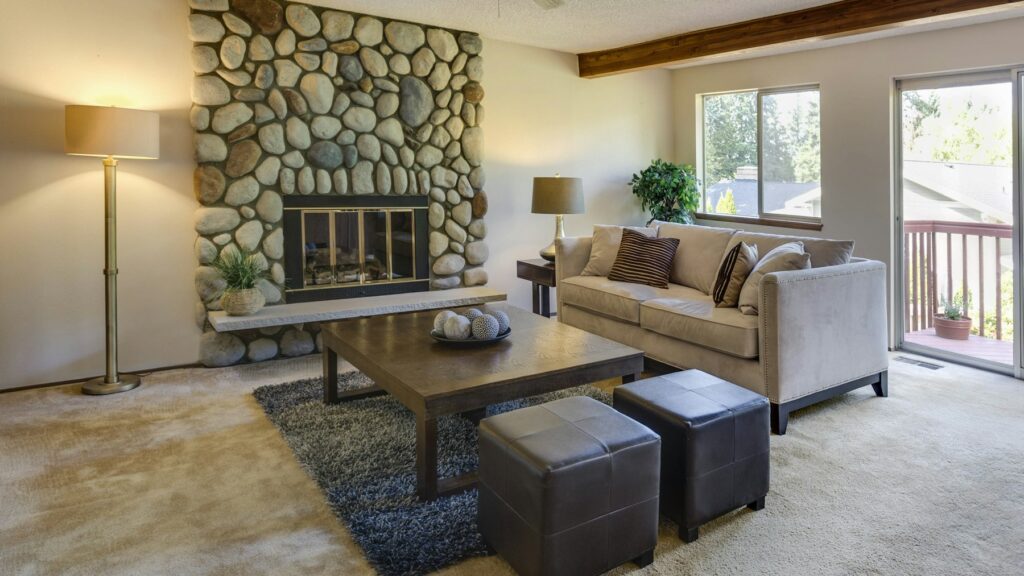
Carpet Trends 2026: Why Britain’s Floors Are Going Soft Again – And the 75p Fleece Behind the £45 Wool Twist
For two decades the defining sound of British home improvement was carpet coming off the gripper rods. Skips outside terraced houses filled with perfectly serviceable twist pile while we laid laminate, then engineered oak, then several hundred acres of grey luxury vinyl. That project is now running in reverse. The carpet trends 2026 forecasts all point the same way: soft floors are back, fitted wall to wall, in colours nobody would have dared order ten years ago. And the people fitting them will tell you their autumn diaries are filling up faster than usual.
In This Article
- How Britain talked itself out of carpet
- Carpet trends 2026: what people are actually ordering
- Why hard floors ran out of road
- The 75p fleece and the £45 carpet
- What a soft floor costs in 2026
- How to read a carpet label without being had
- Where carpet still has no business
- If you’re buying this autumn
This isn’t nostalgia for swirly pub carpet. It’s a correction, and it was overdue.
How Britain talked itself out of carpet
Fitted carpet was a British institution in a way it never quite was anywhere else in Europe. Kidderminster and Axminster are carpet towns the way Stoke is a pottery town, and by the 1990s wall-to-wall covered nearly every floor in the country – bathrooms included, which admittedly nobody should defend. Then came the Changing Rooms years. Click-together laminate made hard floors cheap for the first time, property programmes taught a generation that buyers wanted “original floorboards”, and the dust mite panic of the early 2000s handed the whole exercise a medical excuse. By the 2010s it had hardened into doctrine: carpet was for grannies, hard floors added value, and if you were a landlord, grey LVT was the only sensible answer because you could mop it between tenants.
Some of it was true. Nobody misses carpeted bathrooms.
But the doctrine outran the evidence. We stripped floors in Victorian terraces that were never built to be bare – the gappy builder’s pine under the old bedroom carpet was a subfloor, not a feature – and then wondered why the room was cold and the neighbours could hear every footstep. Sanding your floorboards became a rite of passage that mostly produced draughty rooms with nice photographs. That’s the unfashionable truth of the floorboard decade, and the market has slowly worked it out.
Carpet trends 2026: what people are actually ordering
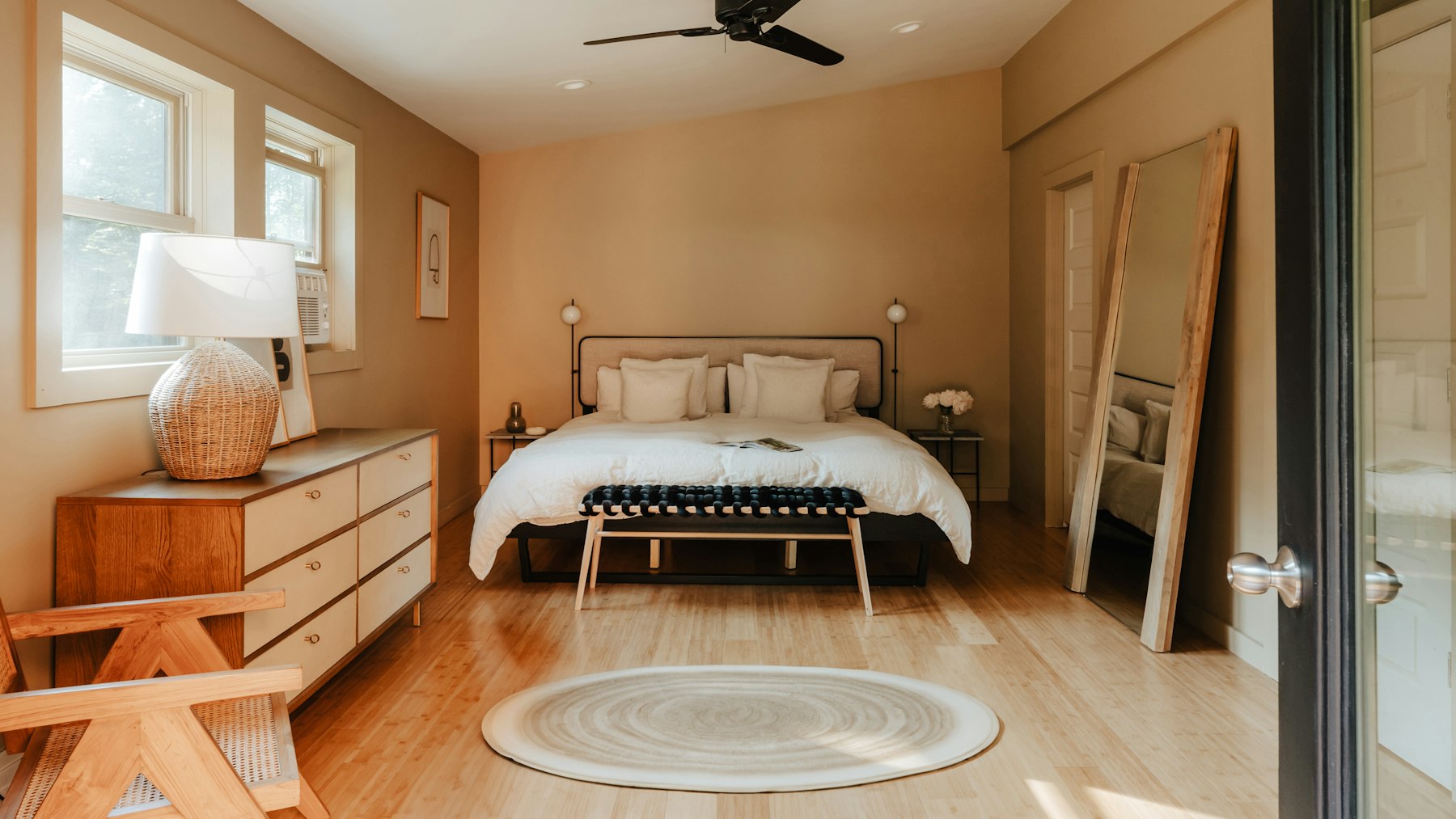
The interiors magazines and the trade agree on the direction, which doesn’t happen often. Livingetc’s carpet trends round-up puts wall-to-wall back at the centre of things, and the colours are warm and grounded: soft browns, terracotta, olive, muted clay. Dark, moody fitted carpet – the deep greens and bitter chocolates that would have seemed reckless in 2016 – is going into bedrooms and snugs. Texture is doing a lot of the work too: chunky loops, boucle-style weaves, and natural fibres like wool and sisal rather than the flat, apologetic pile of the grey years. British weavers such as Brintons and the natural-flooring names like Crucial Trading and Alternative Flooring are suddenly the ones setting the tone.
The common thread is that none of it is grey. Grey carpet didn’t date so much as confess – it was the floor you ordered when you didn’t want to make a decision, and it made every room feel like a new-build showhome on completion day. The 2026 orders are floors that join in with the room. If you’ve already gone in for colour drenching upstairs, a chocolate wool pile finishes the job in a way pale oak-effect planks never will.
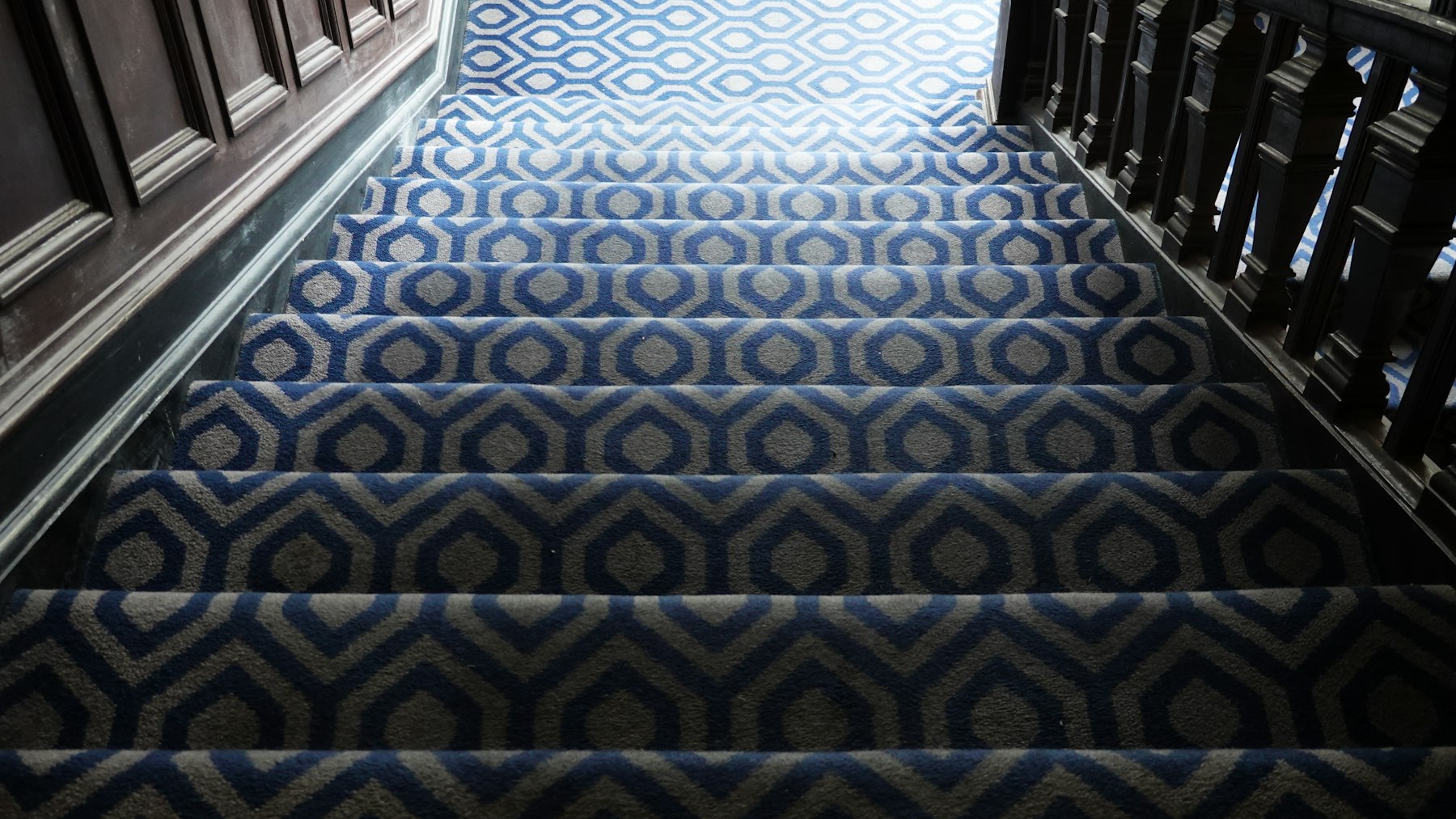
And stripes are back on stairs. A striped runner up a painted staircase – Roger Oates if money is no object, a Cormar stripe if it is – remains the fastest way to make a 1930s semi look like it cost more than it did.
Why hard floors ran out of road
Start with the noise. Open-plan living filled Britain’s ground floors with hard, parallel surfaces, and everyone who lived with one discovered what acousticians already knew: sound bounces. The clatter of a dropped pan, the echo on video calls, the impact noise through the ceiling of every converted flat – hard floors made all of it worse. Plenty of leasehold flats have a clause requiring carpet or equivalent sound insulation, which thousands of LVT-layers discovered only when the downstairs neighbour started keeping a diary.
Renters had no say in any of this, which is partly why the reaction has landed now. A decade of grey plank flooring and greige walls turned rented Britain into one long dentist’s waiting room, and the first thing a lot of tenants do on moving day is unroll a rug big enough to hide the floor entirely. Now the older end of that generation is buying, and fitters report the same pattern over and over: carpet ordered for every upstairs room within months of completion. Ask anyone who’s spent six winters on cold vinyl what they wanted from their first bedroom.
Then there’s warmth. Carpet is rated in togs like a duvet, and a decent pile over 10mm underlay is the difference between a bedroom floor you can stand on barefoot at 7am in January and one you can’t. After four winters of watching energy bills, a floor that holds heat stopped being a soft luxury and became a line in the budget.
The timing fits a bigger shift as well. Britain has spent the last couple of years quietly putting the walls back – we’ve covered the return of the separate dining room and the rise of the broken-plan kitchen – and separate rooms take carpet in a way one big echoing space never did. A snug wants a soft floor. That’s half the point of a snug. The walls themselves are being papered again too, which we’ve covered in our wallpaper trends 2026 piece.
The 75p fleece and the £45 carpet
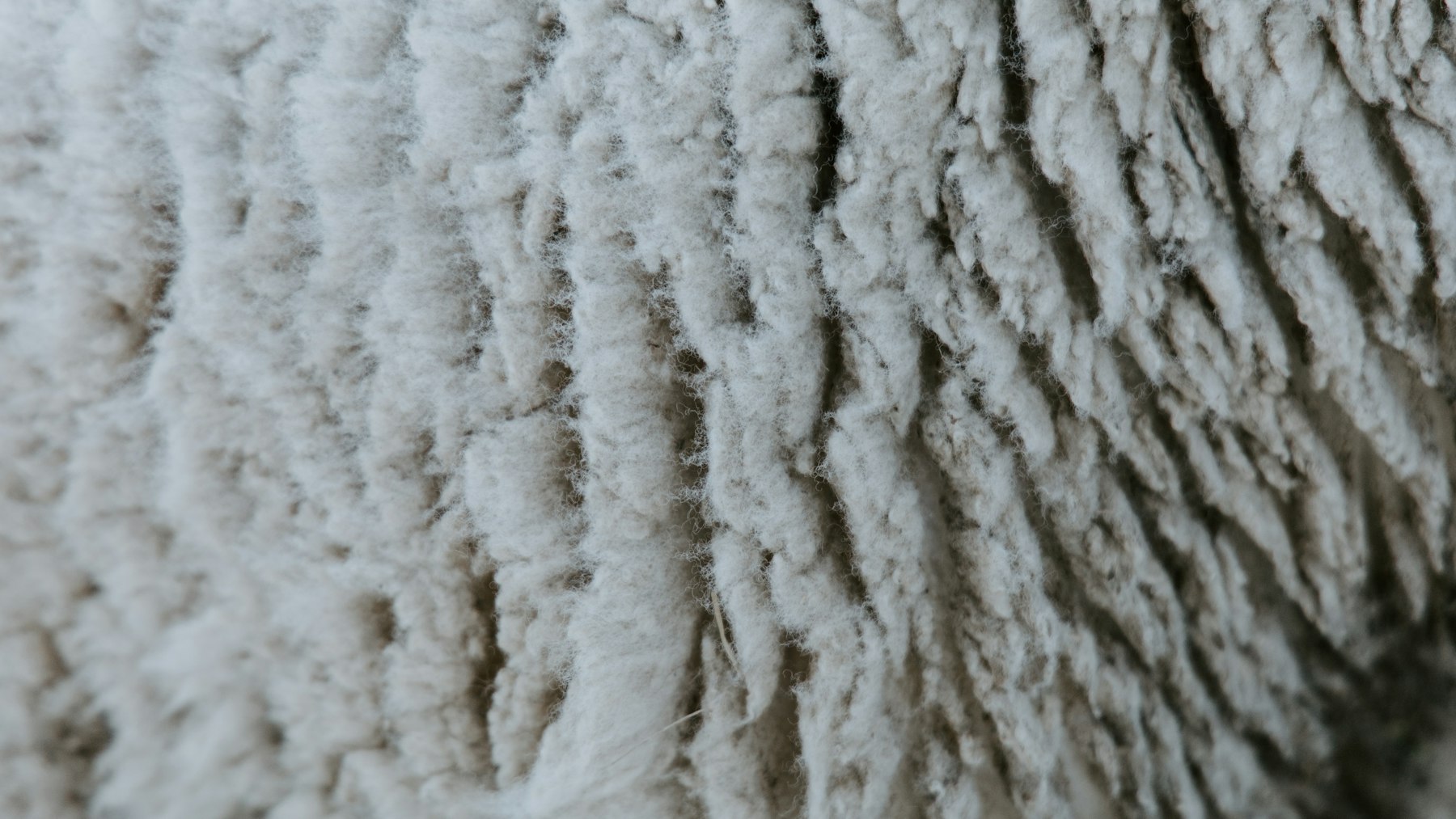
Here’s the strange part of the wool revival. British Wool has in recent years paid farmers around 30p a kilo for core grades of fleece – roughly 75p for a typical clip, when shearing the sheep costs more than double that. Farmers Weekly has tracked fleece values sitting below £1 for years, and in 2024 Lincolnshire farmers burned their fleeces in protest at what they called measly prices. Meanwhile wool carpet starts around £30 a square metre, and a good 80/20 wool twist runs to £40 or £45.
The gap isn’t profiteering, for the most part. Between the sheep and your stairs sit scouring, spinning, dyeing, weaving and two sets of margins, and coarse British fleece needs blending with finer imported wool to make a soft pile. But carpet is the single biggest use for British wool, so a wool floor does put something back into an industry currently paid less for the fleece than the haircut costs.
Is wool worth the premium? On stairs and landings, yes. It springs back where synthetic pile flattens into sad tramlines within a couple of years, it’s naturally flame-resistant, and it doesn’t shed microplastics every time you hoover. But go in with your eyes open: moths adore it, red wine on a pale wool loop is an emergency, and it costs three to four times what polypropylene does. Polypropylene has one party trick wool can’t match – you can clean it with diluted bleach – which is why it stays the right answer for playrooms and anywhere a toddler eats.
Whatever you choose, you’ll need a vacuum that can keep up with it. Our guide to the best cordless vacuum under £250 covers the budget sticks worth buying and when a corded model makes more sense.
What a soft floor costs in 2026
The numbers, roughly. Budget polypropylene twist starts at £6 to £9 a square metre and does the job in a spare room. Mid-range 80/20 wool twists – the Cormar territory most fitters recommend by default – sit between £25 and £40. Pure wool loops and heavy weaves run £40 to £60 and beyond before you’ve looked at anything with a heritage name on it. Underlay adds £4 to £9 a square metre, fitting another £3 to £6, plus grippers and door bars.
Take a 4m by 4m bedroom: 16 square metres, call it 18 once the fitter allows for waste. In budget polypropylene with decent underlay you’re at £330 or so all in. The same room in an 80/20 wool twist lands between £700 and £800. Stairs cost more per metre than any other surface in the house – more cutting, more labour, more wear – which is exactly why they’re the wrong place to economise.
The £4 underlay is the false economy. Underlay is what you’re walking on; the carpet is just the layer you can see. A mid-priced carpet on good underlay outlasts and outfeels an expensive one on cheap foam, and it’s the one upgrade fitters consistently push because it’s true, not because it’s lucrative.
Where you buy has changed shape too. Carpetright collapsed into administration in 2024 and Tapi picked up the brand, so the high street has thinned to a couple of chains plus the independents that survived – and the independents that survived tend to be the ones that were good. Get the independent’s quote before you sign anything, and take “free fitting” offers apart before believing them. The fitting is in the price somewhere. It always is. And ask about roll ends while you’re there – a good independent’s back room usually holds enough remnant to do a box room for £60.
How to read a carpet label without being had
Showroom labels are written to make comparison difficult, so ignore the range names and look for four numbers. Pile weight, in grams per square metre, tells you how much material you’re getting: 700g is entry level, 1,000g is respectable, 1,500g is heavy. Density counts for more than weight, and you can test it with a thumb – press into the sample, and if you can feel the backing easily, that pile will be flat in the doorway within a year. Twist count is the third: the tighter the yarn is twisted, the better it springs back, and “heat-set” on a synthetic means the twist survives cleaning. The fourth is the wear rating – stairs need the “heavy domestic” stamp even if the bedroom doesn’t.
“80/20” means 80 per cent wool to 20 per cent nylon, and the nylon isn’t a cheat. It’s the reinforcement that lets the wool keep bouncing back without wearing thin, which is why fitters rate the blend above pure wool for stairs. A 50/50 blend at an 80/20 price is the one to walk away from.
Two label words deserve open suspicion: “luxury”, which means nothing at all, and “stain-free”, which means polypropylene and is fine so long as they’re charging polypropylene money for it.
Where carpet still has no business
The comeback has limits, and it’s worth being blunt about them. Bathroom carpet stays dead; anyone who lived through its 1970s heyday knows exactly why. Kitchens, no. Under a dining table where children eat, brave verging on reckless.
Hallways are the tempting mistake. The first two metres inside the front door take more grit and water than the rest of the house combined, and fitted pile there goes grubby by February no matter what the sample card promised. Boards or tiles with a washable runner will still look respectable in five years. And if the household includes a large dog, honest advice is to keep carpet upstairs and accept a hard-floored ground floor – some battles aren’t worth fighting twice a week with a rubber glove.
Everywhere else – bedrooms, stairs, landings, snugs, the room you watch television in – the argument for hard flooring was always thinner than the property programmes made out.
If you’re buying this autumn
Autumn is the trade’s high season – the re-carpeting rush before Christmas is real – so the sequence matters. Book the estimator in September, order by early October, and you’ll have it down before the relatives arrive. The logic is the same as booking the log burner installer in August: the diary fills long before the cold does. Take samples home and look at them in evening lamplight, not showroom strip light, because warm browns shift dramatically between the two. And order a metre more than the plan says you need; offcuts make doormats, patches and cat-scratch repairs for a decade.
The more interesting question is what the next round of skips will hold. Twenty years ago they were full of Axminster; before long they’ll be full of grey plastic planks, and the great softening will be under way in earnest. When your floor’s turn comes, what’s going down – something warm, or another decade of click-together?