
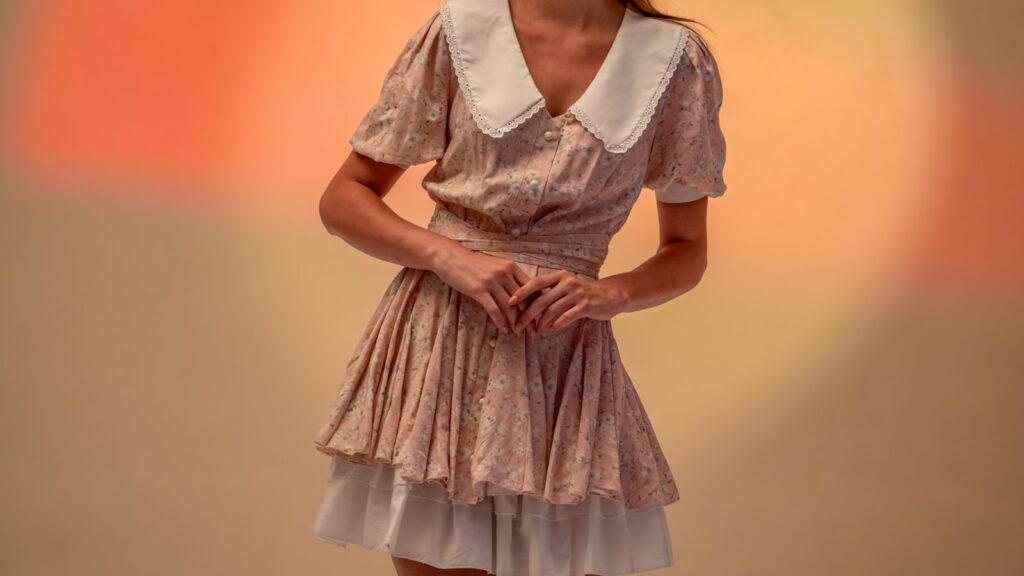
Drop Waist Dresses UK 2026: How to Wear the Trend Quietly Taking Over
Editor’s note (May 2026): We have published a fuller, more recent piece on this trend – read the updated UK drop-waist dress 2026 guide instead. This earlier piece is kept live for context.
In This Article
- Why drop waist dresses are everywhere in 2026
- What counts as a drop waist dress in 2026
- Who drop waist dresses actually suit
- Where to shop drop waist dresses on the UK high street
- How to style a drop waist dress for spring and summer
- Drop waist dresses for weddings, work and everyday
- The drop waist dress mistakes to avoid in 2026
Drop waist dresses are the dress shape of UK 2026, and that much is clear from a single scroll through the spring/summer runways or a quick walk down any high street. The silhouette – waist seam dropped to the upper hip, skirt falling away from there – has turned up at Chanel, Tory Burch, Versace and Ferragamo, and the high street has answered fast. Zara, M&S, H&M, & Other Stories, COS and Mango all have their take in stock right now, and most of them are selling through within a fortnight.
If your only mental image of a dropped waistline is a 1920s flapper costume or a sticky teenage bridesmaid dress, the new version will surprise you. It’s softer, longer, and significantly easier to wear. Here’s how the trend actually plays out for spring and summer in the UK, who it suits, where to buy it, and the styling rules worth following.
Why drop waist dresses are everywhere in 2026
The story starts on the runway. British Vogue called drop-waist silhouettes one of the five dress trends already defining 2026, citing Chanel’s deceptively simple jersey numbers and Tory Burch’s pleated knee-skimmers as the reference points. Versace and Ferragamo followed suit, as did JW Anderson and Simone Rocha at the more directional end.
The high street caught on early because the shape solves a real problem. After several seasons of corseted, nipped-in tailoring, shoppers are looking for something that flatters without constricting. A drop waist dress does exactly that – it nods to the body without pinching it. Marie Claire UK’s spring/summer 2026 trend report notes the same shift, pairing drop waists with bandeau necklines and softer fabrics as the new uniform of the season.
There’s also the cost-per-wear argument. Unlike the more demanding trends of 2026 (sheer panels, bubble hems, exposed corsetry), a drop waist dress earns its spot in the wardrobe. Worn with sandals it’s a barbecue dress; with boots and a blazer it carries through autumn.
What counts as a drop waist dress in 2026
The defining feature is simple: the waist seam sits below the natural waist, somewhere between the bottom of the ribs and the top of the hip. The skirt then falls from that point – either gathered, pleated, A-line or panelled. A pencil skirt below a drop waist almost never works, and the runways largely confirm this; nearly every standout SS26 example used some form of soft volume from the hip down.
The 2026 versions tend to share a few details. The torso is usually fitted but never tight. Necklines are often square, scooped, or bandeau, rarely a deep V. Skirt lengths land at three points – just above the knee for the more retro styles, mid-calf for the editorial midi version, and ankle for the romantic, broderie-leaning takes. Anything between mid-thigh and just above the knee starts feeling more 2010s body-con and less 2026.
Who drop waist dresses actually suit
This is the question that crops up most, and the answer is more generous than the trend’s reputation suggests. The drop waist works on most body shapes, provided you choose the right skirt fullness and length for your proportions.
If you’re shorter (5’4″ and under), look for a drop waist that sits higher rather than lower – more upper hip than lower hip – and pair it with a heel of any height to keep the leg line going. A midi length with a soft pleat is more flattering on a petite frame than a true 1920s knee-skimmer, which can stop the eye in a difficult place.
If you have a defined waist and are nervous about losing it, choose a drop waist with a little gather or shirring at the seam itself. This creates a visual second waist higher up while still letting the skirt swing. Anything with a self-belt around the dropped seam also helps reframe the silhouette without abandoning the trend.
Curvier figures often actually do better in a drop waist than expected, because the lower seam skims over the hip rather than sitting on its widest point. The Stylist team’s edit of the best drop-waist dresses has consistently featured high street picks that flatter a range of shapes – the crucial detail is fluid fabric rather than anything stiff or boxy.
Where to shop drop waist dresses on the UK high street
The supply is unusually broad this season, which is good news for anyone trying to test the trend on a budget.
Zara is the most aggressive on price and turnover, with at least four drop waist styles in store at any given time – look at the linen-blend midis and the jersey body-skimmers. M&S has leaned into the more wearable end, with drop waist tea dresses in florals and broderie that feel made for a UK summer. & Other Stories and COS occupy the design-forward middle, with sharper tailoring and better fabric, while Whistles and Hush handle the elevated end without straying into special-occasion pricing.
For the more romantic, fringe-meets-vintage version of the trend, the smaller UK independents – Damson Madder, Sister Jane, Rixo – have all done it well, and prices sit between £80 and £180. If you’re willing to spend more, Toteme’s drop waist shifts and Khaite’s slip versions are the ones being copied across the high street.
How to style a drop waist dress for spring and summer
The shoes matter most. The runway styling is consistent on this point – flats, kitten heels, slingbacks, ballet pumps and pointed flats all work; chunky trainers, flatform sandals and platform heels generally don’t. The reason is proportional. A drop waist already lengthens the torso, which can leave the leg looking shorter; a pointed or low-vamp shoe lengthens the leg back out. A Birkenstock-style chunky sandal or a thick-soled trainer truncates it.
Bag-wise, anything that sits above the dropped waist seam – so a shoulder bag with a short strap, or a top-handle – keeps the eye moving up the body. A long crossbody can fight visually with the skirt seam, which is rarely what you want.
For layering, the smartest pairing is a tailored blazer. Cropped boxy jackets clash with the dropped waistline because they double up the horizontal break across the body. A longer single-breasted blazer that hits at the hip or just below works far better. The same logic applies to cardigans – go long or skip them.
If you fancy a more directional look, the drop waist plays well with this season’s quietly returning boho trend, particularly when you choose a broderie-anglaise or tiered cotton version. Throw a thin scarf at the neck, swap to flat sandals, and you’re firmly in the spring 2026 mood.
Drop waist dresses for weddings, work and everyday
For wedding guest wear, the drop waist is one of the more interesting alternatives to the predictable midi everyone has worn for the last three summers. A jewel-tone satin or jacquard drop waist, finished with a kitten heel and a small clutch, reads polished without trying too hard. If you’re working out the rest of your summer wedding wardrobe, it’s worth reading our guide to summer wedding guest dressing UK 2026 alongside this piece – the two trends overlap more than you’d expect.
For office and smart-casual settings, a darker, more structured drop waist in a fine wool or crepe wears like a normal dress with a slightly more current shape. It needs no special handling – heels or loafers, a blazer if you want one, done.
For everyday, the broderie and printed cotton versions earn their keep through the British summer’s usual indecision. Pair with white trainers (yes, despite what we said about chunky soles – white slim trainers work, the chunky kind don’t) and a denim jacket, and it covers anything from school run to garden lunch.
The drop waist dress mistakes to avoid in 2026
A few quick warnings, drawn from watching how this trend is being styled (and mis-styled) on the UK high street right now.
Avoid drop waists that sit too low, particularly anything below the upper hip. The runway versions are precise about this for a reason; sit the seam too low and the dress reads as ill-fitting rather than intentional. Skirt fabric also matters – stiff cotton or heavy taffeta can balloon outward unflatteringly. Choose softer fabrics with drape, or pleating that’s been properly weighted.
Skip any drop waist with a printed border or contrasting hem, unless you’re tall and looking to deliberately shorten the skirt. Cluttered detailing across the dropped seam makes the silhouette harder to read.
And finally, don’t double up on dropped waistlines. A drop waist top with a drop waist skirt is a niche styling choice that almost no one outside an Issey Miyake mood board pulls off. One dropped seam per outfit – that’s the rule for 2026. If dresses aren’t your thing, our guide to the best polka dot dresses to buy in the UK this spring covers a different SS26 trend that’s just as wearable.
Are you tempted by the drop waist or sticking with what you know – and which UK high street version has actually convinced you?





Glad someone’s actually written about how to wear these without feeling like you’re in fancy dress. I tried a drop waist tea dress from M&S last weekend and it sat oddly on me – I’m 5’3 and I think the seam landed right where my hip widens. Anyone shorter found a high street brand that actually flatters at petite height? I’d rather not size up forever.
The drop in those M&S tea dresses sits a good two inches lower than it should on anyone under 5’7 – I had the same issue. The Whistles one is cut better in the waist if you can stretch to it, and the Reformation drops have a more deliberate seam.