
Continuous Glucose Monitors in 2026: The £300 Arm Badge Healthy Britons Love – And the Reading It Gets Wrong by 400%
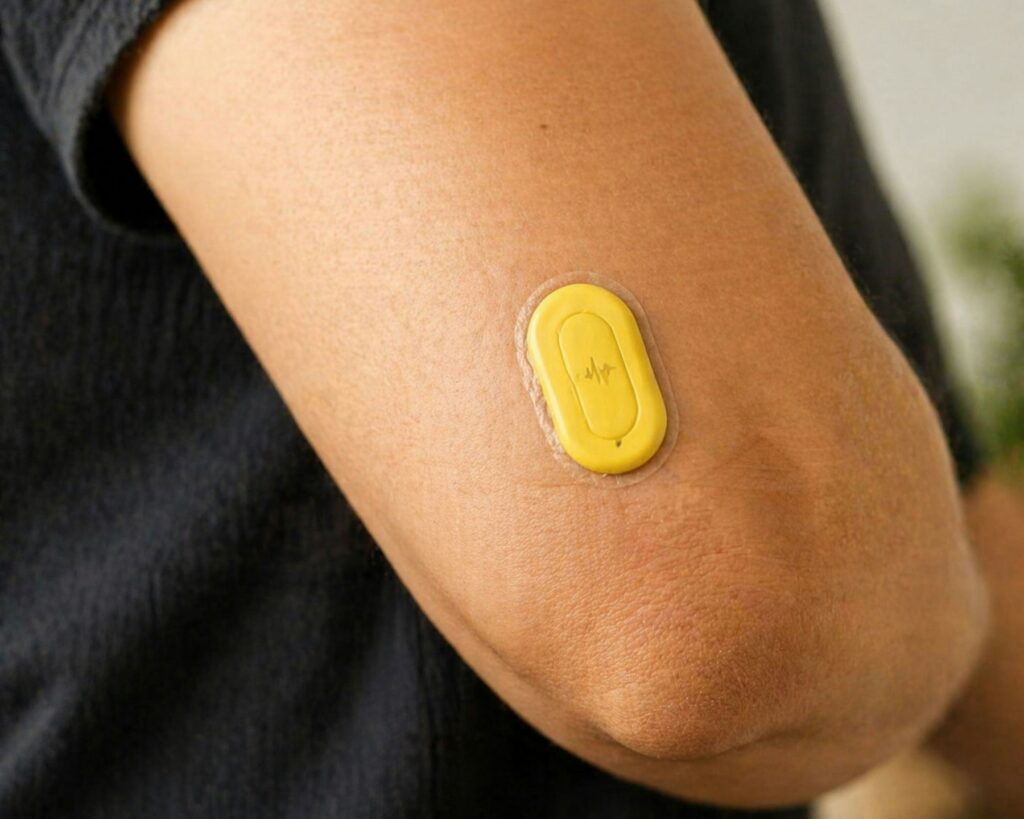
Watch the queue at any London park run this month and count the arms. The small white disc stuck to the back of the tricep used to mean one thing: the person wearing it has diabetes and is managing it. In August 2026 it more often means they’ve paid £300 to find out what a slice of toast does to their bloodstream. The continuous glucose monitor has completed its journey from NHS medical device to wellness status symbol, and the awkward part is that the best UK research we have suggests it’s telling healthy wearers a story that isn’t true.
In This Article
- How a diabetes device became gym-floor jewellery
- The 400% problem: what the Bath study found
- Why continuous glucose monitors read high on healthy arms
- The anxiety business
- Who genuinely benefits from a CGM
- The two-week experiment defence
- What the badge costs: the UK options, priced
- What actually moves the needle, for nothing
Not slightly untrue. When University of Bath researchers compared a market-leading sensor against the standard finger-prick test in healthy adults, the sensor overstated the time their blood sugar spent above Diabetes UK’s recommended threshold by nearly 400%.
That number deserves a moment. These devices are being sold to people without diabetes on the promise of “knowing your body”. And for a healthy user, the headline metric can be out by a factor of four.

How a diabetes device became gym-floor jewellery
The trend has two engines in Britain. The first is Zoe, the personalised nutrition programme co-founded by Professor Tim Spector, whose yellow-and-white sensors became so visible on middle-class arms that wearing one turned into a soft announcement of disposable income – the kit costs £299, with membership from £9.99 a month since the big price drop. The second is Abbott’s Lingo, launched over the counter for non-diabetic adults, at £59 per two-week sensor. No prescription, no GP, no questions. Stick it on your arm, pair the app, and start watching a line wiggle every time you eat.
And people do watch it. That’s rather the point, and rather the problem.
The marketing muscle behind this is considerable. Zoe has had Davina McCall fronting its adverts and Steven Bartlett singing its praises to millions of podcast listeners, and the sensors have become as much a part of the 2026 fitness aesthetic as the Salomon trainers and the sea-salt electrolyte sachet. At my local lido the discs outnumber verrucas. One trainer I spoke to at a Hyrox prep class in Clapham reckoned a third of his clients had worn one at some point this year – none of them diabetic, most of them lapsed within six weeks, all of them still paying when they stopped looking at the app.
That lapsing pattern matters more than the adoption numbers. A device you stop consulting but keep paying for isn’t a health tool. It’s a gym membership for your bloodstream.
The pitch lands because it borrows the language of legitimate medicine. CGMs are life-changing for people with type 1 diabetes – genuinely among the best things the NHS has rolled out this decade. The wellness industry has taken that credibility and stretched it over a different customer: the healthy 35-year-old who does Zone 2 runs, owns a tub of NMN, and quite likes graphs. If that’s you, the sensor isn’t monitoring a disease. It’s monitoring your curiosity, at £118 a month if you keep Lingo running continuously.
The 400% problem: what the Bath study found
The study, from Bath’s Centre for Nutrition, Exercise and Metabolism and published in The American Journal of Clinical Nutrition in 2025, is the most direct test yet of how these sensors perform on healthy people rather than the diabetic patients they were designed for. Researchers fitted non-diabetic volunteers with the Abbott FreeStyle Libre 2 – the same hardware family the NHS prescribes – and compared its readings against finger-prick tests while participants ate fruit and drank smoothies.
The sensor didn’t just drift. It ran consistently high. A smoothie that finger-prick testing scored as low-GI (53) came out as medium-GI (69) on the sensor – a 30% overestimate. Whole fruit got misclassified as medium or high-GI when blood testing showed it was low. And time spent above the recommended blood sugar threshold was inflated by close to 400%, which for an anxious user reads as “my blood sugar is out of control” when it’s doing exactly what healthy blood sugar does.
Professor Javier Gonzalez, who led the work, put it plainly: for people with diabetes, an imperfect measurement beats no measurement. “However, for someone with good glucose control they can be misleading based on their current performance. For healthy individuals, relying on CGMs could lead to unnecessary food restrictions or poor dietary choices.” The full findings are on the University of Bath’s site, including one disclosure worth knowing: the study was funded by innocent drinks, who had no role in design or analysis, but who clearly weren’t sad that smoothies came out fine.
Fund-the-research-that-suits-you is an old game, so read that with one eyebrow raised. But the mechanism the study points to isn’t controversial, and it explains a lot.
Why continuous glucose monitors read high on healthy arms
A CGM doesn’t measure blood. The filament under your skin sits in interstitial fluid – the liquid between your cells – and estimates blood glucose from there. That introduces a lag of ten minutes or so, plus errors from local blood flow, skin temperature, hydration, even how compressed the sensor site is while you sleep on it. Diabetic glucose swings are large enough that this fuzziness barely matters. Healthy glucose control is so tight that the fuzziness can be bigger than the signal you’re trying to read.
Which is how you end up with the modern spectacle of a fit adult staring at a phone at 10pm, worried about a “spike” that is partly a measurement artefact and entirely normal physiology.
Because here’s the bit the apps soft-pedal: blood sugar is supposed to rise after eating. A spike after porridge isn’t your metabolism failing. It’s your metabolism working. The pancreas releases insulin, the glucose gets stored or used, the line comes back down. That loop has run flawlessly in most of the people wearing these sensors for their entire lives, without a single one of them needing to see it graphed.
Continuous glucose monitors aren’t the only bit of consumer diagnostics selling certainty by the month. The same instinct drives the queue for a £299 full body health scan, where the incidental-finding problem is arguably worse than anything a CGM can throw at you.
The anxiety business
Oxford dietitian and researcher Nicola Guess has become the most quotable sceptic on this, and her concern isn’t accuracy – it’s what the watching does to people. There “probably is no need” for people at no risk of diabetes to track their blood sugar, she told The Week, and the habit is “making them quite weird about food… it takes a lot of the enjoyment out of food for no reason whatsoever”. She’s also warned that watching every fluctuation can tip curious users into genuine anxiety and even disordered eating.
I’ve seen the mild version of this in my own gym. A woman in my Thursday class gave up bananas – bananas – because her sensor showed a spike after her pre-workout snack. She has no diabetes, runs 30k a week, and was treating a piece of fruit like contraband on the say-so of a device the Bath data suggests was probably exaggerating the reading in the first place.
That’s the sharpest version of the case against: the device manufactures a problem, then sells you the dashboard for managing it. We’ve written before about how the wellness industry monetises this loop, from £97 greens powders to subscription wellness apps, but the CGM is its purest form yet. The product’s output is worry. The subscription is the treatment.

Who genuinely benefits from a CGM
None of this applies to the people these devices were built for, and it matters to keep the two groups separate.
If you have type 1 diabetes, NICE guidance now means everyone – adults and children – can access a CGM or flash monitor on the NHS, and the case for using one is overwhelming. Some people with type 2 on insulin qualify too; Diabetes UK has a clear rundown of who’s eligible. For these users the sensor replaces multiple daily finger-pricks and catches dangerous overnight lows. Nobody serious disputes any of that.
There’s also a middle group where the honest answer is “maybe”: people with diagnosed prediabetes, gestational diabetes, or a strong family history, working with an actual clinician. A few weeks of monitoring under guidance can be useful there, though even then the NHS route starts with an HbA1c blood test at your GP – which measures three months of average blood sugar, costs you nothing, and doesn’t ping your phone at dinner.
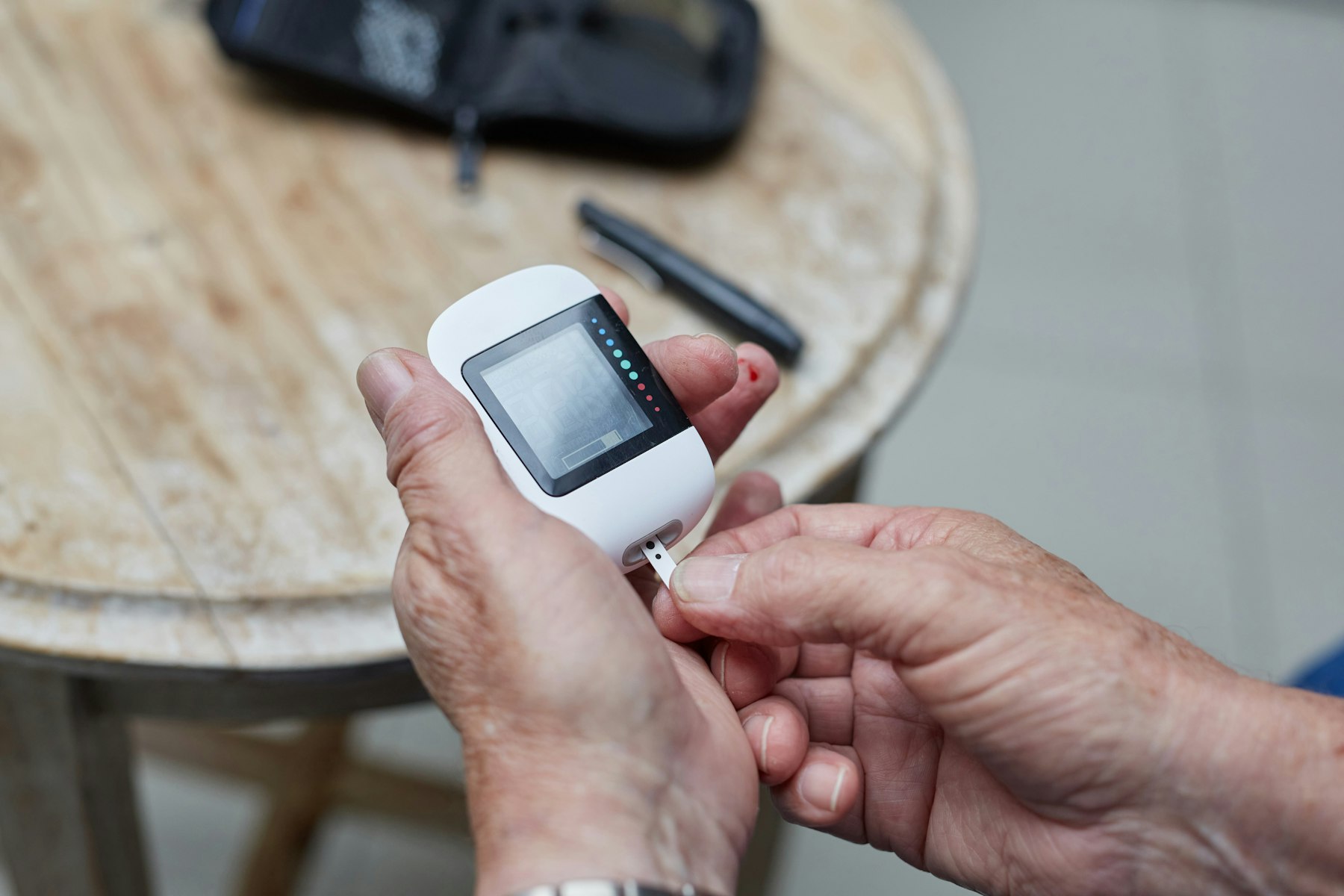
And a word on what the finger-prick comparison means, because the wellness crowd sometimes waves the Bath study away as one device on one day. The finger-prick test isn’t some quaint rival gadget – it measures glucose in actual capillary blood, which is the thing everyone is claiming to care about. When the sensor and the blood disagree, the blood wins. That’s not a matter of interpretation.
For everyone else – the healthy and the curious – the Bath data suggests you’d be paying £59 a fortnight for numbers that run systematically high, to solve a problem you don’t have.
The two-week experiment defence
The strongest argument for a consumer CGM goes like this: fine, the absolute numbers are off, but the patterns are real. Wear one for a fortnight, learn that a fry-up affects you differently than muesli, that a walk after lunch flattens the curve, that four pints does odd things overnight – then take the sensor off, keep the lessons, and move on.
It’s a fair argument, and a fortnight of Lingo at £59 is cheaper than most wellness experiments. But notice what those lessons are. Eat more fibre. Move after meals. Don’t drink four pints. Sleep properly. You already knew all of it; the graph just made it feel personal. Behavioural scientists call this a “legitimising totem” – the gadget that gives you permission to do the thing you already knew to do. £59 is a lot for permission, but it’s cheaper than a year of longevity powders, so as wellness purchases go it’s mid-table.
What the two-week defence can’t justify is the continuous version – the £100-plus monthly habit, the year-round wear, the app streaks. And that, not the fortnight experiment, is the business model. Zoe is a subscription. Lingo sells sensor bundles. Nobody’s revenue plan is built on you learning your lesson and leaving.
What the badge costs: the UK options, priced
Most coverage of these devices is either advertorial or outrage, so here’s the actual arithmetic, checked September 2026. Three products dominate the UK consumer market, and they’re priced on entirely different logics.
| Option | What you’re buying | What it costs | The catch |
|---|---|---|---|
| Zoe | A personalised nutrition programme: gut microbiome test, blood fat test, a fortnight of CGM wear, then an app that scores your meals | £299 upfront (£479 with a four-month retest), then £9.99 a month since the big price cut | The sensor is two weeks of onboarding, not the product. What you’re subscribing to is the food scores. |
| Lingo (Abbott) | An over-the-counter biosensor plus a coaching app, sold in Boots and online pharmacies | £59 per two-week sensor – about £118 a month worn continuously, less on bundles | Same hardware family the Bath study tested. No prescription, no clinician, and no defined end point. |
| Ultrahuman M1 | Abbott’s Libre 2 sensor paired with an athlete-flavoured app | Around £100 a month for sensors plus roughly £25 for the platform | You’re paying a markup for the same sensor with sportier graphs. |
| HbA1c at your GP | A blood test measuring your three-month average glucose – the number an actual diabetes diagnosis uses | Free | No graph, no streaks, nothing to post. |
Two things jump out of that table. The first is the Ultrahuman markup: the M1 is, physically, an Abbott sensor you could buy more cheaply in its own box, and the roughly £25 a month buys an app layer and some athletic branding. Plenty of its wearers either don’t know or don’t mind. Fine – but know what you’re paying for.
The second is that no paid option has a finish line. A blood test answers a question and ends. A subscription is designed not to. Zoe’s price cut from £24.99 to £9.99 a month made headlines as generosity; it’s also what you do when your product is easy to quit and you’d rather people didn’t. If a fortnight of data genuinely taught you what you needed, every one of these companies has a revenue problem.
What actually moves the needle, for nothing
If the underlying worry is “am I heading for type 2?”, there’s a free and better answer: ask your GP for an HbA1c test, or start with the NHS’s online diabetes risk score, which takes two minutes and doesn’t require anything stuck to your arm. If the worry is vaguer – afternoon slumps, a general sense of metabolic unease – the interventions with actual evidence behind them are almost insultingly cheap. A ten-minute walk after your biggest meal. More beans and fewer beige carbs. Consistent sleep, which we covered in our look at Britain’s magnesium habit. Strength training twice a week, since muscle is where most of your glucose disposal happens anyway – the same reason to get your protein intake right.
None of it produces a graph. That’s the trade. The wellness market has learned that British consumers will pay handsomely to convert ordinary health advice into personal data, and the CGM is currently the most elegant machine ever built for that conversion.
My contrarian position, held with some confidence: for a healthy adult, a continuous glucose monitor is the most expensive way yet devised to discover that toast contains carbohydrate. The device is brilliant. The medicine is real. The customer is wrong.
The pattern repeats right across the self-optimisation aisle. When a lab tested teeth whitening kits sold openly in Britain, it found peroxide at 530 times the legal limit – a different product, the same gap between what sells and what’s sound.
So here’s the question for anyone currently wearing one without a diagnosis: in the weeks you’ve had it on, has it told you a single thing that changed what you do – or has it just given you a new number to check? I’d genuinely like to hear which, because the second answer is the one the industry is banking on.