
Kitchen Trends 2026: Blue and Green Now Outsell White Four to One, the £25 Tin That Gets You There – And the Quartz Question to Ask Your Fitter
Only 8% of British homeowners who renovated a kitchen in the past year chose white cabinets. That figure, from the 2026 UK Houzz Kitchen Trends Study, is the single most useful thing to know about kitchen trends 2026, because it tells you the default has flipped. Blue cabinets took 18% of renovations and green took 17%. Put those together and coloured kitchens now outnumber white ones more than four to one.
In This Article
- Kitchen trends 2026 in one number: white has fallen to 8%
- Blue or green: the choice matters less than the undertone
- The £25 route: why painting beats replacing for most kitchens
- Storage is the trend people actually spend on
- The quartz question to ask your fitter
- Handles, brass and the smart oven you don't need
- The kitchen trend nobody photographs
A decade ago the brief was simple: white gloss, grey worktop, done. Estate agents told everyone it was the safe choice for resale. Now the safe choice looks like a rental.
But the colour story is the part everyone’s already written. The more interesting kitchen trends of 2026 are the ones buried lower down the survey – where the money actually goes, what’s changed about worktops since the Health and Safety Executive got involved in May, and a sharp rise in people planning kitchens around their knees rather than their Instagram. If you’re pricing a kitchen this autumn for a new-year fit, or you’ve just decided you can’t face another winter with the one you’ve got, here’s what’s worth copying and what’s worth ignoring.
Kitchen trends 2026 in one number: white has fallen to 8%
Start with the caveat, because it matters. Houzz surveyed 402 of its own UK users between November and December 2025, all of them mid-renovation, planning one or just finished. Houzz users skew design-conscious and slightly better off than the average household, so this isn’t a picture of what’s going into every new-build in Swindon. It’s a picture of what people who care about kitchens are choosing. That’s still worth knowing, since those choices tend to reach Howdens and Wren catalogues about eighteen months later.
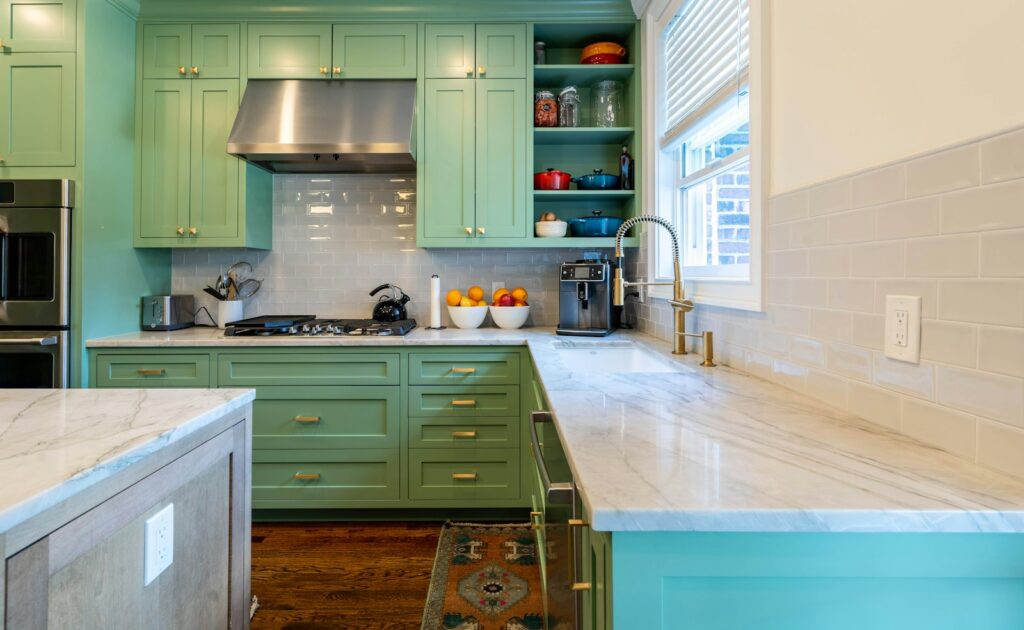
Here’s the full cabinet colour split: blue 18%, green 17%, grey 12%, off-white 9%, wood 9% and white 8%. Grey, which was the colour of the 2010s kitchen, is now third. And wood is level with off-white, mostly in medium and light tones rather than the dark walnut you see on Pinterest.
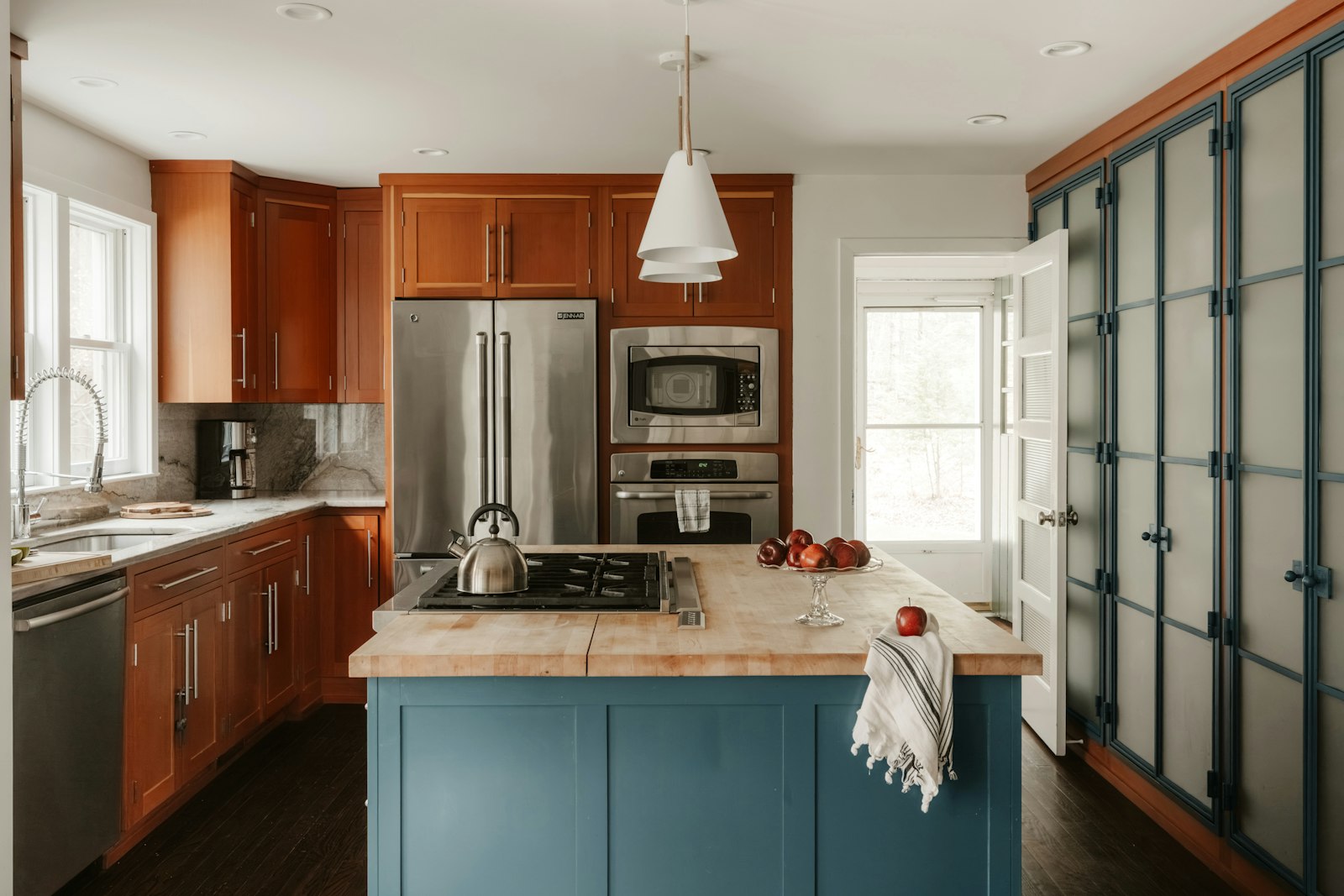
The other figure I’d pay attention to is contrast. Nearly three in ten renovators (29%) chose different colours for upper and lower cabinets. Wood tops the list for wall units, green for base units. That pairing – oak or ash above, a muddy green below – is the look I’d bet on still feeling right in 2030, because the wood keeps the green from going heavy and the green hides the scuffs a white base unit would show within a month.
Blue or green: the choice matters less than the undertone
People agonise over this one. They shouldn’t.
Blue and green are within a percentage point of each other in the Houzz data, and both work for the same reason: they read as neutrals in a British kitchen, where the light for five months of the year is flat and grey. What makes a kitchen look good or tired isn’t whether you picked blue or green. It’s whether the colour has a warm or a cool base. A navy with a lot of black in it looks smart in a south-facing extension and like a cave in a north-facing galley. A green with yellow in it (think olive, moss, the sage Dulux has just named its Colour of the Year for 2027) warms up under the cheap LED strip most of us have under the wall units. Cool greens with blue in them do the opposite and can make skin look grey at breakfast. The practical test is dull but it works: paint a sample board, put it where the cabinets will go and look at it at 7am and 7pm on a cloudy day before you commit to anything.
Ideal Home made the same point about staying power in its mid-year kitchen round-up, singling out earthy shades like mushroom, olive and warm neutrals as the ones people will still like in a few years. I’d agree, with one exception. The deep inky blues that were everywhere in 2024 are the colour I’d be most wary of now. They photograph beautifully and live badly in small rooms, and they show every fingerprint on a matt finish.
If you’ve already gone colourful in the bathroom – and plenty of people have, as we covered in our look at bathroom trends for 2026 – resist matching the kitchen to it. Two strong colours in rooms you can see from the same hallway start to feel like a show home.
The £25 route: why painting beats replacing for most kitchens
This is where I part company with most kitchen trend pieces, which tend to assume you’re about to spend £20,000.
Checkatrade puts a budget kitchen renovation at £6,200 to £16,800, and mid-range at £11,500 to £35,000. Houzz’s own 2025 study put the median spend at £17,500. Meanwhile, a 750ml tin of Rust-Oleum Kitchen Cupboard Paint is £25 at B&Q in the matt finishes and £29.99 in satin or gloss. Most standard kitchens need two or three tins plus a primer. If you’d rather not do it yourself, Checkatrade’s figures for having cabinets painted run from £595 to £1,532, with an average of about £951.
That’s the whole of the colour trend for under a grand. And the Houzz survey shows the carcasses themselves aren’t usually the problem – 37% of people renovate because their kitchen has deteriorated or stopped working, which often means hinges, drawer runners and a worktop that’s swollen round the sink, not the boxes on the wall.
So my honest advice: if your units are solid wood or MDF and the carcasses are sound, paint them, change the handles, spend £150 on new soft-close hinges and put the savings towards a better worktop. It’s the most sensible kitchen trend of the year and nobody’s selling it to you because there’s no showroom margin in it.
There’s one catch. Vinyl-wrapped doors (the shiny ones common in kitchens fitted between about 2000 and 2015) don’t take paint well once the wrap starts lifting at the edges, and it usually does, near the kettle and the oven first. If yours are peeling, replacement doors are the answer rather than paint. Plenty of firms now make doors to fit existing carcasses, and that’s still a fraction of a full refit.
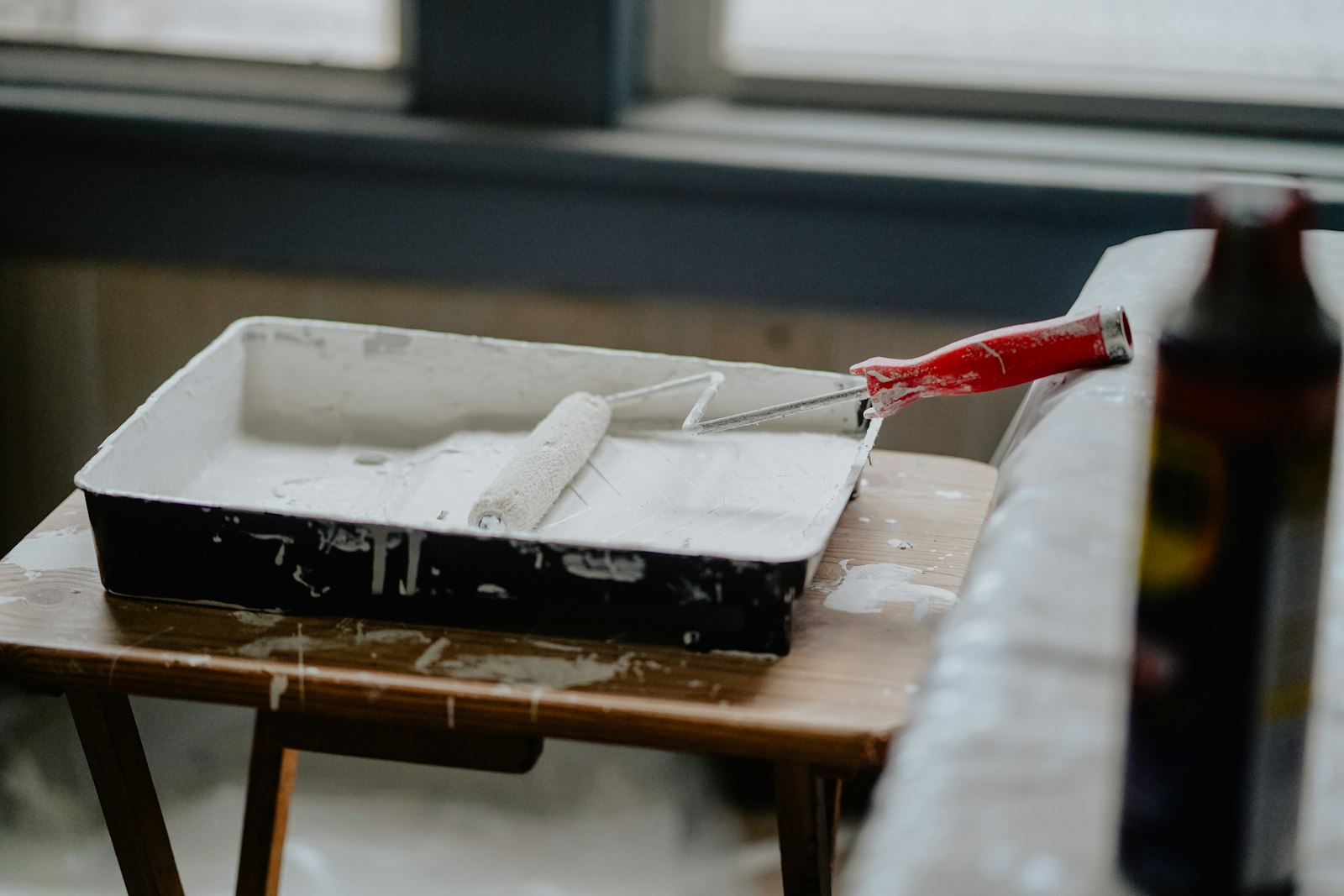
A word on prep, because it’s where DIY cabinet jobs go wrong. Take the doors off, number them on the hinge side with masking tape, degrease properly (sugar soap, not washing-up liquid) and give it longer between coats than the tin says, especially now the heating’s going on and the house is damp. It’s a bit of a faff over two weekends. It isn’t difficult.
Storage is the trend people actually spend on
Colour gets the headlines. Storage gets the budget.
According to Houzz, 82% of renovating homeowners added some kind of built-in feature, and 95% put specialist storage into their new cabinets: cutlery organisers (78%), pull-out bins (55%), deep drawer organisers (45%), spice storage (36%) and corner carousels (29%). Nearly four in five replaced every single cabinet rather than patching.
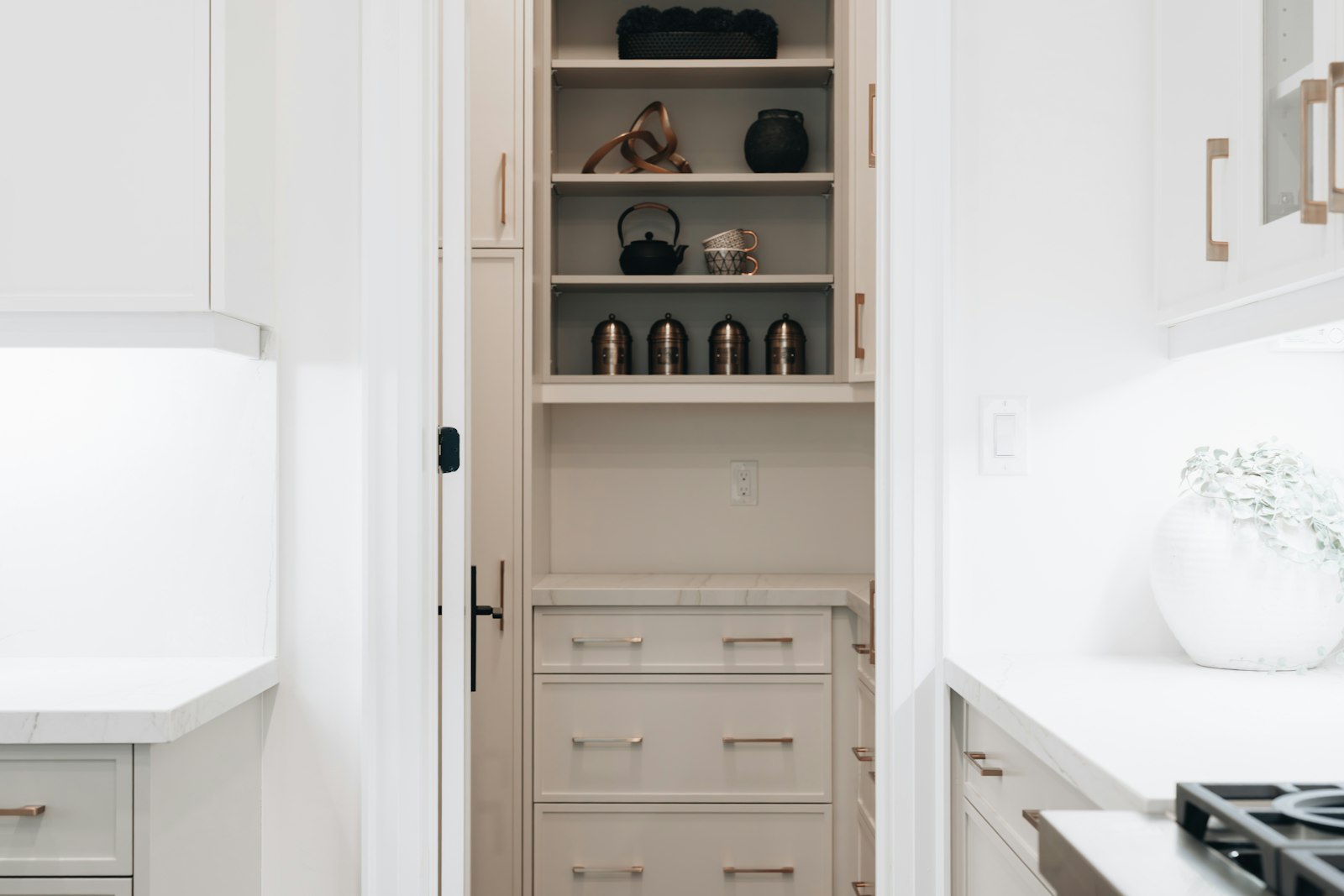
The pantry numbers are where it gets interesting. A tall pantry cabinet went into 40% of kitchens. A walk-in pantry went into 12%, and a butler’s pantry or separate prep kitchen into 11%. Beverage stations – basically a dedicated coffee corner with the machine, mugs and a pull-out for pods – rose five points to 12%. And 2% of people built a snack station, which I’ll let you judge for yourself.
Here’s my contrarian bit. The walk-in pantry is the most overrated kitchen feature of 2026 for the average British house. We wrote about the rise of the butler’s pantry earlier this year and the appeal is obvious in a big extension. But in a Victorian terrace or a 1930s semi, carving out a walk-in means stealing floor space from a kitchen that’s already short of it, and you end up with a dark cupboard you walk into to find the tinned tomatoes. A pair of 600mm-wide larder units with internal drawers holds more usable stuff per square metre, costs less and doesn’t need its own light and extractor. The 40% who chose the pantry cabinet made the smarter call.
The same logic applies to islands. Half of Houzz renovators (51%) changed the size of their kitchen, and 23% enlarged it by more than half. If you’re not extending, an island is often the thing that makes a small kitchen feel cramped, which is why we’ve seen so many people going back to tables and peninsulas – there’s more on that in our piece on kitchen island alternatives.
The quartz question to ask your fitter
This is the part of the 2026 kitchen story most trend round-ups leave out, and it’s the one that affects the people building your kitchen rather than you.
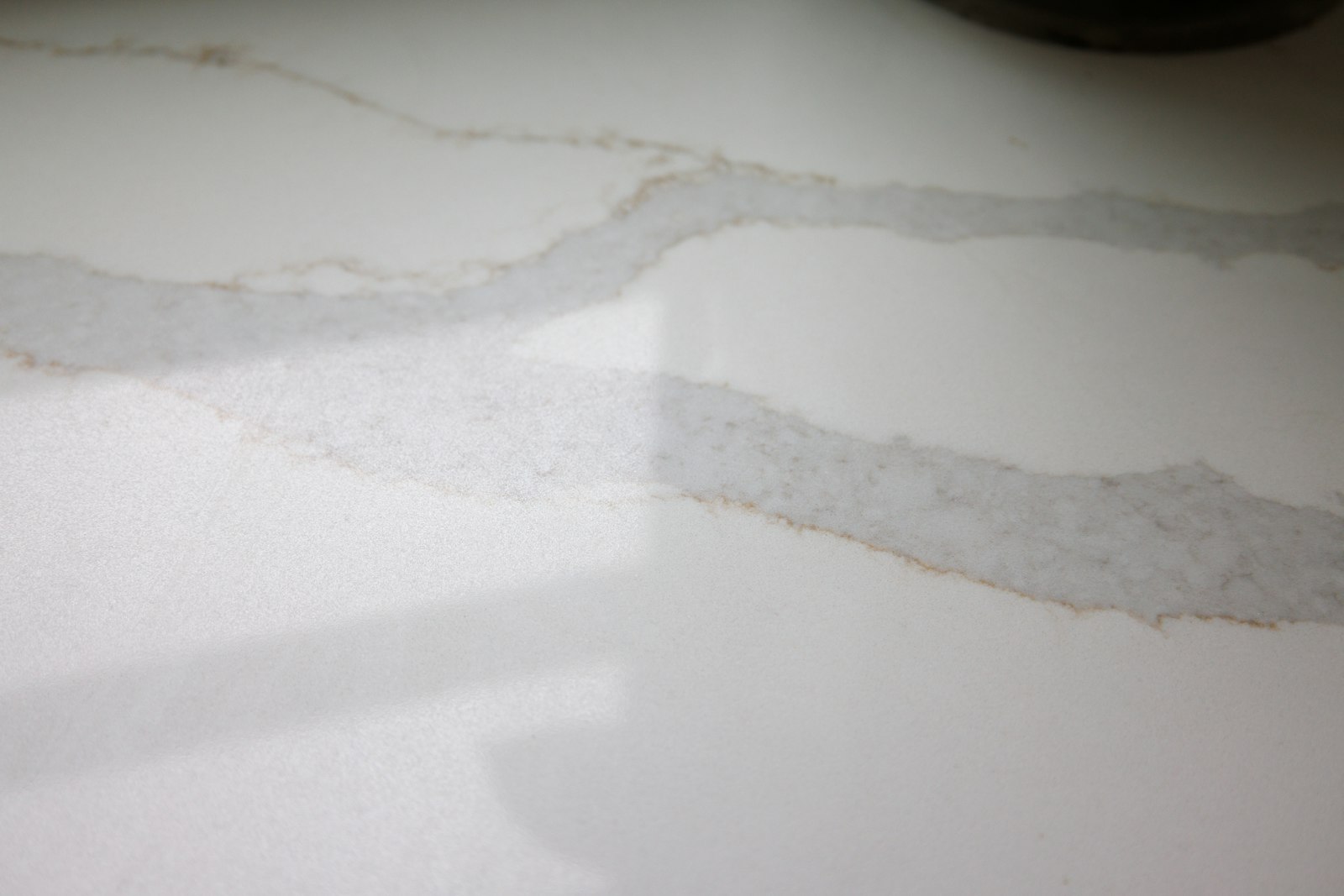
Slab splashbacks – a single sheet of the worktop material running up the wall instead of tiles – went into 71% of renovated kitchens, up nine points in a year. Engineered quartz was the most popular splashback material at 36%, up 13 points. It’s easy to see why. It’s hard-wearing, it doesn’t need sealing like marble, and the veined versions look expensive.
But engineered stone has a problem. It can be more than 90% crystalline silica, and cutting it dry releases dust that causes silicosis, an incurable lung disease. Australia banned engineered stone outright in 2024. In the UK, the Health and Safety Executive stopped short of a ban but in May published guidance that, as the British Safety Council reported, makes water suppression during cutting a legal requirement and pushes fabricators towards lower-silica products. HSE’s own scientists found dry cutting exposes workers to five to ten times more silica than wet methods. A 12-month inspection drive targeting around 1,000 fabricators is already under way.
None of this makes a quartz worktop dangerous once it’s in your kitchen. The risk is to the people cutting it. But it gives you some sensible questions to put to whoever’s quoting:
- Is the material a low-silica engineered stone? HSE says these are now available at the same quality, so there’s no good reason for a fabricator not to offer one.
- Is it cut wet, in a workshop, with extraction? If the answer’s vague or involves someone with an angle grinder on your driveway, find another firm.
- Can the sink and hob cut-outs be done at the workshop from a template, rather than on site?
- And if you’re still undecided on material, have you priced sintered stone, porcelain slab or a good solid laminate as well?
For what it’s worth, a porcelain slab splashback gets you most of the look for less money and there’s no silica debate about it.
Handles, brass and the smart oven you don’t need
Bar pulls are the most popular handle at 35%, just ahead of handleless designs at 31%. Knobs are at 24% and cup pulls at 18%, which tells you the shaker-style kitchen is still selling well. On finish, brushed nickel (19%) has edged past brass (17%), with bronze at 10%.
I’d read that as brass peaking rather than fading. Unlacquered brass that tarnishes over time is lovely on a painted green door; the shiny lacquered stuff sold in packs of ten online is what’ll date first. If you’re painting, handles are the cheapest place to spend a bit more – £8 to £15 each for decent solid ones rather than £2 hollow castings that loosen within a year.
Appliances are where I’d hold back. Houzz found 69% of renovators chose ovens with specialist features, including automated cooking programmes (41%), remote timer activation (38%) and remote monitoring from a phone (36%). Ask anyone with a wifi oven how often they still use the app and the answer is usually a shrug. A pyrolytic self-cleaning function is worth paying extra for; wifi mostly isn’t. And the same goes for fridge touchscreens, which 14% of people bought, presumably for reasons that made sense in the showroom.
The kitchen trend nobody photographs
This one surprised me more than any colour figure. The share of renovators making changes for current ageing-related needs jumped from 4% to 25% in a year. For future needs, it went from 12% to 37%. Overall, 55% of people planned for some kind of accessibility need.
In practice that means drawers instead of low cupboards (no kneeling on the floor for the big saucepan), wall ovens at eye level, better task lighting and wider walkways. Houzz’s economist puts it down to longer tenure: fewer homes for sale, people staying put and upgrading what they’ve got rather than moving. That matches what the survey says about motivation too – “finally having the means” was only the third most common reason to renovate, behind a kitchen that had stopped working and personalising a recent purchase.
It’s not glamorous. But if you’re spending five figures on a kitchen you plan to keep for 15 years, deep drawers and a raised oven will matter a lot more by 2040 than whether you went olive or navy. And they don’t cost much more if you plan them in from the start rather than retrofit later.
So that’s where kitchens are heading: coloured, drawer-heavy, slab-backed and built for the long haul. If you could only change one thing in yours before Christmas, would it be the colour, the storage or the worktop?