Bathroom Trends 2026: Britain Is Putting the Colour Back In, the £7,000 Refit Question and Why the All-White Bathroom Finally Lost
The all-white bathroom took the best part of twenty years to conquer Britain and about eighteen months to lose it. That’s the story behind every bathroom trends 2026 list you’ll read this autumn, and it’s a stranger one than the showrooms let on. Nobody woke up hating white tiles. What happened is that a generation of people who’d spent lockdown staring at a grey-and-white box realised it looked like the en suite in a Premier Inn, and decided they’d rather have a room they actually wanted to be in.
In This Article
- What the bathroom trends 2026 lists agree on, and what they're dodging
- Colour: sky blue is the sensible option, and that's the problem with it
- Texture is the trend that'll actually last
- Timber in a bathroom used to be a mistake. Now it's a trend. Which is it?
- Brushed nickel, brushed brass, and the tap finish nobody mentions
- The lamp in the bathroom, and what Part P thinks about it
- The £7,000 question
- Bath or shower? Keep the bath if it's the only one
- Renting, or spending £300: the version without a plumber
- What's over
I spent a Saturday in three showrooms last month – a Wickes, an independent in Bath and one of the big online-only outfits’ new physical space – and counted. White suites were still the majority on the floor. But every display that had a queue in front of it was blue, timber, ridged, or some combination of the three. The displays people were photographing weren’t the ones being sold in volume. Not yet.
That gap between what’s on the mood board and what’s actually going into British bathrooms is the useful bit. So here’s what’s real, what’s showroom theatre, and what it’ll cost you.
What the bathroom trends 2026 lists agree on, and what they’re dodging
Line up the predictions from the trade and the magazines and they overlap more than usual. Ideal Home’s 2026 round-up lands on warm timber, texture over pattern, brushed nickel instead of brass, sky blue, and bathrooms lit like living rooms. The bathroom retailers’ own blogs say roughly the same thing with more exclamation marks. When Mira, BC Designs, Ca’ Pietra and Tissino are all pointing the same way, that’s not a trend forecast, it’s a stock order that’s already been placed.
What none of them say out loud is that the two headline looks – the pale, tonal “spa” bathroom and the maximalist, colour-everywhere bathroom – are opposites. You can’t have both. And the industry is happy to sell you either, because either one means ripping out what you’ve got.
The honest version is this. The spa look is what most people will end up with, because it’s the safe resale choice and because it photographs well in the estate agent’s listing. The colourful version is what people pin, talk about, and mostly bottle out of at the point of writing a cheque. If you’ve got the nerve, the colourful one is the better room to live in. I’d rather brush my teeth in a room with a personality than in a beige box with a eucalyptus diffuser.
Colour: sky blue is the sensible option, and that’s the problem with it
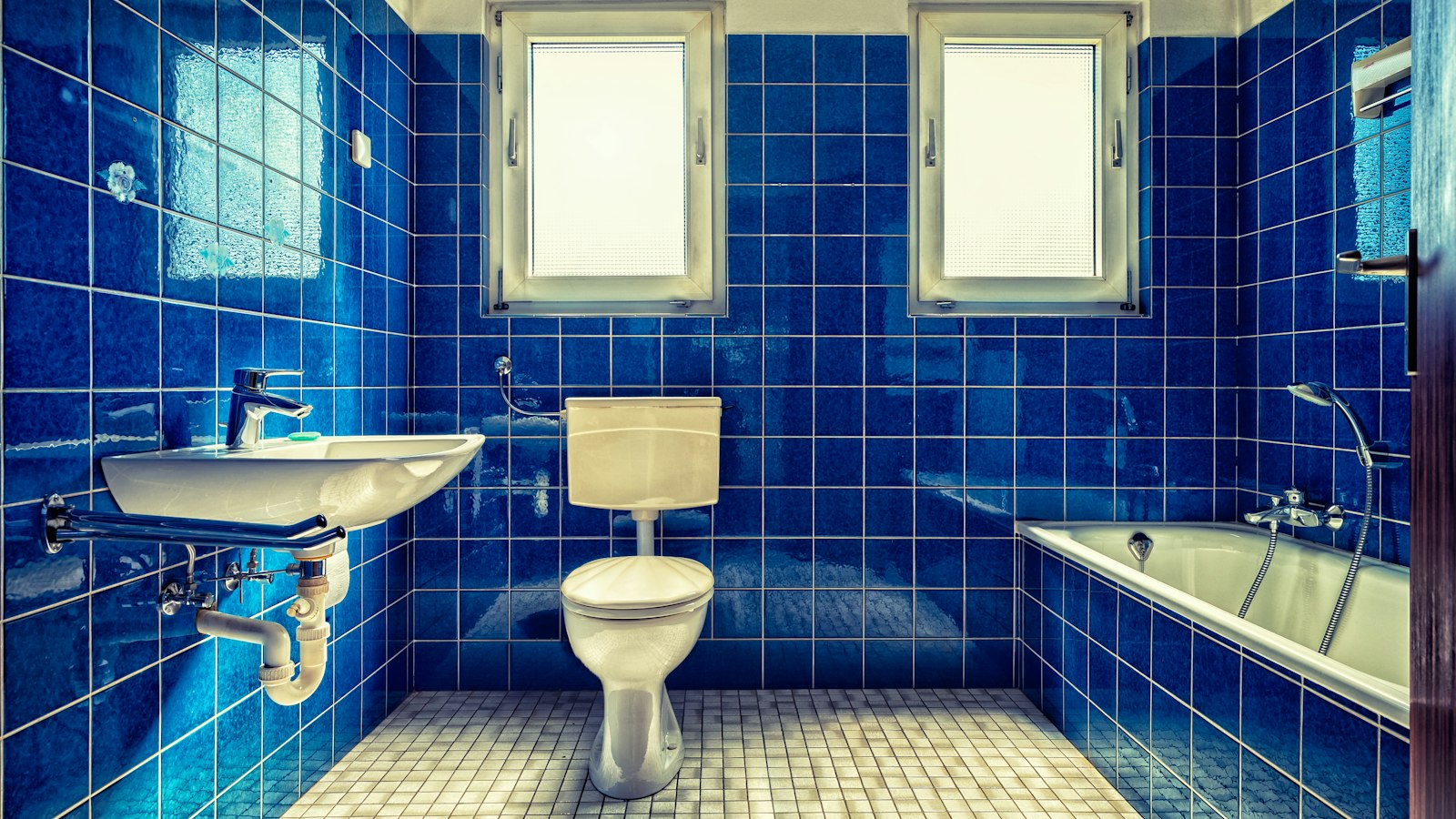
Blue has been a bathroom colour for as long as bathrooms have had colour, so calling it a comeback is a bit generous. What’s changed is the shade. Navy cabinetry had its moment around 2021 and it’s now looking like the grey kitchen of bathrooms – fine, dated, everywhere. The 2026 version is lighter and warmer: a sky or cerulean blue on the walls, often paired with white tiles and timber so it reads as fresh rather than nautical.
It works. It’ll also be the default choice in a lot of new-build show homes within a year, which tells you how safe it is.
The more interesting shift is happening below the tide line. Coloured sanitaryware – the bath, the basin, sometimes the loo – is back in a way that would have got you laughed out of a showroom in 2015. BC Designs sells its Cian composite baths in a whole run of colours now, and they’re not cheap – you’re into four figures before the taps. Pink and sage basins are turning up in the mid-market too. Somebody in Britain, right now, is choosing an avocado bath on purpose, and I’ve stopped finding that funny.
But here’s where I’d pump the brakes. A coloured bath is a ten-year commitment to a colour, bolted to your plumbing. Paint is a Saturday. If you want colour in the bathroom in 2026, put it on the walls, the vanity doors and the tiles – all of which can be changed without a plumber – and keep the bits that hold water white. The exception is if you’re staying put for a decade and you love it. Then buy the pink bath and enjoy it, because life’s short and bathrooms are boring.
If you’re painting, the same rules apply as anywhere else damp: a proper bathroom emulsion or a mid-sheen, not the matt you’ve got left over from the hall. We covered why limewash and mineral paints are having a moment earlier this year, and a bathroom is the one room where I’d think twice about them unless the ventilation’s properly good.
Texture is the trend that’ll actually last
Every other line in the bathroom trends 2026 conversation is a colour or a finish that’ll date. Texture is different, because it’s about surface rather than shade, and a ridged tile in a neutral colour still looks considered when sky blue has gone the way of navy.
The specific things showing up: fluted or reeded vanity fronts, handmade-look zellige tiles with their wobbly glaze, plaster-effect porcelain, ribbed glass on shower screens, and tiles with a soft ridge or scallop rather than a printed pattern. The Ca’ Pietra line is that tiles have become the “quiet storytellers” of the room, which is a slightly grand way of saying people want something to run their hand over.
Two honest negatives. Zellige and anything hand-made-looking is a nightmare to grout – the edges are irregular, the tiler will charge more, and you need to be relaxed about the finish being uneven, because that’s the point. And fluted vanity doors collect dust and toothpaste splash in the grooves. They look wonderful in the showroom and slightly grubby in a family bathroom by month three. If you’ve got small kids, a flat door and a textured tile is the smarter split.
Timber in a bathroom used to be a mistake. Now it’s a trend. Which is it?
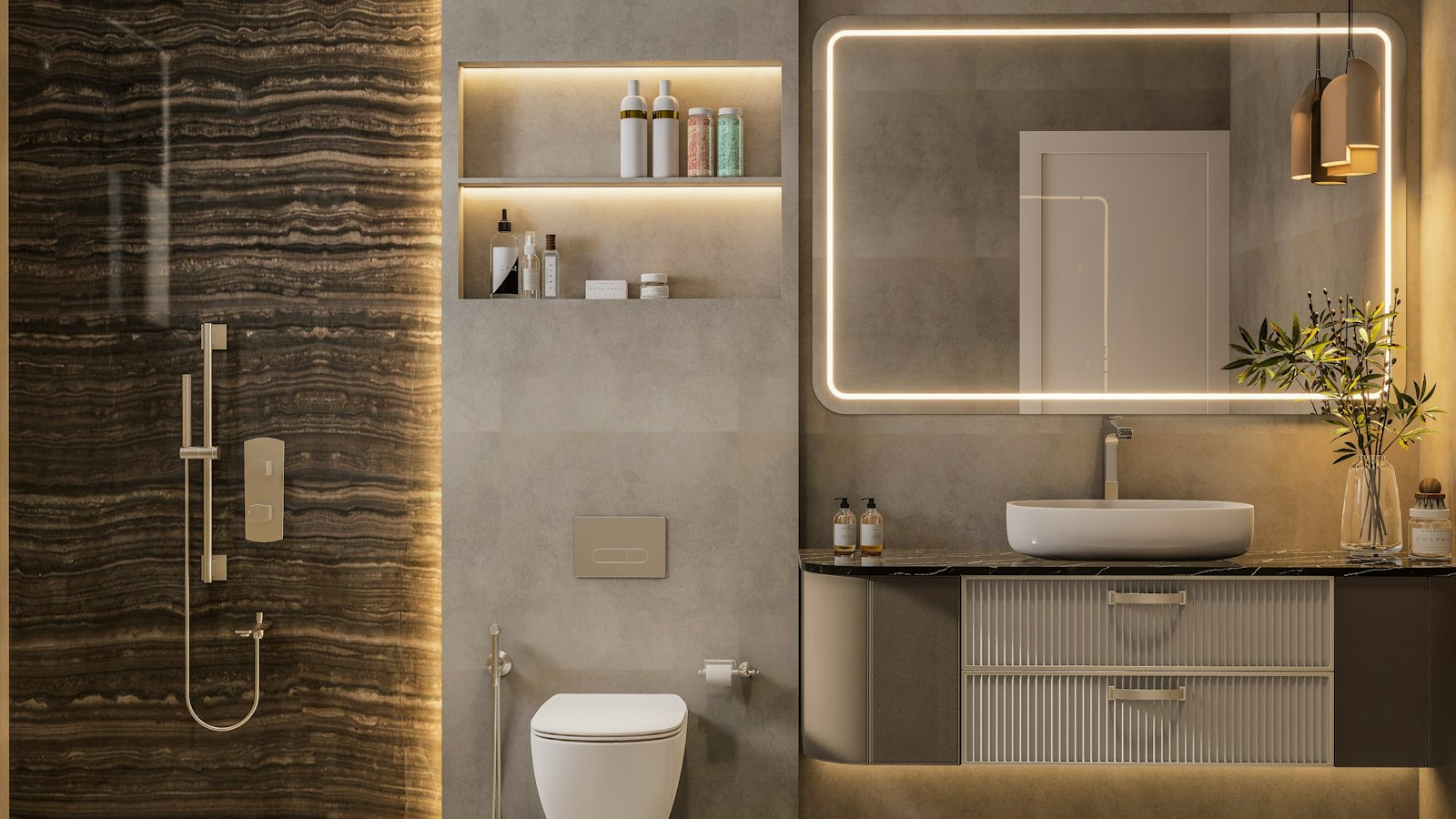
Both, depending on the timber. The push for oak, walnut and ash vanities, wall panels and even ceilings comes from better moisture-resistant finishes – the manufacturers are confident enough now to put solid timber in a room that gets steamed twice a day. Keeley Sutcliffe at BC Designs makes the case that timber stops a bathroom feeling clinical and ties it into the rest of the house, and she’s right.
But confidence from the manufacturer and confidence from your bathroom are two different things. A sealed oak vanity from a decent brand, wiped down, will be fine. A cheap veneered unit with a timber-effect wrap will bubble at the edges within two winters if it’s next to the bath. And an unsealed timber shelf under the window will go black. I’ve seen all three.
The practical version of this trend is one timber element, done properly – a vanity, or a slatted wall panel behind the bath – against tile and paint. Not a sauna.
Brushed nickel, brushed brass, and the tap finish nobody mentions
Brass had a good five years. It’s now the finish that says “we did the bathroom in 2020”, and the trade knows it, which is why brushed nickel is being pushed as the 2026 replacement. Sally Bettison at Tissino describes it as softer than chrome and warmer than brass, and that’s fair – it’s the diplomat of tap finishes. It goes with the pale blues, the timber and the plaster pinks without shouting.
My contrarian position: matt black is the one to avoid, not brass. Black taps and shower frames were the 2019 trend that’s aged worst, because the cheaper ones chip and show every water spot, and the expensive ones still make a small bathroom feel like a nightclub loo. Brass at least ages into something. Black just gets scruffy.
And the finish nobody’s mentioning is chrome, which has never gone anywhere. It’s on every rental bathroom in the country because it’s cheap, tough and matches everything. If you’re doing a bathroom to let, or you’re not sure you’ll be in the house past 2030, chrome remains the correct, boring answer. Not every room needs to be on trend.
The lamp in the bathroom, and what Part P thinks about it
The idea that a bathroom should be lit like a bedroom rather than a dentist’s surgery is the trend with the best ratio of effort to result. We wrote about the death of the big light in living rooms back in August, and the same thing has reached the bathroom: a rechargeable lamp on the windowsill, a wall light either side of the mirror, the ceiling spots on a dimmer or off altogether.
There’s a catch that the interiors pages skip. UK bathroom wiring is divided into zones, and anything within roughly 60cm of the bath or shower needs a proper IP rating and, if it’s hard-wired, a qualified electrician under Part P. A mains lamp on the windowsill is a bad idea in most bathrooms. A rechargeable, battery-powered one – Pooky do a good range, so do Lights & Lamps and half of Etsy – sidesteps the whole problem, and you can take it with you when you move. That’s why it’s also the best renter’s trend on this list.
Pair it with a heated towel rail that’s actually warm, which in a lot of British bathrooms means replacing the feeble chrome ladder the developer fitted. The column radiator revival we covered last week is bleeding into bathrooms too, in painted finishes, and a proper cast-effect radiator plus a lamp does more for how the room feels than any tile.
The £7,000 question
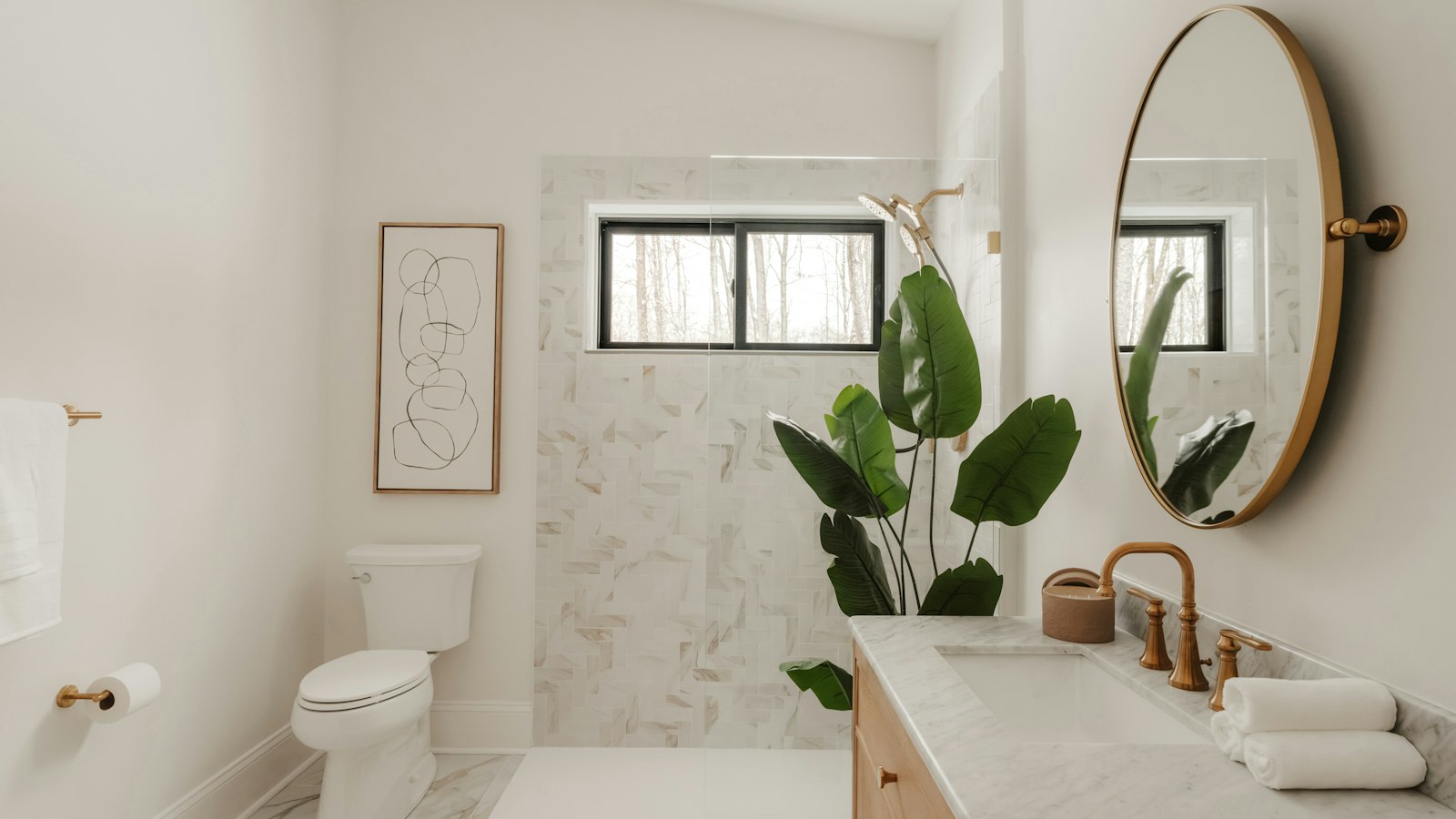
Here’s the number that should sit behind every trend piece and never does. Checkatrade’s 2026 cost guide puts a typical new bathroom, including materials, at £5,500 to £8,000, with £7,000 as the average and £14,000-plus for a large or high-end job. Labour alone is generally £1,500 to £3,000. Those figures are for a like-for-like swap in an existing room. Move the loo, add a wall, or discover the floor under the old bath is rotten – which it often is – and you’re past the top of that range quickly.
So what does £7,000 actually buy in 2026, trend-wise? Roughly: a decent white or coloured-accent suite from a mid-market brand, a run of textured porcelain rather than zellige, brushed nickel brassware, a timber-look or painted vanity, one wall of colour, and a fitter who turns up. It doesn’t buy a coloured composite bath, a solid oak vanity and a wall of handmade tile. That’s a £12,000 to £15,000 room, and the pictures you’ve been saving are mostly that room.
Where I’d spend the money, in order: the fitter, the shower valve, the tiles you’ll touch every day, then everything else. Where I’d save: the bath (a £250 acrylic bath with a good panel looks the same as a £900 one once it’s in), the loo (nobody has ever admired a loo), and the mirror cabinet, which the online-only outfits sell for a third of the showroom price.
And one thing I’d skip entirely, which will annoy people: the wet room. In a large bathroom with a proper fall to the drain, lovely. In the average British bathroom – which is about 2.4 metres by 2 metres and has the loo eighteen inches from the shower – a wet room means a permanently damp floor, a wet loo roll, and a resale question mark, because the next buyer has a toddler and wants a bath. Fit a big, low-profile shower tray with a fixed glass screen. It’s 90% of the look for a third of the aggravation.
Bath or shower? Keep the bath if it’s the only one
The trend pages are full of sculptural freestanding baths, and the growth in bathroom sizes that Keeley Sutcliffe talks about – seating areas, dressing zones, the odd sauna – is real at the top end. Meanwhile in normal houses, people are still ripping baths out to fit a bigger shower, and then discovering when they sell that families won’t view a house without one.
If you’ve got one bathroom, keep a bath in it. A shower over the bath with a decent screen and a good valve is not a compromise, it’s what most of Britain does. If you’ve got two bathrooms, make one a proper shower room and put the bath in the other, and then you can have the freestanding tub in the corner and feel like a person in an advert.
Space is the real limit on all of this, which is why the most useful thing on the site for a lot of readers is still our small bathroom storage guide. You can’t fit a 2026 trend into a room that’s already full of shampoo bottles.
Renting, or spending £300: the version without a plumber
Most of the people reading a piece on bathroom trends 2026 are not about to spend £7,000. They’re renting, or they’ve just paid for the roof, or they like their bathroom well enough and want it to look less like 2017. Here’s what gets you there.
Paint the walls, obviously – one of the warm blues or a soft clay pink, with permission if you’re renting, and it’s a weekend. Swap the shower curtain for a fixed screen if you own, or for a heavier, plain-coloured curtain on a proper rail if you don’t; the flimsy printed ones are what make a bathroom look cheap, more than anything else in it. Buy a rechargeable lamp. Replace the basin tap, which is a £60 to £120 job a competent DIYer can do in an afternoon – brushed nickel if you want to be on trend, chrome if you want to be sensible. Add one timber thing: a slatted bath mat, a stool, an oak shelf that you’ve actually sealed.
Skip peel-and-stick tiles. They look fine in the listing photo and terrible in person by the second month, and the adhesive takes the paint off when you remove them. And skip the matching accessory set – the soap dispenser, tumbler and tray in the same colour – which is the fastest way to make a bathroom look like a hotel, and not the good kind.
Wallpaper, oddly, is worth a look. Bathroom-rated papers have got a lot better, and the wider papering revival we covered last week has a bathroom wing – one papered wall away from the shower, with a mid-sheen paint elsewhere. It’s the cheapest way to get the “doesn’t feel like a bathroom” look without a single tile.
What’s over
Grey, in every form – grey floor tile, grey vanity, grey-veined marble-effect porcelain on all four walls. The hotel look, where every surface is the same slab. Matt black taps. Navy cabinetry, which is on its way out rather than gone. Metro tiles in white with dark grout, which had a fifteen-year run and has earned a rest. And the wet room in a small house, for the reasons above.
None of that means you need to rip it out. A grey bathroom with a warm blue wall, a lamp and a timber shelf looks like 2026 for about £150. The industry would like you to believe the trends require a new suite. They mostly require a tin of paint and a bit of nerve.
So the real question for this autumn isn’t which trend to follow. It’s whether you’re brave enough to put actual colour in the one room where you’ve always played it safe – and if you are, what’s the first thing going in?