Kitchen Island Alternatives in 2026: Why British Kitchens Are Falling Back in Love With the Table – And the £3,000 It Saves
For twenty years, the island has been the thing British kitchen renovations were organised around. Not the boiler or the flooring – the island, a fitted, stone-topped block in the middle of the room, ideally with stools nobody sits on. And in 2026, quietly at first and now not quietly at all, designers have started taking them out.
In This Article
Search interest in kitchen island alternatives has been building all year, and the trend pages that spent a decade telling you to fit one are now running features on what to put in the space instead. The answer, in most cases, is a table. Which is where the British kitchen started, of course, before granite got involved.
This isn’t a style note. It’s a £3,000 decision. Sometimes a £12,000 one.
How the island became compulsory
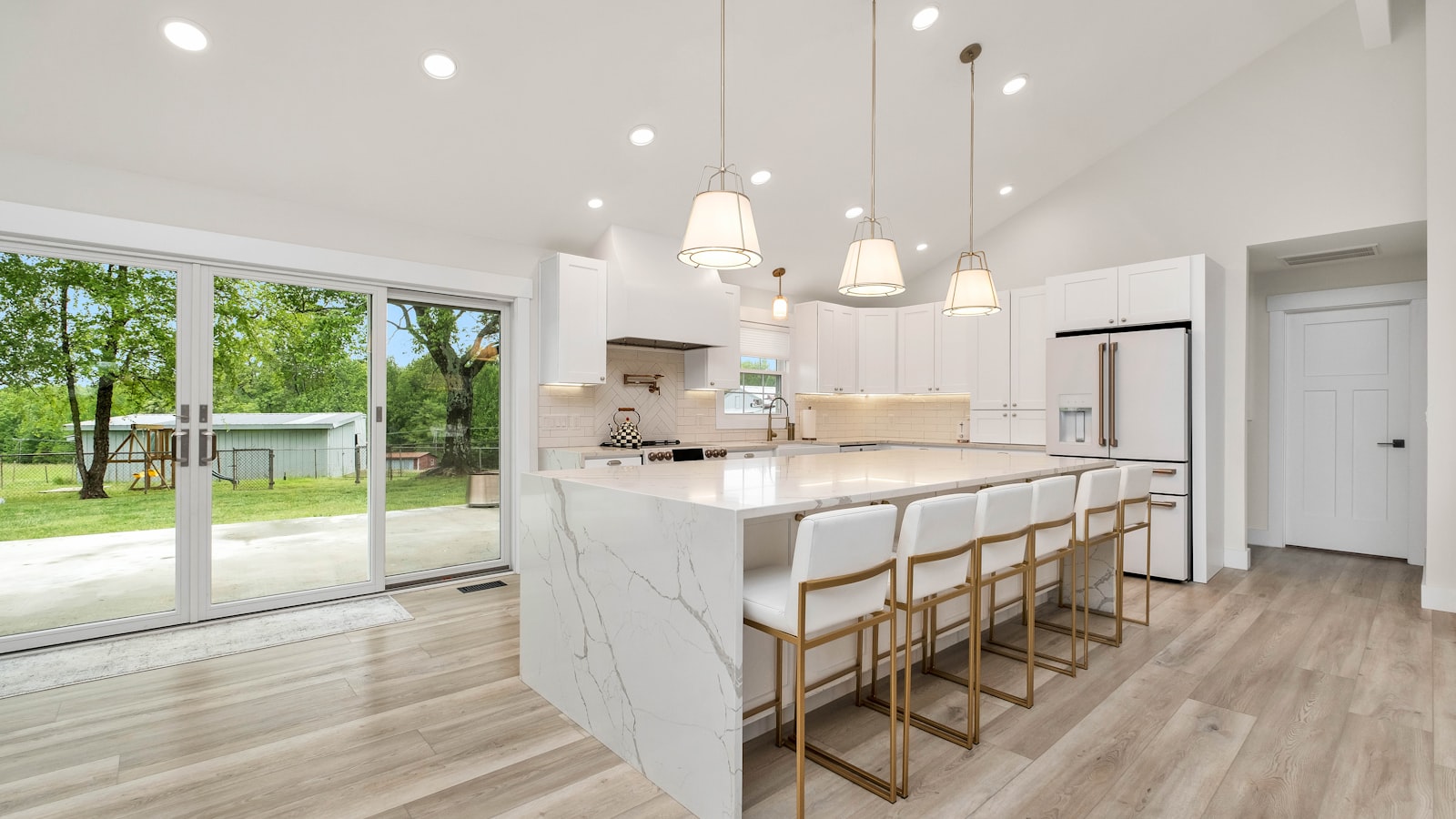
The island arrived with open plan. It was an American import – the US had been building kitchens around islands since the ranch houses of the 1950s – and it landed here just as the wall between kitchen and sitting room started coming down. Once Britain began knocking through – and we’ve been knocking through since the late nineties – the kitchen suddenly had to work as a room you look at, not just a room you cook in. Property television did the rest, and by the mid-2010s the island had become shorthand for a job done properly: the stone top, the breakfast bar, the pendant lights hung in a row, the fruit bowl nobody touches. Houzz’s 2026 UK kitchen study found 29% of renovating homeowners added an island and another 29% updated the one they already had. Among the new ones, more than half now run past seven feet long. The island didn’t just survive two decades of trend cycles; it grew.
And it kept absorbing jobs. First it was a worktop. Then it gained a sink, then a hob, then a wine fridge, then seating for four, then the family calendar propped against the splashback. The same rethink that’s driving broken plan kitchens is now asking a blunter question: should one piece of joinery be doing all of that in the first place? The living-room half of that story is in our broken-plan living guide.
Somewhere along the way the island stopped being a work surface and became a monument.
The case against the slab
Start with the space, because the maths is brutal. An island needs roughly a metre of clear walkway on every side – any less and you’re turning sideways with hot pans. So a modest island of two metres by one claims a footprint of about four metres by three once the walkways go in, and a very large number of British kitchens simply don’t have it. The fix people reach for, a smaller island, is worse: a stranded cube you walk around all day, seating no one, storing three baking trays.
Then there’s what islands actually do all day, which is collect things. The island is usually the first flat surface inside the door, so it hoovers up post, keys, school letters and laptop chargers. You clear it on Sunday. It’s covered again by Tuesday.
The bill is the other problem. Checkatrade puts a standard fitted island at £1,000 to £3,000, made-to-measure work at £3,000 to £8,000, and once a stone worktop, plumbing and integrated appliances are involved you’re at £5,000 to £12,000 or beyond. The worktop alone can cost more than the cabinets underneath it. Add an island hob and you’ve also bought a ceiling extractor, which is the kind of line item that appears on the quote in small print and lands like a piano.
But the quieter cost is flexibility. A fitted island is fitted. When the room stops working – a baby arrives, or a desk gets squeezed into the corner – everything else has to shuffle around a block of cabinetry that isn’t going anywhere without a crowbar.
The unfitted kitchen, quietly returning
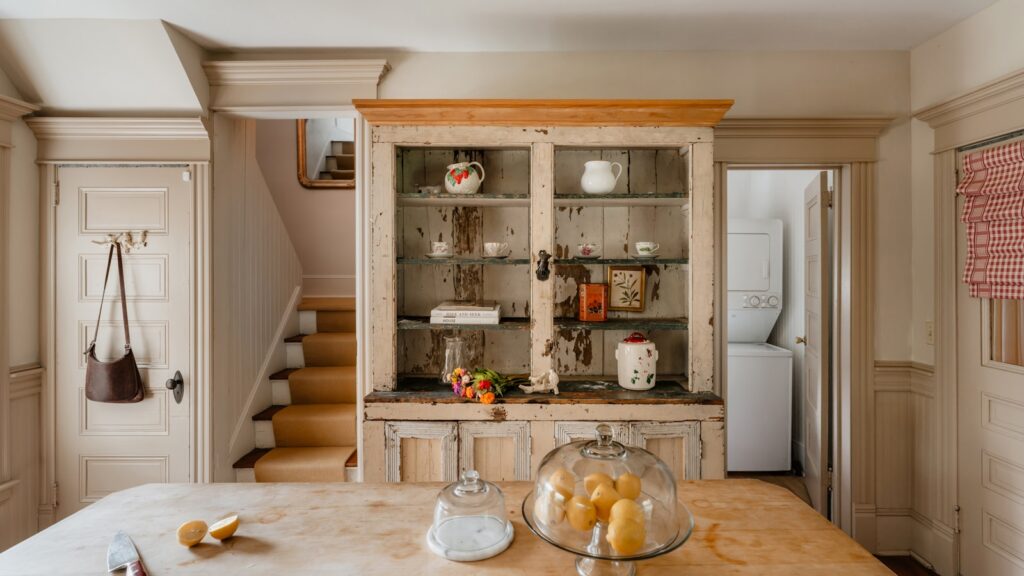
The island’s retreat is part of a wider undoing. For most of a century the direction of travel was more fitted: more units, more matching doors lining every wall, everything built in and boxed off. The unfitted kitchen reverses it – a painted dresser, a work table, a glazed cupboard, a butcher’s block, pieces that look like they arrived separately because they did. It’s how kitchens looked before the 1950s, and it’s how the very expensive ones are starting to look again.
Some of the appeal is plain economics: freestanding pieces cost less than joinery, and you can buy them one at a time as money allows, rather than in a single terrifying invoice with a payment schedule. And some of it, frankly, is fatigue. Twenty years of handleless grey units will do that to a country.
A word of caution the trend pages tend to skip: unfitted kitchens are harder to keep clean. Gaps behind freestanding furniture collect exactly what you’d imagine. The fitted kitchen won in the first place for reasons that haven’t vanished, and a fully unfitted room is a commitment to sweeping under things for the rest of your life. Most people want the middle path – fitted at the edges, loose in the middle. Which is precisely the island-to-table swap.
The kitchen island alternatives designers actually rate
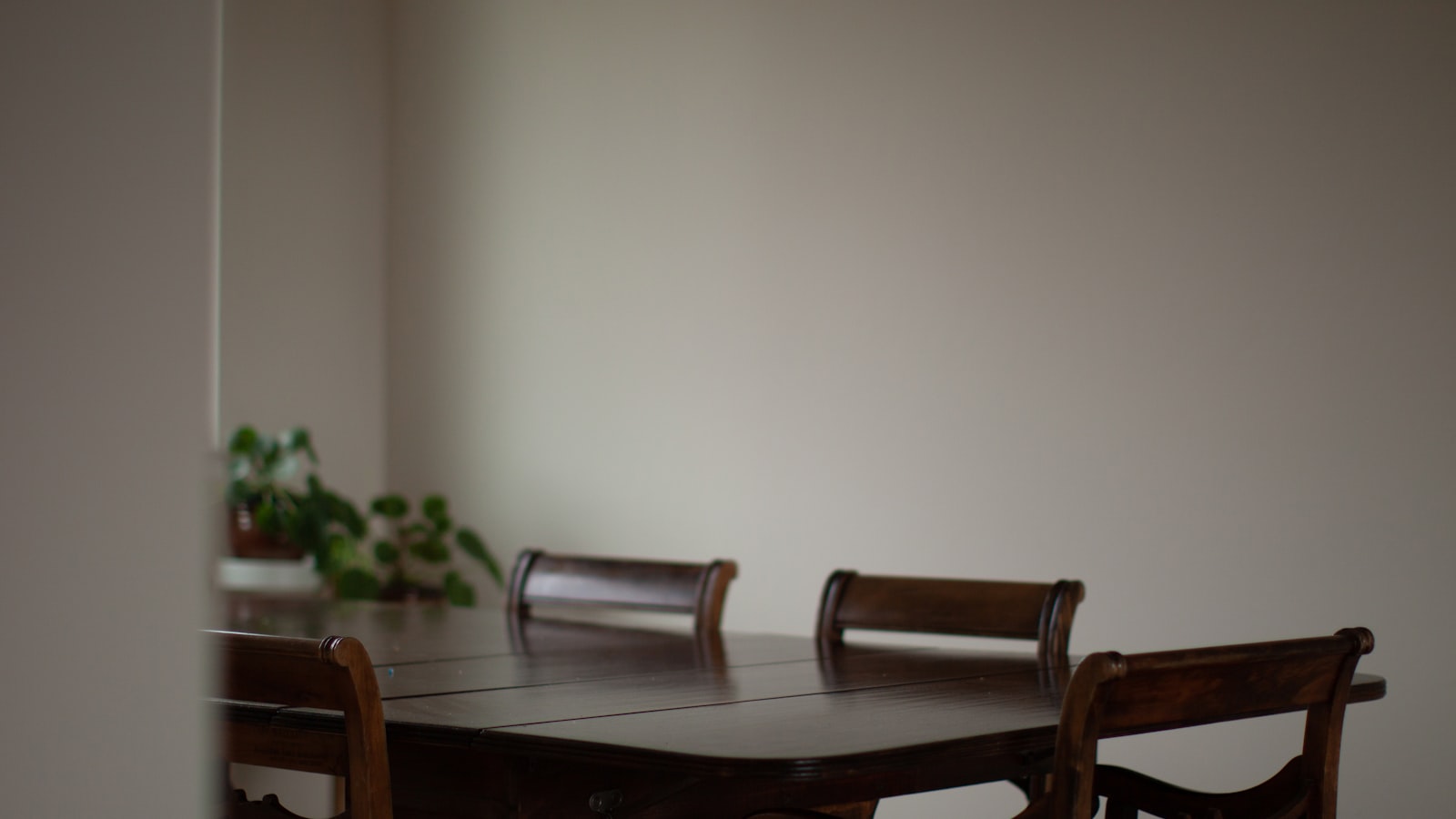
The table is the big one. Not a dining table exiled to the kitchen, but a proper work table – the cook’s table that ran down the middle of large British kitchens for a couple of hundred years before fitted units arrived. The expensive end of the market got here first: deVOL has been styling its kitchens around freestanding prep tables for years, and Livingetc’s 2026 island trend report shows where the luxury market has landed – islands designed to look like standalone furniture, vintage or made to measure, pieces that feel collected rather than installed. Follow that logic to the end. If the fashionable island is pretending to be a table, you could just have a table.
A table seats people at sitting height, which matters more than it sounds (more on stools below). It works harder socially – homework, wrapping presents, long breakfasts, the tax return. In a period house it suits the architecture in a way a waterfall-edge quartz slab never will. And when you move, it comes with you.
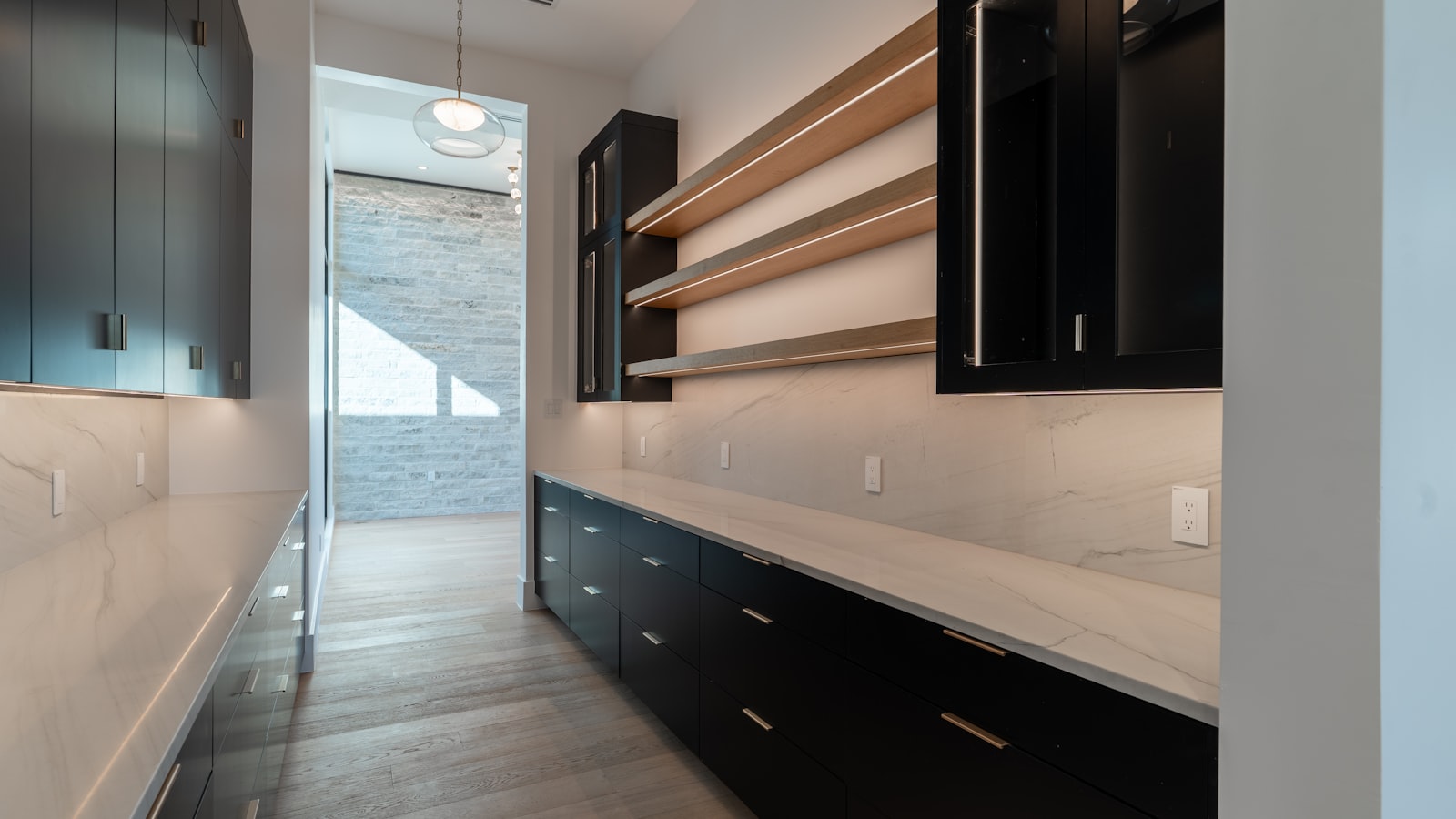
The storage the island held goes into a larder or dresser instead, and that swap has its own momentum. We wrote in the spring about why the butler’s pantry has become the most wanted feature in UK kitchens, and nothing since has slowed it down. A single freestanding larder cupboard holds more than most islands do, at a fraction of the fitted price, and it doesn’t need a walkway on four sides.
For properly small rooms, the honest answer is often a peninsula – an island with one end attached to the wall, needing clearance on two sides instead of four. It’s not glamorous. It works. Fit it badly, though, and it chokes the room exactly the way the island did, so the walkway rule still applies.
And for renters, a butcher’s block or a sturdy trolley does most of the job for under £200 and leaves when you do.
What you give up is real, and worth saying plainly. A table has no bin drawer, no dishwasher, no sockets for the mixer – though the sockets problem has a £20 answer, since a clamp-on socket strip does for a kitchen table what it does for a desk. A cheap one wobbles the moment you knead anything. And if you love cooking on an island hob, facing the room while you stir, nothing on this list recreates that.
The money, done honestly
Here’s the comparison nobody in a kitchen showroom will run for you. A mid-range fitted island – decent cabinetry and a quartz top, no appliances – lands somewhere around £4,000 to £6,000 installed. A solid oak or scrubbed pine farmhouse table from an auction house or Facebook Marketplace runs £150 to £400, and the supply is enormous, because Britain spent two decades throwing brown furniture out of fashion and the salerooms are still full of it. We made this case about Victorian chests of drawers earlier this month; it goes double for tables. I bought a scrubbed pine table at a Bristol saleroom two years ago for £180, and the delivery van cost nearly as much as the table.
New isn’t ruinous either. IKEA will sell you a perfectly serviceable pine table for somewhere around £150, and £600 to £900 buys new oak from any number of small British makers who will be delighted to hear from you in September, their quietest month.
One warning from experience: a scrubbed pine top takes marks. Wine glasses, hot pans, the felt tip that went through the paper – you either learn to call it character or you buy oak and oil it twice a year. Quartz owners never have this conversation, and it’s only fair to admit it.
So call it £3,000 kept in your pocket at minimum, and £5,000 quite plausibly. What that money doesn’t buy you is storage, integrated appliances or the estate agent photograph. Islands photograph beautifully – a real if slightly depressing part of why they spread – and a kitchen with one still shows well on Rightmove. If you’re selling within a couple of years, that might reasonably swing it back.
In defence of the island – and against the bar stool
None of this makes the island a mistake in every house. If your kitchen is more than four metres wide, if you host a lot, if you cook seriously and want the hob facing the room – keep it, or fit one, and ignore the trend pages, including this one. Big rooms need something in the middle. That isn’t fashion; it’s physics.
The stools, though. I’ll say what the design press won’t: the kitchen bar stool was always the worst seat in the house. Perched at 90 centimetres, backless or nearly, feet hooked on a rung, looking down at your food. Nobody has ever been comfortable on one for longer than forty minutes, and most households know this, which is why the stools end up holding coats. The island’s great social promise – everyone gathered round while you cook – was mostly people standing, because the seats were bad. A table fixes that without a single tradesman, and I’d argue a decent chunk of the island backlash is really a stool backlash that hasn’t worked out what it’s angry at yet.
Doing it before Christmas – or without a renovation
If a proper rework is on the cards, the calendar matters more than people think. Most kitchen companies want orders confirmed by late September or early October to guarantee a fit before Christmas, so the window for deciding this year is now, not November when the brochures start arriving.
But the cheap version of this trend needs no tradesmen at all. Sell the stools while they still have resale value. Move a table in – secondhand, and slightly too big. Add a freestanding dresser or larder cupboard to catch the storage you lost. And if the room feels bitty afterwards, paint is the cheapest way to pull it together; colour drenching was practically invented for rooms full of furniture that didn’t arrive together. If there’s a dining room next door doing nothing, that’s a different argument, and we’ve already made it.
Done secondhand, the whole swap can come in under £600: table from the saleroom, dresser from Marketplace, a litre of decent paint, a Saturday with a hired van. That’s less than the cheapest island carcass before anyone’s fitted a worktop to it.
The island isn’t disappearing – Britain has fitted far too many for that, and in the right room it still earns its footprint. But the default has cracked, and that’s the interesting part. Next time you’re in a showroom looking at a £6,000 slab with four sad stools tucked under it, ask yourself: what would you actually miss? And what would you get back?