
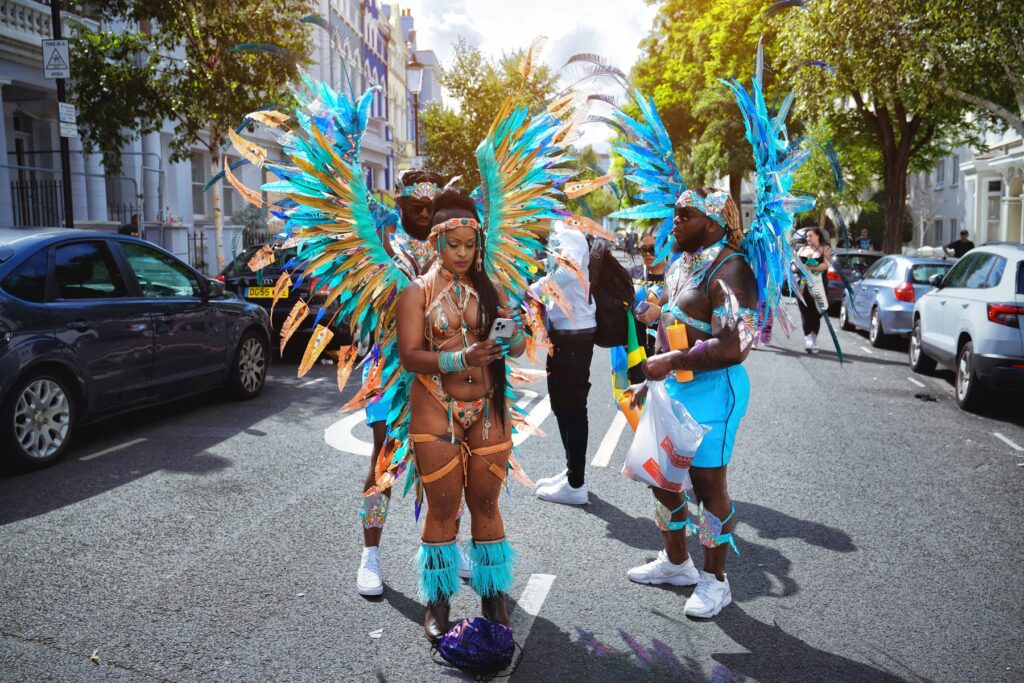
Notting Hill Carnival 2026: The Free Weekend That Costs £5.6 Million to Stay Free
The best-value weekend in British live music doesn’t sell tickets. Notting Hill Carnival 2026 runs over the August bank holiday – Panorama on Saturday 29th, J’ouvert and Children’s Day on Sunday 30th, the main parade on Monday 31st – and for the 60th time, walking in costs nothing. No booking page, no presale code, no wristband. You come out of Ladbroke Grove or Westbourne Park station, you follow the bass, and Europe’s biggest street festival swallows you whole. It isn’t even the only big free-entry event of the bank holiday: Manchester’s community-rebuilt Pride runs the same weekend, with a free Monday of its own. If your bank holiday leans more towards dance tents than steel bands, Creamfields 2026 runs the same weekend.
In This Article
And it very nearly didn’t happen.
In March, Sadiq Khan stepped in with £4.66m of emergency funding – on top of £946,300 City Hall had already committed – to cover safety improvements that an independent review said carnival could not go ahead without. That’s roughly £5.6m of public money, this year alone, to stage an event nobody pays to enter. The organisers had run out of options. Without the cheque, the 60th anniversary of the most important cultural event in Britain was in real doubt. Sit with that for a second, because it tells you almost everything about how this country funds culture: we will happily let a £396m economic engine rattle a collection bucket every spring.
Sixty years from a street party on a broken street
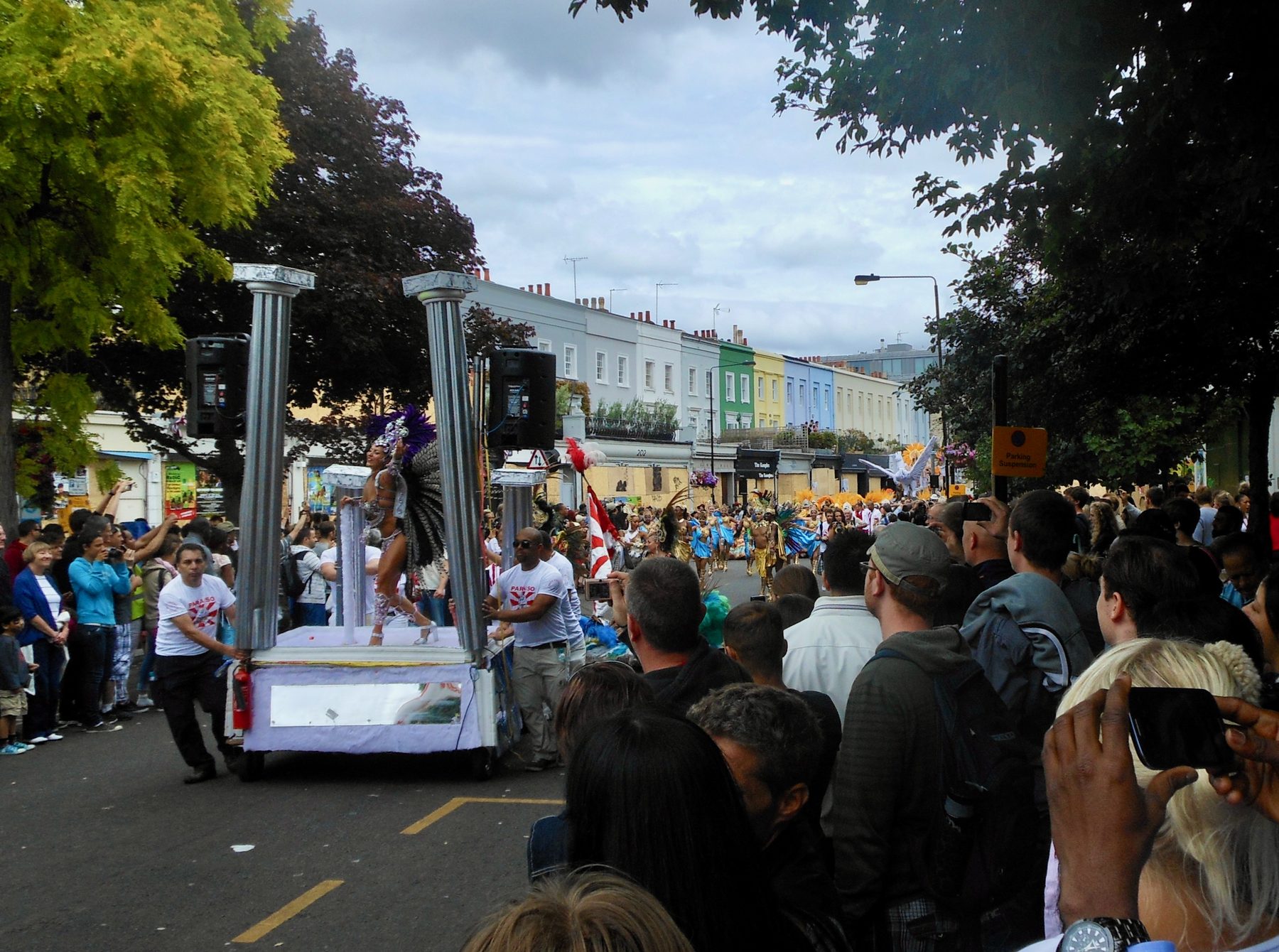
Carnival’s origin story is better than most festivals’ entire history. In September 1966, community activist Rhaune Laslett organised a children’s street festival in a Notting Hill that bore no resemblance to the one estate agents sell now – overcrowded housing, open racial hostility, the long shadow of the 1958 race riots and the murder of Kelso Cochrane. Claudia Jones had already staged her indoor Caribbean carnival at St Pancras Town Hall in 1959, a defiant answer to those riots, and when the two traditions met on the streets of W10 and W11, something took hold that has never let go. Steel bands first, then the mas bands, then in the seventies the sound systems – great walls of speakers wired into lampposts, playing music you couldn’t hear anywhere else in Britain.
Ian Comfort, chair of Notting Hill Carnival Ltd, put it plainly when the rescue funding was announced: Laslett “sought to bring unity to a neighbourhood marked by racial tension, poor housing and social division”, and from that beginning carnival “has grown from a small local street party into a global cultural institution”, as reported by London City Hall.
That growth is the whole problem, and the whole point.
What £5.6 million actually buys
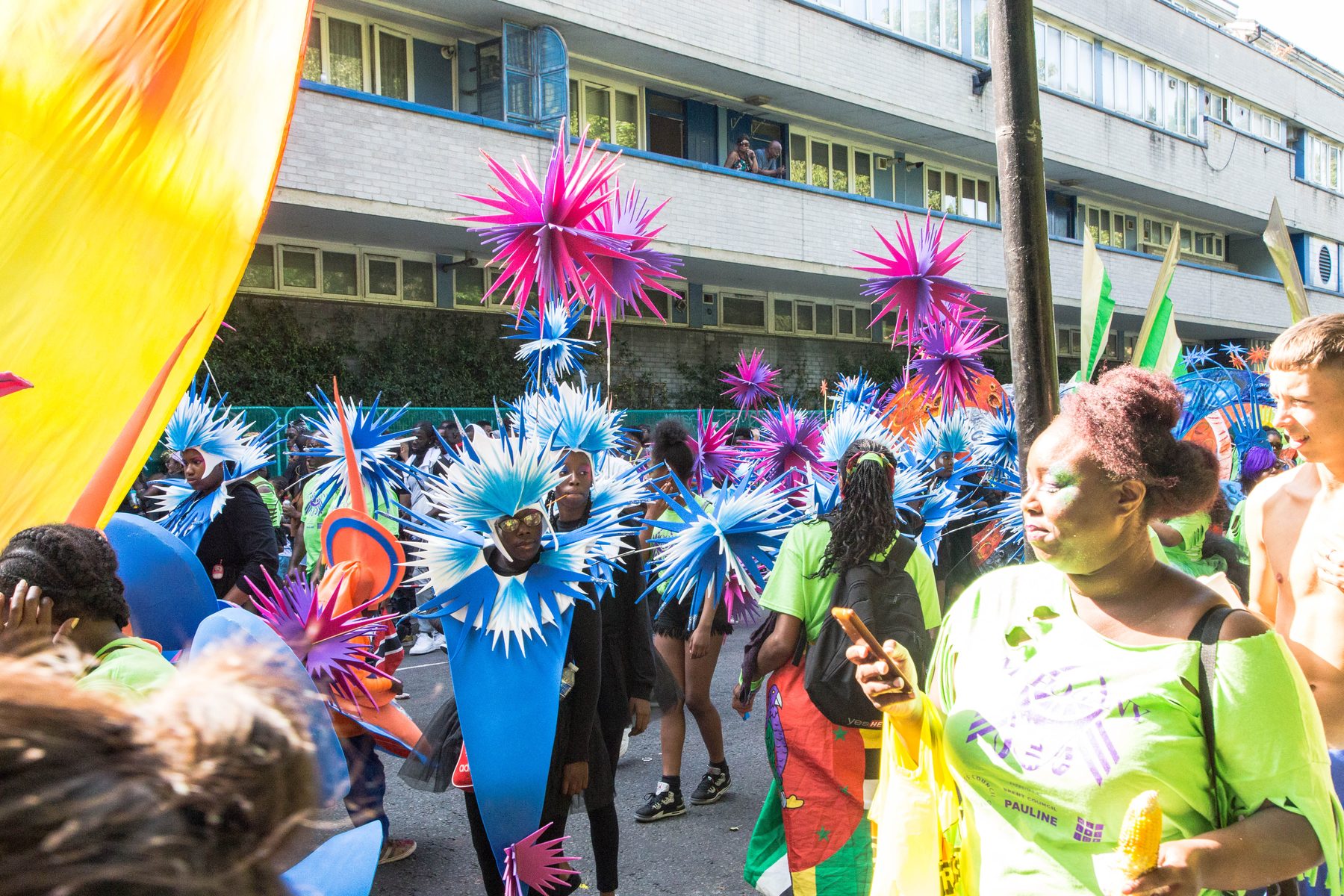
The money isn’t for floats or feathers. In 2024, carnival’s organisers – with City Hall, the Met, Kensington & Chelsea and Westminster councils – commissioned an independent review into crowd safety, prompted by years of warnings about crush risks in the narrowest pinch points of the route. The first phase paid for measures at last year’s event. The completed review then handed organisers a bill they had no way of paying: £4.66m for more barriers, more stewards, professional crowd management plans, and the staffing to run them.
Some of it also covers something quietly significant: Notting Hill Carnival Ltd taking over operational responsibilities that the Metropolitan Police have historically managed. That’s the event growing up. For decades carnival has run on an awkward handshake between a community organisation and a police force with, to put it gently, a complicated history in that exact postcode. Moving stewarding and crowd operations into the organisers’ own hands is what every mature festival does – it’s how Reading and Leeds operates, and nobody blinks.
The difference is that Reading charges £325 a head for the privilege. Carnival charges nothing, so the bill lands on the public purse, and every year the same argument starts up again about whether it should.
Notting Hill Carnival 2026: dates, days and what’s different this year
The shape of Notting Hill Carnival 2026 will be familiar to anyone who’s been before, with a few anniversary flourishes. Panorama – the national steel band competition, and for my money the most underrated event of the whole weekend – takes place on Saturday 29 August. Sunday 30 August brings J’ouvert at dawn, all paint, powder and oil, followed by the family-focused Children’s Day parade. Monday 31 August is the main event: the full parade, the mas bands, and the sound systems running until the 7pm shutdown.
For the 60th, organisers have promised limited edition anniversary collections and a new official app with a proper map, band listings and live updates – genuinely useful at an event where phone signal dies by noon and finding anyone is a matter of faith. Details are on the official carnival site.
Entry remains free. No tickets, no gates. It’s worth saying plainly because every year someone asks where to buy them.
The sound systems are the point
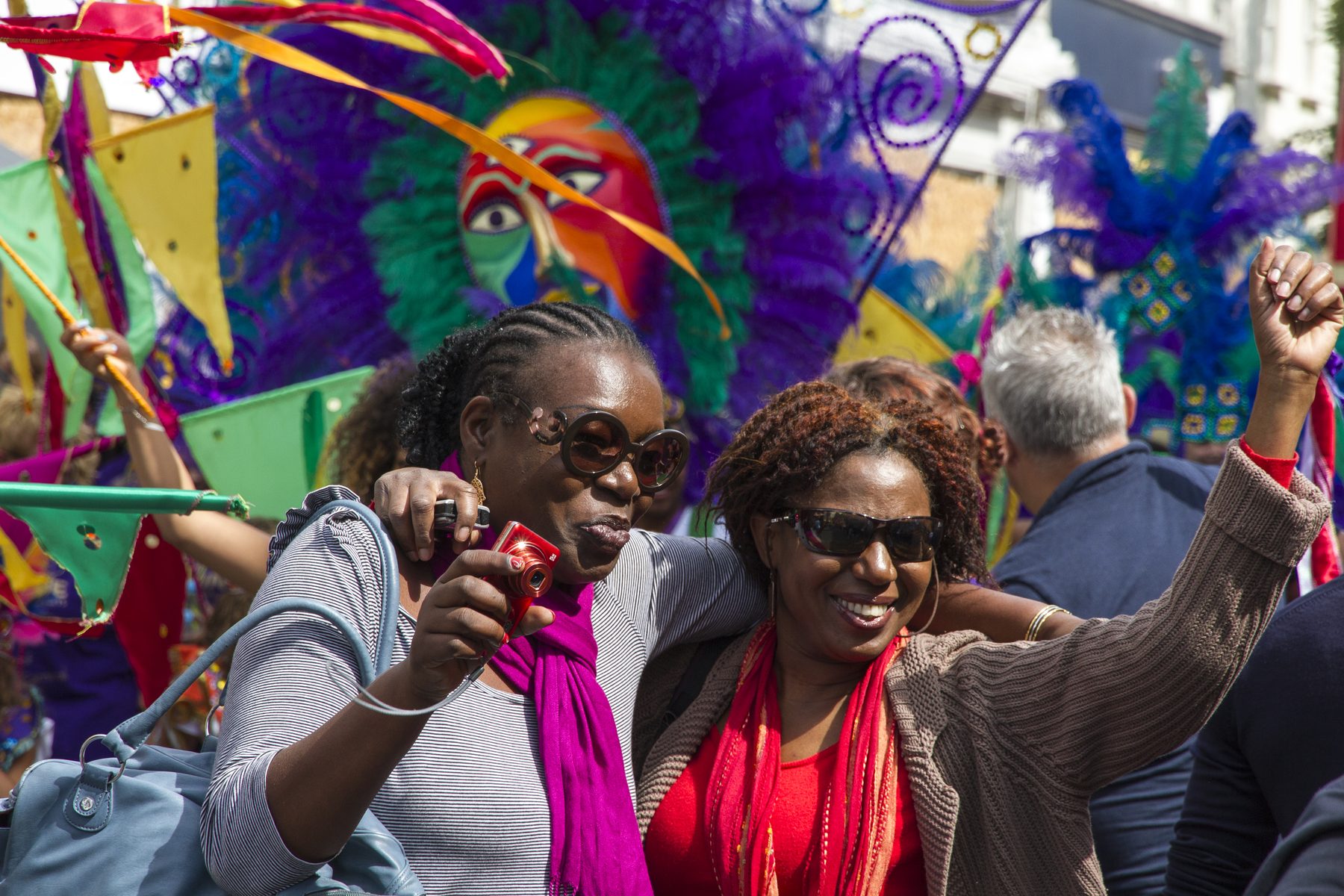
The parade gets the television coverage, but ask anyone who goes every year and they’ll tell you the static sound systems are the beating heart of the thing. There are around three dozen of them, wired into corners and side streets across the route, and some have held the same pitch for generations. Channel One’s stack of hand-built speaker boxes has been rearranging ribcages with dub and roots reggae since the late seventies. Aba Shanti-I’s corner is closer to a church service than a gig – one man, a mixing desk, and several thousand people locked into an hour-long meditation on bass. Then two streets over someone’s playing soca at a tempo that makes standing still physically impossible, and two streets after that it’s UK garage, or amapiano, or whatever London’s actually listening to this year.
This is the bit the relocate-it crowd never seems to grasp. Sound system culture came to carnival in 1973, when Leslie Palmer opened the event up to the reggae generation and changed it from a parade you watched into a city you wandered. The systems aren’t stages booked by a promoter. They’re family operations, built and maintained over decades, playing yards from the houses their founders grew up in. Half the story of British music runs through those speaker stacks – dub, lovers rock, jungle, garage, grime all took something from carnival’s corners. When people call carnival the most influential event in British music, this is what they mean. Not the headliners; there aren’t any.
And that’s also why the safety money matters more than it sounds. The systems sit in residential streets never designed for crowds of this size. Better stewarding is what keeps them there – the alternative, floated more than once, is cutting the number of systems to thin the crowds. Losing them to save the event would be a quiet way of losing the event.
The £396 million contradiction
Research commissioned by The Voice and carried out by JN Bank economist James Williams put carnival’s annual economic contribution at over £396m – a figure reported by The Voice and repeated by the Mayor himself, who called carnival an event “boosting our economy by nearly £400m each year and symbolising how our capital celebrates our diversity”.
Hold those two numbers next to each other. Nearly £400m generated. £5.6m needed to keep it alive, found at the last minute, framed as a rescue.
Every pub, hotel, off-licence and short-let landlord within two miles of the route has their best weekend of the year. Airbnb prices in W2 triple. The brands that drape themselves over carnival’s imagery in August ad campaigns contribute nothing to the stewarding bill. Carnival generates enormous value and captures almost none of it, because the thing that makes it valuable – free, open streets – is the thing that stops it charging. Britain’s other great music weekends don’t have this problem. Van Morrison can sell out a small room at £150 a seat; the Mercury Prize has a broadcaster and a sponsor. Carnival has a collection bucket and a mayor with an election-proof affection for it.
Compare how the rest of the cultural calendar is funded and the strangeness sharpens. The BBC Proms sit on licence fee money and a broadcaster’s marketing machine. Glastonbury banks £400-plus a ticket and still gets treated as a national treasure. Even the Edinburgh Fringe, chaotic as its economics are, has a ticketing infrastructure doing the heavy lifting. Carnival – older than most of them as a mass event, bigger than all of them by attendance – is funded like a village fete that got out of hand. It took a safety review with the word “risk” in it to shake loose £4.66m; the culture itself has never commanded that kind of cheque on its own merits.
The new funding package at least gestures at a fix – part of it is earmarked for developing future income so carnival stops needing annual bail-outs. There’s an official merch line now, and talk of partnerships with carnivals in Paris and Tenerife. Modest stuff. But sixty years in, it’s about time someone built the thing a business model.
No, it shouldn’t move to Hyde Park
Every year, usually from a think tank or a retired police officer, comes the same suggestion: ticket it, fence it, or move it to Hyde Park where it can be “managed properly”. And every year the suggestion misunderstands what carnival is at such a basic level that it’s barely worth engaging with – but let’s, briefly, because this year the safety argument has real weight behind it.
The crowding concerns aren’t invented. The independent review exists because the density in spots like the Ladbroke Grove pinch has genuinely frightened people who study crowds for a living. Anyone who’s been caught in the Sunday afternoon crush under the Westway knows the feeling – feet not quite touching the ground, no way to change direction, a slightly forced grin at the stranger pressed against your shoulder.
But a fenced carnival in a royal park is not carnival with better safety. It’s a different event wearing carnival’s clothes. The route matters because it’s the neighbourhood – the same streets the Windrush generation was redlined into, the same corners where the 1958 riots happened, now the most expensive real estate in Europe, reclaimed for two days a year by the community that made the area worth anything in the first place. Take that away and you’ve got a large Caribbean-themed concert. London already has plenty of those.
The £5.6m is the better answer: keep the streets, pay for the stewards. Barriers where the review says they’re needed, professionals running the pinch points, and the Met stepping back to actual policing. That’s not compromise. That’s the event finally being resourced like the national institution everyone claims it is.

Which day should you actually go?
Panorama, if you want the secret-handshake version. Watching a 100-piece steel orchestra attack a ten-minute arrangement they’ve rehearsed all summer is one of the great free experiences in British music, and the crowd is a fraction of Monday’s. If the brass and pan send you down a rabbit hole afterwards, our British jazz round-up is a decent place to land.
Sunday suits families and first-timers – the parade is smaller, the crowds gentler, and you can get a kid within actual sight of a costume. J’ouvert, if you can face a 6am start, is the closest thing to the Trinidadian original: paint, powder and chocolate flung about in the half-light, and done before most of London has had breakfast.
Monday is the full-fat version. Get there before eleven, pick a sound system and stay loyal to it rather than trying to see everything, eat from the stall with the longest queue of locals, and accept that you’ll lose whoever you came with by 2pm. Bring cash, because the card readers give up early. Check which tube stations are exit-only before you set out – Ladbroke Grove usually shuts entirely and the walk from Westbourne Park catches people out every year. And don’t plan anything for the evening. You’ll think you’ll be home by eight. You won’t.
Sixty years ago this started as a children’s party on a street Britain preferred not to think about. This August bank holiday, a couple of million people will stand in the same streets and dance to sound systems older than most of the acts on the best British albums list. The £5.6m question is whether Britain keeps treating that as an annual emergency or finally funds it like it means it. What’s the version of this city, or this country, that’s better off without carnival in it?