

Best British Jazz 2026: The London Sound That Outgrew the Underground
When Ezra Collective walked off the BRITs stage in March 2025 with the Group of the Year trophy, they’d just done something no jazz act had managed in the 45 years of the ceremony. They’d played it. A five-piece who met in a youth club in north London, stood where Oasis and the Spice Girls once stood, and the room went up. If you want a single moment that explains why the phrase “best British jazz 2026” now gets typed into Google by people who couldn’t name a Coltrane record, that’s the one to start with.
In This Article
- The night jazz gatecrashed the mainstream
- Best British jazz 2026: the records actually worth your time
- Why it doesn't sound like American jazz
- The names worth following next
- The bit nobody in jazz wants to say out loud
- Where the music actually breathes
- How the scene feeds itself
- The quiet export story
- Where to start if you've never bothered
And it wasn’t a fluke. Two years earlier the same band had become the first jazz group to win the Mercury Prize, beating Arctic Monkeys and Raye to it. The story everyone told afterwards – that British jazz was having “a moment” – has now gone on so long it stopped being a moment and became the weather.
The night jazz gatecrashed the mainstream
Drummer Femi Koleoso has never been shy about where the band came from. Tomorrow’s Warriors, the free youth programme set up in 1991, put instruments in the hands of kids who’d otherwise never have touched a double bass. His brother TJ, the band’s bassist, once described those youth jazz sessions as “the best place on Earth to be born” if you’re a young musician. That’s not marketing. It’s the actual production line that gave Britain Nubya Garcia, Kokoroko and half the names on any decent shortlist right now.
What’s changed isn’t the talent. Britain has always produced serious players. What’s changed is that the audience caught up. Streaming flattened the old genre walls, so a nineteen-year-old who grew up on Afrobeats and grime hears a Yussef Dayes drum break and doesn’t file it under “jazz, not for me”. They just like it. Speaking to Music Week after the Mercury win, the band were clear they saw the prize less as a finish line and more as a door they intended to keep kicking open for the players behind them.
The numbers back the mood. The UK recorded music market passed £1.5 billion for the first time in 2025, and a chunk of the new energy in British music is coming from acts who’d have been shoved into a specialist corner a decade ago. Jazzwise called the BRITs performance a watershed, and for once the watershed language felt earned rather than reached for.

Best British jazz 2026: the records actually worth your time
So where do you point someone who’s heard the noise and wants the music? Here’s what’s holding up.
Nubya Garcia’s Odyssey, out in late 2024, is the one I keep going back to. It’s a tenor saxophonist’s record that isn’t really about the saxophone – she brought in the Chineke! Orchestra for strings and worked with the producer Kwes, and the result swings between dub basslines and something close to a film score. It’s ambitious in a way that could’ve collapsed into mush and doesn’t. If you only try one thing off this list, try that.
Yussef Dayes is the other pole. Where Garcia builds cathedrals, Dayes is all groove and pulse, and Black Classical Music remains the record that converts sceptics. Stick it on for someone who claims they “don’t get jazz” and watch them give in by track three. Kokoroko sit somewhere between the two, all West African horns and warmth, the kind of band you put on a Sunday and don’t take off.
And it’s not just London, whatever the press would have you believe. Fergus McCreadie, a pianist from Stirlingshire, makes music that sounds like the Scottish Highlands – folk melody bent through jazz harmony – and he’s up for Album of the Year at the 2026 Jazz FM Awards for The Shieling. Emma-Jean Thackray is nominated in the same category for Weirdo, a sprawling, slightly mad record made after a brutal few years, and it’s the most personal thing the British scene has produced lately. The full 2026 nominations read like a map of where this thing has got to.

Why it doesn’t sound like American jazz
Play a British record from this scene next to a classic Blue Note session and the difference is obvious within seconds. The American tradition is built on swing and bebop and the long shadow of Charlie Parker. The British version grew out of something else entirely.
The roots here are Caribbean and West African. A lot of these players are the children and grandchildren of the Windrush generation, and you can hear it – the basslines come from reggae and dub soundsystem culture, the horn arrangements borrow from Fela Kuti and Afrobeat, the drum patterns nod to grime and broken beat as much as to anything from New Orleans. Notting Hill Carnival is in this music as much as any jazz club. That’s why it moves the way it does. American jazz asks you to sit and listen closely; British jazz, at its best, wants you on your feet.
It’s also less precious about the word “jazz” itself. Half these musicians shrug at the label. They grew up on Dizzee Rascal and D’Angelo and Sun Ra in roughly equal measure, and the records reflect that magpie ear. Purists hate it. Everyone else seems to be getting on fine.
The names worth following next
The headline acts are only part of it. If you want to stay ahead of where this goes, a few players are doing the most interesting work just below the main billing.
Moses Boyd, a drummer and producer from south London, makes the most forward-leaning records of anyone here – his 2020 album Dark Matter still sounds like it arrived from somewhere slightly ahead of the rest. Theon Cross does things with a tuba that shouldn’t be physically possible, turning an instrument most people associate with brass bands into a bass weapon. Joe Armon-Jones, the keys player whose fingerprints are all over half these records, makes solo work that drifts toward dub and soul. And Alfa Mist, out of Newham, built a quiet following making jazz that bleeds into hip-hop, the sort of thing that soundtracks a lot of late-night studying without the listener ever clocking what genre it is.
Cassie Kinoshi deserves a mention too. Her large ensemble SEED was Mercury-nominated back in 2019, and she’s since written for film and dance, the kind of career that shows how far the doors have opened. Ten years ago a young British composer with her training would’ve ended up writing for adverts. Now there’s somewhere else to go.
The bit nobody in jazz wants to say out loud
Here’s my unpopular position. Some of this is starting to sound the same.
The London scene has a house style now – broken-beat drums, a bit of dub, a horn line you could hum, everything warm and major-key and uplifting. It’s lovely. It also means a fair few records released in the last couple of years blur into one long, pleasant, slightly samey playlist. The genre got popular by being joyful, and joy sells, so everyone leaned into the joy. The edges that made early Sons of Kemet records feel dangerous have been sanded off in places.
This isn’t a reason to dismiss any of it. It’s a reason to be picky. The acts that last will be the ones willing to make the awkward, difficult, less-streamable record – the one that doesn’t fit neatly on a “feel good Sunday” playlist. Shabaka Hutchings putting down the saxophone to make quiet flute music in 2024 annoyed some fans and was exactly the kind of swerve the scene needs more of. Comfort is the enemy here, not commercialism.
Where the music actually breathes
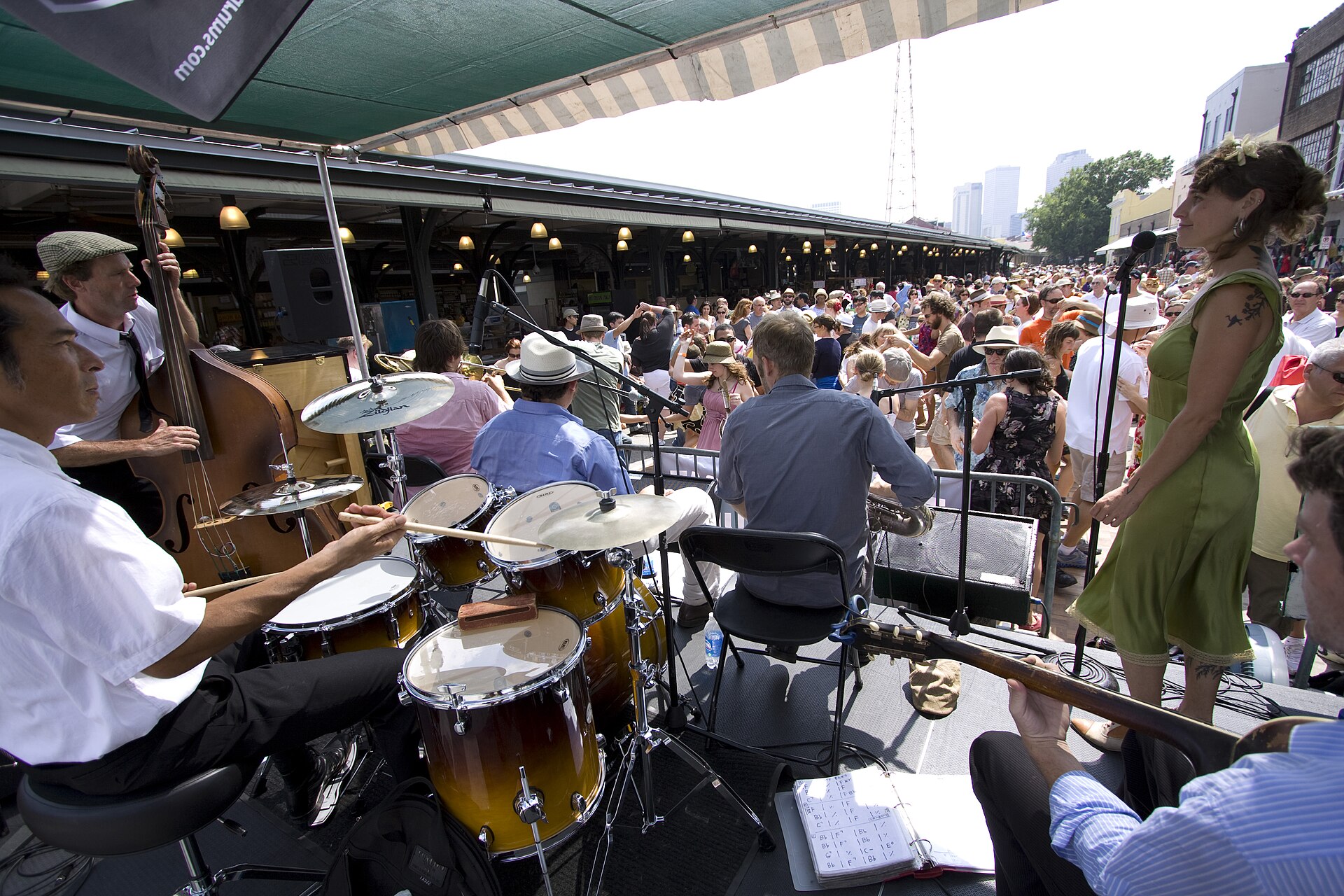
Recorded jazz is a starting point. The real thing happens in a room with bad sightlines and overpriced beer, and Britain is unusually well set up for it.
Ronnie Scott’s in Soho is the obvious one, eighty-odd years old and still the room every visiting American wants to play, though you’ll pay for the privilege. The 606 Club in Chelsea is the better-value alternative if you can find the unmarked basement door. Up in Manchester, Band on the Wall has been quietly doing the work for decades. And for the newer crowd, Church of Sound in east London turned a working church into the scene’s spiritual home, the kind of night where the line between the band and the crowd basically dissolves by the encore.
Festivals are where it scales up. Love Supreme in the South Downs is the closest Britain has to a dedicated jazz Glastonbury, and with the actual Glastonbury taking a fallow year in 2026, it’s picking up some of the slack for festival-starved music fans this summer. Cheltenham and Glasgow both run serious programmes too, the latter marking forty years of putting Scottish players on bills next to international names.
How the scene feeds itself
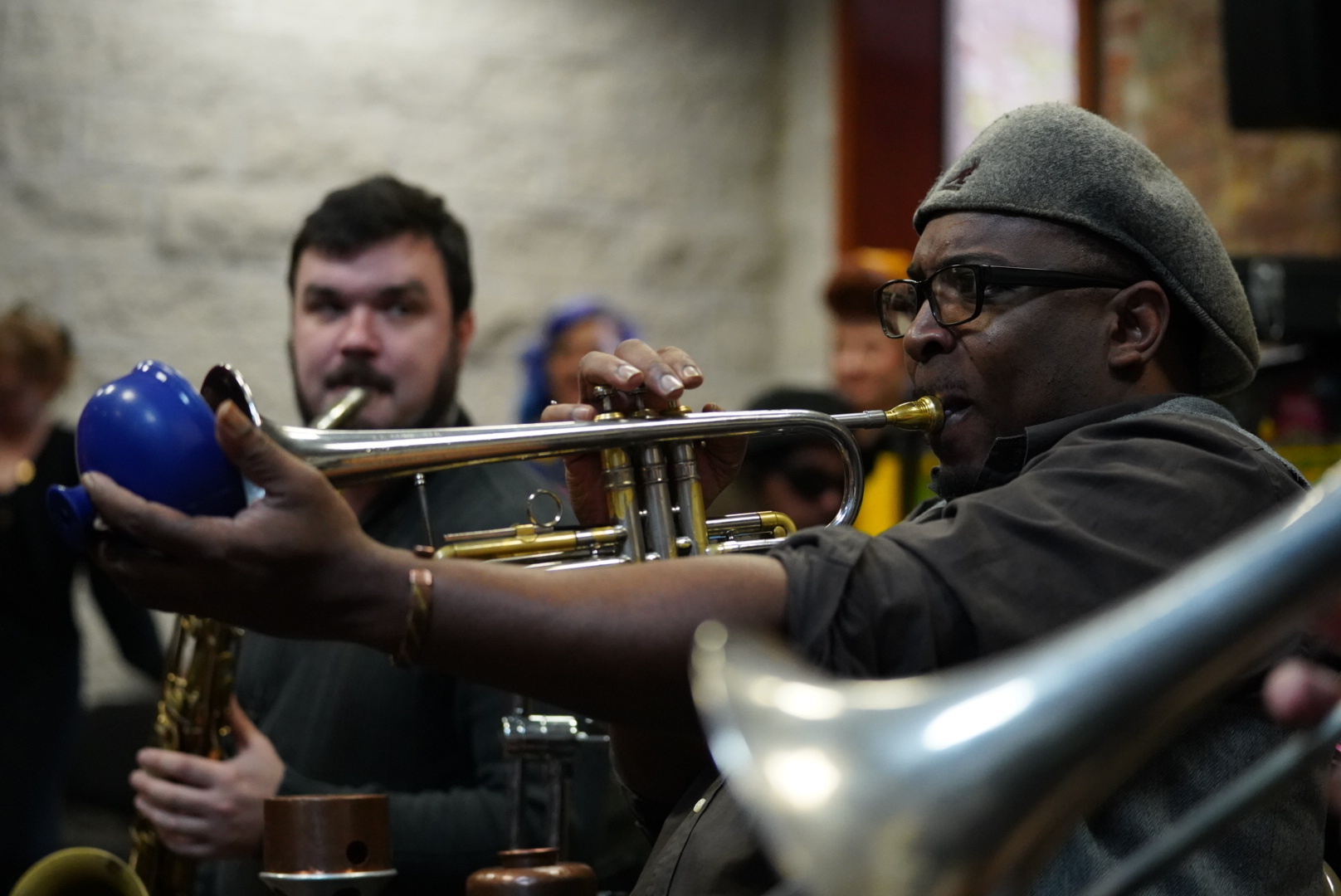
The thing that makes this more than a fad is the pipeline. Tomorrow’s Warriors is still running. Music education in state schools has been hammered for fifteen years, and into that gap stepped a handful of free programmes and youth clubs that produced, almost by accident, the most exciting generation of British improvisers in living memory.
There’s a lesson in that the politicians keep missing. You don’t manufacture a scene with a grant and a press release. You give kids instruments, somewhere warm to play them, and a few older musicians who bother to turn up and teach. The rest sorts itself out. Femi Koleoso has spent a good portion of his fame banging this exact drum, and he’s right to.
It’s also why the regional spread matters so much. If the only door into this music is a youth club in Hackney, it stays a London story. The fact that McCreadie came up through Scotland, that there are kids learning this stuff in Leeds and Bristol and Birmingham, is what turns a trend into something with roots.
The quiet export story
Here’s something that gets lost in the home-grown excitement: this music travels. Ezra Collective have played sold-out rooms across the United States and Europe, and the slightly surreal sight of American audiences discovering a London youth-club band is now fairly routine. British jazz has become one of the country’s more successful cultural exports of the last decade, and almost nobody talks about it in those terms.
That matters because export is what keeps a scene financially alive. A band can’t survive on London gigs alone, however packed. The touring circuit through Europe and North America is what lets these players make a living without a day job, which in turn is what lets them keep making records rather than drifting into session work or teaching full-time. The audience abroad is, in a real sense, subsidising the next wave back home.
Where to start if you’ve never bothered
Don’t begin with the difficult stuff. Nobody’s first jazz record should be a forty-minute free improvisation that sounds like a fight in a brass factory.
Start with Ezra Collective’s Dance, No One’s Watching – it’s built to move to, and there’s no entry exam. Then Nubya Garcia’s Odyssey when you want something with more weight. From there, follow your ears: liked the drums on Ezra, go to Yussef Dayes; liked the horns, go to Kokoroko; want something that sounds nothing like any of it, go to Fergus McCreadie. Half the fun is the wandering.
And if you’d rather have someone walk you through it properly, this is exactly the territory the better music podcasts cover well – our roundup of the best British podcasts of 2026 has a few worth your commute. For the wider state of British music this year, the 2026 Proms season and the year’s best British films tell a similar story – homegrown work finally getting the spotlight it spent years being denied.
British jazz spent decades as a thing you had to seek out, defend, explain. It isn’t anymore. The question now isn’t whether it’s any good – that argument’s over. It’s whether the scene keeps its nerve and makes the strange, difficult records, or settles for being the nation’s favourite Sunday-afternoon background music. Which way do you reckon it goes?