
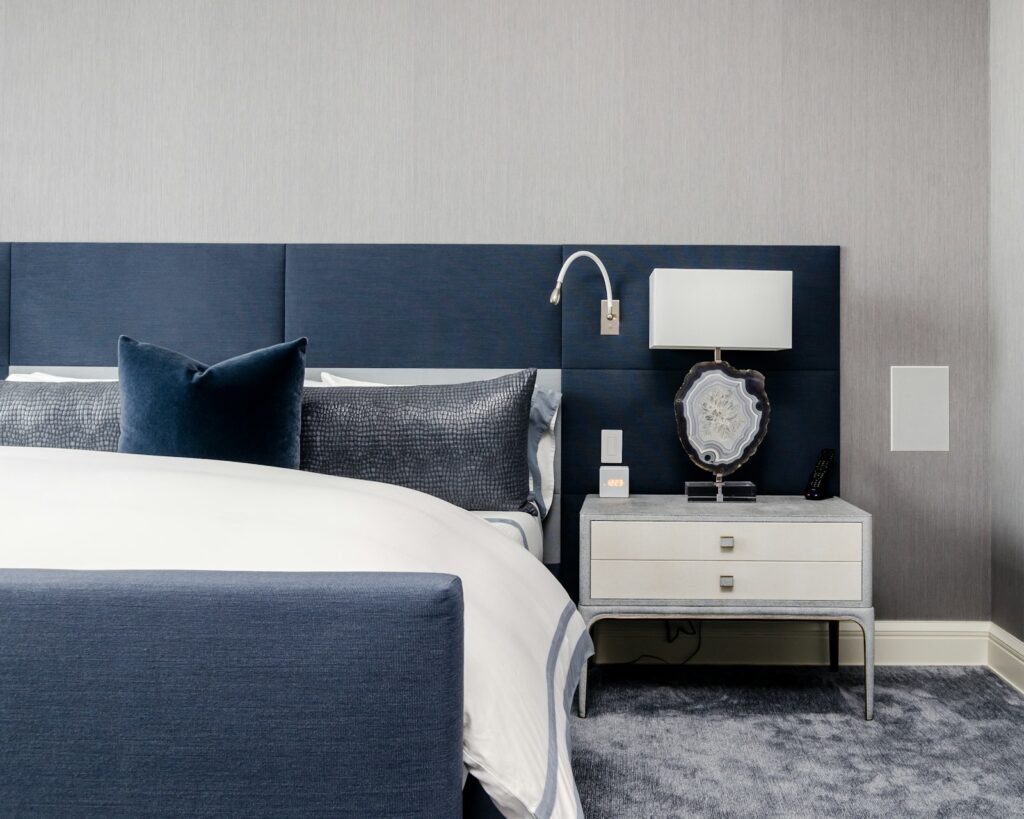
Oversized Headboard Ideas for 2026: Why Wider Beats Taller in a Small Bedroom – And the £429 Dunelm One That Runs 330cm
Dunelm sells a headboard that’s 330cm wide. A UK king-size mattress is 150cm. So the thing behind your pillows is now more than twice the width of the thing you sleep on, and it’s one of the best-selling ideas in bedrooms this autumn. If you’re hunting for oversized headboard ideas, this is where the trend has landed in 2026, what it costs, and where it goes wrong.
In This Article
- Why the oversized headboard idea took off
- Oversized headboard ideas for a small bedroom: go wide, not tall
- What the money actually buys
- Measuring it properly: the sums that stop expensive mistakes
- The fitting problem nobody mentions
- Fabric: chenille beats velvet, and pale bouclé is a trap
- Reupholstering or making your own
- Four versions I'd skip
- Let the headboard choose the paint
- Who should actually buy one
I’ll say it now: most people should go wide, not tall, and a good few shouldn’t do it at all.
Why the oversized headboard idea took off
Ideal Home calls the upholstered headboard the dominant bedroom trend of 2026, and the people who sell them agree. Hannah Armstrong, senior furniture buyer at Heal’s, describes a “soft, sculptural profile” that brings “cocooning comfort”. Megan Thompson at Bensons for Beds points to a wider hunger for softness and texture.
That tracks with everything else happening indoors. Bedrooms have been getting warmer and heavier for a while now (we covered why chocolate brown is taking over UK homes, and the pelmet is back). A big, soft slab of fabric behind the bed is the same instinct with a bigger footprint.
The look has also changed since last year. Ideal Home notes a move away from 2025’s bold abstract prints towards delicate florals, heirloom stripes and embroidery, with linen, bouclé and cotton doing most of the work and velvet slipping down the pecking order.
Oversized headboard ideas for a small bedroom: go wide, not tall
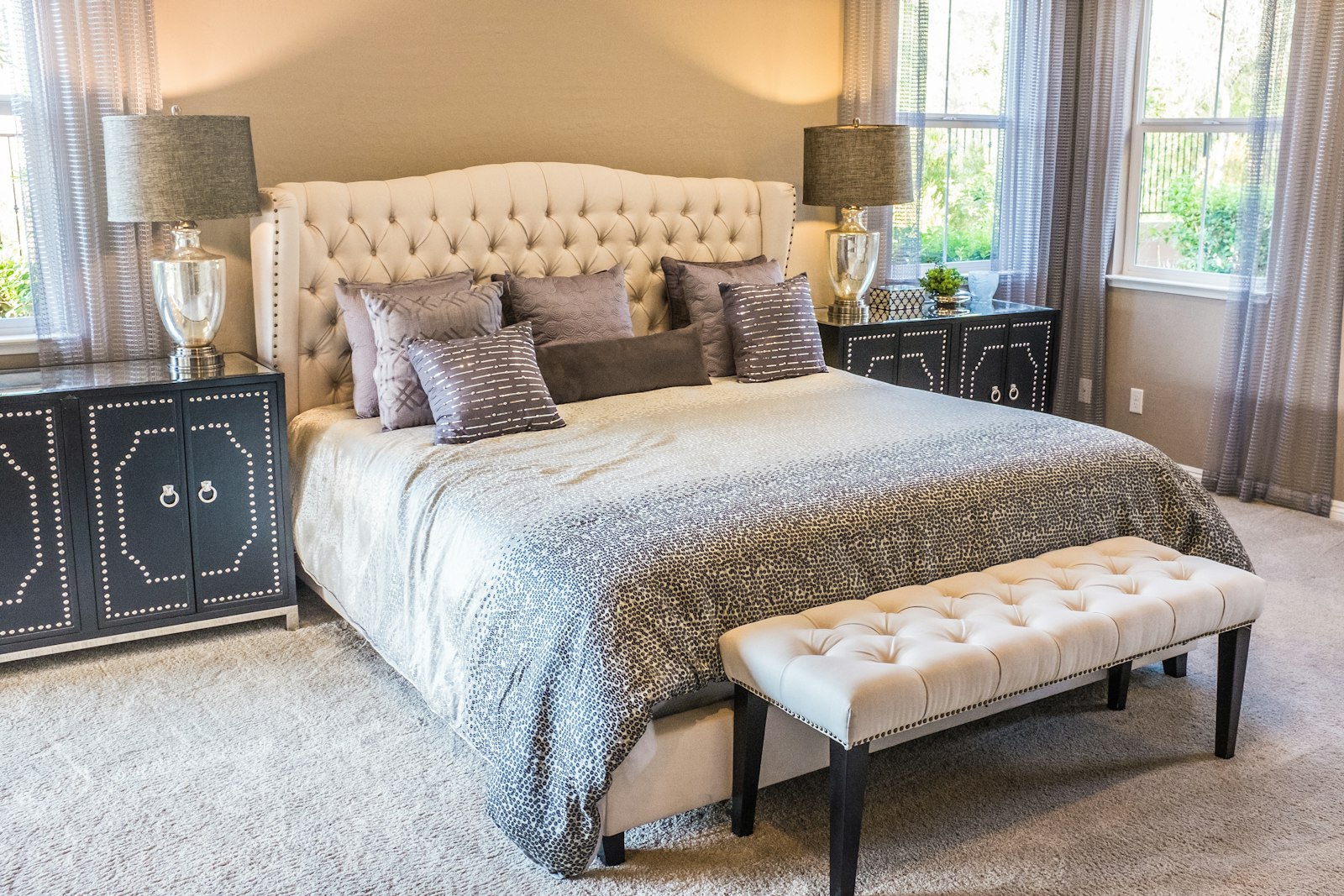
This is the bit that surprised me. You’d assume a huge headboard swallows a small room. The designers quoted by Ideal Home say the opposite. Cath Beckett of Yellow London argues that a headboard that runs wide “emphasises the width of the space, giving the illusion of a larger room”. Tall ones do the reverse: they shorten the wall and press down on the ceiling.
The Headboard Workshop’s rule of thumb is to choose a width that reaches past the mattress, often lining up with the outer edges of the bedside tables. On a king, that puts you somewhere around 200 to 240cm, and it means the tables sit against the headboard rather than floating beside it.
Now the arithmetic Dunelm’s 330cm number hides. The government’s nationally described space standard asks for a double bedroom to be at least 2.75m wide. That’s a minimum for new homes, and plenty of older British bedrooms are tighter. A 330cm headboard can’t physically fit in a room built to that minimum. It only works wall to wall in a properly generous room, or in an alcove-style space where the headboard is the wall.
So measure the wall first. Not the bed, the wall. And leave a few centimetres at each end, because a headboard jammed hard against a side wall looks like a mistake rather than a decision.
What the money actually buys
Ideal Home’s edit of the trend runs from £135 to £1,710, with the sensible middle sitting around £479 to £579. Livingetc’s stretches wider still, from £30 to £4,895, and most of that top end is designer pieces few people will buy.
Here’s where the real prices from the current crop sit:
- Habitat Onda linen headboard, £160. The cheapest credible one in the current crop, and linen rather than a polyester imitation.
- Silentnight Wave velvet headboard, £259. The wavy outline is the shape Livingetc says feels fresher than an obvious curve, though it’s velvet, which the trade is drifting away from.
- Dunelm Grandeur Plush, £429. 330cm wide, 12 colours. This is the one that made me write this piece.
- Dreams Saffron ottoman bed, £899. Comes with integrated bedside tables, which solves the alignment problem in one go.
- Anthropologie Gia Francois headboard, £1,198. Lovely. Also a headboard that costs more than most people’s mattress.
My view: the Dunelm at £429 is the value pick on paper because it undercuts the £479 to £579 mid-range by a comfortable margin and gives you the full oversized effect. But it’s the one where you have to be sure about your room width before you click buy. The Habitat at £160 is the safer first attempt if you’re not sure you’ll like living with a big soft headboard. And the £899 ottoman bed is the only one of the five that makes sense as a space-saver in a compact room, because the bedside tables are already in the price.
Measuring it properly: the sums that stop expensive mistakes
Standard UK mattress widths are 135cm for a double, 150cm for a king and 180cm for a super king. Bedside tables are usually somewhere between 40 and 50cm wide, so call it 45cm each. Add them up and the headboard width that lines up with the outer edges of the tables works out like this:
- Double: 135 + 90 = 225cm
- King: 150 + 90 = 240cm
- Super king: 180 + 90 = 270cm
Now compare those with your bed wall. A super king with matching tables and an aligned headboard needs 2.7m before you’ve left any breathing space, which is about the width of the smallest double bedroom the space standard allows. That’s why so many super king beds in small rooms look crammed. The headboard isn’t the problem. The bed is.
The 330cm Dunelm only makes sense past that point. It’s a wall-to-wall piece for rooms about 3.4m across or more, where it fills the whole wall and the bedside tables sit in front of it. In a room that size it looks deliberate. In anything smaller, take a tape measure and be honest.
One more check: doors and windows. A wide headboard that blocks half a window or stops a wardrobe door opening is a problem you’ll notice every single morning. Mark the outline on the wall with masking tape, leave it up for a couple of days, and see how it feels walking past it.
The fitting problem nobody mentions
Most of the glossy features skip this. A headboard that’s wider than the bed has to sit somewhere, and if it’s fixed to the wall it has to clear the skirting board.
The Headboard Workshop’s answer is to cut the skirting so the headboard sits on the floor and stays flush to the wall, and to use retaining brackets to hold it upright. That’s a job for a joiner, not a Sunday afternoon with a drill. Add embedded reading lights or plug sockets, which some custom makers offer, and you’re into electrician territory as well.
If you rent, forget all of that. Buy a freestanding one, or a bed with the headboard built in, and accept a small gap behind it. A gap that size collects dust and the odd lost phone charger. It’s a faff, but it’s cheaper than losing a deposit.
And check the mattress height against the headboard bottom before you order. A headboard that starts at floor level looks great until you realise it stops 15cm short of where your pillows sit and the bare wall shows above the mattress.
Fabric: chenille beats velvet, and pale bouclé is a trap
Thompson at Bensons says chenille and other tactile weaves are gaining ground on velvet, and I think that’s the right call. Velvet marks easily, shows every brush stroke, and looks tired in a year. Chenille hides the wear better and still reads as soft.
Pale bouclé is the trend’s biggest trap. It photographs beautifully in the shop and then spends three years absorbing hair oil, face cream and the odd cup of tea. If you want cream, choose a performance fabric that’s rated as wipeable, or a washable loose cover. If you can’t wipe it, don’t buy it in white.
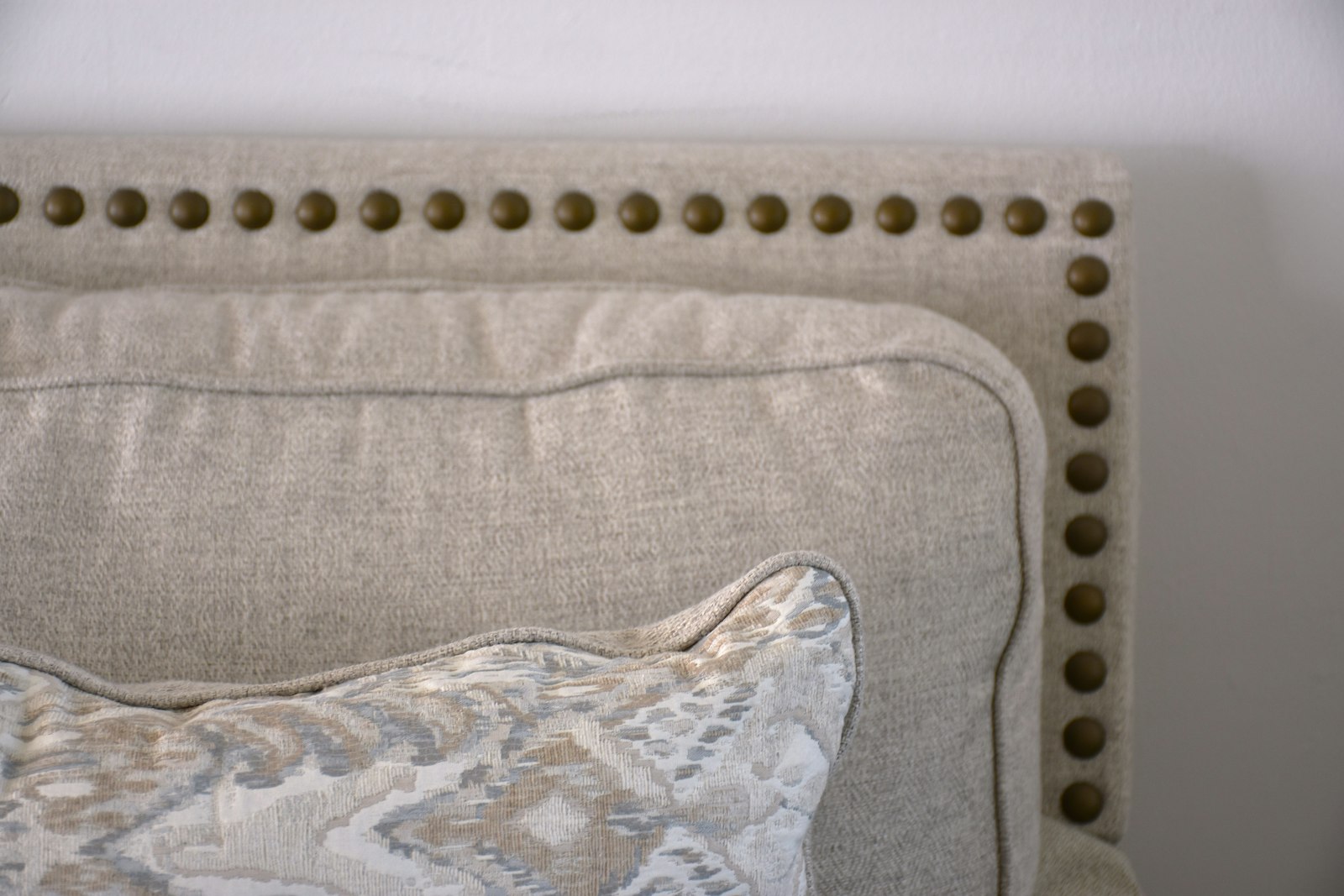
Nailhead trim, like the one above, is the other fabric decision. It looks smart, and it also catches pillowcases. Two people who read in bed will find out quickly.
Reupholstering or making your own
If you’ve already got a bed and a headboard that’s fine structurally, recovering it is the obvious middle route. Take the fabric off, add fresh foam and cover it in linen or chenille. I don’t have a reliable UK average for what a local upholsterer charges, and quotes vary a lot between areas, so get two before you commit. It’s usually worth it if the frame is solid wood and the shape is one you like.
Making your own from a plywood board, foam and a staple gun is a genuine option for a plain wide rectangle, and the shape is the reason it works: a big flat panel is far easier than a wavy or curved one. Curves are where DIY headboards look homemade. I’d say a straight-edged oversized panel is one of the few upholstery jobs a confident beginner can pull off, but it’s heavy, so plan how it gets on the wall before you start.
And second-hand is underrated. A big headboard is a nuisance to store, so people list them cheaply when they move. Look for a solid frame and measure it before you drive across town to collect it.
Four versions I’d skip
Ceiling-height headboards look dramatic in a magazine with a 2.7m ceiling. In a 1930s semi with a 2.4m ceiling and a sloping loft wall, they look like you’ve lost an argument with a wardrobe.
Canopy and curtain headboards, the gothic-romantic ones Livingetc describes, need what it politely calls “thoughtful proportions” to avoid looking like a design shortcut. Translation: they go wrong very easily.
‘Hidden’ headboards that match the wall panelling are the most expensive trick on the list, because they only work when the panelling is done properly, and the sums for a joiner get big fast. Lovely if you’re doing a full refit. Odd to bolt on afterwards.
The fourth is any headboard with built-in sockets that you don’t plan to have wired by a professional. Just don’t.
Let the headboard choose the paint
This is the cheapest good idea in the whole trend. Designer Emma Deterding suggests picking one or two colours from the headboard fabric and using them elsewhere in the room. If the headboard is a soft stripe in oatmeal and rust, the walls, the lamp shades and the curtains can pull from those two.
It’s also how you avoid the “new headboard, wrong room” problem. Ideal Home’s bedroom trends round-up puts Lick’s Taupe 03 at £39 a tin for the cocooning look, which is a fraction of what a new headboard costs and lands close to what a linen one will look like. If you’d rather stay greener, Dulux’s Soulful Sage sits nicely with natural linen.
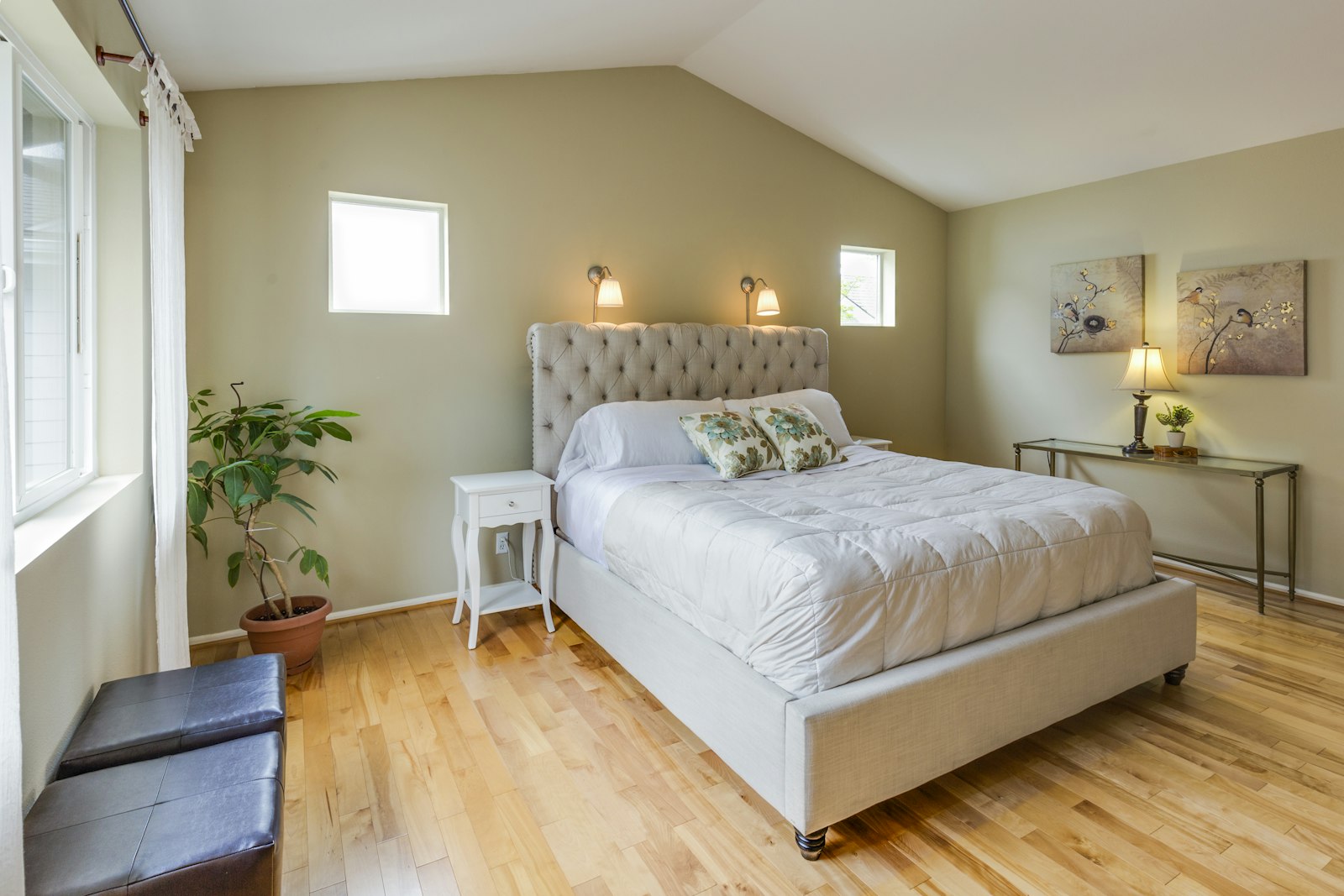
Lighting matters more than you’d think once the headboard gets bigger. A wide pale surface behind the bed bounces light around, which helps a small room, but only if the lamps are warm. Cold white bulbs on a linen headboard make it look grubby. Livingetc’s headboard trends piece makes the point that texture needs calmer surroundings to work, and that applies to the bulbs as much as the walls.
Who should actually buy one
If your bedroom is at least 3.3m across the bed wall, your budget is £160 to £430, and you’re happy to wipe things down, buy the oversized version. It’s the single biggest visual change you can make to a bedroom for the money, and the trend has legs because it’s comfortable, not just clever.
If the room is narrow, buy a modest headboard 200 to 240cm wide and put the rest of the budget into curtains or a proper bedside lamp. Our earlier piece on bedroom design ideas has more on where the money does most good, and if you’re thinking of turning the spare room into a cosy retreat rather than a bedroom, the snug room ideas piece covers that ground.
The honest sums: a headboard is a good place to spend money once and a bad place to chase every trend, because it’s the piece you’ll look at most. So which do you want to be looking at in three years – the one that suited the room, or the one that made the best photo?