Creatine for Women UK 2026: Why Strength Coaches Are Recommending a Daily Dose
For most of the last decade, creatine sat firmly on the boys’ side of the supplement shop – bucket-sized tubs next to the protein, marketed to men trying to add a couple of kilos to their bench press. That has shifted faster than almost any wellness story of the year. Creatine for women is now one of the most talked-about supplements in UK gyms, GP surgeries and menopause clinics, and the conversation has moved well beyond muscle. Colostrum is the other powder having a moment – we looked at whether bovine colostrum earns its considerably higher price tag.
In This Article
- What creatine for women actually does (and what it doesn’t)
- Why creatine for women became the surprise supplement story of 2026
- The bone, brain and perimenopause conversation
- How much creatine for women, and when to take it
- What to look for on a UK supplement label
- Monohydrate, HCl, gummies: what each format actually delivers
- Three tubs that pass the checks
- Who should hold off, and what to do about side effects
- The four myths that will not die
- Where creatine fits with the rest of the supplement aisle
What changed is the evidence base, not the product. A run of studies through 2024 and 2025, plus updated guidance from UK strength and conditioning coaches, has pushed creatine monohydrate into a different category – closer to vitamin D than to pre-workout. Here is what that actually means in 2026, what dose to bother with, and the labels worth reading before you buy.

What creatine for women actually does (and what it doesn’t)
Creatine is a compound your body already makes from three amino acids, and you get a small amount from red meat and fish. It sits in your muscle cells as phosphocreatine and helps regenerate the energy your body burns through during short, hard efforts – the last two reps of a heavy set, a hill sprint, lifting a toddler off the floor for the ninth time before lunch.
Supplementing with it raises the amount stored in your muscles by roughly 20-40 per cent. The practical effect for most women is modest but consistent: a few more reps before failure, slightly faster recovery between sets, and over months of training, more lean mass than you would have built without it. It does not cause the kind of weight gain people worry about – the small early bump on the scale is intramuscular water, not fat.
The British Dietetic Association is clear that creatine monohydrate is one of the most studied sports supplements available, with a strong safety profile in healthy adults. What it is not is a stimulant, a fat burner or a hormone modulator. If you are reading copy that promises any of those things, you are reading marketing.
The baseline gap is the part most coverage skips. Women store markedly less creatine than men to begin with – work published in the Journal of the International Society of Sports Nutrition puts the difference at somewhere around 70 to 80 per cent lower – which is precisely why supplementing tends to shift the needle more, not less, for a female body. The old assumption that creatine was a men’s supplement had the logic exactly backwards.
Why creatine for women became the surprise supplement story of 2026
Three things converged. First, sports scientists started running trials specifically on women rather than extrapolating from male data – and finding that women may benefit more from supplementation precisely because they tend to start with lower baseline stores. Second, the conversation around female strength training, helped along by the rise of weighted-walk habits like rucking and structured lifting in your forties and beyond, made the audience receptive. Third, researchers began looking at creatine outside the gym altogether – at bone, at mood, at sleep deprivation, at the brain.
The result is that supplement brands which spent a decade ignoring women have spent the last twelve months scrambling to design tubs that don’t look like they belong in a Gold’s Gym in 1998. The product is the same. The audience has changed.

The bone, brain and perimenopause conversation
The most interesting research over the last two years has been on women over forty. Trials combining creatine with resistance training in postmenopausal women have shown small but meaningful improvements in lean mass and lower body strength – the kind of changes that translate to staying upright on a wet pavement at seventy. There is also early evidence that creatine may have a modest protective effect on bone mineral density when paired with weight-bearing exercise, which matters because oestrogen decline accelerates bone loss in the years around menopause.
The brain side is less settled but worth knowing about. Several recent studies suggest creatine supplementation may blunt the cognitive hit from sleep deprivation – useful for new parents, shift workers and anyone whose nightly seven hours is more aspirational than real. A smaller body of work is looking at creatine alongside SSRIs for low mood in women, though the evidence is too thin to draw firm conclusions yet.
None of this makes creatine a substitute for HRT, sleep or therapy. It does mean the framing has shifted – it is now reasonable to think of it as a low-cost, low-risk daily supplement with relevance well beyond training, particularly for women in perimenopause and after.
If you want to check the underlying science rather than take a coach’s word for it, two documents do most of the heavy lifting. The International Society of Sports Nutrition’s position stand on creatine supplementation (Kreider and colleagues, 2017) remains the standard safety and efficacy reference, and a 2021 review in the journal Nutrients by Abbie Smith-Ryan’s group – “Creatine Supplementation in Women’s Health: A Lifespan Perspective” – is the paper that kicked off much of the current interest in creatine for women specifically, covering the menstrual cycle, pregnancy research gaps, and the post-menopause data.

How much creatine for women, and when to take it
The dose that does the work is 3 to 5 grams a day of creatine monohydrate. That is one slightly heaped teaspoon of powder. You can take it at any time – the muscle store fills up over weeks, not hours, so timing matters far less than consistency.
You can skip the old “loading phase” of 20 grams a day for the first week. That protocol came from early studies that wanted to saturate muscle stores quickly. It works, but it also causes more of the gut discomfort people associate with creatine, and a steady 5g a day gets you to the same place inside a month. For women with smaller frames, 3g a day is enough.
Take it with water, juice or a smoothie – it does not need to be a fancy shake. If you train, it makes no measurable difference whether you have it before or after. If you don’t, take it at the same time as something else you do daily, like coffee, so you actually remember.
What to look for on a UK supplement label
This is where the market gets messier than it should be. Creatine monohydrate is a commodity ingredient – the molecule is the same whoever sells it – but quality and labelling are not. A few things worth checking:
Form. Choose creatine monohydrate. Ignore “advanced” forms like creatine HCl, ethyl ester or buffered creatine – they cost more and have no good evidence of being better. The most-studied version is Creapure, a German-made creatine monohydrate that several reputable UK brands use; it is not the only quality option, but its presence on a label is a useful signal.
Single ingredient. A plain tub of micronised creatine monohydrate is what you want. Avoid blends loaded with sweeteners, flavours and “muscle matrix” filler – they add cost, often add caffeine you don’t need, and obscure how much actual creatine you are getting per scoop.
Third-party testing. Look for Informed Sport or Informed Choice certification, particularly if you compete in any sport tested for banned substances or if you just want assurance the tub contains what the label says.
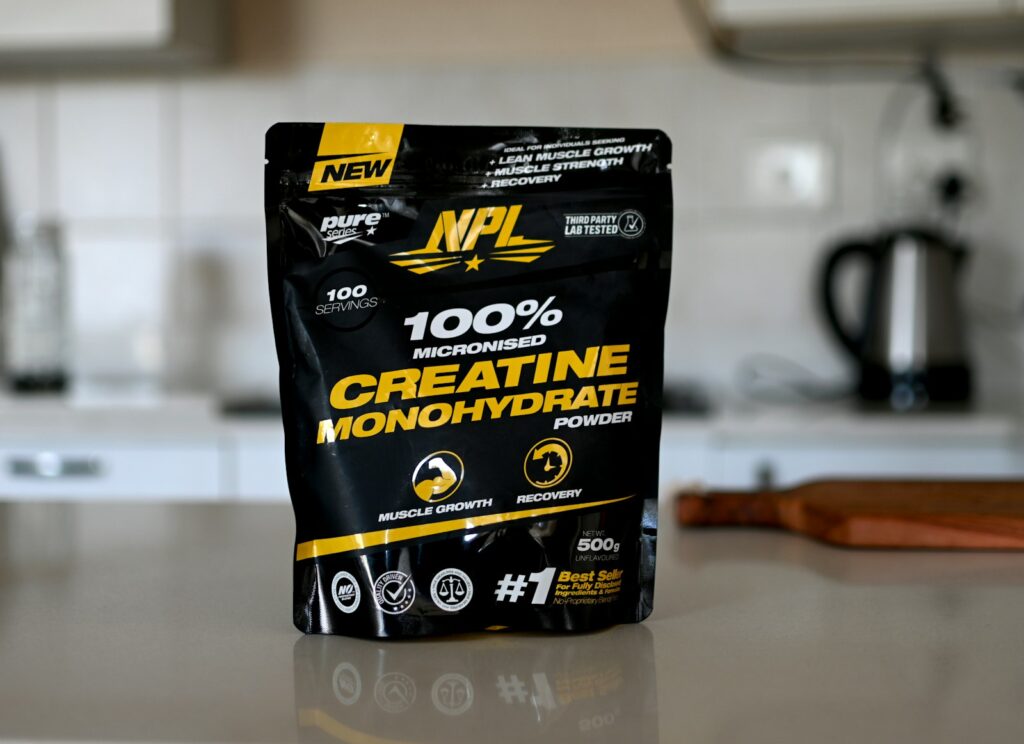
Price sanity check. A 500g tub of certified creatine monohydrate in the UK should sit roughly between £15 and £25 in 2026. Pay more and you are paying for branding. Pay much less and the certification is usually missing.
Monohydrate, HCl, gummies: what each format actually delivers
Update, August 2026: the case against gummies has hardened since this guide first ran. In March 2025 the fitness coach James Smith paid a laboratory to test Ovrload’s creatine gummies, which promise 1.5g per gummy; the lab found 0.0849g – about 6% of the label claim. Our full piece on creatine gummies lab tests covers which brands failed. The same shopping rule keeps you clear of the pink-tub problem too: plain creatine monohydrate is chemically identical whoever it’s marketed at, so a “for women” label on the tub should change the price you’re willing to pay by nothing at all.
The format wars are mostly marketing, but since UK shelves in 2026 carry everything from £4 gummy pouches to £35 “advanced absorption” capsules, it is worth being blunt about what the evidence supports.
| Format | Evidence base | Typical UK cost per month | Verdict |
|---|---|---|---|
| Creatine monohydrate (powder) | Hundreds of trials over 30 years | £2-£4 | The default. Buy this. |
| Micronised monohydrate | Same molecule, finer grind | £2-£5 | Mixes better, worth it if plain powder sits gritty |
| Creatine HCl | Limited; no proven advantage | £8-£15 | Pays a premium for nothing measurable |
| Buffered / “Kre-Alkalyn” | Trials show no benefit over monohydrate | £10-£20 | Skip |
| Gummies | Same molecule in theory; dosing is the problem | £15-£30 at a true 3-5g dose | Convenient but expensive, and quality control has been patchy |
Gummies deserve a specific warning. Independent lab testing reported through 2024 and 2025 found that several creatine gummy brands sold online contained substantially less creatine than the label claimed – in some cases almost none – because creatine degrades in the moist, acidic environment of a gummy. If you genuinely cannot face powder, buy a gummy brand that publishes batch-specific third-party test results, and expect to pay several times the price of a tub for the same dose.
Three tubs that pass the checks
None of this is sponsored and there are no affiliate links in this piece – these are simply the three options that come up most when you apply the label rules above to what is actually stocked in the UK in mid-2026.
Myprotein Creatine Monohydrate (500g, around £14 at full price and frequently discounted). The volume seller for a reason: single ingredient, available unflavoured, and the Creapure version costs only slightly more. A 500g tub at 5g a day lasts just over three months, which puts the real cost at pennies per day.
Bulk Pure Creatine Monohydrate (Creapure option available). Functionally identical to Myprotein’s offering, sold in resealable pouches rather than tubs. Pick whichever of the two is cheaper the week you order – they trade places constantly.
Optimum Nutrition Micronised Creatine Powder. The pick if you want to buy on the high street rather than online – it is stocked in Boots and major supermarkets. You pay a little more per serving than the direct-to-consumer brands, but it is Creapure-sourced and the micronised grind dissolves cleanly.
One pattern worth naming: several newer brands now sell creatine “for women” in pastel tubs at two to three times these prices. The molecule inside is identical. There is no female-specific creatine, only female-specific marketing – the dose adjustment for smaller body mass (3g rather than 5g) is something you do with a teaspoon, not your wallet.
Who should hold off, and what to do about side effects
Creatine has a long safety record in healthy adults, but it isn’t appropriate for everyone. If you have existing kidney disease, are pregnant or breastfeeding, or take medications that affect kidney function, speak to your GP before you start. The same applies if you have a condition that affects fluid balance.
The most common complaint – mild bloating or stomach upset in the first week – is almost always down to loading doses or taking too much in one go. Splitting 5g into two 2.5g servings, or just sticking with 3g daily, usually clears it up. The water-weight increase is real but small (typically 0.5 to 1.5 kg) and stops climbing after the first few weeks.
One worth flagging for anyone tracking their cycle or experimenting with structured female-specific training: there is no evidence creatine disrupts hormones or the menstrual cycle. If you are interested in matching training to your cycle, the conversation about cycle syncing workouts is separate, and creatine works the same across both halves of the month.
The four myths that will not die
“Creatine makes you bulky.” No supplement adds visible muscle on its own, and women’s lower testosterone makes dramatic mass gain hard even with serious training. What creatine adds over months is a small amount of lean tissue and a litre or so of intramuscular water – the difference between a 60kg and 61kg body, not a different silhouette.
“It causes hair loss.” This traces back to a single 2009 study of male rugby players that found raised levels of DHT, a hormone linked to pattern baldness – it never measured hair loss itself, and no study since has replicated the finding. The current evidence does not support a hair-loss effect in men or women.
“It wrecks your kidneys.” In healthy adults at standard doses, decades of trials have found no evidence of kidney damage. The myth persists partly because creatine supplementation raises creatinine, a marker GPs use to estimate kidney function – so tell your GP you take it before any blood test, or the result can look misleadingly off.
“It’s basically a steroid.” Creatine is a food-derived compound your liver already makes daily. It is not hormonal, not banned by any sporting body, and is permitted in tested competition – which is precisely why Hyrox competitors and club athletes use it openly.
Where creatine fits with the rest of the supplement aisle
If you are already taking magnesium or apigenin for sleep, vitamin D in winter, or something like myo-inositol for PCOS, creatine slots in alongside them without interaction. It is not glamorous. There is no flavour to discuss, no morning routine to film, no skin-related before-and-after to post. It is a cheap white powder that helps your muscles work slightly better and may help your bones and brain at the margins. It also makes a useful contrast with the noisier end of the aisle: berberine is what it looks like when the marketing outruns the trials.
That is also why the slow shift in how UK women think about it feels like a real change rather than a trend – the people recommending it loudest are coaches, NHS-trained dietitians and menopause clinicians, not influencers. The NHS guidance on eating well still puts food first, and rightly so, but the gap between “no harm” and “actively useful” for creatine has narrowed enough that it is now a sensible question to ask your GP rather than a fringe one.
If you are starting from zero in 2026, the protocol is dull but it works: 3 to 5g of certified creatine monohydrate, once a day, with whatever you are already drinking, alongside a couple of sessions a week of something heavy enough to be a bit uncomfortable. Give it eight weeks before you decide whether it is doing anything.
What is the supplement you have been quietly curious about but never quite committed to trying?