
Tremella Skincare UK: The K-Beauty Hydrator Holding More Water Per Gram Than Hyaluronic Acid
Walk into any Boots, Space NK or Cult Beauty in 2026 and hyaluronic acid is still the default sticker on half the serum bottles. But tremella skincare UK shoppers are starting to notice is quietly creeping onto the same shelves – a hydrator that holds more water per gram than hyaluronic, sits more comfortably on reactive skin, and comes from a mushroom used in Chinese tonic medicine for at least six hundred years.
In This Article
That mushroom is Tremella fuciformis, the silver-ear or snow fungus. And it is one of the most credible alternatives to hyaluronic that has reached British retailers in years – quieter than the last few K-Beauty waves, much better supported.
What Tremella Skincare UK Brands Are Actually Selling
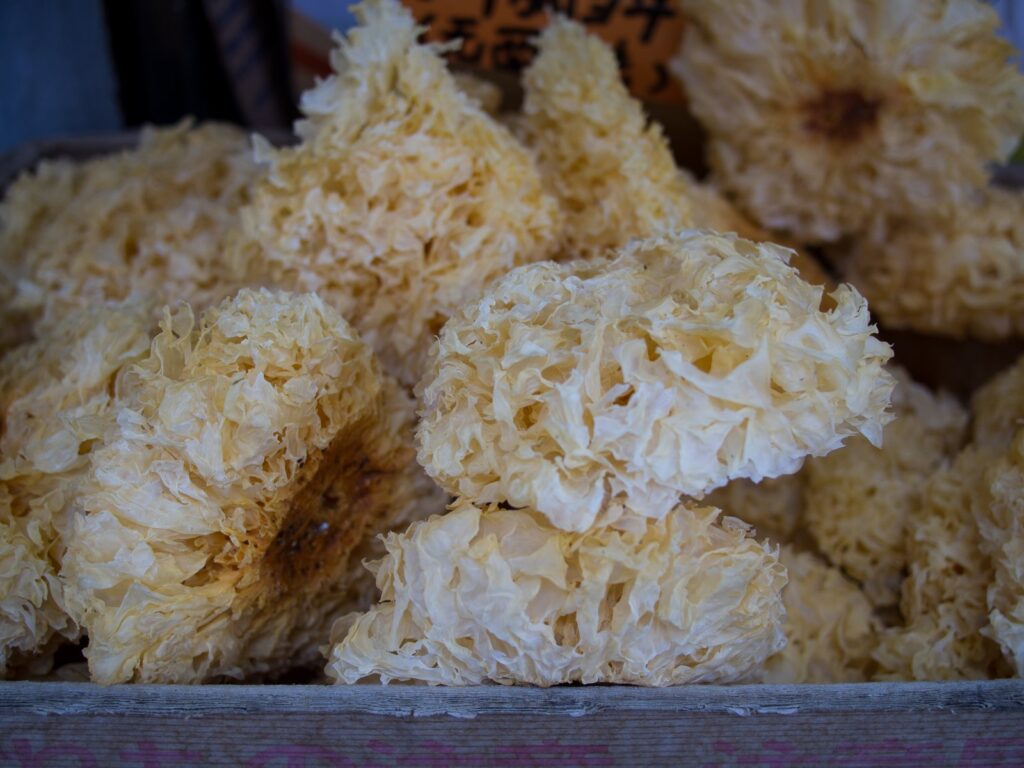
Tremella is a white, gelatinous fungus that grows on hardwood across East Asia and is dried into pale, coral-like clusters for use in soups, desserts and traditional medicine. When you rehydrate it, the texture is unmistakable – somewhere between sea moss and silken tofu. That gel-forming quality is the entire point: it is what skincare formulators are extracting.
What ends up in a serum bottle is usually labelled Tremella fuciformis (mushroom) extract or Tremella fuciformis sporocarp extract. It is rich in polysaccharides – long chains of sugar molecules – which are the same family of compounds that make hyaluronic acid and beta glucan such effective humectants. The difference is structural. Tremella’s polysaccharide molecules are smaller and more branched than hyaluronic acid’s, which lets them sit at multiple depths of the skin at once rather than parking purely on the surface.
The current crop on UK shelves is mostly Korean – SKIN1004, Anua, Manyo Factory and Beauty of Joseon all run tremella through at least one product – but a few British indies (notably Skin Rocks and Beauty Pie) have started folding it into their hydrating ranges too.
How It Actually Compares With Hyaluronic Acid
The headline claim – that tremella holds more water than hyaluronic acid – is one of those skincare lines that sounds like marketing but turns out to be reasonably well supported. In vitro work published in the International Journal of Biological Macromolecules has measured tremella polysaccharides absorbing roughly 500 times their weight in water, versus around 300 to 1,000 times for hyaluronic acid depending on molecular weight. On the lab bench, they are at least in the same ballpark, and often above it.
The bit that matters more for British skin, though, is molecular weight. Hyaluronic acid in skincare comes in fragments ranging from very large (sits on the surface, draws water in from the air) to very small (penetrates further). Tremella’s molecules naturally cluster in the mid-range, which is the bit dermatologists generally agree is the most useful for keeping skin hydrated without triggering irritation in the first place. That is also why tremella tends to feel slightly silkier on the skin than hyaluronic – less stretchy, more cushioning.
For a closer breakdown of the polysaccharide hydrator category as a whole, our piece on polyglutamic acid UK readers are switching to covers the science in more depth. Tremella fits in the same family, just with a much older pedigree.
Why It Suits British Skin Specifically
British skin spends nine months of the year reacting to either central heating, hard water, or sideways wind off the North Sea. The skin barrier – the lipid layer that keeps water in and irritants out – takes a quiet hammering, even on faces that look perfectly fine in the mirror. The British Skin Foundation notes that dry skin is one of the most common complaints in UK dermatology, and that humectant-rich moisturisers are first-line for managing it.
Tremella does two useful things here. First, it humectant-binds water into the top layers of skin, the same way hyaluronic does. Second, because its molecules are smaller and more flexible, it appears to support the lipid barrier rather than just sit on top of it. In practice, that translates to less of the tight, slightly raw feeling that high-strength hyaluronic can produce when used in genuinely dry environments – including the average UK living room in February.
It also plays well with the actives most British shoppers are running alongside their hydrators. Retinol, vitamin C, exfoliating acids – all of these benefit from a hydrating buffer underneath, and tremella is mild enough to layer with the lot. If your routine already includes one of the calming K-Beauty ingredients we have covered, like heartleaf for stressed skin, tremella stacks on top without competing.
What To Look For On The Label
Three things matter when you are reading the ingredient list:
Position in the INCI list. Tremella works at relatively low concentrations – the published data points sit between 0.1 and 2 per cent for visible hydration effects – but you do want it sitting somewhere in the top half of the list rather than tucked in at the bottom with the preservatives. If it is the last ingredient before phenoxyethanol, it is there for the marketing.
Form of extract. Look for Tremella fuciformis (mushroom) extract, Tremella fuciformis sporocarp extract or Tremella fuciformis polysaccharide. The first two are the whole fungus extract; the third is the isolated active. Both are credible. Anything just labelled “mushroom extract” without a species name is not what you want.
Supporting cast. Tremella works best in a formula that also includes a barrier-supporting ingredient – ceramides, panthenol, or a beta glucan. A pure tremella serum is fine; a tremella plus ceramide moisturiser is generally better value. Our take on beta glucan skincare UK readers should know about covers why that pairing punches above its weight.
Who Should Try Tremella, And Who Shouldn’t
Tremella is a sensible pick for: anyone with dry or dehydrated skin (those are different things), anyone whose hyaluronic acid serum has started feeling sticky or tight, anyone running a retinoid or tretinoin who needs a kinder hydrating layer underneath, and anyone with reactive or rosacea-prone skin who finds the more common humectants too aggressive.
It is probably not the right pick for: anyone with a known fungal or mushroom allergy (rare but real), anyone whose main problem is congestion or active breakouts rather than dryness, and anyone hoping for a single product that will replace their entire moisturising step. Tremella is a humectant. It pulls water in. You still need an occlusive moisturiser on top, especially overnight.
The NHS guidance on dry skin is worth a read if you are not sure whether dryness is your actual issue – the difference between dehydrated skin (a water problem, fixed by humectants) and dry skin (a lipid problem, fixed by oils) is the single most useful thing to understand before spending any money on a new serum.
How To Layer It Into A Routine
Tremella sits in the same slot as a hyaluronic acid serum – applied to damp skin after cleansing, before your moisturiser, oil or sunscreen. The classic K-Beauty approach is to press it in with the palms of the hands rather than rub it across the face, which sounds precious but does genuinely help the gel form rather than ball up.
If you already use a hyaluronic serum, there is no need to throw it out – tremella layers fine on top, or you can alternate them morning and evening for a fortnight to work out which one your skin prefers. Most people who switch report that tremella feels less “grabby” through the day, particularly in heated indoor environments.
In a routine alongside other K-Beauty ingredients, the order generally goes: cleanser, toner, lightweight active (vitamin C in the morning, retinol or an acid in the evening), tremella serum, moisturiser, SPF. If you are still building a K-Beauty routine from scratch, our guide to Korean skincare UK shoppers are buying in 2026 is a useful starting point.
Where To Buy In The UK
The cleanest entry point is Boots – SKIN1004’s Madagascar Centella Hyalu-Cica range now includes a tremella variant, and Anua’s Heartleaf line has a tremella-led mist that has been quietly climbing the rankings since Christmas. Cult Beauty stocks Beauty of Joseon’s Glow Deep Serum, which uses tremella alongside rice extract. Space NK runs Manyo Factory’s Bifida Biome line, which folds tremella into its hydrating essence.
Pricing sits between £15 and £35 for a credible serum, which is in the same range as a mid-market hyaluronic option. There is no need to spend more than that – the active is not the expensive part of the formula.
What is striking about tremella skincare UK shoppers are now picking up is that it has none of the flash of the last few K-Beauty waves. There is no glow filter, no viral TikTok trick, no neon packaging. It is a quiet, well-formulated humectant with six hundred years of use behind it and decent modern data underneath. For the first time in a while, that feels like the right kind of skincare story.
Have you tried tremella in your routine yet, or are you still loyal to the hyaluronic serum in the bathroom cabinet?
If you’re layering Tremella under daily SPF, don’t forget the bit your face cream never reaches: our scalp sunscreen UK guide explains why the parting needs its own protection through summer.
If you prefer the polar opposite – a saturated animal fat rather than a polysaccharide – our look at the beef tallow skincare trend British dermatologists are arguing about covers the other end of the moisturiser spectrum.


I’ll admit I rolled my eyes a bit at “better than hyaluronic” – feels like that gets said about every new ingredient. But the molecular size point is fair and it would explain why my skin tolerates tremella-led serums when basic HA seems to sit on top and pill. Out of the brands you mention, which one has the highest tremella percentage actually disclosed on the bottle? That bit always seems to be left vague.