
Heartleaf Skincare UK: The K-Beauty Calming Ingredient So Mainstream Even Boots Clones It
You can tell when a K-beauty ingredient has properly crossed over: Boots starts cloning it. The own-brand Ingredients range now includes an Ectoin & Heartleaf Soothing Toner, sitting a shelf or two away from the Korean originals it’s politely imitating. Five years ago heartleaf was something you ordered from YesStyle and explained to confused friends. Now it’s in the shop where you buy your meal deal.
In This Article
- What heartleaf is, and how it got here
- The evidence, read honestly
- How it compares with the calming ingredients you already own
- The claims on the bottle, checked
- Using it without overloading your routine
- What's worth buying in the UK
- Who should give it a miss
- The quieter routine, and what gets cloned next
The leaf earning all this attention has been used by Korean formulators for years to do one thing well: turn the temperature down on hot, reactive, overworked skin. British complexions tend to need exactly that. Pollution, central heating that drags on into May, a late frost followed by a weekend of sudden sun – reactive skin here lives in a permanent low-grade flare, and heartleaf positions itself as the calm-down step that doesn’t require stripping your routine back or waiting months for a dermatology referral.
But heartleaf’s evidence base is thinner than its shelf presence now suggests, and the two are worth untangling before you spend anything. Here’s what it actually is, what the research does and doesn’t support, how it compares with the calming ingredients you already own, and which UK products earn their place.
What heartleaf is, and how it got here
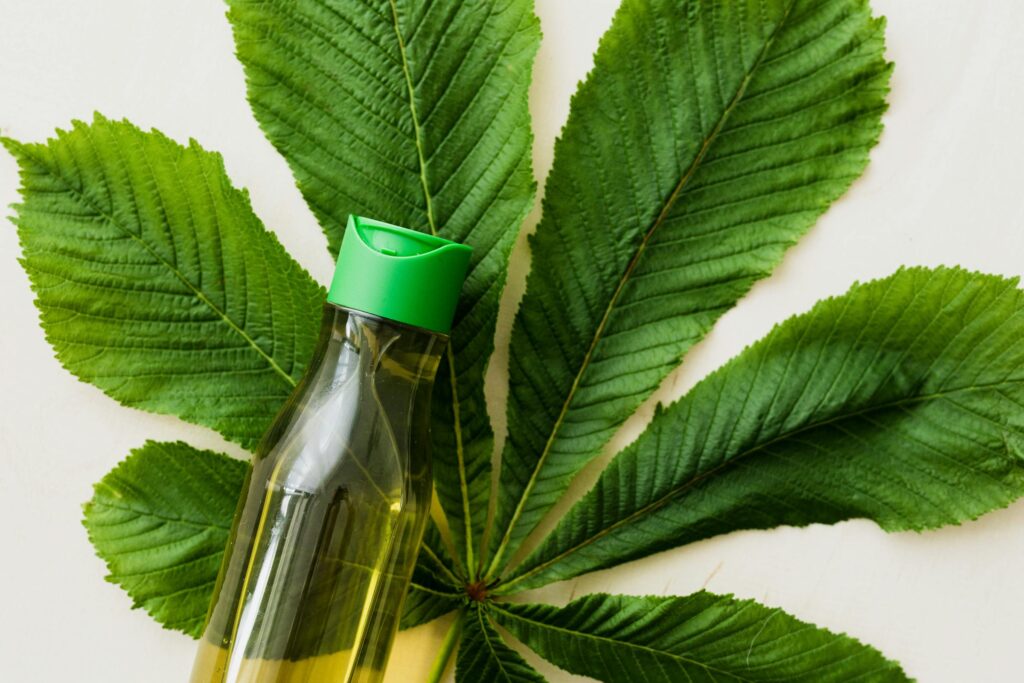
Heartleaf is the common name for Houttuynia cordata, a low-growing, heart-shaped leaf native to East Asia with a centuries-long CV in traditional Korean and Chinese medicine. In Korea it’s called eoseongcho – roughly, “fish-smell plant”, because the fresh leaf reeks when crushed. Mercifully, none of that survives into the bottled extract. It’s brewed as a tea, eaten as a vegetable in some regions, and – the part that matters here – extracted into toners, essences and serums.
The modern story starts around 2021 with Anua’s Heartleaf 77% Soothing Toner, which built a cult following among people with reactive, breakout-prone or post-treatment skin. UK retail followed: Cult Beauty, Boots, Sephora UK and YesStyle have all widened the heartleaf bench since, and the category now runs to ampoules, pads, cleansers and moisturisers from Abib, Some By Mi, Round Lab and SKIN1004. And now the own-brand copies have arrived, which in high-street terms is the final stamp of arrival – nobody clones a product that isn’t selling.
One crossover worth flagging: heartleaf also turns up in UK health-food shops as a tea and in capsule form, riding the same trend. Drinking it and putting it on your face are entirely different propositions with entirely different (and equally thin) evidence bases. This piece is about the topical stuff.
The pitch: a soothing botanical that takes redness down without the tingle some people get from niacinamide, and that plays nicely with everything else in your routine.
The evidence, read honestly
Heartleaf is rich in flavonoids – quercetin, quercitrin, hyperoside and rutin are the ones that keep turning up in analyses – alongside polyphenols and a small amount of essential oil. In the lab, these compounds do impressive things. One study on macrophages, the immune cells that drive inflammation, found a heartleaf extract fraction dialled down four separate inflammatory signals at once, including TNF-alpha and IL-6, the same messengers your skin floods itself with when it’s irritated. More recently, a 2025 paper in Scientific Reports put heartleaf essential oil through cosmetic formulation testing and reported antimicrobial, antioxidant and wound-healing activity, with no toxicity to skin cells at the concentrations tested.
That’s the strong version. The honest version is that almost all of it happened in a dish. Cells in a dish respond to all sorts of things that never translate to a face, and there are still no large randomised human trials of heartleaf as skincare – what exists instead is in vitro work, traditional use, and the lived experience of a lot of people who’ve used 70%-plus toners through retinoid purges and post-laser flushes. The British Skin Foundation hasn’t issued guidance on heartleaf, and the British Association of Dermatologists’ patient leaflets on rosacea and acne don’t mention it. That’s typical for a botanical of this size. It’s also worth remembering the next time a product listing says “clinically proven”.
Promising, then. Proven, no.
It’s not a stand-in for prescription anti-inflammatories either. Moderate-to-severe rosacea, persistent perioral dermatitis, active eczema – heartleaf is at best a supporting act around proper treatment, and for rosacea-prone skin azelaic acid targets redness far more directly. But as a way of keeping mild reactivity from tipping into a full flare, the case is decent. It’s also why people reach for it when hayfever wrecks the skin barrier through summer.
How it compares with the calming ingredients you already own
| Ingredient | What it’s doing | When you’ll notice | The catch |
|---|---|---|---|
| Heartleaf | Flavonoids damping the inflammatory response; feels like an immediate temperature drop | Minutes to days | Human trial data is thin; under ~70% extract it’s mostly set dressing |
| Centella (cica) | Rebuilding the barrier structurally; madecassoside does the heavy lifting | Two to six weeks | Much slower than the marketing implies |
| Niacinamide | Multi-tasking on redness, oil and barrier function at 4-5% | Two to eight weeks | Tingles or congests a minority of users, especially past 5% |
| Azelaic acid | Treating rosacea redness and acne as a proper active | Four to twelve weeks | The prescription strengths do the real work |
Centella is the closest comparator and the two often share a formula. But centella’s reputation as an instant soother is one of skincare marketing’s quiet swindles – it’s a slow, structural ingredient that supports the barrier over weeks, and pretending otherwise sells a lot of disappointing face mist. Heartleaf is the opposite temperament: less of a rebuilder, more of an immediate calm-down on skin that’s hot and flushed right now.
Niacinamide remains the British favourite for redness, and at sensible doses it’s earned that. The wrinkle is the minority of users who find it tingles, congests or simply stops agreeing with their skin past a certain concentration. Heartleaf gives those people something they can layer morning and night without hitting the same ceiling.
The claims on the bottle, checked
“77% heartleaf extract.” Real, but it means less than it looks. A botanical extract is mostly water, so that number describes the base of the formula, not a drug-style dose. It’s still a useful signal – below roughly 70%, heartleaf is usually there for the label rather than your face – just don’t read 77% as three times stronger than 25%.
“Clears acne.” Overreach. Lab work shows antibacterial activity and researchers are actively formulating heartleaf lotions for acne, but nobody has clinical results showing it clears spots on real faces. If your breakouts improve, the likelier story is calmer, less inflamed skin – which is worth having, but isn’t the same claim.
“Minimises pores.” No topical botanical does this. Next.
“Natural, so it suits everyone.” Well tolerated is not the same as universally tolerated – more on who should sit it out below.
Using it without overloading your routine
The biggest mistake people make with heartleaf is treating it like another active and stacking it on top of an already busy routine. It isn’t a swap for your retinol or your vitamin C. It’s the layer that lets your barrier tolerate them.
Morning: gentle cleanser, heartleaf toner or essence pressed in with damp hands, hydrating serum, moisturiser, SPF 30 or 50. The toner goes on first and dries down in seconds; don’t towel it off.
Evening: double cleanse if you wear SPF or makeup, heartleaf toner, then your active step – retinoid, exfoliating acid or treatment serum – on alternate nights, moisturiser to finish. On non-active nights, swap the active for a second heartleaf product: an ampoule, a sheet mask, a richer essence.
And if your skin has just been pushed too far – a bad reaction, a stubborn flare, a sunburn – use heartleaf as a short reset. Cleanser, toner, basic ceramide moisturiser, SPF. Pause everything else for three to five days. Skin that’s flaring doesn’t want more inputs; it wants fewer, calmer ones.
What you don’t need to worry about is conflicts. Unlike vitamin C and retinoids, which argue with half the bathroom shelf, heartleaf has no known incompatibilities with the usual actives – it layers under acids, over niacinamide and around retinoids without complaint. That agreeableness is a large part of why it’s spread so fast.
A 250ml bottle used twice a day lasts about three months, which makes the arithmetic friendlier than the shelf price suggests.
What’s worth buying in the UK
Anua Heartleaf 77% Soothing Toner (around £22 for 250ml at Boots and Cult Beauty) is still the obvious starting point. Alcohol-free, fragrance-free, and it behaves as a hydrating layer rather than an old-fashioned wipe-off astringent.
Boots Ingredients Ectoin & Heartleaf Soothing Toner is the own-brand shortcut, pairing heartleaf with ectoin – another barrier-calming ingredient we’ve covered in depth – at a high-street price. The existence of this bottle is half the reason this article needed updating.
SKIN1004 Madagascar Centella Heartleaf Quick Calming Pads pair heartleaf with centella in single-use pads. Useful for travel, and for the kind of mid-week flare where you can’t face a full routine.
Round Lab 1025 Dokdo and Abib Heartleaf Spot Pad sit at the more clinical end – quieter packaging, shorter ingredient lists, sensible prices at the independent K-beauty retailers.
One format to skip: heartleaf cleansers. Whatever the extract can do, it isn’t doing it in the eight seconds before you rinse it off.
And buy from an actual retailer. The cult status of the Anua toner has made it a favourite for marketplace sellers of uncertain provenance, and a soothing toner is a bad product to gamble on. Boots, Cult Beauty, Sephora UK or a K-beauty specialist with a UK returns address – not the cheapest listing a search throws up.
Pairing logic, briefly. Oilier or breakout-prone skin does well with heartleaf alongside a low-percentage BHA. Barrier-damaged or post-treatment skin should look for panthenol, beta-glucan or madecassoside on the same ingredient list – the case for madecassoside on reactive skin is one we’ve made before, and heartleaf-plus-madecassoside is one of the few combinations that properly earns its place.
Who should give it a miss
Heartleaf is well tolerated by most people, but not all. If you have a known sensitivity to plants in the Saururaceae family, patch test on the inner forearm for forty-eight hours before it goes anywhere near your face. Pregnancy and breastfeeding data on topical heartleaf is sparse – not alarming, just absent – so the safer bet during either is a fragrance-free centella or panthenol formula until your GP or midwife says otherwise.
NHS sun-safety guidance applies regardless of which soothing ingredient you settle on. A compromised barrier burns faster, so daily SPF is non-negotiable if you’re using anything to calm inflammation.
One more flag: “soothing” on the front of a bottle guarantees nothing about the back. Scan the ingredient list for high-up alcohol denat, essential-oil fragrance blends or menthol – all of which will quietly undo what the heartleaf is meant to be doing.
The quieter routine, and what gets cloned next
Heartleaf’s rise says as much about us as about the leaf. The twelve-step maximalism of late-2010s K-beauty has matured into something quieter and more barrier-aware. Cortisol-face theories on TikTok, the spread of postbiotic formulas, beta-glucan quietly turning up in mainstream moisturisers – it’s all the same arc. Fewer actives, more support, more attention to how skin feels at the end of a routine rather than what got applied during it. Even the beef tallow crowd, whatever you make of their conclusions, are reacting to the same fatigue.
Slugging belongs to the same support-ingredient family. So, at the sharper end, does spicule skincare, which takes the exact opposite bet – irritate the skin on purpose – and mostly proves how broad this church has become.
Heartleaf doesn’t promise to transform your face in a fortnight. It promises to keep your skin calm enough that the actives you’re paying for can do their job, and that’s a more useful promise than most of the aisle makes. If the own-brand clones tell us anything, it’s that the calm-down step has stopped being a trend and become a fixture. The interesting question for 2027 isn’t whether heartleaf sticks around – it’s which quiet Korean staple gets the Boots treatment next.


I’ve been on the heartleaf bandwagon since the Anua toner started doing the rounds on TikTok and honestly my redness has settled massively. The bit about not stacking too many actives at once is the part most articles skip – I learned the hard way layering it with retinol and tranexamic acid. Anyone tried the Skin1004 ampoule version yet? Wondering if it’s worth the upgrade from the toner.
Used the Skin1004 ampoule on and off since January – it’s more concentrated than the toner so I’d only use it at night, and only on the days my skin is actually flaring. For everyday I’m still on the toner. Honestly the bigger upgrade was committing to applying both before makeup rather than after – the calming effect lasts through the day rather than getting wiped off straight away.