Video Podcasts UK 2026: Britain Turned Podcasts Into Telly, and 39% of Listeners Still Just Want the Audio
Thirty-nine per cent. That’s the share of British podcast listeners who, when Ofcom asked them a new question this year about how they actually consume the shows they follow, said they’d rather just have the audio.
In This Article
- The video podcasts UK listeners say they prefer, and the number that went backwards
- Podcasting is growing. Podcast listening isn’t, much.
- The one place video genuinely earns its keep
- Your dad follows more podcasts than your niece does
- Spotify still wins, and nobody wants a video button
- What I think happens next
It squares with where listeners actually spend, too: not on watching podcasts in better resolution, but on hearing them properly – see our guide to noise-cancelling earbuds under £100.
It’s the biggest single answer in the survey. It came in a year when nearly every large producer in the country has been busy pointing cameras at people talking into microphones, and when the video podcasts UK listeners keep being handed have quietly become the default rather than the extra. The audience, on the whole, isn’t looking at the screen.
That’s not the story the industry has been telling itself.
The video podcasts UK listeners say they prefer, and the number that went backwards
Ofcom’s 2026 podcast survey went into the field between 26 February and 10 March, run by Yonder, with a total sample of 2,440 people. Among those who’d listened to podcasts that have a video version, the answers split like this: 39 per cent prefer audio-only, 27 per cent prefer to watch when there’s a video, 26 per cent play the video but don’t actively watch it, and 8 per cent have no preference either way.
Look at the direction of travel rather than the raw numbers and it gets more awkward. The 27 per cent who prefer watching is down from 29 per cent a year earlier. The share who put the video on and then ignore it is up, from 23 to 26. And the group who shrug and say it makes no odds has grown from 5 per cent to 8.
So the enthusiasm is drifting downwards while production budgets drift upwards. Nobody in the business is going to put that on a slide.
There’s a second number worth holding up next to it. Asked which types of podcast they listen to, 35 per cent said they listen to podcasts that have videos – down from 37 per cent last year. Adam Bowie, who has picked apart these Ofcom tables every year since 2021, flagged the oddity: “All the other available evidence suggests people are consuming more podcasts that have videos, not less.” His explanation is the sensible one, and it’s a bit of a headache for anyone trying to measure this properly. People who watch a podcast on a telly or a laptop may simply not think of themselves as listening to a podcast at all. They think they’re watching a programme.
Which is either a rounding error or the whole story, depending on how much you’ve staked on the word “podcast” meaning something specific.
Podcasting is growing. Podcast listening isn’t, much.
The topline reads well. Ofcom’s separate audio report puts weekly podcast reach at 33 per cent of adults, up from 26 per cent in 2022. The podcast survey, a different sample entirely, has 50 per cent of respondents saying they ever listen and 25 per cent listening weekly. Both point the same way.
Dig into how much people actually listen and the picture flattens right out. The average regular UK listener gets through 5.15 episodes a week. That figure has barely moved in two years. The average number of shows followed has crept up from 6.01 to 6.23. Growth in podcasting, then, is coming almost entirely from new people arriving rather than existing listeners consuming more – which is exactly the pattern you’d expect from a medium that’s filling up rather than deepening.
I’d argue this is the number that should worry producers, not the video preference split. A medium where the committed audience listens to five episodes a week and follows six shows has less headroom than the current level of investment assumes.
The reason audio keeps winning isn’t mysterious, and Ofcom’s own data spells it out. The most common settings for podcast listening are walking, doing housework, sitting in a car and exercising. You can’t watch a video while you’re carrying a laundry basket up the stairs. The format’s core advantage is that it occupies your ears and leaves everything else free, and the moment you demand someone’s eyes you’ve thrown that away.
There’s a related finding that made me laugh a bit. When Ofcom asked listeners to rank what matters about the app or service they use, the ability to switch between audio and video came near the bottom of the list. Below quality. Below ease of use. Below price. The feature the entire industry has spent two years building is one the audience ranks somewhere near push notifications, which came dead last.
The one place video genuinely earns its keep
Here’s where I’ll break ranks with my own argument, because the data does too.
Ofcom asked a separate set of questions about podcasts attached to television programmes – The Traitors: Uncloaked, The Apprentice: Unfinished Business, Love Island: The Morning After. Among people who’d actually watched that sort of thing, 60 per cent said they’d be interested in more of them for other shows, against 17 per cent who wouldn’t. Fifty-nine per cent said the video podcast improved their experience of the TV programme itself, against 14 per cent who disagreed.
Even the hostile question came back reasonably. Asked whether video podcasts on TV are poor-quality television, 36 per cent disagreed and 30 per cent agreed, with a third parked in the middle. For a format that critics have spent years describing as cheap filler, that’s a much better verdict than it usually gets in print.

As VideoWeek’s Tim Cross-Kovoor put it in his read of the report, the problem for standalone shows is structural: “Producers need to make sure video isn’t a crucial part of the experience, since many listeners won’t watch it. But that means the video component has to remain inherently limited, rather than a key, must-watch part of the experience.”
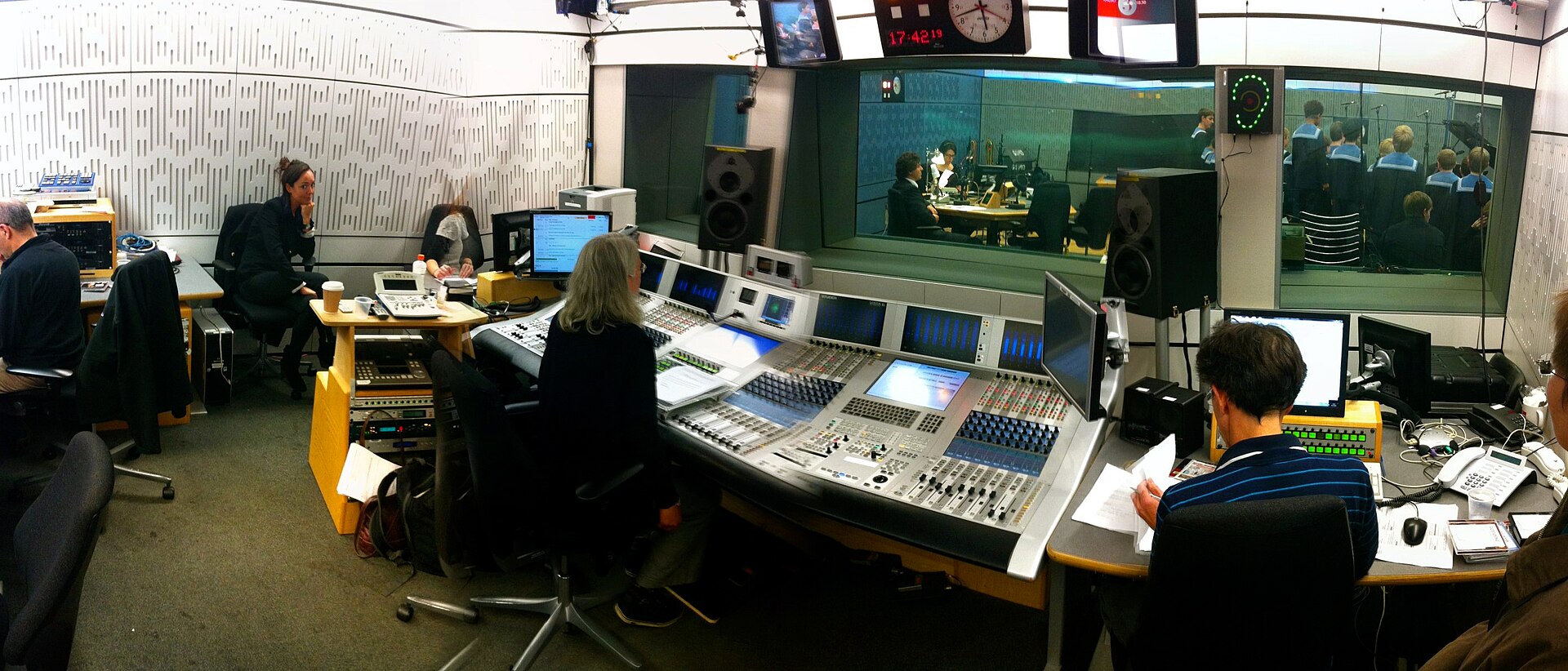
That’s the trap in one paragraph. If most of your audience is listening in the car, your video can never carry information. It can only ever be two people sitting in chairs. Which is why so much of it looks the same – the identical foam-panelled room, the identical boom arms, the identical dead-eyed reaction shot cut in when nobody’s talking. The companion podcast escapes this because it doesn’t have to be self-sufficient. It’s already sitting inside a programme you’ve watched, so it can assume the pictures.
Made-for-TV spin-offs work. General-purpose video podcasts mostly don’t. The industry has been treating those as the same bet.
Your dad follows more podcasts than your niece does
The demographic data undercuts a lot of received wisdom about who this medium is for.
Listeners aged 16 to 24 follow an average of 3.97 podcast feeds. Those aged 55 to 64 follow 7.16, and they’re also the peak age group for the sheer number of episodes consumed. The biggest single age group for listening at all is 25 to 34, so the medium hasn’t gone grey – but the heaviest, most committed users are middle-aged, and they’re the ones least likely to be watching anything on a screen while they do it.
Scotland has the highest rate of podcast listening of any UK nation. Ethnic minority listeners are significantly more likely to listen than the population overall, and use an average of 4.3 different platforms to do it against 2.9 for everyone else – which suggests they’re chasing shows that aren’t available in one convenient place.
The genre picture shifted this year too. News and current affairs has overtaken entertainment, having been level at 47 per cent apiece last year. True crime slipped from 30 per cent to 27. Politics remains the most lopsided category going: 46 per cent of male weekly listeners against 30 per cent of women, skewing older. Football is worse – 45 per cent of men against 14 per cent of women. Arts and culture, meanwhile, skews young, which is the one finding here I’d actually build a commissioning strategy around. If you’ve been reading our round-up of wellness podcasts that respect the science, you’ll recognise the pattern: the audiences that grow are the ones with a specific reason to show up.
Spotify still wins, and nobody wants a video button
You’ll have seen the claim that YouTube has overtaken Spotify as Britain’s main podcast platform. Ofcom’s UK tables don’t support it. Spotify still leads on the question of which app people use most often, and its lead actually extends when you move from “ever use” to “use most”. BBC Sounds sits remarkably high – just below Spotify on access – and YouTube comes in above Apple Podcasts rather than above Spotify.
This matters more than a league table normally would. YouTube overtaking Spotify would be evidence that British listening has genuinely moved to a screen-first environment. It hasn’t. The habit is still overwhelmingly running through audio apps, and one of the strongest performers is a broadcaster’s own service.
It’s the same trap we wrote about when a headline claimed Netflix had overtaken the BBC and the actual figure fell apart in a footnote. Media statistics travel faster than their caveats. Check whose survey it is, which country it covers, and whether “most used” means the same thing in both halves of the comparison.
One more from the tables, and it’s a genuine problem: 36 per cent of listeners say they don’t hear about new podcasts at all. Among the over-65s that rises to 61 per cent. Social media is the main discovery route for everyone under 45; above that, word of mouth beats it. A medium with 50 per cent penetration and a broken discovery layer is a medium leaving an enormous amount on the table. Film has partly solved that problem: recommendations travel through the people you follow on Letterboxd rather than through an algorithm, and podcasting has never built an equivalent.
And that gap explains a fair bit of the video push, if you’re feeling charitable about it. A thirty-second clip on a phone is currently the most reliable way anyone has found to get a stranger to try an episode. The trouble is that solving discovery with video doesn’t mean the video needs to exist for the ninety minutes nobody’s watching. You can shoot for the clip and stop there. Plenty of shows already do, and their listeners have no idea a camera was ever in the room.
Worth saying plainly: the average listener is following six shows and getting through five episodes a week. That’s a person with one commute, one dog walk and a Sunday of ironing. They’re not short of options. They’re short of a reason to change the thing they already put on.

What I think happens next
Video isn’t going away, and I’m not arguing it should. Clips are how shows get found now, video ads pay better than audio ads, and a camera in the room is cheap insurance for a producer who needs social assets. Those are real commercial reasons and they don’t depend on anyone watching the full episode.
But the strategy that treats video as the destination rather than the shop window is running against the grain of how Britain actually listens. The evidence for it keeps getting thinner while the spend keeps getting thicker, and that gap tends to close in one direction.
The interesting version of this format isn’t the interview show with two cameras. It’s the thing that knows what it is – the companion piece with a programme behind it, or the audio show that stops pretending it needs pictures. There’s a version of the same logic playing out in cinemas, where a record July at the UK box office came from films that gave people a reason to leave the house rather than from more of everything. Britain’s audio habits have been moving in a similar direction for a while, whether that’s the audiobook boom or the odd, welcome rise of hi-fi listening bars. People will give you their full attention. They just want to know what they’re giving it to.
Ofcom will ask this question again next spring, and the number to watch isn’t reach. It’s that 27 per cent – the people who say they’d rather watch. If it drops for a second year running while the industry keeps building studios, somebody’s going to have a difficult conversation about what all those cameras were for.
So which is it for you: do you actually watch the podcasts you follow, or is the video window sitting behind another tab while you get on with something else?