
Winter Eczema in 2026: Three British Trials, 1,332 Children and Why the Cheapest Moisturiser Is Probably the Right One
The NHS spends more than £100 million a year on moisturisers for eczema, spread across over 100 different products. And when researchers in Bristol finally put the four main types head to head, the winner was whichever one the child would actually let you rub in. That finding should change how you shop for winter eczema this year, because the cold months are when people panic-buy their way up the price ladder – the £28 “barrier repair” balm, the bath oil, the silk pyjamas – and the best British evidence says most of that spend does nothing extra.
In This Article
- The £4 tub problem: what the BEE trial found about winter eczema creams
- Bath oils: a year of data, and the answer was no
- Silk pyjamas at £56,811 per quality-adjusted life year
- Why the heating makes winter eczema worse
- The steroid fear is doing more harm than the steroids
- The fire warning nobody reads on the side of the tub
- What I'd actually do this winter
- The bit the trials can't tell you
Three NIHR-funded trials, 1,332 children between them, have quietly dismantled a lot of eczema folklore over the past decade. Nobody marketed the results. Here’s what they found, and what it means now the heating’s on and everyone’s knuckles are starting to crack.
The £4 tub problem: what the BEE trial found about winter eczema creams
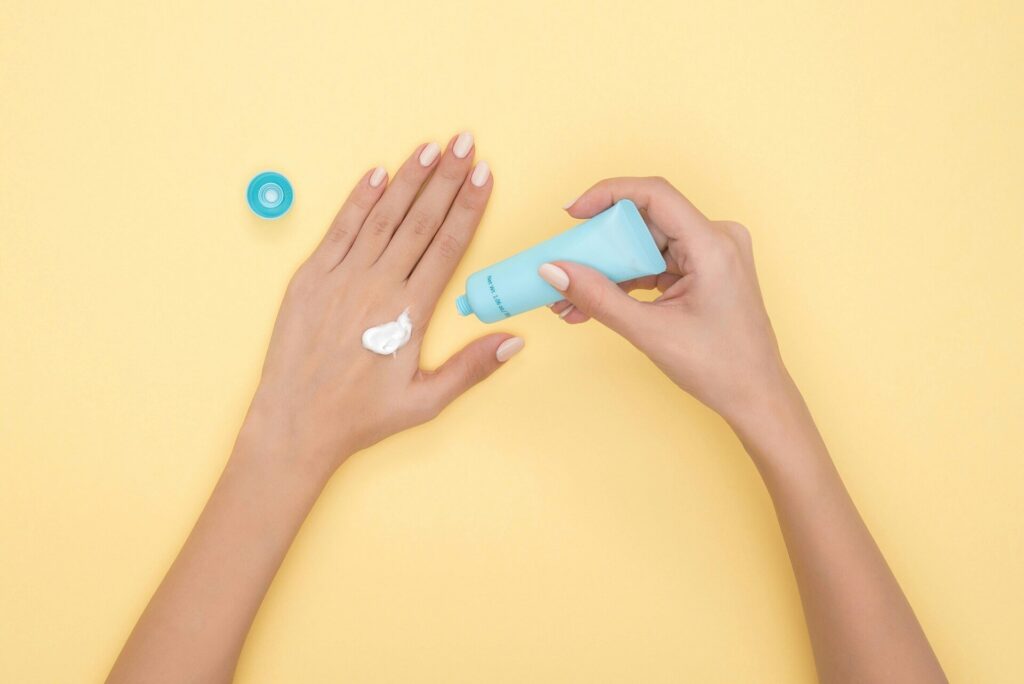
The Best Emollients for Eczema study, run out of the University of Bristol and published in 2022, took 550 children under 12 and randomly assigned them one of four moisturiser types: lotion, cream, gel or ointment. They used it as their main moisturiser for 16 weeks, and parents kept diaries for a full year. The result, in the researchers’ own words, was that “there was no difference in effectiveness of the four types of moisturiser used in the study.”
No difference. Not a small edge for the greasy ointments that every grandmother swears by, not a win for the light lotions that sink in before school. Skin reactions like itching and redness turned up with every type. Preferences varied wildly – some families liked how quickly a lotion soaked in, others wanted the heavy “barrier” feel of an ointment – and that preference is the bit that matters, because a cream that stays in the cupboard has an effectiveness of zero.
I’ve watched this play out at home. My sister spent most of last winter cycling her son through four different products, the last of which cost about the same as a decent bottle of wine, and the one that finally worked was a plain pump-dispenser cream from the supermarket pharmacy aisle. It worked because he’d tolerate it. He hated the feel of the ointment, so it went on in a two-second smear and he wiped half of it onto the sofa.
The trial was in children, so adults should be a little careful about extrapolating. But the mechanism isn’t age-specific. An emollient works by sitting on the skin, slowing water loss and patching the gaps in a damaged barrier, and none of the four formats does that job in a fundamentally different way. The expensive brands are mostly selling texture, fragrance-free reassurance and nicer packaging. Fine if you like them. Not a medical upgrade.
Bath oils: a year of data, and the answer was no
This one irritates me more than any other eczema myth, because for years bath additives were a standard NHS prescription. The logic sounded reasonable: put an oily emollient in the bath water, it coats the whole body, job done.
The BATHE trial, led from the University of Southampton and published in the BMJ in 2018, tested it properly. It recruited 482 children from 96 GP practices and split them into two groups – one used bath additives for a whole year, the other used none at all. Both groups carried on with their usual leave-on moisturisers and creams. The researchers found “no meaningful difference in eczema severity between the groups over the year.” Stinging and redness at bath time affected around a third of children in both groups, additive or not.
So if you’re standing in Boots looking at a £12 bottle of bath emollient for your own winter eczema, my advice is simple: don’t bother. Spend the money on a bigger tub of the leave-on cream you already use, and put it on properly after you’ve dried off. Bath oils also make the tub dangerously slippery, which is a bit of a faff with a wriggling toddler and a genuine hazard for older relatives.
Silk pyjamas at £56,811 per quality-adjusted life year
The CLOTHES trial is the one that gets the least attention, probably because the answer disappointed a lot of people who’d already bought the garments. Researchers recruited 300 children aged one to 15 with moderate to severe eczema, across five UK centres, and gave half of them specialist silk clothing on top of their normal care. The other half just had normal care.
After six months, there was no significant difference in eczema severity, no difference in quality of life and no difference in how much medication the children used. The health economics put the cost at £56,811 per quality-adjusted life year, well above the threshold the NHS normally pays, and the authors concluded the garments were unlikely to be cost-effective.
Soft, loose cotton is still sensible. Scratchy wool jumpers against broken skin are obviously miserable. But the idea that a premium fabric is a treatment in itself doesn’t survive contact with the data.
Why the heating makes winter eczema worse
Here’s the part that’s specific to November. Cold air holds very little water, and when you heat it up indoors its relative humidity drops sharply, so the air in a centrally heated house in January is often drier than it is outside on a damp day. Skin with a weak barrier loses water into that air faster. Add hot showers, which feel wonderful when you’ve come in from the rain and strip oils from the skin, plus the constant switching between a freezing bus stop and an overheated office, and you get the cracked hands, the rough patches on the shins and the itching that keeps you awake at 2am.
The NHS lists heat and changes in temperature among the things that make eczema worse, and its atopic eczema guidance is plain about the basics: apply emollients “as often as possible (at least 2 times a day)” and “do not use aqueous cream as it can irritate the skin and make eczema worse.” That second line still surprises people. Aqueous cream was handed out for decades and plenty of households still have an ancient tub of it in the bathroom cabinet.
A few things do help in a cold, dry house. Turning the thermostat down a degree or two in the bedroom. Shorter, lukewarm showers. Swapping a foaming shower gel for a soap substitute – we tested body wash swaps for sensitive skin earlier this year and the difference in that tight post-shower feeling was obvious within a week. Some people swear by a humidifier, but I’d be cautious: the evidence for them in eczema is thin, and in British homes that already have condensation and mould problems you can make one issue worse while chasing another. If your windows run with water every morning, you probably need a dehumidifier, not the opposite.

The steroid fear is doing more harm than the steroids
This is the section where I’ll lose some readers. But if you take one thing from this piece, make it this.
Moisturisers manage dry skin. They don’t switch off inflammation. For a proper flare – red, hot, weeping or keeping someone up at night – the standard treatment is a topical corticosteroid, and a lot of people in the UK are under-using them because of what they’ve seen online. The “topical steroid withdrawal” stories on TikTok and Instagram are real people with real suffering, and the MHRA did review the issue in 2021 and asked for clearer warnings. But its advice was about using the right potency for the shortest time needed, not avoiding steroids altogether, and withdrawal reactions are described as rare, mostly linked to long-term continuous use of stronger creams.
The far more common problem, in my experience talking to parents and to pharmacists, is the opposite one. Someone gets prescribed a steroid cream, they’re frightened of it, they apply a thin smear for two days, the flare doesn’t budge, and they decide it doesn’t work. The skin stays inflamed for weeks, they scratch it raw, it gets infected. That’s a worse outcome than a properly dosed short course.
The NHS measure is the fingertip unit: a line of cream squeezed from the tip of an adult’s index finger to the first crease, which is roughly enough to cover an area twice the size of an adult’s flat palm. Use enough. Use it for the time your GP or pharmacist tells you. Then step back down to moisturiser. And if eczema is blistering, crusting or leaking pus, the NHS treats that as a possible infection that needs a same-day GP or 111 call – not another week of trying a new cream.
None of this means you should self-prescribe. Mild hydrocortisone is available over the counter for adults, but it isn’t licensed for use on the face or for children under ten without medical advice, and anything stronger needs a prescription. Talk to a pharmacist – it’s free and usually quicker than waiting for a GP appointment in December.
The fire warning nobody reads on the side of the tub
This isn’t a myth. It’s a fact that too few people know, and it matters most in winter, when people sit closer to gas fires, use electric heaters and light candles.
Emollients aren’t flammable on the skin. But when they soak into clothing, bedding or bandages and dry there, the fabric burns faster and hotter. The MHRA says that since 2010 more than 50 deaths and serious injuries have been linked to emollient skin creams, and that the risk applies even to creams that don’t contain paraffin – something a lot of “paraffin-free” packaging still implies otherwise. The people most at risk are over 60, smokers and anyone with reduced mobility.
The advice is simple enough. Change and wash clothes and bedding often, though the regulator is clear that a hot wash reduces build-up rather than removing it. Keep away from naked flames and don’t smoke. If an older relative uses heavy creams and sits in front of a gas fire all winter, it’s worth a conversation this week. And keep using the cream – the MHRA stresses that emollients are an important and effective treatment.
What I’d actually do this winter
If I had a flare starting this week, here’s roughly where my money and effort would go.
One large pump dispenser of whichever plain emollient you like the feel of, ideally 500g, because you’ll go through far more than you expect – applied at least twice a day and after every wash, in smooth downward strokes rather than rubbed in hard. A soap substitute in the shower. Nothing fragranced, which rules out a lot of the Christmas gift sets that’ll start arriving next month (if someone gives you a scented body butter, regift it). A plan for flares agreed with a pharmacist or GP, so you’re not deciding whether to use a steroid cream at midnight with a scratching child.
What I wouldn’t buy: bath oils, silk clothing, the £30-plus “clinical” balms sold on the idea that they’re medically superior, and anything leaning on the latest ingredient trend. We looked at beef tallow skincare earlier this year and slugging before that, and both, if you strip away the TikTok packaging, are really just asking a greasy occlusive to do what a cheap emollient already does. Neither is harmful for most people. Neither is new.
And if you’ve got eczema that flares with seasonal triggers more generally, it’s worth reading our piece on hay fever and the skin barrier – a lot of people find their skin has two bad seasons, not one.
The bit the trials can’t tell you
All three of these studies were in children, and children’s eczema behaves differently from the adult version that suddenly appears on your hands at 40, or the patch on your eyelids that turns out to be a reaction to a new shampoo. Adult hand eczema in particular is often irritant or allergic contact dermatitis, and the fix there is finding the trigger – washing-up liquid, hand sanitiser, the rubber gloves you’ve worn for years – rather than finding a better cream. If yours started in adulthood, or keeps coming back in one specific spot, ask for a referral for patch testing rather than buying your way through another winter.
But the broad lesson from Bristol, Southampton and the CLOTHES team holds up well. The fundamentals are cheap, a little dull and work, provided you actually do them every day. The add-ons are mostly expensive and don’t.
So here’s what I’d like to know: what’s the most expensive thing you’ve bought for eczema that turned out to make no difference at all?