
Small Bathroom Storage Ideas UK 2026: What Works in a Two-Metre Bathroom – And the Viral Buys That Don’t
The standard British bathroom is about the size of a double mattress stood on end, and somehow it’s expected to hold towels for four people, a family’s entire dental history and that foot spa someone bought in 2019. Small bathroom storage ideas are everywhere online right now – Pinterest boards, TikTok “restock” videos, endless carousels of colour-coded baskets – and most of them were filmed in American bathrooms twice the size of yours. This is a guide to what actually holds up in a two-metre UK bathroom with a radiator in the wrong place and a window that opens into the shower. And, just as usefully, what doesn’t. The same logic – one wall, one job – runs through our boot room ideas guide for the hallway end of the house.
In This Article
I’ve spent the last month fixing the worst bathroom I’ve ever owned: 1.9m by 2.1m, one bloke’s razor permanently on the windowsill, no cabinet at all when I moved in. Everything below has either survived that room or been returned.
Do the Ten-Minute Audit First
Before buying a single basket, empty the room. All of it, onto the landing floor. This takes ten minutes and it’s the step every storage article skips, because storage articles want to sell you storage.
What comes out of a typical small bathroom: eleven part-used shampoo bottles, a pyramid of hotel miniatures, sun cream from a holiday two governments ago, medicines past their expiry date (pharmacies take those back, for free), and a hair tool nobody has plugged in since Christmas. Half of it goes in the bin or moves elsewhere in the house. What’s left – the stuff you use weekly – is usually a shoebox and a half of actual bathroom contents per person.
That’s the real number you’re storing for. Design for the shoebox and a half, not for the pyramid.
Start With the Walls, Not the Floor
Floor space is the one thing you haven’t got, so stop shopping for anything that stands on it. A freestanding storage tower in a small bathroom is like parking a wardrobe in a hallway – technically storage, practically an obstacle. The trade consensus, and Which? says the same in its small bathroom guide, is to go up: wall-hung units, tall narrow cabinets, shelving above head height for the things you touch twice a year.
The dead zones in a small bathroom are nearly always the same four spots. Above the door – a single deep shelf up there swallows spare towels and loo roll multiples, and nobody ever sees it. Above the toilet cistern. The wall over the radiator. And the back of the door itself, which will happily hold four hooks’ worth of dressing gowns and towels without costing you a millimetre of floor.
Height does something else too: it drags the eye upwards, which makes the room feel taller than it is. A tiled box with everything stored at waist height feels cluttered even when it’s tidy.
The Small Bathroom Storage Ideas That Earn Their Keep
A mirrored cabinet over the basin is the single best pound-for-pound upgrade in a small bathroom, and it’s not close. It replaces a flat mirror you already needed, hides the entire skincare shelf, and stops the toothpaste living on the basin edge. If you buy one thing off the back of this article, buy that.
They’re not all equal, mind. The £25-£40 flat-pack ones from Dunelm and B&Q do the job, but the doors are usually foil-wrapped MDF, and foil-wrapped MDF in a steamy room has a life expectancy of about three years before the edges start lifting. IKEA’s ENHET cabinets run around £60-£80 and take humidity better, though the shallow ones won’t fit a can of shaving foam upright – measure your tallest bottle before you order, not after. Spend £90-£130 at Victoria Plum or Wickes and you get aluminium bodies, soft-close doors and a shaver socket, and that’s the tier I’d actually recommend for a family bathroom that gets showered in twice a day. Above £150 you’re mostly paying for LED strips and demister pads. The demister is a nice-to-have; the LED halo is jewellery.
Under the basin is the next battleground. If you’ve got a pedestal sink, an under-sink caddy that wraps around the pedestal turns useless pipe-space into two shelves of cleaning products. If you’re replacing the basin anyway, a vanity unit is the grown-up answer – the drawer versions beat the cupboard versions, because a 60cm-deep cupboard under a sink is where bottles go to be forgotten.
Then there’s the stuff interiors magazines love. Recessed niches in the shower wall look brilliant and work brilliantly, but they’re a mid-renovation job, not a Saturday one – more on cost further down. Ladder-style towel racks that lean against the wall are somewhere in between: they hold three towels, they look good in photos, and they fall over if you look at them wrong on a bumpy Victorian floor. Livingetc’s small bathroom storage round-up is honest about this trade-off – some of the prettiest solutions are the least stable ones.
Towels deserve their own paragraph, because towels are the actual problem in most small bathrooms – the bottles are just noise. A household of four owns somewhere between twelve and twenty towels, and the bathroom itself only needs to hold the four in rotation. The rest belong in the airing cupboard, a bedroom drawer, anywhere that isn’t a damp room. Once you accept that, the storage question shrinks dramatically. Two hooks store more towels than one rail, in half the width, and a damp towel dries faster on a hook than folded over a bar – Livingetc’s towel storage piece makes the same point. Hooks are also about £3 each. The towel ladder can wait.
The Cheap Fixes That Do Most of the Work
Here’s the uncomfortable truth about this whole category: the difference between a chaotic small bathroom and a calm one is usually about £45 of unglamorous plastic and pine, not a renovation.
The IKEA VESKEN trolley – the little three-tier plastic one, about £10 – has become a cliché because it works. It slots into the 20cm gap beside most toilets and holds more than a wall cabinet. It’s ugly in a way that stops mattering after a week.
Suction-cup shower storage is a false economy; every one I’ve owned has let go at 6am with a crash like a car accident. Screw-fixed or adhesive-mounted corner caddies cost the same and stay put. For adhesive, the 3M Command range – the big hooks are about £8 for two in Sainsbury’s – genuinely holds a wet dressing gown, which the knock-offs don’t.
An over-door organiser with clear pockets, the sort sold for shoes, is the best £12 you’ll spend if you have kids: sun cream, spare toothbrushes, bath toys, all off the floor and visible. Not pretty. Doesn’t matter, it’s behind a door.
And decant nothing. The TikTok habit of pouring shampoo into matching amber bottles adds a job to your life and roughly nothing to your storage. If you want the bathroom to look considered, spend the money on one good soap dispenser instead – several of the British homeware brands we rated this summer make ones that survive being dropped.
What Sorting It Actually Costs
Since budget is the question everyone asks, here’s how the spending stacks up in practice, based on my own receipts and a lot of time in the returns queue.
Around £50 gets you the essentials tier: two packs of Command hooks, a VESKEN trolley, an over-door organiser and a screw-in corner caddy for the shower. That combination clears the floor and the basin edge, which is 70% of the visual difference. It won’t be in any magazine. It will work.
At £150-£200 you add the mirrored cabinet, a proper towel hook rail and an over-door shelf, and at that point most small bathrooms are done – genuinely done, nothing on the floor, nothing on the cistern lid. The gap between this tier and the £50 one is the single biggest jump in how the room feels.
Past £250 you’re into replacing sanitaryware, and the maths changes. A vanity unit with a basin runs £150-£400 before fitting, and a plumber will want £150-£250 to swap it in. That’s real money, but it’s also the only option on this page that adds drawer storage where a pedestal used to be, and it’s the one people never regret. Nobody has ever refitted a vanity back to a pedestal sink.
What you shouldn’t do is spend £250 on accessories. Ten baskets cost more than one cabinet and store less.
The Viral Buys to Leave on TikTok
The over-toilet ladder shelf is the most overrated storage purchase in Britain. It photographs beautifully. In use, it’s a wobbly frame that turns flushing into an extreme sport, puts your clean towels directly in the splash zone, and blocks the cistern lid the one time a year you need to get into it. If you want storage above the toilet, a wall-mounted cabinet or a single stout shelf does the same job without the theatre.
Corner sink shelves that clip over the basin edge: they make cleaning the sink impossible and hold one bar of soap. Skip.
Open basket shelving gets a qualified no. Baskets on open shelves look calm on Instagram because someone styled them four minutes before the photo. In a working bathroom they collect talc-textured dust, hide nothing (you can see the basket, you know what’s in the basket), and add a lift-down-rummage-lift-up step to finding a plaster. One basket for guest towels, fine. A wall of them is a filing system for things you’ve given up on.
The one viral buy that deserves its reputation is the magnetic strip. A £6 self-adhesive knife strip inside a cabinet door holds tweezers, nail scissors, bobby pins and clippers, and ends the drawer-shaking ritual forever. Cheap, invisible, slightly life-changing.
Bath caddies – the wooden trays with the wine glass slot – are lovely if you take baths. But be honest about whether you take baths or whether you took two last winter. In a genuinely small bathroom the caddy spends 360 days a year propped against a wall, being storage that needs storing.
Renting? You Can Still Fix This
Most of the good solutions above involve a drill, which is a problem when your deposit is on the line. The no-drill toolkit has improved a lot in the last few years though, and a rental bathroom can get 80% of the way there.
Adhesive hooks and strips handle towels, and the better adhesive shelves will hold a mirror cabinet’s worth of bottles if the tiles are flat. Tension poles – the spring-loaded kind sold for shower curtains – now come as corner caddy systems that jam between floor and ceiling with no fixings at all. The trolley and the over-door organiser need no permission from anyone. We covered the same logic for tech in our renter’s smart home kit: the no-drill version is rarely the best version, but it’s nearly always good enough.
One warning from experience: adhesive anything fails on textured tiles and fresh paint. Test one hook for a week before you trust a shelf with your Sunday-best aftershave. And when you leave, warm the strips with a hairdryer for thirty seconds before peeling – they come off clean and the deposit conversation never happens.
It’s also worth knowing what landlords actually object to. Most tenancy agreements ban new holes in tiles, but plenty of landlords will say yes to a mirrored cabinet screwed into painted plasterboard if you ask in writing and offer to fill the holes when you go. A cabinet is an improvement to their property; a strip of mould behind a floor-standing unit isn’t. The worst they can say is no, and you’re no worse off than before you asked.
When to Spend Real Money
There’s a ceiling to what baskets can do. If your bathroom is small and you’re planning to refit it in the next few years anyway, three structural decisions matter more than everything above put together.
A wall-hung toilet and basin free up visual floor space and create cleaning access, and the price gap versus floor-mounted has narrowed to a few hundred pounds. A recessed shower niche costs £150-£300 in labour when the wall is already open during a refit – and ten times the disruption if you decide you want it afterwards. And built-in cupboards over the cistern, using the full wall depth of the boxed-in pipework, turn wasted boxing into the biggest cupboard in the room. Any decent fitter will quote for all three; the mistake is not asking.
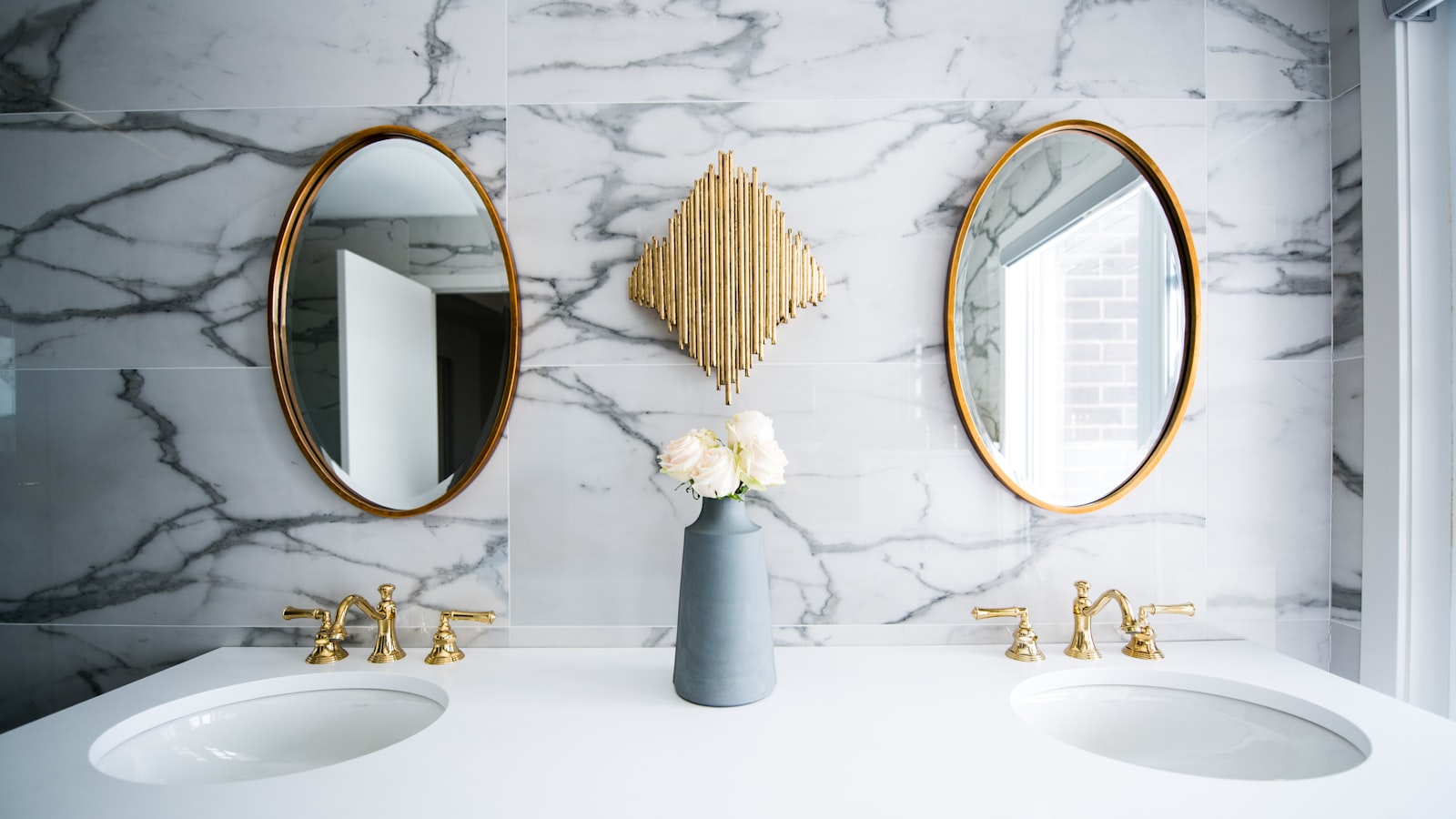
While the room’s torn up, think about colour too. Small bathrooms take bold treatment surprisingly well – we’ve written about how colour drenching flatters awkward small rooms by removing the contrast lines that chop them up, and why limewash finishes keep having a moment in UK homes. A dark, drenched small bathroom with hidden storage reads as deliberate. A white one with visible clutter reads as a mess, however hard you scrubbed it. And if the refit goes further than paint, our bathroom trends 2026 piece covers what a £7,000 refit actually buys and why the all-white bathroom has finally lost its grip.
The honest summary is that small bathroom storage is mostly about subtraction – fewer things standing on the floor, fewer bottles in eyeline, fewer purchases that exist for the camera. Your bathroom probably doesn’t need more storage so much as better-placed storage, and possibly a bin bag’s worth of hotel miniatures taken to the tip.
What’s the one thing in your bathroom right now that hasn’t been touched in a year – and why is it still on the windowsill?