
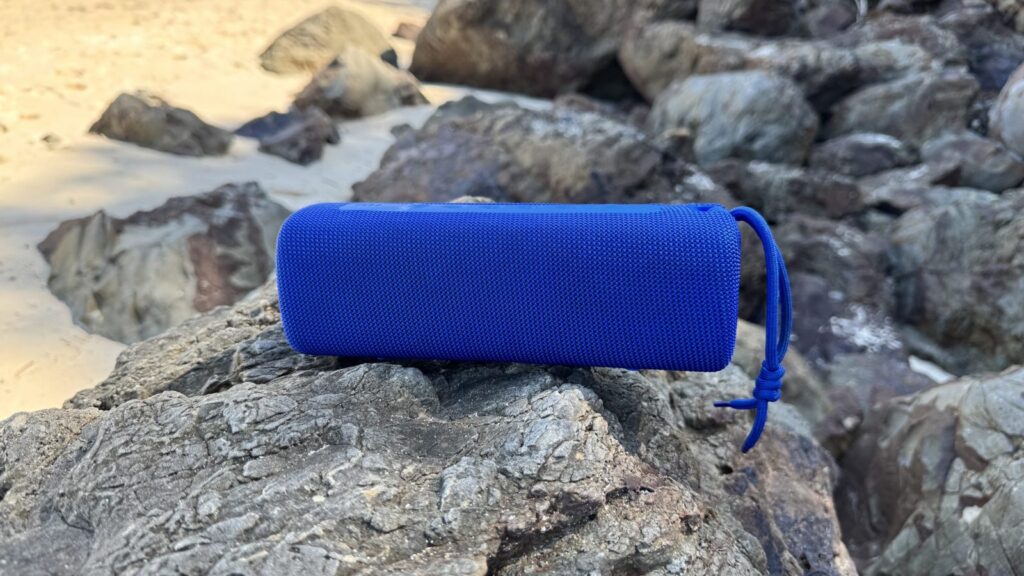
The Best Bluetooth Speaker for the Garden in 2026: Six Tested for BBQs, British Weather and a £180 Budget
The speaker died at 4.40pm, roughly halfway through the second bag of charcoal. One minute there was music drifting across the garden, the next there was the sound of fourteen people pretending they hadn’t noticed, and a host crouched over a flat battery muttering about Spotify. It is the most British of summer scenes: the weather finally turns, everyone piles outside, and the cheapest part of the whole set-up – the little speaker propped on the windowsill – is the thing that lets you down.
In This Article
- What a garden speaker in Britain actually has to survive
- The best Bluetooth speaker for the garden, overall: JBL Charge 6
- If you want it to play all day: Marshall Emberton III
- The cheap one that’s genuinely hard to fault: JBL Flip 7
- The wildcards: Bose, Sony and Sonos
- How to set it up so it actually sounds good outside
- So which one should you buy?
Finding the best Bluetooth speaker for the garden in 2026 is not really about chasing the loudest box or the biggest spec sheet. A garden in this country has to deal with sudden showers, music fighting against open air and next-door’s lawnmower, a battery that has to outlast a long afternoon, and the very real risk of the thing being knocked off a table into a flowerbed. I have spent the last few weeks living with the current crop, and the honest answer is that the right pick depends almost entirely on how you actually use your outdoor space. Here is what holds up, what to skip, and where the money is genuinely well spent.
What a garden speaker in Britain actually has to survive
Before any talk of soundstage and bass response, it helps to be clear about the job. Indoors, a speaker sits in a small, reflective box of a room where sound bounces off walls and feels fuller than it is. Outdoors, all that reinforcement vanishes. Sound just leaves and never comes back, which is why a speaker that fills your kitchen can sound thin and apologetic the moment you carry it onto the patio. Power and driver size matter more outside than they do anywhere else.
Then there is the weather. You want an IP rating of at least IP67, which means full dust protection and the ability to survive being submerged in a metre of water for half an hour. In practice you are not planning to dunk it, but IP67 or the newer IP68 is your insurance against a downpour, a splash from the paddling pool, or a damp evening. Anything rated lower than that is an indoor speaker wearing a raincoat.
Battery life is the third pillar, and the one most people underestimate. A garden session is not three songs; it is a Saturday that starts with lunch and ends after dark. Manufacturer battery figures are also measured at polite volumes, so a quoted “16 hours” can mean far less when you are actually playing loudly enough to hear over a barbecue and conversation. Range matters too: if your router or phone stays indoors while you wander down the garden, Bluetooth can start to stutter past about ten metres and through a brick wall.
The best Bluetooth speaker for the garden, overall: JBL Charge 6
If you want one speaker that handles a real British garden without fuss, the JBL Charge 6 is the one I would point most people towards. It is not the cheapest here and it is not the most stylish, but it does the unglamorous things exceptionally well. It is rated IP68, so rain and splashes are a non-issue, and it is built to shrug off being dropped onto a patio.
The headline is battery and volume. JBL quotes up to 24 hours, rising to around 28 with its Playtime Boost mode, and in a garden that translates to genuinely not thinking about charging across a whole weekend. It is loud enough to carry across a decent-sized lawn without distorting, and the new internal subwoofer gives it a fuller low end than the Charge 5 managed. A neat practical touch: it doubles as a power bank, so when a guest’s phone hits 4 per cent during the World Cup, the speaker can rescue it. On that note, if you are planning garden viewing this summer, our guide to watching the 2026 World Cup from the UK is worth a look for kick-off times.
It is not perfect. At an RRP of around £170 it is the priciest of the mainstream options, though it is frequently discounted below that. It is also chunky and weighs over a kilo, so it is a “carry it out and set it down” speaker rather than something you clip to a bag. What Hi-Fi’s review praised its clarity and weight of sound while noting the price has crept up generation on generation. For a fixed garden speaker that you are not constantly transporting, none of that bothers me. It is the safe, sensible default.
If you want it to play all day: Marshall Emberton III
The Marshall Emberton III is the speaker I would choose on looks alone – that ribbed, amplifier-inspired design genuinely earns its place on an outdoor table rather than hiding under it. But it is not just a style purchase. Its trump card is stamina: Marshall quotes north of 30 hours of battery, which is more than three times what some rivals manage, and in testing it comfortably outlasted everything else here across multiple sessions without a recharge.
It uses what Marshall calls True Stereophonic sound, firing audio outward in a 360-degree spread, which suits a garden where people are scattered around rather than sitting in front of it. It is rated IP67, so it will handle the weather. At around £159 it sits just below the Charge 6 on price. TechRadar described it as a small speaker with stacks of personality, and that feels right.
The honest catch is that it is a pure, traditional Bluetooth speaker. There is no built-in voice assistant, no Wi-Fi, no speakerphone for taking a call in the garden. If you want a speaker that fits into a wider smart-home set-up, this is not it. But if you simply want to press play, set it down, and not think about it again until the following weekend, the Emberton III is hard to beat – and it pairs nicely with the kind of considered outdoor space we covered in our look at what a garden room really costs in 2026.
The cheap one that’s genuinely hard to fault: JBL Flip 7
Not everyone wants to spend £160 to play music over a barbecue, and they shouldn’t have to. The JBL Flip 7, at around £130, is the speaker I recommend most often to people who want something that simply works without overthinking it. It is IP68 rated, compact enough to clip onto a bag with its new PushLock system, and despite its size it is startlingly loud for the money. Expert Reviews called it the best portable speaker for most people, and I would not argue.
The caveat is battery. JBL quotes 16 hours, but independent testing at proper listening volume – the level you would actually use outdoors – brought that down to closer to six hours. That is the trade-off for the small size, and it is worth knowing before you bank on it lasting an all-day event. For all-day sessions – a barbecue, a campsite – it pairs naturally with a decent cool box, which we’ve tested separately. For a couple of hours in the garden after work, or as a grab-and-go speaker for a picnic or a trip to one of the UK’s best seaside towns, it is excellent value. Buy two and JBL lets you pair them for stereo, which is a cheaper route to a big sound than a single premium speaker.
Below this, the genuinely budget tier is healthy too. Anker’s Soundcore range and Tribit’s StormBox models offer surprisingly capable sound and IP67 protection for £30 to £60, and the JBL Go 5 is a perfectly good little speaker for a balcony. None will fill a large garden, but for close-range listening they punch above their price.
The wildcards: Bose, Sony and Sonos
Three more deserve a mention, because each gets one specific thing right. The Bose SoundLink Flex (2nd Gen), at an RRP of around £150 but routinely found nearer £109, is the sound-quality pick at the smaller end. It is beautifully balanced, it floats if it goes in the pool, and it is properly portable. Its limit is volume: push it hard in an open garden and the sound starts to muddle, so it suits a patio or a balcony far better than a big lawn.
The Sony ULT Field 1 is the value disruptor. It launched at around £119 and is regularly discounted well below £100, it is rugged and IP67 rated, and its “ULT” button dials up the bass for outdoor parties where you want more thump. What Hi-Fi found it well built and good value, though that bass mode can tip into boomy if you leave it on for everything. At its sale price it is one of the smartest buys here.
The Sonos Roam 2, at around £179, is the one to consider only if you are already in the Sonos world. Connect it to Wi-Fi and it slots into a multi-room system, supports AirPlay, and adjusts its sound to its surroundings automatically. The problem for garden use is battery: roughly 10 hours, the shortest of this group, and it is expensive for what it delivers as a pure portable. As a speaker that lives indoors and occasionally comes outside, it makes sense. As a dedicated garden speaker, it is the wrong tool.

How to set it up so it actually sounds good outside
The speaker is only half of it. Placement makes a bigger difference outdoors than people expect. Putting the speaker against a wall or fence gives the sound something to reflect off, which adds body and stops it disappearing into the open air – the same trick that makes a speaker sound bigger indoors. Raising it off the ground onto a table or low wall also helps; on the grass, a surprising amount of the sound is simply absorbed.
Keep the source phone closer to the speaker than you think. Bluetooth range degrades fast through brick, so the classic mistake is leaving your phone charging in the kitchen while the speaker sits at the bottom of the garden, then blaming the speaker when it cuts out. If you have two compatible JBLs or two Sonos units, pairing them as a stereo pair and placing one at each end of the seating area gives a far more even spread than cranking up a single box.
Finally, a word on heat. We tend to worry about rain, but a black speaker left in direct July sun will get hot, and lithium batteries dislike that. Keep it in the shade when you can – the same common sense that applies to keeping a house cool in a heatwave applies to your electronics. And if your garden evenings have graduated to outdoor film nights, a speaker like the Charge 6 pairs neatly with one of the units in our portable projector guide.
So which one should you buy?
For most people with a normal-sized garden who want one speaker to handle everything, the JBL Charge 6 is the answer: loud, weatherproof, long-lasting and reliable, even if it asks for around £170. If you value battery life and design above all and don’t need smart features, the Marshall Emberton III is the more characterful pick and will outlast a whole weekend. If you are watching the budget, the JBL Flip 7 at £130 does 90 per cent of what the pricier speakers do, with the one caveat that its real-world battery is shorter than the box claims.
The Sony ULT Field 1 is the bargain hunter’s choice, the Bose SoundLink Flex is for those who care most about sound on a smaller patio, and the Sonos Roam 2 only really makes sense if you are already invested in Sonos. What unites the good ones is not a spec; it is the quiet confidence that they will still be playing when the charcoal finally gives out. If you want to round out the kit, our guide to wireless earbuds under £100 covers the evenings when you’d rather not share the playlist with the whole street.
So before the next sunny Saturday catches you out: is your speaker built for a British garden, or is it an indoor speaker you’ve simply been getting away with?
Running a speaker outdoors all afternoon will flatten a phone fast – our guide to the best portable power banks under £100 covers what’ll keep it going. And if the garden set-up is turning into a habit, a pizza oven under £300 turns the same afternoon into dinner.