
Fibre Supplements UK 2026: One Powder Earns Its Place – And a 40p Tin of Beans Beats the Rest
Britain has solved its protein problem. Walk any supermarket aisle and there’s protein in the porridge, the yoghurt, the pancake mix, the water. What nobody solved is fibre – and the numbers are worse than most people think. NHS guidance says adults need 30g a day; the average UK adult manages about 20g. That gap is now being monetised, hard, which is why fibre supplements in the UK have become one of the fastest-growing corners of the wellness shelf in 2026. Psyllium husk, inulin powders, “gut gummies” at 30p a chew – Holland & Barrett has a whole bay of them now. The gut-immunity link is also why fibre keeps turning up in our guide to immune boosting supplements, usually ahead of the pricier tubs.
In This Article
- The 30g problem no marketing department created
- What fibre supplements UK shoppers are actually buying
- Soluble versus insoluble is the wrong question
- Psyllium: the boring one with the receipts
- Inulin, gummies and the bloating tax
- Fibermaxxing gets more right than most TikTok trends
- I counted a week of eating, and it was humbling
- What I'd actually do
Here’s the uncomfortable bit for the supplement industry: most of that shelf is selling you something a 40p tin of beans does better. But not all of it. One supplement in particular has decades of unglamorous evidence behind it, costs pennies per dose, and gets almost no marketing budget because there’s no way to make it sexy.
This piece sorts the aisle properly. What works, what bloats, and what you should just eat instead.
The 30g problem no marketing department created
Unlike most wellness targets, the 30g figure isn’t arbitrary. It comes from the Scientific Advisory Committee on Nutrition’s 2015 Carbohydrates and Health report, which reviewed the evidence and raised the UK recommendation from 24g to 30g. The committee found higher fibre intakes linked to lower rates of heart disease, stroke, type 2 diabetes and bowel cancer.
A 2019 review in The Lancet, commissioned by the World Health Organization, backed this up across 185 studies: people eating the most fibre had meaningfully lower risk of dying early from pretty much anything cardiovascular. The relationship was dose-dependent. More fibre, better outcomes, up to and beyond the 30g mark.
And yet the NHS’s own fibre guidance notes most UK adults sit around 20g. That’s not a small miss. It’s a third of the target, every day, for decades.
The bowel cancer link deserves more attention than it gets, too. The SACN review found the risk association strong enough to build the national recommendation around – and bowel cancer in under-50s has been rising in the UK for years, enough that Cancer Research UK has flagged it repeatedly. Nobody can say fibre alone explains that trend. But when the fourth most common cancer in Britain tracks this closely with something this cheap to change, the 30g target stops being a nutritionist’s nicety.
Why the gap, then? Because fibre lost the branding war. Protein got gym culture, aesthetics and an entire influencer economy – to the point where supermarkets now sell protein versions of foods that were already protein, at a 40% markup. Fibre got Fybogel and your nan. It’s only in the last eighteen months – roughly since gut health went mainstream and “fibermaxxing” started trending – that the supplement industry noticed there was money here.
And notice what they built when they did: not cheap, effective products, but expensive, pleasant ones. That ordering isn’t an accident. It’s the same playbook the protein industry ran a decade ago, compressed into eighteen months.
What fibre supplements UK shoppers are actually buying
The bay breaks down into four things wearing different labels.
Psyllium husk – the outer coating of Plantago ovata seeds. Sold as loose husk, powder, or as the branded orange-flavoured sachets your GP might suggest. Forms a gel in water. The workhorse.
Inulin and chicory root fibre – the darling of the gummy and “prebiotic soda” market, because it’s mildly sweet and dissolves invisibly. Heavily fermented by gut bacteria, which is both its selling point and its problem.
Wheat dextrin – a processed starch sold under names like Benefiber. Dissolves completely, tastes of nothing.
Methylcellulose – plant fibre modified in a lab, sold mainly for constipation. Doesn’t ferment at all, so no gas, but does less elsewhere.
Prices are all over the place. Loose psyllium husk runs about £6-8 for a 300g pouch that lasts a month. The fashionable gummy brands charge £25-30 for the same month, delivering a fraction of the fibre. That ratio should tell you most of what you need to know about who each product is designed for.
| Supplement | Typical daily dose | The evidence | Cost per month | Verdict |
|---|---|---|---|---|
| Psyllium husk (loose) | 5-10g | LDL down 5-10% in meta-analyses; normalises stools both ways | £4-6 | The only clear buy |
| Fybogel (ispaghula sachets) | 2 sachets (7g) | Same plant as psyllium, same effects | £10-12 | Works, but you pay double per gram |
| Inulin / chicory root gummies | 2-4g per serving | Feeds gut bacteria; bloating common above 10g | £25-30 | Confectionery with a health halo |
| Wheat dextrin | 4-7g | Well tolerated, but trials suggest little effect on constipation | £12-15 | Skip |
| Methylcellulose | 2-6g | Constipation relief only; no fermentation, so no gas | £8-14 | Niche, if inulin wrecks you |
Soluble versus insoluble is the wrong question
Most of us were taught the two-bucket model at school: soluble fibre (oats, dissolves, lowers cholesterol) and insoluble fibre (bran, doesn’t dissolve, keeps you regular). The labels on the supplement bay still use it. Researchers largely don’t, because it turned out to predict very little about what a fibre actually does in a human.
The questions that matter now are different. Does the fibre form a viscous gel? Gel-formers – psyllium, beta-glucan from oats and barley – are the ones that lower cholesterol and steady blood sugar, because the gel physically slows what your gut absorbs. And does it ferment? Fermentable fibres – inulin, the resistant starch in cooled potatoes and slightly green bananas – feed gut bacteria, which produce short-chain fatty acids that seem to matter for everything from inflammation to appetite signalling. Wheat bran does neither; it works as bulk, full stop.
No single fibre does all of it. Which is the quiet, unfashionable argument for getting fibre from varied food rather than one powder: a lentil curry with rice that’s been cooked and cooled delivers three or four fibre types in one bowl. A scoop of anything delivers one.
It also explains why the supplement bay can’t honestly promise everything on one label. A product that’s brilliant for cholesterol may do nothing for your gut bacteria. The gummy that “feeds your microbiome” won’t touch your LDL. Read the ingredient, not the front of the tub. And if you’re weighing a fibre against a capsule of live bacteria, our look at whether probiotics actually work explains who the evidence backs, and why a £1.50 pot of live yoghurt covers most people.
Psyllium: the boring one with the receipts
If you buy one fibre supplement, it’s this, and it’s not close.
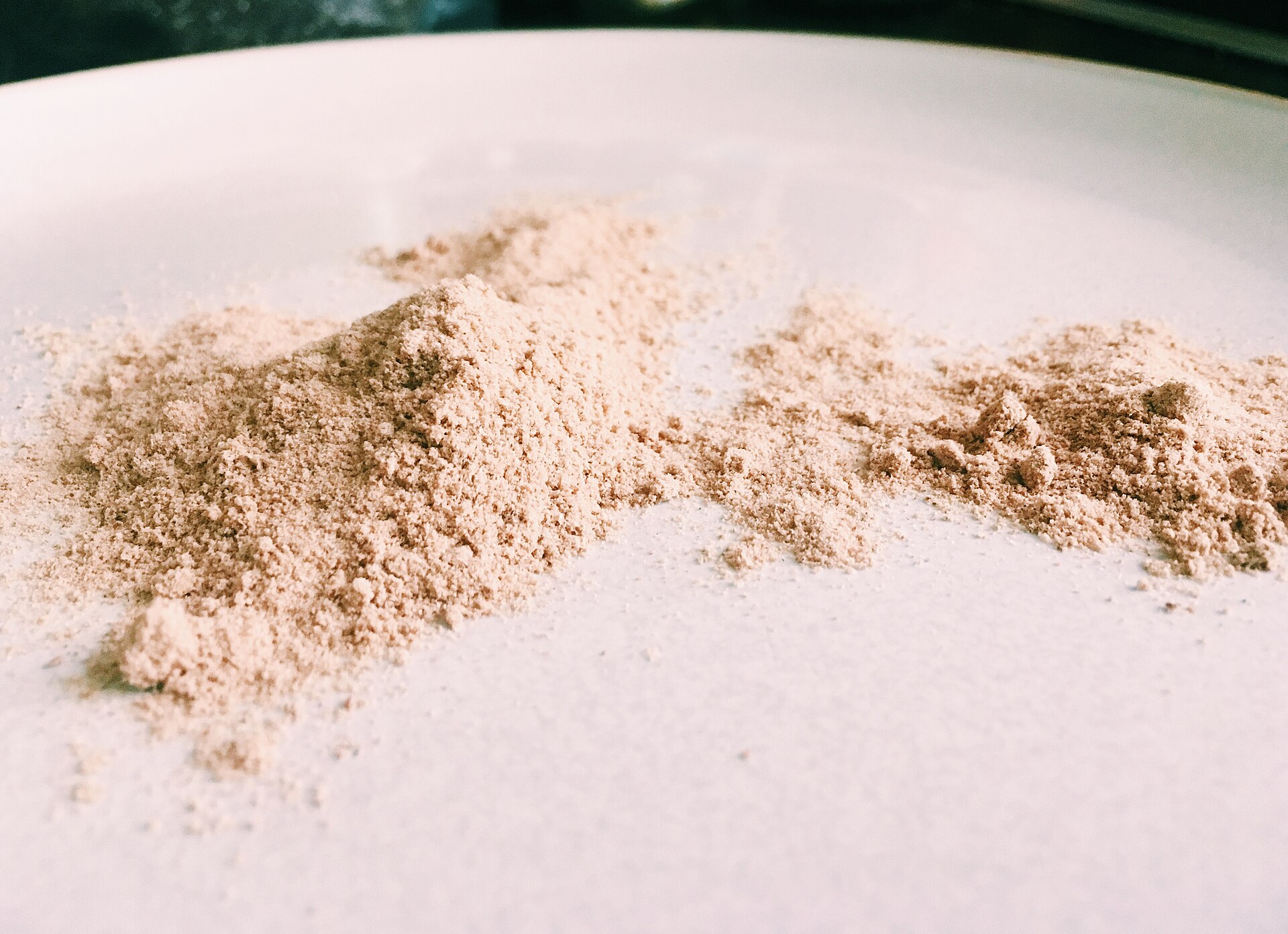
Psyllium is a viscous, gel-forming fibre that mostly resists fermentation – meaning it does its work mechanically rather than by feeding bacteria. That gel slows glucose absorption, binds bile acids (which is how it nudges LDL cholesterol down), and normalises stools in both directions: softer if you’re constipated, firmer if you’re not. Meta-analyses consistently show LDL reductions in the region of 5-10% at around 10g a day. US regulators have allowed a heart-health claim on psyllium packaging since the late 1990s – a bar very few supplement ingredients have ever cleared.
It’s also cheap. Genuinely cheap. About 15-20p a day at a proper dose, less if you buy the loose husk from the world foods aisle rather than the supplement shelf – it’s the same plant, sometimes literally the same importer, at half the price.
The catch is texture. Stir it into water and drink it fast, because after ninety seconds you’re drinking wallpaper paste. I’ve settled on mixing a teaspoon into porridge before cooking, where it vanishes. And start with a teaspoon, not the tablespoon the packet cheerfully suggests, unless you want to spend day three regretting your ambition.
A note on the branded version. Fybogel is psyllium (ispaghula, same plant) at £5-6 for a box of thirty sachets, with sweetener and orange flavouring doing the heavy lifting. It works. But you’re paying roughly double per gram for the sachet format, and since the price crept up again this spring the loose husk has become the obvious buy. The one under-reported upside of sachets is dosing discipline – if you’re the sort of person who’ll otherwise heap a spoon and suffer for it, the pre-measured 3.5g dose has some merit.
Inulin, gummies and the bloating tax
Inulin is where the marketing money went, and where the evidence gets thinner and the side effects get louder.
Because it’s rapidly fermented in the colon, inulin does feed bifidobacteria – the prebiotic claim is real as far as it goes. But rapid fermentation means gas, and at doses above roughly 10g a day a large share of people get noticeably bloated. The prebiotic sodas and gut gummies dodge this by keeping doses tiny: 2-4g a serving, which is also too little to move you meaningfully towards 30g. You’re paying £25 a month for single-digit percentage progress and a pleasant sense of having done something.
I tried a fortnight on one of the popular gummy brands while researching this – the £26-a-pouch sort with the pastel branding and a waiting list, allegedly. They taste like slightly worthy Haribo, which is the point. Two gummies gave me 3g of fibre and about a teaspoon of chicory root’s characteristic after-effect. To reach even a third of the daily target through gummies alone you’d need eight of them, £2.60 a day, and a very forgiving office.
That pleasant sense of having done something is the actual product. Same story as the £88 colostrum tubs, half the electrolyte powders and the creatine gummies we’ve covered this year: a real ingredient, a real mechanism, and a dose and price that quietly break the promise.
Wheat dextrin sits in an odd middle ground. It’s well tolerated, but several trials suggest it does little for constipation – the main thing people buy it for. Skip it.

Fibermaxxing gets more right than most TikTok trends
Here’s my contrarian position for the piece: fibermaxxing – the TikTok trend of deliberately loading every meal with fibre – is mostly correct, and the reflexive backlash to it is more wrong than the trend. When the same app that gave us cortisol-detox nonsense (we dismantled that one in the spring) lands on “eat more beans”, the right response is mild astonishment and agreement.
The trend gets two things wrong, though, and they matter. First, speed. Jumping from 18g to 35g overnight is a recipe for a genuinely bad week; your gut bacteria need two or three weeks to adjust to what is, from their perspective, a change of career. Add 5g or so per week. Second, water. Gel-forming fibres need it; psyllium taken without enough fluid can make constipation worse, not better, and in rare cases cause blockages. The British Dietetic Association’s fibre fact sheet makes both points, less breathlessly than TikTok does.
One group should sit this trend out entirely: anyone with an existing bowel condition – IBS, IBD, diverticulitis – for whom “just add fibre” can go badly wrong in either direction. That’s a conversation with a GP or dietitian, not a supplement aisle. And if you take regular medication, space psyllium a couple of hours away from it; a gel designed to slow absorption doesn’t discriminate between glucose and your prescription.
It’s also worth saying that a sudden, unexplained change in bowel habit isn’t a fibre problem to self-treat – it’s a see-your-GP symptom, full stop. The supplement aisle has a way of absorbing worries that belong in a consulting room.
I counted a week of eating, and it was humbling
Before writing this I tracked my own fibre for a week, on the theory that a food writer ought to be the easy case. I cook from scratch most nights. I own more dried pulses than any reasonable household needs.
Monday came in at 22g.
That was the humbling bit. A day with homemade soup, decent bread and an apple – a day that felt virtuous – still missed the target by a quarter. The days I cleared 30g had something in common, and it wasn’t effort: they were the days a meal was built on pulses or the breakfast was porridge with berries and a spoonful of psyllium. The days I failed were the days lunch was “something on toast” and dinner was pasta with a vegetable waved at it.
Two other things surprised me. White pasta and rice are fibre deserts in a way I hadn’t fully registered – a big bowl of white spaghetti manages about 3g, which is why swapping the carb base moves the number more than adding a side salad ever will. And the classic health-halo foods barely register: a bag of spinach wilts down to almost nothing, fibre-wise. Spinach is fine. It’s just not doing this particular job.
By Friday I’d stopped needing to count, because the pattern is crude: base a meal on beans, lentils, oats or proper wholegrains and you bank 7-10g a sitting. Base it on white carbs and meat and you bank 2g. Everything else is rounding.
The reason dietitians bang on about food sources isn’t purity. It’s that whole foods bundle fibre with the things supplements strip out – polyphenols, resistant starch, micronutrients, and the simple bulk that makes you stop eating.
And the arithmetic is embarrassing for the supplement shelf. A tin of baked beans: 7-8g of fibre, about 40p. Two slices of proper wholemeal instead of white: 4g, no extra cost. A 40g bowl of porridge oats: 4g. Frozen peas, 80g: 4g. Raspberries beat blueberries roughly two to one and are usually cheaper. Two green kiwis a day matched prescription fibre for constipation in clinical trials, with fewer complaints about taking them – which is the least surprising trial result of the decade.
| Source | Fibre | What it costs |
|---|---|---|
| Tin of baked beans | 7-8g | about 40p |
| Porridge oats, 40g bowl | 4g | 10p |
| Two slices wholemeal instead of white | 4g | nothing extra |
| Frozen peas, 80g | 4g | 15p |
| Raspberries, 80g | 5g | around £1 |
| Two green kiwis | 4g | 60p or so |
| Loose psyllium, 10g dose | 7-8g | 15-20p |
| Gut gummies, two | 3g | £1.70 |
Stack a normal day – porridge, a bean-heavy lunch, wholemeal bread, two veg portions, some fruit – and you’re at 30g without a single scoop of anything.
The honest case for a supplement is narrower: you eat lower-carb and struggle to fit the volume in, your routine is chaotic, or you want psyllium’s cholesterol effect on top of a decent diet. Those are real cases. They describe far fewer people than the size of the supplement bay suggests.

What I’d actually do
Fix breakfast first – it’s the easiest 8-10g of the day, and if you’ve read our piece on the Japanese walking method you already know how much mileage this site gets out of boring, cheap interventions that work. Swap the bread. Put beans or lentils in anything tomato-based; nobody has ever detected a tin of green lentils in a bolognese.
Then, if you want the supplement, buy loose psyllium husk for under a tenner and ignore the rest of the bay. The gummies are confectionery with a health halo. Inulin is fine in small doses you’re probably already getting from onions and oats. Wheat dextrin is a solution looking for a problem.
Track one normal day of eating against the 30g target before you buy anything, though. Most people have never actually counted – so, what did your last Tuesday add up to?