London Design Festival 2026: Nine Free Days, One £16 Ticket, and a Power Station That’s Been Shut for 13 Years
The most expensive thing at London Design Festival 2026 costs £16, and it’s optional. Everything else that matters – a light sculpture with 3,500 fibre-optic stars in the churchyard of St Paul’s, a Victorian power station in Wapping that hasn’t let the public in for 13 years, an Es Devlin keynote at the V&A – is free. For a city where a stadium gig now runs past £150 and a West End stalls seat can top £200, that’s a strange and slightly wonderful anomaly. And it starts on Saturday.
In This Article
- St Paul's after dark is the one fixture to build the week around
- London Design Festival 2026 keeps opening doors that are normally locked
- The £16 exception, and why it's the one worth paying for
- Saturday at the V&A: Es Devlin for nothing
- The honest bit: half of this is showroom marketing, and that's fine
- The Barbican gets its own sofa
- Nine days, one sensible route
- Why a design festival is the best free week London has
The festival’s 24th edition runs from 12 to 20 September across 11 districts, with Soho joining for the first time. It’s easy to file it under “trade thing for people who buy Italian sofas”, and about half the programme is exactly that. But the other half is the closest London gets to a free, city-wide art show, and this year it’s better than it’s been in a while. Dezeen, which doesn’t hand out praise lightly, called the 2026 programme “one of the strongest we’ve seen since the pandemic”.
Here’s what to actually plan around, what to skip, and why the whole thing still works.
St Paul’s after dark is the one fixture to build the week around
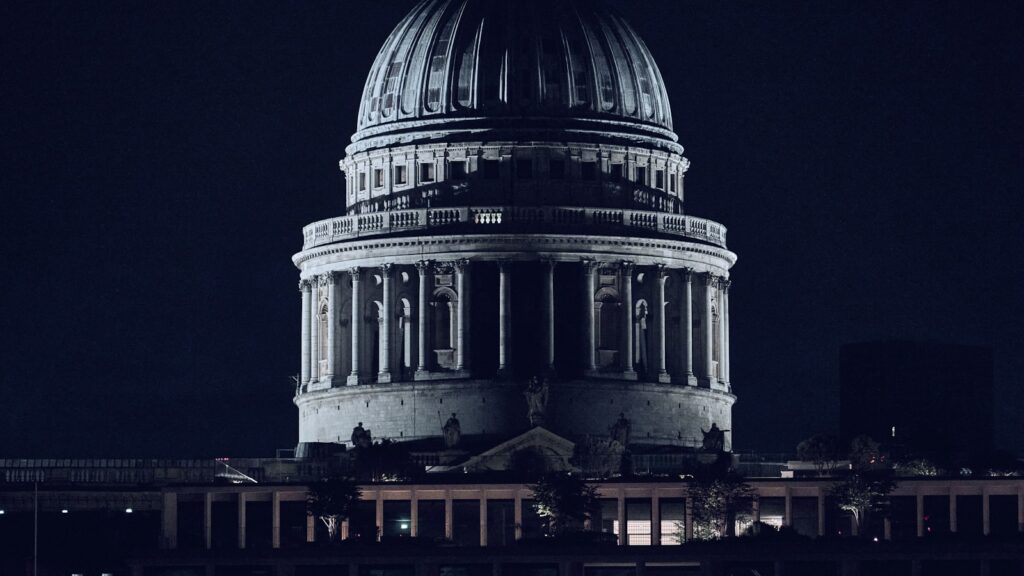
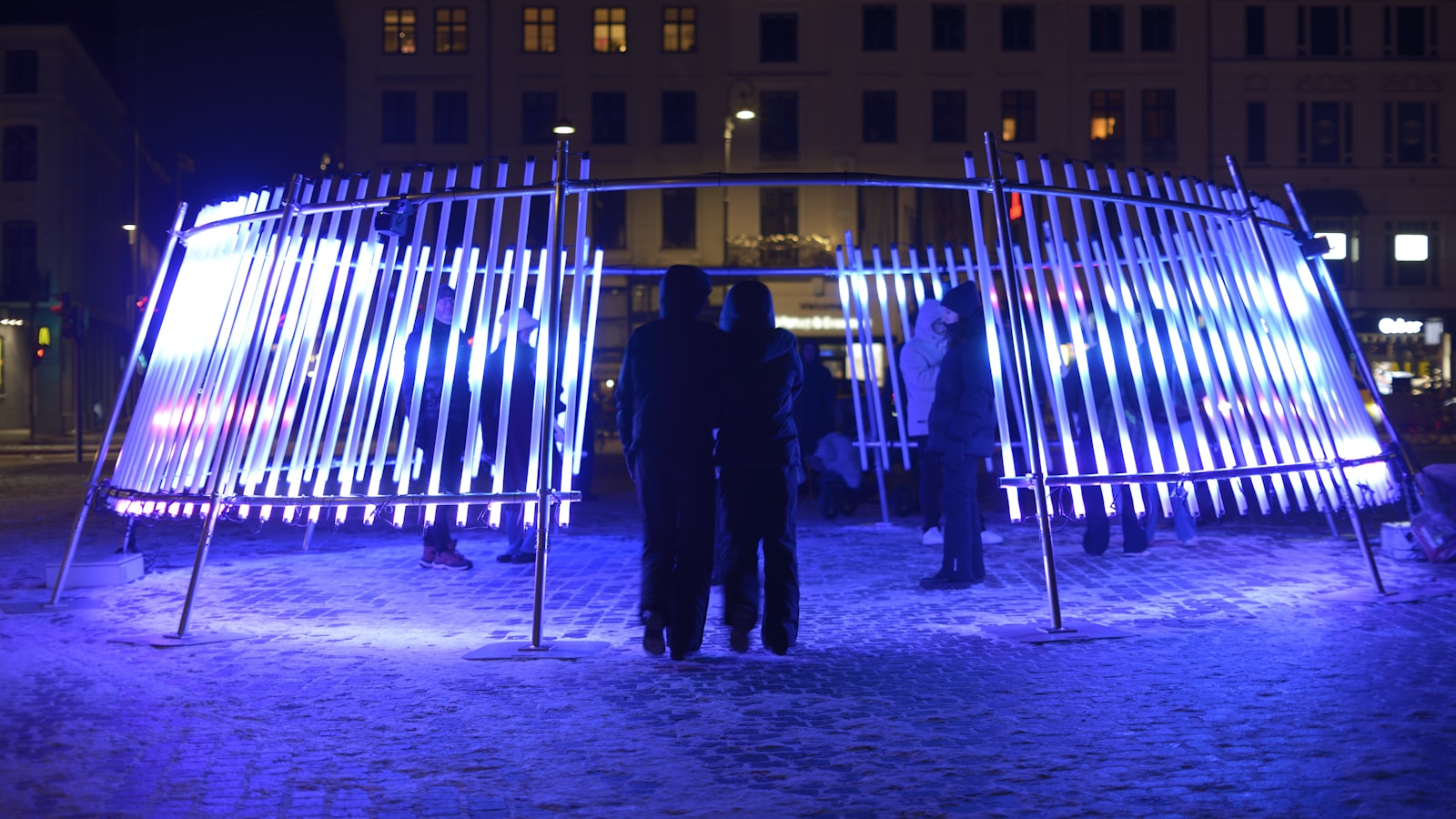
Start with the Landmark Project, because it’s the piece people will still be talking about in October. Ukrainian lighting designer Mykola Kabluka and his studio Expolight are bringing two works to St Paul’s Cathedral. “Soul” is projected onto the west front in the evenings. “The Point of Unity” is a mirrored light sculpture in the churchyard that reflects sky and passing clouds by day, then switches to 3,500 fibre-optic points after dusk, run through optical filters that split white light into shifting spectral patterns. It made its debut at Burning Man last year. This is its first UK showing.
Another free art outing worth planning: the Turner Prize 2026 show, which is free to enter until March.
The festival lists it as free with no ticket, open 10am to 10pm daily. Go after 8pm. The daytime version is a nice bit of public sculpture; the night version is the reason to bother.
What lifts it above the usual light-show fare is the context. Kabluka is working from Ukraine during a war, and the festival’s own copy is careful to say the pieces don’t depict the conflict directly. They don’t need to. A sculpture about “how to preserve one’s inner light in times of darkness” sitting outside a cathedral that survived the Blitz lands differently to the same thing in a Nevada desert. The projection is generated live from the interaction of light, glass and movement rather than pre-rendered video, so no two minutes look the same. Whether it lives up to the visualisations is the open question, and I’d rather see it than guess. But the ambition is real, and it’s the sort of commission that would’ve been a paid, timed-entry event at Lumiere or Canary Wharf Winter Lights.
Note the dates: the festival site currently lists the St Paul’s installation from 14 to 21 September, so it may not be up on the opening Saturday. Check before you cross town for it.
London Design Festival 2026 keeps opening doors that are normally locked
The best thing the festival does isn’t design at all. It’s access. Every September it talks its way into buildings you can’t otherwise enter, and this year’s prize is Wapping Hydraulic Power Station.
Built in 1890, it once pumped pressurised water under the streets to power lifts, cranes and theatre safety curtains across London. It closed as a restaurant and gallery over a decade ago and has been shut to the public for 13 years. For a few days this month, L-Acoustics is filling the machine halls with a 12-speaker spatial sound system carrying a 20-minute piece by Max Cooper, “Feeling is Structure”, originally built for a live performance at the Royal Albert Hall, and “Trent Falls” by Chris Watson, the field recordist who’s spent decades capturing sound for David Attenborough’s series, which takes you down the Humber estuary to the North Sea.
Tickets are free through the festival site, and this is the one that’ll go first. The building alone is worth the trip to Wapping Wall. Dezeen lists it running 11 to 15 September, which means it’s over before most people have noticed the festival’s on.
It’s the same instinct that’s making Open House London and Heritage Open Days the two most over-subscribed weekends in the London calendar, and it’s no coincidence they overlap with LDF this year. September in London has quietly become the month of the open door. The design festival just happens to bring better lighting.
The £16 exception, and why it’s the one worth paying for
If you’re going to spend money, spend it at the Design Museum. “NIGO: From Japan with Love” is the first retrospective anywhere of the A Bathing Ape founder and current Kenzo artistic director – more than 700 objects, a rebuilt version of his teenage bedroom, ceramics he threw himself. It’s been open since May, runs to 4 October, and £16 is fair for the scale of it. My nephew, who’s never willingly entered a museum, has been twice.
Downstairs, the museum’s free PLATFORM display goes to Simone Brewster, whose furniture and jewellery sit somewhere between sculpture and architecture, with a curator-led tour on Saturday 12 September. On the 15th there’s a free panel on design practice and motherhood with Brewster, Hettie Judah and others. Neither costs a penny.
Compare that with the other September tickets we’ve covered. The Bayeux Tapestry sold out in record time and won’t reopen until October. A London Film Festival gala is £40. And once you’ve paid your £16 you get to keep coming back to Kensington for the free stuff.
Saturday at the V&A: Es Devlin for nothing
The Global Design Forum is the festival’s talks strand, and this year it’s three days at the V&A’s Gorvy Lecture Theatre from 12 to 14 September, all free, ticketed via Eventbrite. Guest programmer Rhiarna Dhaliwal has built it around the theme “Worlds in Motion”, and the line-up is stronger than most paid design conferences manage.
Es Devlin’s keynote is Saturday at 4pm. She’s the stage designer behind the Beyoncé and Weeknd tours, the 2022 Commonwealth Games opening and the poem-generating UK pavilion at Expo 2020 Dubai, and she’s one of the few people in British design whose talks fill a room without a slide deck. Anab Jain of Superflux opens the day at 11.10am in conversation with critic Debika Ray. Monday has Asif Khan, architect of the 2018 Winter Olympics’ “darkest building on earth”, at 3pm.
Free lectures of this calibre used to be a Gresham College and Tate thing. Now they’re a design festival thing too. Book Devlin the moment you finish reading this, because the theatre holds a few hundred and word’s been out since July.
The museum itself is running “Awakenings”, a spread of installations across the permanent galleries that’s heavier on AI than any previous LDF programme – a game about human labour by Playfool, a piece by Nina Davies on how bodies are starting to move like AI-generated video, and Aziza Kadyri’s “Sender Unknown”, which threads Uzbek embroidery through a custom model. And in the Daylit Gallery, the second Craft x Tech show pairs six Tokai-region Japanese craftspeople with designers including Bethan Laura Wood and Philippe Malouin. That one runs to 30 September if you can’t face the opening weekend crowds.
The honest bit: half of this is showroom marketing, and that’s fine
Time for the criticism. Flick through the full programme and a huge slice of it is Italian furniture brands “presenting new collections” in their own showrooms. Cassina in Brompton. Kartell debuting a chair. Porro in King’s Cross. Rimadesio marking 70 years. These are launch parties with a festival logo on the invite, and the prosecco is the point.
It’s fair to ask whether a festival that gets Mayor of London backing as Principal Supporter should be lending its brand to what is, in practice, a trade fair spread across Chelsea and Clerkenwell. A lot of design writers ask exactly that every year, usually over the free prosecco.
But I’ve come round to it. The showroom money is what pays for the St Paul’s commission and the Wapping sound system. Nobody’s charging you to walk into Cassina, and the staff are noticeably nicer during festival week. More to the point, the self-organised end of the programme has grown enough that you can spend nine days without setting foot in a brand showroom. Design Everything’s show at Aram on Drury Lane has furnished a mock flat entirely with work by 102 emerging designers, picked from over 500 open-call entries, each piece made in response to a limitation – no money, no space, no workshop. It’s free, it runs to 10 October, and it’s a sharper comment on what it costs to be a young designer in London than any panel discussion will manage.
The trade fair funds the art. That’s how most cultural festivals work now, whether they admit it or not. LDF just doesn’t hide it.
The Barbican gets its own sofa
The special project most likely to end up in your living room is MADE x Barbican. The furniture brand has spent time in the estate’s archives and with the original show-home interiors designed by Miriam Howitt, and turned them into a 23-piece collection of furniture, lighting, textiles and accessories. An installation on the ground floor of the Barbican Centre from 12 to 20 September walks through how the drawings became products.
Whether the pieces are any good I’ll judge when I’ve sat on one. The idea, though, is smart. Brutalism has gone from the most hated architecture in Britain to the most Instagrammed in about 15 years, and the Barbican flats themselves sell for sums most of the people queuing to photograph them won’t see. Bottling the interiors is the obvious next move, and the surprise is that nobody did it sooner.
It fits a wider shift we’ve written about before, where design that used to be niche – hi-fi listening rooms, the boot room, the 1970s show flat – becomes the thing the whole high street copies within a season. Expect a lot of grey concrete-effect lamps in the January sales.
Nine days, one sensible route
You can’t do all 11 districts, and you shouldn’t try. The Shoreditch Design Week crowd will tell you their end is the real festival; the Brompton set will say the same about Cromwell Place. Both have a point. Here’s how I’d split it.
Opening weekend belongs to South Kensington. Es Devlin at the V&A on Saturday afternoon, Awakenings and Craft x Tech in the galleries around it, then the Lavery at Cromwell Place, where Brompton curator Alex Tieghi-Walker has filled the townhouse with everyone from Kelly Wearstler to Isamaya Ffrench’s Studio Iron. The Design Museum is a half-hour walk or a short hop on the 9 bus for the Brewster tour or NIGO.
Midweek is east. Shoreditch Design Week runs 15 to 20 September across more than 60 showrooms and galleries, with Material Matters (bacteria-grown tiles, furniture from salvaged brutalist oak) packed into 15 to 17 September at Unlocked on Curtain Road, and Max Radford Gallery taking over Christopher Farr’s showroom on Calvin Street. Combine with the Barbican installation and SCP’s new five-storey Clerkenwell townhouse, which opens during the festival after leaving Shoreditch.
Fit St Paul’s in after dinner on any clear evening from the 14th. Fleet Street Quarter’s a district in its own right this year, and the Pangolin Shield – a bamboo pavilion by Studio Saar and Atelier One on Strand Aldwych, built from Indian police shields and farmers’ rain shields layered like scales – is a ten-minute walk away.
The second weekend is for Richmond, where Kingston University graduates have taken over Ham House with furniture responding to the 17th-century interiors, including a speaker cabinet inspired by the house’s Japanese lacquer and modern listening bars. Normal Ham House admission applies, but it’s a National Trust property so members walk in.
Download the Bloomberg Connects app before you go. It’s the festival’s free official guide and it’s better than the website for working out what’s open when, which – as the St Paul’s dates show – isn’t always obvious.
Why a design festival is the best free week London has
Festival director Ben Evans says London “retains its allure as a global design capital”, which is the kind of thing a festival director has to say. The more interesting claim is the one he doesn’t make: that LDF has quietly become the most generous cultural event in the city.
Think about the September competition. Londonist’s free-events round-up for this week lists LDF alongside Heritage Open Days, the Great River Race and Hampton Court’s garden open days, and it’s the only one of them commissioning new work at this scale. The Proms cost £8 a night. The London Film Festival’s cheapest seat is £6. Design festival week costs nothing unless you want the NIGO ticket, and it’s happening in cathedrals, power stations and stately homes rather than a lecture hall.
It has flaws. The programme is baggy, the branding is corporate, the “design district” concept means a lot of walking between things that turn out to be a candle launch. And if you go expecting the Milan Salone you’ll be underwhelmed; London doesn’t have the fair, it has the city.
But that’s also the case for it. Nine days, no ticket, and the best of it is on after dark in the middle of town. Which of the free doors will you be walking through first – the cathedral, the power station or the lecture theatre?