
Raiders of the Lost Ark Re-Release: One Week, a £12 IMAX Seat, and Why Britain’s Cinemas Now Run on 45-Year-Old Films
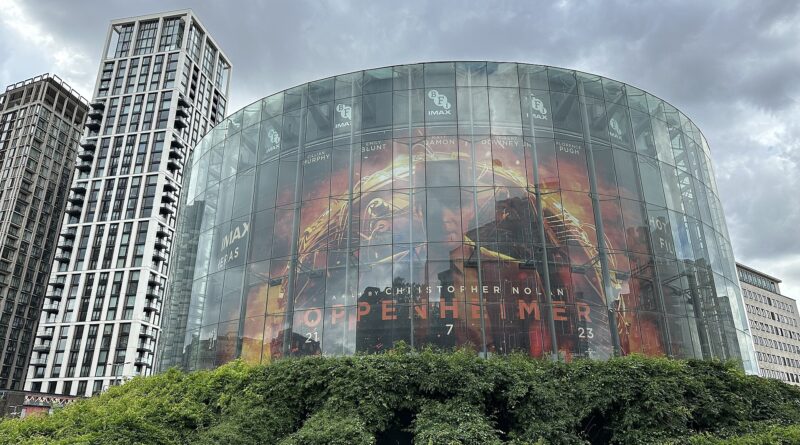
The biggest film opening in British cinemas this Friday is 45 years old. The Raiders of the Lost Ark re-release runs from 11 to 17 September, one week only, in a new 4K master, on IMAX screens including the biggest one in the country at Waterloo, and for the first time in 4DX seats that lurch when the boulder does. Paramount is handling it directly, which means Odeon, Cineworld and Picturehouse are all listing it rather than the usual handful of arthouse rooms. A standard adult seat at BFI IMAX starts at £12. And it may well outgross Practical Magic 2, which opens the same day and cost a great deal more to make.
In This Article
- Why the Raiders of the Lost Ark re-release is the week's real event
- What £12 actually buys: 4K, IMAX and the 4DX gimmick
- The re-release economy, in numbers
- Does Raiders hold up? Mostly, and the bits that don't are instructive
- The most British American film of 1981
- The contrarian bit: the boom is a symptom, not a revival
- What to book after Friday
That’s not a quirk of the calendar. It’s how British cinema works now.
Why the Raiders of the Lost Ark re-release is the week’s real event
Anniversary re-issues used to be a Prince Charles Cinema thing: a print, a Sunday afternoon, forty people who already owned the Blu-ray. What’s changed is the scale. Screen International reported in 2024 that the UK and Ireland market for classic films in 2022 and 2023 had grown by 139% against the 2017 to 2019 average, and it hasn’t slowed since. The Film Stories re-release calendar for the rest of 2026 runs to more than twenty titles between now and Christmas, and Raiders is the one the chains have cleared screens for.
The “45th anniversary” tag is a marketing invention, as Film Stories’ Simon Brew pointed out when the date was announced, wondering whether Hallmark would do a card range. Nobody celebrated the 45th birthday of anything until studios needed an excuse to re-sell their libraries. But the excuse is a good one here, because Raiders is close to the ideal re-release: a film almost everyone has seen on a television, that almost nobody under fifty has seen in a room with the sound turned up.
And that’s the whole pitch. You know the truck chase. You’ve never heard the truck chase.

What £12 actually buys: 4K, IMAX and the 4DX gimmick
There are three versions in circulation this week, and they’re not equal. The standard 4K re-issue is the one playing at most multiplexes and it’s the version to see if you’re outside London. The 4K restoration, first seen on the 2021 home release, looks superb: the Tunisian desert sequences have a grain and depth that the old broadcast masters flattened, and Douglas Slocombe’s cinematography, which was always warmer and browner than the Spielberg films that followed, finally reads as a choice rather than a fault.
IMAX is the second tier. BFI IMAX at Waterloo is showing it on the UK’s largest screen with IMAX with Laser, adult tickets from £12 plus a £1 online booking fee, members £2.50 off and no fee. That’s cheaper than a standard seat at a central London Odeon for a new release and it’s the format the film deserves. Raiders was shot on 35mm, not IMAX cameras, so it won’t fill the full height of the screen the way The Odyssey did this summer, but the sound system is the point, and John Williams through that system is a physical experience.
4DX is the third option and it’s the one I’d skip. The seats move, the air jets fire, and for the opening ten minutes in the Peruvian temple it’s a laugh. By the time Indy’s being dragged under a lorry you’re mostly aware of the chair. Raiders is a film about rhythm, cut by Michael Kahn to within an inch of its life, and the last thing it needs is a second rhythm fighting it from underneath. Pay the IMAX price instead, or pay the standard price twice.
One thing to check before booking. The re-issue carries a 12A certificate in the BFI listing, which is a step up from the PG on the DVD most people remember. The melting faces at the end are the reason. If you’re taking an eight-year-old, that’s your call, but it’s a call.
The re-release economy, in numbers
The UK Cinema Association’s 2025 figures give the context. Admissions across the year came to 123.5 million, down 2% on 2024 and 30% below 2019. Box office held at £996.8 million, up 2% on the year but a fifth below the pre-pandemic peak, and that’s before you adjust for ticket prices that have risen far faster than inflation. Fewer people are going. They’re paying more when they do. And an increasing share of what they’re paying for is old.
Look at the next three months. Matilda opens the same Friday as Raiders for its 30th anniversary. Manhunter follows on 25 September, the same day Disney puts Avengers: Endgame back out under an “Encore” banner. October brings Casino Royale at twenty, The Craft and 24 Hour Party People, The Others, then a Halloween weekend of Pan’s Labyrinth, Donnie Darko and Ken Russell’s The Devils. November has V for Vendetta, a 50th anniversary Rocky and The Man Who Fell to Earth. December gets It’s a Wonderful Life at eighty. That’s a full release slate, and none of it required anyone to green-light a script.
We wrote in August about the record July that was supposed to have killed the “cinema is dying” story. It didn’t kill it. It complicated it. The big new films are doing enormous numbers and the middle has collapsed, and the re-release slate is what exhibitors have found to fill the gap between tentpoles. A 4K re-issue costs a distributor a fraction of a new release to market, arrives with its audience already built, and plays to people who’ve stopped taking risks on anything they haven’t heard of.
Does Raiders hold up? Mostly, and the bits that don’t are instructive
Yes, obviously. But it’s worth being specific, because the film’s reputation has calcified into “perfect” and that’s not quite right.
What holds up is the construction. The 1936 setting means there’s no technology to date, the plot moves in straight lines, and Lawrence Kasdan’s script trusts the audience to keep up without a single scene of characters explaining the Ark to each other beyond the one they need. Harrison Ford is playing a man who’s tired and slightly incompetent, which is the joke the sequels forgot. Karen Allen’s Marion is introduced winning a drinking contest in Nepal and never becomes the damsel the poster implies. Paul Freeman’s Belloq is the best villain in the series by a distance because he’s Indy with better tailoring. Denholm Elliott and John Rhys-Davies do a lot with very little. And Williams’s score, which people hum without knowing it’s the Raiders March, is the last great example of the kind of theme that used to sell soundtracks in HMV.
What doesn’t hold up is the film’s own confidence about Indy’s past with Marion, one line of dialogue that’s aged badly and that Spielberg has never quite addressed. The Cairo section leans on the kind of shorthand about Arab crowds that was standard in 1981 and is noticeable now. And the ending, which the film has to reach by having its hero do next to nothing in the final reel, is the sort of structural cheat a screenwriting tutor would circle in red. Raiders gets away with it because it has spent 100 minutes earning your goodwill. Plenty of films that copied it didn’t.
Against the four-star press the re-release will get, that’s a four-and-a-half. The half is for the truck.
The most British American film of 1981
There’s a home-fixture element to this re-release that the marketing hasn’t bothered with. Raiders is a Lucasfilm production about an American archaeologist, and it was made, for the most part, in Hertfordshire. The interiors, the Well of Souls, the Nazi submarine base and the map room were built and shot at Elstree Studios in Borehamwood in 1980, on the stages Lucas had used for the Star Wars films. Douglas Slocombe, the cinematographer, was an Ealing veteran who’d shot Kind Hearts and Coronets. Norman Reynolds, the production designer, was British and would win the Oscar for it. The cast list is a roll-call of British character actors: Denholm Elliott, Paul Freeman, Alfred Molina in his first screen role, John Rhys-Davies from Salford by way of Wales.
So when the film opened in British cinemas in the summer of 1981 it was, in a quiet way, a local product. It went on to become the biggest film in the world that year. The Odeons that showed it then are, in a good number of cases, the same buildings showing it this week, several of them now with IMAX screens bolted into the auditorium where the old single screen used to be.
That matters for the argument I’m about to make, because it’s a reminder that the British industry once built things like this rather than just re-screening them.

The contrarian bit: the boom is a symptom, not a revival
Here’s where I part company with the “cinema is back” crowd. The re-release boom is being written up as evidence that British audiences have rediscovered the big screen. I think it’s evidence of the opposite. When a 45-year-old film is the safest booking on a September weekend, what you’re looking at is a market that has lost faith in its own new product.
Consider who’s actually going. The Letterboxd generation treats re-releases as canon-ticking, and they’re the audience Park Circus and the BFI have built the last decade on. Then there’s the forty-plus crowd who saw Raiders at the Odeon in 1981 or on a rented VHS in 1985 and want to feel that again for two hours. Both groups are real. Neither of them is the family audience that made cinema a mass habit, and neither will be back next week for Practical Magic 2.
That’s the trap. Re-releases are cheap, reliable and flattering to programme, and every screen given to one is a screen not given to a new British film that needs a second weekend to find its audience. We made a version of this argument in July about Britain paying to watch old films in the rain. Indoors, with better sound and a £12 ticket, the logic is the same.
None of which means don’t go. Go. But go knowing you’re watching the exhibition sector’s insurance policy, not its comeback.
What to book after Friday
If the Raiders week converts you to the habit, the autumn list rewards being choosy. Manhunter on 25 September is the one to prioritise: Michael Mann’s first Hannibal Lecter film, rarely shown theatrically in this country, and a very different thing on a big screen with its synth score at volume. Casino Royale’s 20th on 5 October is worth it for the parkour opening alone, and it lands with Bond casting rumours at full boil. The Devils on 30 October is the rarest of the lot, a film Warner Bros spent decades keeping off screens, and any showing of the restored cut is an event.
Skip Avengers: Endgame Encore. It’s seven years old, it was on Disney+ the whole time, and it’s a re-release in the way that a supermarket price rollback is a sale. The same goes for most of the sub-ten-year anniversaries on the list. A re-release earns its screen when the film has been hard to see properly, or when the print has been rebuilt from scratch, or when a generation has grown up without it. Endgame fails all three.
Matilda, on the same Friday as Raiders, is the better family choice than the 12A Ark. Danny DeVito’s film has aged into a genuine British favourite despite being entirely American, mostly because every primary school in the country has shown it on the last day of term.
And then there’s the question worth asking on the way out on Friday night, ears still ringing from the Well of Souls. If a room full of strangers will pay £12 to watch a film they could stream for nothing, what exactly is it they’ve been missing – and which new film, released this year, would you have trusted to give it to them?