

Fish Oil Supplements in 2026: 86 Trials Found No Heart Benefit, the AF Risk Is Real Above 1.5g a Day – and the Two Groups Who Should Still Take Them
Four in ten British over-60s take fish oil supplements. That’s not a guess – it’s the figure from the UK Biobank, which asked more than 400,000 people what they swallowed each morning and found fish oil was the single most popular pill after the multivitamin. And the reason most of them give, when you ask, is the heart. It’s the claim on the front of the tub, the one your GP might have mentioned in 2008, the one your dad repeats over Sunday lunch.
In This Article
- What 86 trials of fish oil supplements found about your heart
- The prescription version works. The Boots version isn’t it.
- The atrial fibrillation risk that isn’t on the tub
- Brain health: the 2026 trials went the wrong way
- Dry eyes, joints, skin: mostly no, with one small yes
- The two groups who should still take fish oil supplements
- If you do buy: what the label won’t tell you
- Where that leaves the autumn tub
The problem is that the heart claim has been dead for the best part of a decade, and almost nobody outside cardiology got the memo.
September is when the tubs come out again. The oily fish that felt fine on a barbecue in July stops appearing, the evenings draw in, and the supplement aisle in Boots does its annual trade in “immunity” and “heart health” bundles. So this is a reasonable moment to look at what the trials on fish oil supplements actually say in 2026 – which is a stranger story than either the sellers or the sceptics tell. Some of it is worse than you’d think. One bit is better.
What 86 trials of fish oil supplements found about your heart
Start with the biggest single piece of evidence, because it’s the one that should have settled the argument. In 2018, then again in a 2020 update, the Cochrane Collaboration pooled every decent randomised trial of long-chain omega-3 (EPA and DHA, the stuff in fish oil) lasting a year or more: 86 trials, 162,796 people. The conclusion, in the review’s own words, was that “increasing EPA and DHA has little or no effect on mortality or cardiovascular health”. The lead author, Dr Lee Hooper at the University of East Anglia, said the finding went “against the popular belief that long-chain omega 3 supplements protect the heart”.
That’s not a fringe read. NICE’s current lipid guideline, NG238, doesn’t recommend omega-3 supplements for preventing cardiovascular disease in the general population, first heart attack or second. The NHS line has been the same for years: two portions of fish a week, one of them oily, and no mention of capsules.
But the trial that muddied the water, and the one the supplement industry still leans on, is VITAL. This was the big American primary-prevention study – 25,871 adults, a gram of fish oil a day, followed for a median of 5.3 years. If that number sounds familiar, it’s because the same trial tested vitamin D, and we covered that half of it a fortnight ago. On its main outcome – heart attack, stroke or cardiovascular death combined – omega-3 did nothing statistically significant: 386 events against 419 on placebo, a difference that could easily be chance. Where it did show something was heart attacks on their own, down by about 28%, and the effect looked stronger in people who ate very little fish to begin with.
That last bit matters. It’s the most charitable reading of the whole literature: if you never eat fish, a capsule might be doing something. If you’re already having salmon on a Tuesday, the trials suggest you’re topping up a tank that’s full.
The prescription version works. The Boots version isn’t it.
Here’s where the story gets awkward for both sides, and where most articles on fish oil supplements go wrong by treating “omega-3” as one thing.
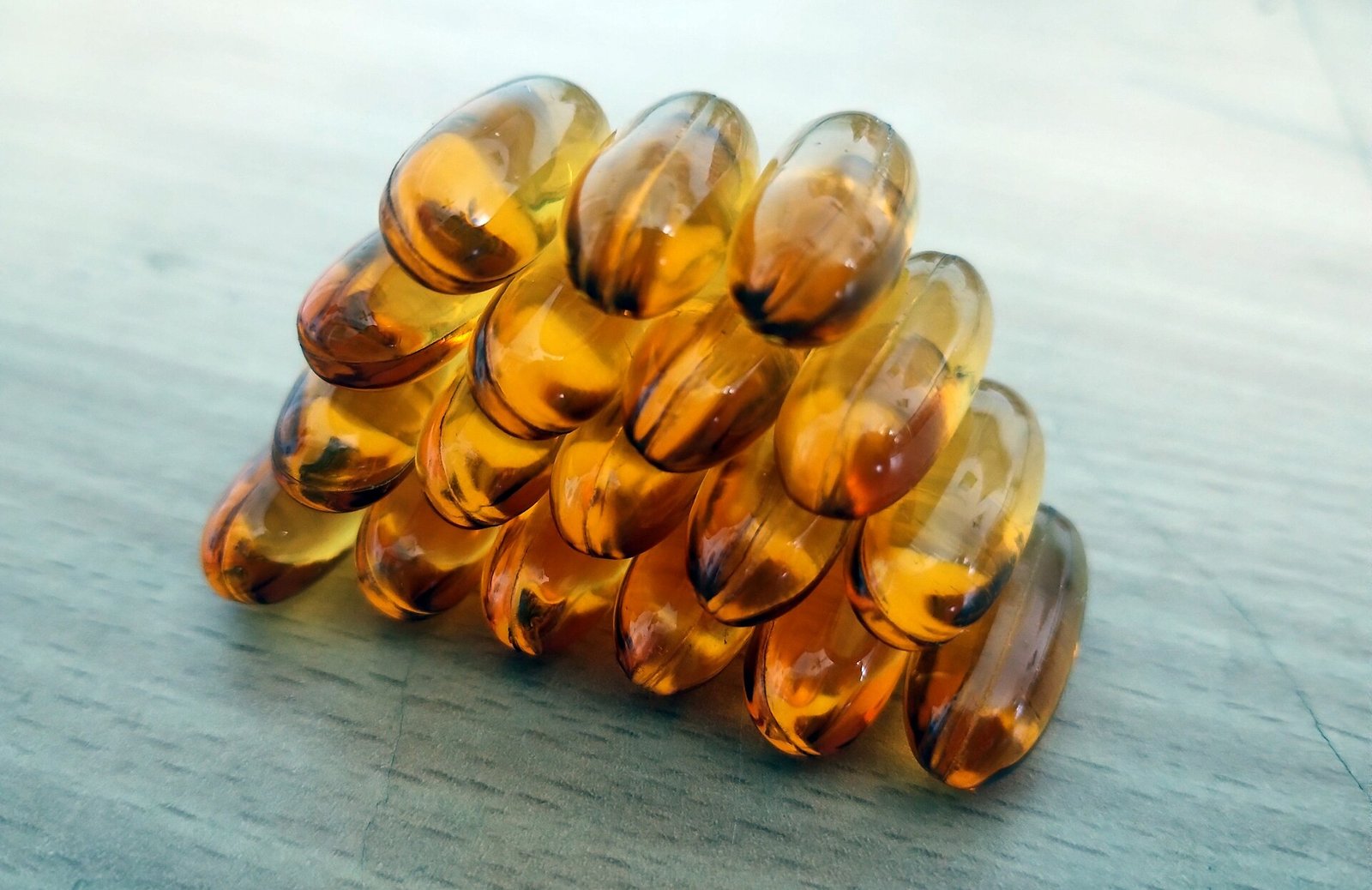
There is a fish-oil-derived drug that reduced heart attacks and strokes in a large trial. It’s called icosapent ethyl (brand name Vazkepa in the UK), it’s pure EPA with no DHA, and the dose is 4 grams a day – roughly four to eight times what’s in a supermarket capsule. In the REDUCE-IT trial of 8,179 statin-treated patients with high triglycerides, it cut major cardiovascular events by 25%. NICE approved it in 2022 for exactly that group: people already on a statin, with raised triglycerides, who’ve had a cardiovascular event or have diabetes with risk factors. It’s a specialist prescription, not a lifestyle product.
Even that result has an asterisk. The placebo in REDUCE-IT was mineral oil, and later analysis showed the placebo group’s inflammatory markers and LDL got worse over the trial – which means part of the “benefit” may have been the comparison group being nudged in the wrong direction. A rival trial called STRENGTH, using a corn-oil placebo and a mixed EPA-DHA product at the same dose, found nothing at all and was stopped early. Cardiologists have been arguing about this for six years and there’s no clean resolution.
But the practical point for anyone reading the label on a tub of Seven Seas is simple. The evidence that exists for omega-3 and hearts is for a purified, single-molecule, prescription-strength drug in a narrowly defined group of sick patients. It doesn’t transfer to 500mg of mixed fish oil taken by a healthy 52-year-old who wants to be sensible. Nobody has shown that works, and quite a lot of people have tried.
The atrial fibrillation risk that isn’t on the tub
This is the section I’d want a relative to read.
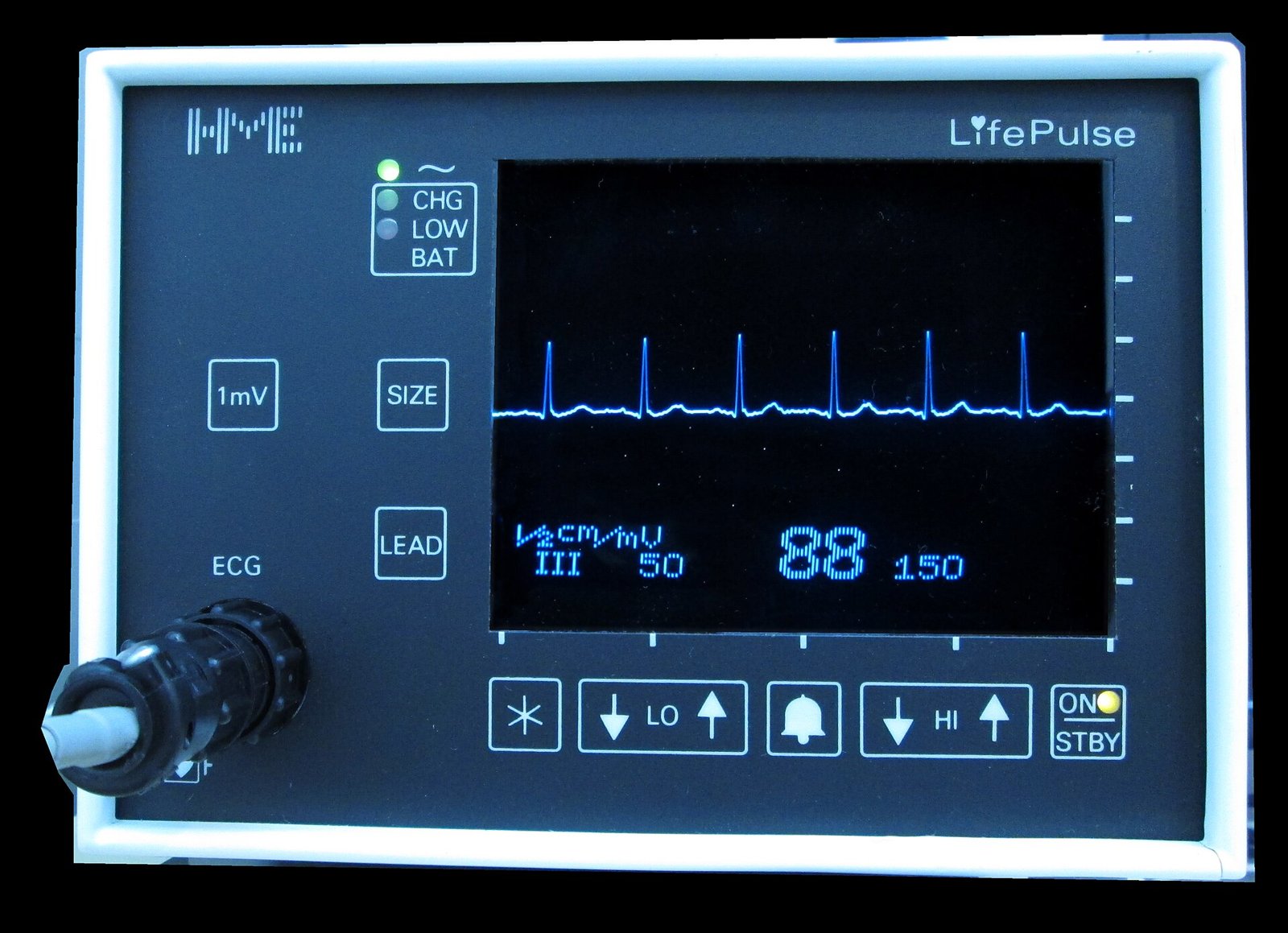
Atrial fibrillation – AF, the irregular heartbeat that raises stroke risk and affects well over a million people in the UK – turned up as an unwanted signal in the big omega-3 trials, and it’s held up. A 2021 meta-analysis in the journal Circulation, led by Baris Gencer, pooled seven cardiovascular outcome trials and found omega-3 supplementation raised AF risk by about 25%, with a dose relationship: the higher the dose, the bigger the excess. Then in 2024 the UK Biobank added observational weight. Among 415,737 Britons followed for nearly 12 years, regular fish oil users who were healthy at the start had a modestly higher risk of developing AF and stroke than non-users – though, in an odd twist, users who already had heart disease seemed to do slightly better.
And now the counter-swing. A different UK Biobank analysis, published in the Journal of the American Heart Association at the start of this year, measured omega-3 in the blood rather than asking people what they took. It found higher blood levels went with lower AF risk, and that once age was properly accounted for, self-reported fish oil use didn’t raise AF risk at all. An updated meta-analysis of 34 trials and 114,326 people, out in late 2025, narrowed the danger zone further: the AF excess was only statistically clear in high-risk cardiac patients taking more than 1,500mg of EPA/DHA a day, where the odds went up by 48% and the absolute extra risk was about 0.8%. At normal supplement doses in ordinary people, the signal was there in direction but not in significance.
So what’s the honest summary? High-dose omega-3 probably does nudge AF risk up, mostly in people whose hearts are already under strain. A standard 1g capsule in a healthy person is likely fine, but “likely fine” is a lot less than “protects your heart”, and the one group most likely to be taking big doses on their cardiologist’s say-so is precisely the group where the risk is real. If you’ve had palpitations, or you’ve got a family history of AF, or you’re over 65 and taking two or three capsules because you read it was better – that’s a conversation for the GP, not the health food shop. The same logic applies to iron: our guide to iron supplements for tiredness explains why a ferritin blood test should come before the tablets.
Brain health: the 2026 trials went the wrong way
If the heart claim is dead, the brain claim is on life support, and this year’s results didn’t help.
The theory is sound enough. DHA is a structural fat in brain cell membranes, and people with higher omega-3 blood levels tend to have less dementia in observational studies. The catch, as always, is that people with high omega-3 levels also eat more fish, exercise more, earn more and smoke less. When you actually randomise people to capsules, the effect keeps not appearing. A 2025 US trial gave high-dose DHA to older adults at raised Alzheimer’s risk and confirmed the omega-3 made it into the brain – and then did nothing measurable for memory or cognition.
Worse, an analysis published in May 2026 of older adults in a long-running Alzheimer’s imaging cohort found omega-3 supplement users declined faster on standard cognitive tests than non-users, and a separate trial reported a drop in brain glucose metabolism on scans. These are early, observational or single-trial findings and it would be daft to over-read them – the AF story above shows how much these signals bounce around. But they’re not what you’d expect from a brain-protective supplement, and it’s fair to say that in September 2026 there’s no good trial evidence that fish oil supplements slow cognitive decline in healthy adults.
Depression is the one mental-health area with something to show. Several meta-analyses find a modest benefit from EPA-heavy formulas (over about 60% EPA) as an add-on to standard treatment in diagnosed depression. Modest, and add-on, and diagnosed – and none of those qualifiers describes someone feeling a bit flat in October.
Dry eyes, joints, skin: mostly no, with one small yes
Dry eye is the claim I’d most like to be true, because half of Britain’s office workers have it and the drops are a faff. The DREAM trial – 535 people, a year of 3g fish oil a day, published in the New England Journal of Medicine in 2018 – found no difference from olive oil placebo on symptoms or clinical signs. That one’s fairly conclusive.
Joints are a partial yes. In rheumatoid arthritis, an autoimmune condition, higher-dose fish oil has a consistent small effect on morning stiffness and tender joint counts, enough that some rheumatologists suggest it alongside proper treatment. For the ordinary wear-and-tear osteoarthritis in a 60-year-old’s knee, the trial evidence is thin and unconvincing. Don’t buy it for that.
Skin claims – “glow”, “hydration”, “barrier support” – rest on tiny studies and a lot of hope. If you want an evidence-based skin supplement, the collagen argument we ran through on Tuesday at least has industry trials to argue about. Fish oil for skin barely has that.

The two groups who should still take fish oil supplements
After all that, it would be easy to write the whole category off. That would be wrong, because there are two situations where the evidence is not just present but stronger than for most things sold in a health food shop.
The first is pregnancy. A 2018 Cochrane review of 70 trials and 19,927 women found that daily omega-3 in pregnancy cut the risk of birth before 37 weeks by 11% and birth before 34 weeks – the dangerous kind – by 42%. In absolute terms, early preterm birth fell from 4.6% to 2.7%. That is a large, real effect on an outcome that matters enormously, and it’s why European obstetric bodies now recommend 250mg or more of DHA a day in pregnancy, with more for women who eat little fish. The NHS advice is still framed around eating fish (no more than two portions of oily fish a week when pregnant, because of pollutants), but the supplement route has better evidence here than almost anywhere else in this article. If you’re pregnant and not eating fish, this is the one tub worth buying.
The second is the near-total fish avoider. Vegans, people who can’t stand the taste, anyone allergic, anyone whose fish intake is a fish finger sandwich twice a year. Both the VITAL heart-attack signal and the Biobank blood-level data point the same way: the benefit, where it exists, sits with people starting from a low baseline. For this group a daily 500mg to 1g EPA/DHA capsule is a reasonable insurance policy, and an algae-based DHA/EPA product does the same job for vegans without the fish.
Beyond those two? Someone already having salmon or mackerel weekly is, on current evidence, buying a placebo with a fishy aftertaste.
If you do buy: what the label won’t tell you
Fish oil goes off. It’s an unsaturated fat sitting in a warm bathroom cabinet, and oxidised fish oil isn’t just less effective – there’s decent lab evidence that rancid oil is actively unhelpful, and the odd fishy burp you get from cheap capsules is a reasonable sign the oil is past its best. Independent tests in New Zealand and South Africa have found a large share of retail products either oxidised beyond the industry’s own limits or containing less EPA/DHA than the label claimed; the same lab-versus-label gap we found with creatine gummies in July applies here, and I’m not aware of anyone testing this category routinely in the UK.
A few practical things, then. Buy the smallest bottle you’ll get through in a couple of months, not the 365-capsule value tub. Keep it in the fridge once opened. Look for the EPA and DHA figures on the back rather than the “1,000mg fish oil” on the front – a 1,000mg capsule typically holds 300mg of the actual active fats, so the headline number is close to meaningless. And if you’re taking it because you saw it’s “good for you” and can’t say more precisely than that, the £8 is better spent on a tin of sardines and a decent loaf.
The NHS position hasn’t moved because it doesn’t need to: two portions of fish a week, one oily, gets you everything the trials can show a capsule doing, plus protein, vitamin D, iodine and selenium the capsule doesn’t have. We wrote about the food version in the spring, and it’s held up better than the supplement version has.
Worth doing the same gut check on the cooking fat in the cupboard next to it – the omega-6 seed oils that get blamed for everything get a fairer hearing in our look at whether seed oils are actually bad for you.

Where that leaves the autumn tub
The odd thing about fish oil supplements is that the science has moved a long way and the shelf hasn’t moved at all. The tubs still say “heart health”. The bundles still pair it with vitamin C for “winter wellness”, as if that combination had ever been tested. And the people buying it are, overwhelmingly, the healthy, fish-eating over-50s for whom the trials show the least – and the AF data shows the most reason for caution at higher doses.
If we’d had this evidence in 2005, fish oil would never have become a default. It became one because early trials on Italian heart-attack survivors looked good, Britain wasn’t eating much fish, and a capsule is easier to sell than a mackerel. Our September audit of immune supplements found much the same pattern: the products that sell best are the ones with the oldest, weakest claims.
So here’s the question for the cupboard. Do you know why you’re taking it – pregnancy, a genuine no-fish diet, a specialist’s prescription – or is it there because it always has been? And if it’s the second, what would it take to leave it on the shelf this October?