
UK Eurovision 2026 Result: Why Britain Came Last Again And What The BBC Has To Change
The UK Eurovision 2026 result is in, and it is the sort of number that produces a long silence in the BBC office: one point, twenty-fifth place, dead last. Sam Battle, the Ramsgate synth builder performing under his Look Mum No Computer name, returned from Vienna on Sunday morning with a German-language song called Eins, Zwei, Drei, zero points from the public vote and a single point of jury sympathy from the entire continent. Bulgaria’s Dara won the whole thing with the year’s most absurdly catchy entry, Bangaranga, and a winning margin of 173 points – the biggest in Eurovision history.
In This Article
- What Actually Happened In Vienna
- Why The UK Eurovision 2026 Result Was Worse Than It Looks On Paper
- The Pattern: Three Last Places In Five Years
- What Bulgaria, Sweden And Italy Are Doing That The BBC Isn’t
- The BBC’s Internal Problem With Eurovision
- What A Real UK Eurovision Comeback Would Look Like
- What This Means For UK Viewers Watching In 2027
This is not a one-off. It is the third UK last-place finish in five years, and the UK Eurovision 2026 result has rapidly turned from a curiosity into something the broadcaster can no longer treat as bad luck.
What Actually Happened In Vienna
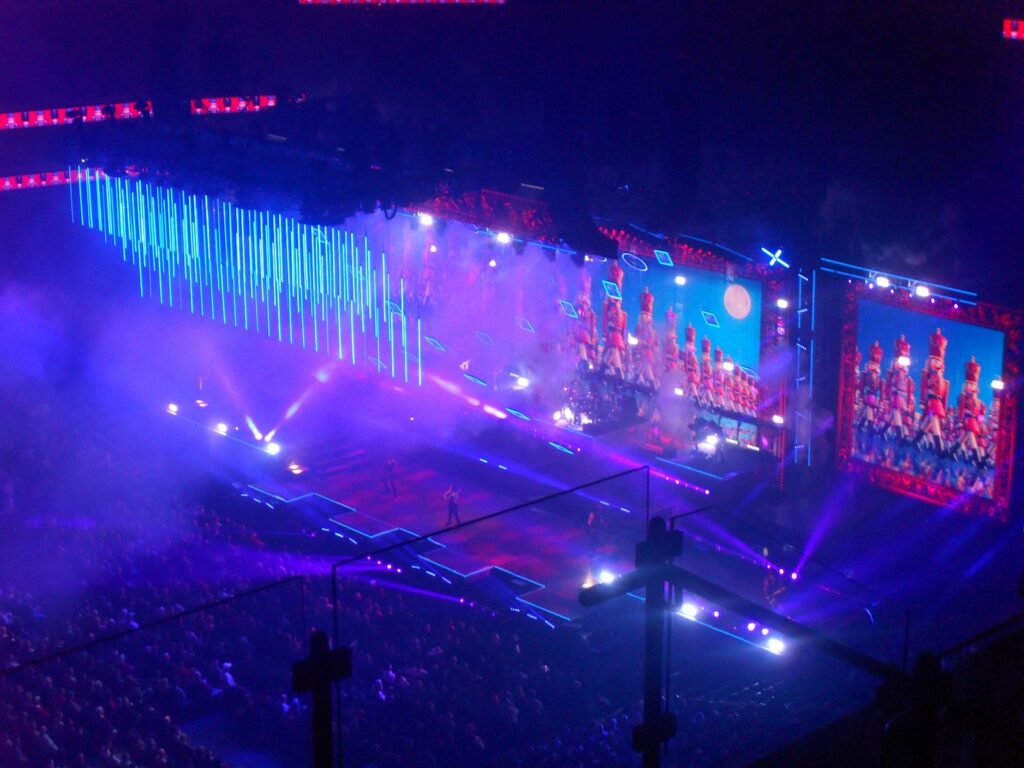
The 70th Eurovision Song Contest took place on Saturday 16 May 2026 at the Wiener Stadthalle, with twenty-five countries competing in the grand final after two heavily watched semi-finals. Bulgaria’s first ever win came with 516 points split almost evenly between juries and the public, a rare unanimity in a contest that usually rewards one or the other. Israel finished second with Noam Bettan and 343 points, an outcome that played out against ongoing protests and broadcaster boycott calls in several territories, including reduced viewing figures on BBC One.
The UK delegation went into the night briefed for a mid-table finish. Bookmakers had Look Mum No Computer’s analogue-synth oddity at around twentieth on the morning of the show. The actual result – one point, awarded by the Maltese jury – was significantly worse than even the worst pre-show modelling, and the British camera cut to a tight, professionally still face when the public vote came through with a flat zero.
Why The UK Eurovision 2026 Result Was Worse Than It Looks On Paper
A nul-points-from-the-public scoreline is not just embarrassing. It is structurally bad. The televote rewards earworms, staging, charisma and a competent vocal; failing it across twenty-five voting nations means the song did not register, the performance did not register, or both. For a country that still funds one of the largest delegations and the second-biggest public broadcaster in Europe, that is a process problem.
The next bit of cultural temperature-taking the BBC will need is closer to home and far less continental: ITV2’s thirteenth run of Love Island 2026 is the format that has set the British summer mood since 2015, and it has its own credibility problem to solve.
The previous Eurovision post on this site – the German-language gamble preview – flagged the obvious risk in April: a non-English song from a UK entrant trades familiarity for novelty, and Eurovision juries reward familiarity. The novelty worked in Vienna for about ninety seconds in the rehearsal clips. By the live show it read as a niche choice without the staging spectacle that allows a niche song to land.
The Pattern: Three Last Places In Five Years
2021: James Newman, zero points. 2024: Olly Alexander, eighteenth with eighteen jury points and zero public. 2026: Look Mum No Computer, twenty-fifth with one. The two exceptions in that run are Sam Ryder’s second place in 2022 – a delegation produced by TaP Music, not the BBC’s in-house team – and Mae Muller’s middling 2023 finish on home soil in Liverpool, where the geography did most of the work.
Take Sam Ryder out and the trend line is bleak. The pattern is not “the UK can’t write a pop song”. The pattern is that the UK keeps sending songs chosen by a process that is not built to win Eurovision. Look at the songs Britain sent: a balladeer who’d never released a single, a queer pop star with an under-rehearsed performance, an indie synth-builder with a German-language novelty record. The talent is real. The fit is not.
What Bulgaria, Sweden And Italy Are Doing That The BBC Isn’t
Bulgaria’s win did not come out of nowhere. BNT – their public broadcaster – ran an open submission earlier in the year, narrowed it to a five-act televised final with full Eurovision-style staging, and let the public co-pick the entry alongside a music industry jury. Dara was already a national name with two Top 10 streaming singles. The song had been workshopped with the team that produced Loreen’s 2023 winner.
Sweden’s Melodifestivalen does the same thing on industrial scale: six weeks of televised heats with full production. Italy uses Sanremo, the country’s biggest music event of the year, as its de facto qualifier. France has tried this hybrid model and finished in the top five three times in the last decade. The UK alone still hands the choice to an internal BBC and TaP shortlist of one, behind closed doors, in roughly forty-eight hours.
The countries that win Eurovision in the 2020s treat selection as the most important part of the process. The UK treats it as the inconvenient bit before the staging budget gets signed off. BBC’s own arts coverage in the days after the contest gestured at the same conclusion without quite committing to it.
The BBC’s Internal Problem With Eurovision
There is a real question about whether the broadcaster wants to win. A genuine UK Eurovision push would require a multi-month televised selection, a willingness to send a song that is unapologetically a Eurovision song rather than a “credible UK indie crossover”, and a producer team given enough budget and creative latitude to compete with the Swedes on staging. None of those things sit comfortably with the BBC’s mid-2020s instinct to treat Eurovision as a quirky outpost of the entertainment department rather than a serious music export.
The Wireless cancellation, the slow attrition of grassroots venues covered in our analysis of why UK music venues are closing in 2026, and now a Eurovision result that suggests the UK can no longer find a hit in time for May – these things sit in the same pile. They are all symptoms of an industry that has stopped reliably exporting pop music to the rest of Europe.
What A Real UK Eurovision Comeback Would Look Like
It is not actually mysterious. A British Melodifestivalen would be commercial television gold – the format is proven, the audience exists, and a six-week reality competition built around picking a Eurovision act would slot straight into the BBC One Saturday night line-up between Strictly seasons. Pair it with a properly resourced creative team that has actually attended Eurovision finals in person and understands the difference between a song that streams well in the UK and a song that lands in a 12,000-seat arena on a Saturday night, and the UK has a winnable contest within two cycles.
The Sam Ryder evidence is the most important data point. When the UK borrowed the right process – artist with international ambition, song written by a Swedish team who knew the genre, staging built specifically for Turin’s arena – it came second. The West End summer slate currently features Sam Ryder doing a stadium-scale stage run, which is the kind of post-Eurovision career trajectory the contest is supposed to unlock for a winning act. It works when the process works.
The Guardian’s Eurovision coverage made a related point this week: every UK delegation post-mortem since 2021 has produced the same recommendations, and no recommendation has been implemented. The selection is still internal. The timeline is still compressed. The staging budget is still a fraction of what the top finishers spend. The UK Eurovision 2026 result is what happens when the diagnosis is correct and the prescription is ignored.
What This Means For UK Viewers Watching In 2027
Eurovision 2027 will be held in Bulgaria. The UK will, barring a budget revolt, return with another internally selected song. The bookmakers will offer 100/1 against a top-five finish. Viewing figures – already down on the BBC this year, with boycott protests pulling some of the audience – will dip further if the result repeats. At some point the conversation moves from “what an embarrassing run” to “is it worth participating”.
That last question is the one the BBC genuinely does not want to answer in public. The UK is one of the Big Five who fund Eurovision automatically and earn an automatic grand final spot for the money. Walking away would be a serious cultural admission. Staying in and continuing to finish last is also an admission, just a slower one.
So here is the specific question for British viewers watching this all unfold: if the BBC announced tomorrow that the UK’s 2027 Eurovision entry would be chosen by a six-week televised public competition, would you watch it – and would you trust the result of that vote more than another sealed-room decision?