WOMAD 2026: The Festival That Cancelled a Year, Moved House and Sold Out Its Launch Day in Hours
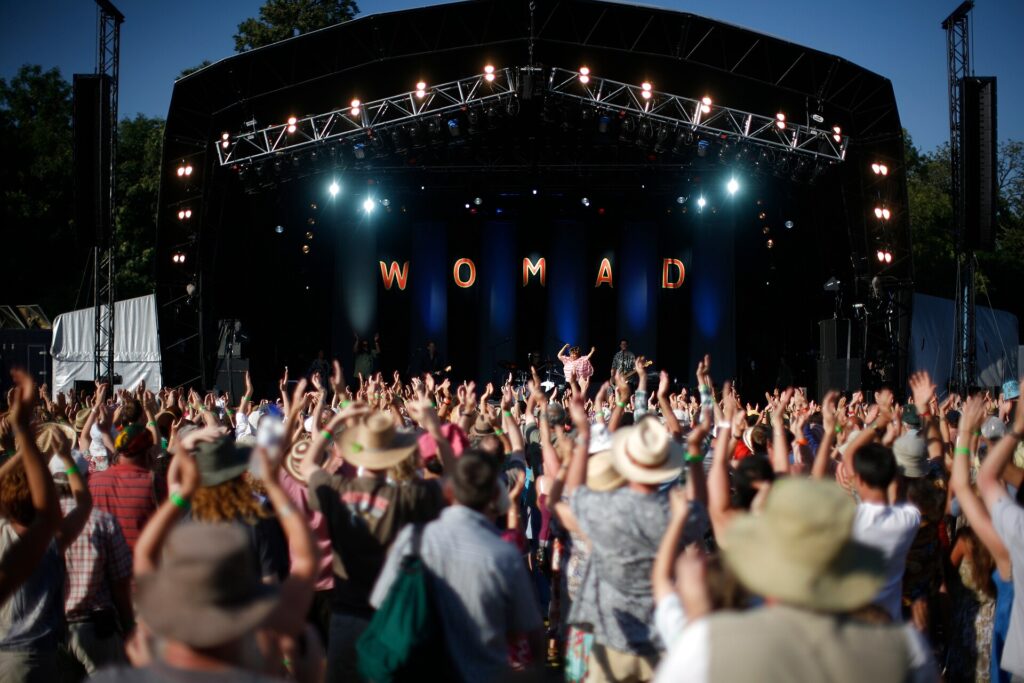
Next Thursday, a Wiltshire estate that has never hosted a public event of any kind opens its gates to one of the most respected festivals in the world. WOMAD 2026 runs from 23 to 26 July at Neston Park, near Corsham – the festival’s 43rd edition, its first at a new home after 17 years at Charlton Park, and its first outing of any sort since 2024. Adult weekend camping tickets start at £250. Launch-day sales targets were beaten in a matter of hours. And all of this happened because WOMAD did something almost no British festival has the nerve to do: it cancelled a perfectly viable year on purpose.
In This Article
If you prefer an indoor night of new British music, see our guide to Mercury Prize 2026 tickets.
That decision looked eccentric in 2025. It looks rather clever now.
The year off nobody understood
When WOMAD announced it was sitting out 2025, the assumption in most quarters was that this was a festival in trouble. It’s not hard to see why. The list of British festivals that “paused” and never came back is long and getting longer, and the economics of mid-sized events have been brutal since Covid – artist fees up, infrastructure costs up, audiences booking later and later. A year off usually means the receivers are circling.
WOMAD’s version was different. The 2024 edition had gone well – a strong 42nd year by the festival’s own account. The festival chose to stop anyway, announced the pause alongside news of the move, and promised to come back, in its own words, fully charged. British festivals don’t do sabbaticals. Glastonbury’s fallow years are the lone exception, and Glastonbury can afford them because demand outstrips supply five times over. For an independent 40,000-capacity event to voluntarily hand its audience – and its suppliers, and its crews – to competitors for a whole summer was close to unheard of.
Festival director Chris Smith set out the thinking in a contribution to FIXR’s 2026 event industry trends report: “The decision to take a year off in 2025 wasn’t taken lightly. But it came from an honest recognition that the long-term health of festivals depends on being willing to pause, reflect and adapt.” The team spent the year listening to audience feedback and, in Smith’s words, “challenging our assumptions and asking what WOMAD should look and feel like in its next chapter”.
You could read that as consultant-speak for a rescue job. The ticket data suggests otherwise. When WOMAD 2026 went on sale last November, Smith says launch-day targets were “exceeded in a matter of hours”, with total sales significantly up on previous years’ on-sales. For a festival that had just told its audience to go and do something else for a summer, that’s a remarkable vote of confidence. My mate who’s been going since the Reading-era editions rebooked the morning tickets dropped, site unseen. Plenty did.
Neston Park: a house move with a story attached
The new site is the interesting bit. Neston Park is a private estate near Corsham – Bath stone country, a few miles from the city itself – that has never opened its grounds to any event before. Not a car show, not a county fair, nothing. WOMAD gets to be the first, which is either a privilege or a gamble depending on how you feel about portaloos on virgin ground. For the festival’s audience, many of whom have been coming for decades and remember the Reading and Rivermead years, a new site is a bigger deal than any line-up announcement. The geography of a festival is half its personality.
The location isn’t random. Neston Park sits a few miles from Real World Studios in Box, the residential studio complex Peter Gabriel built in the late eighties, and Gabriel – who co-founded WOMAD back in 1982 – has given the move his blessing. He said he was “delighted” to see the festival return and described Neston Park as “a warm and welcoming home”. There’s a neat circularity to it. The festival that grew out of Gabriel’s fascination with music from everywhere ends up back on his doorstep.
Worth remembering how unlikely WOMAD’s survival has been from the start. The first edition, at Shepton Mallet in 1982, was a financial disaster severe enough that Gabriel reunited with Genesis for a one-off show largely to pay off the debts. Forty-four years later the festival it rescued is still going, still independent, and still built around the same idea – that a field in the West Country is a reasonable place to hear a Malian icon, a Brazilian superstar and an Iranian percussionist on the same weekend.
Moving house after 17 years is still a risk, and the festival knows it. Charlton Park was licensed for 40,000 and WOMAD had nearly two decades of accumulated knowledge about how that site worked – where the mud gathered, where the sound carried, which gate jammed on Sunday mornings. All of that resets next week.
What £250 buys at WOMAD 2026
Now the money, because this is where WOMAD’s pitch gets quietly strong. An adult four-day camping ticket starts at £250. Latitude, the same weekend and roughly the same demographic, is £254 for three days of music. Tramlines wants £190 for a weekend in a Sheffield park with no camping. A single general admission day at BST Hyde Park ran to £99.95 this summer before booking fees, and that gets you one headliner and a long queue for a £9 pint.
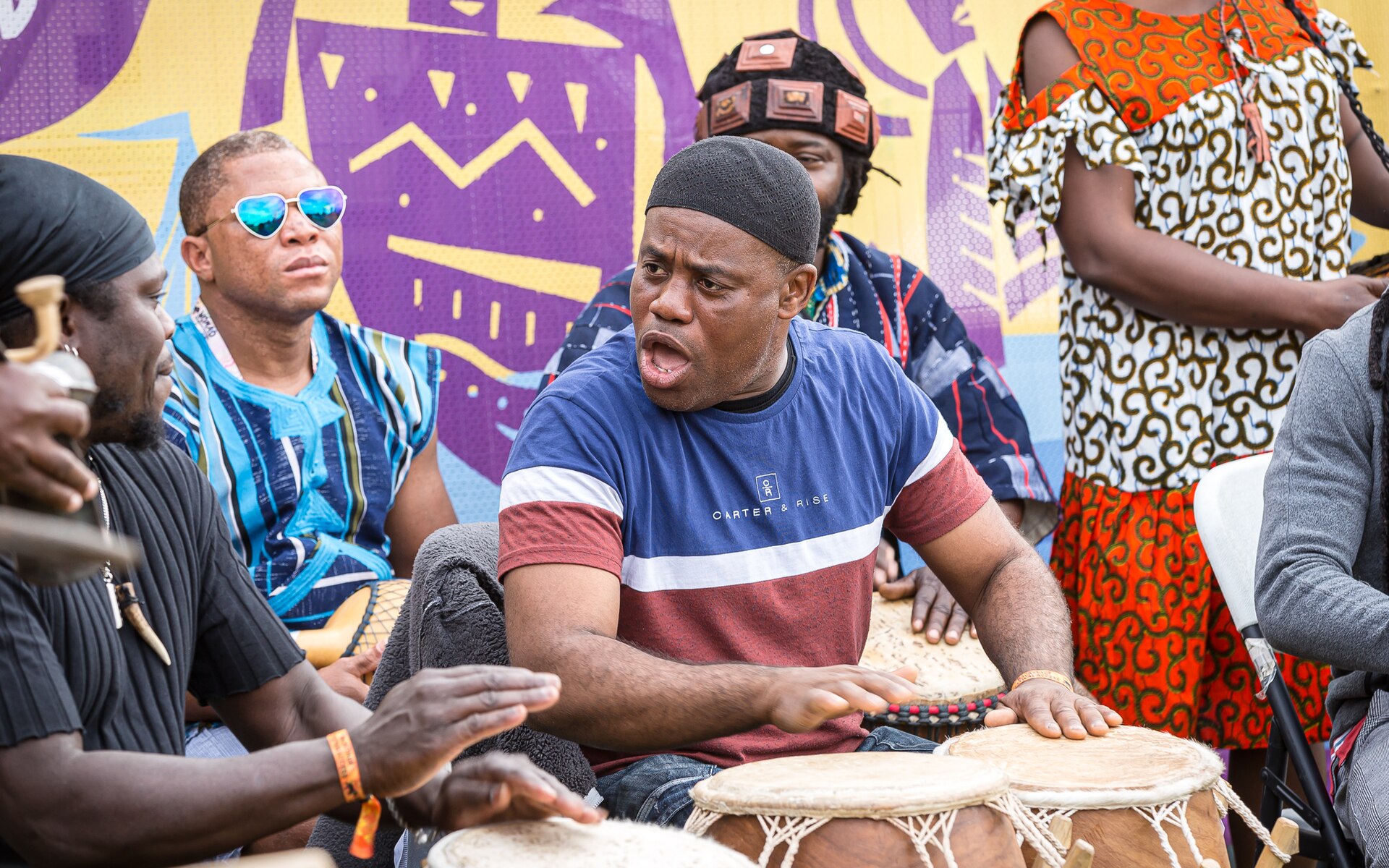
Per day of music, WOMAD is charging about £62. And it’s a different kind of £62 – this is a festival where the programme runs from morning workshops to late-night takeovers, where you can watch a Ugandan xylophone troupe at lunchtime and a Lebanese electronic pioneer after dark, and where the food village has been the best in British festivals for about two decades running. (This is the event that invented the Taste the World stage, where artists cook their national dishes on stage while being interviewed. It remains the single most civilised idea any festival has ever had.)
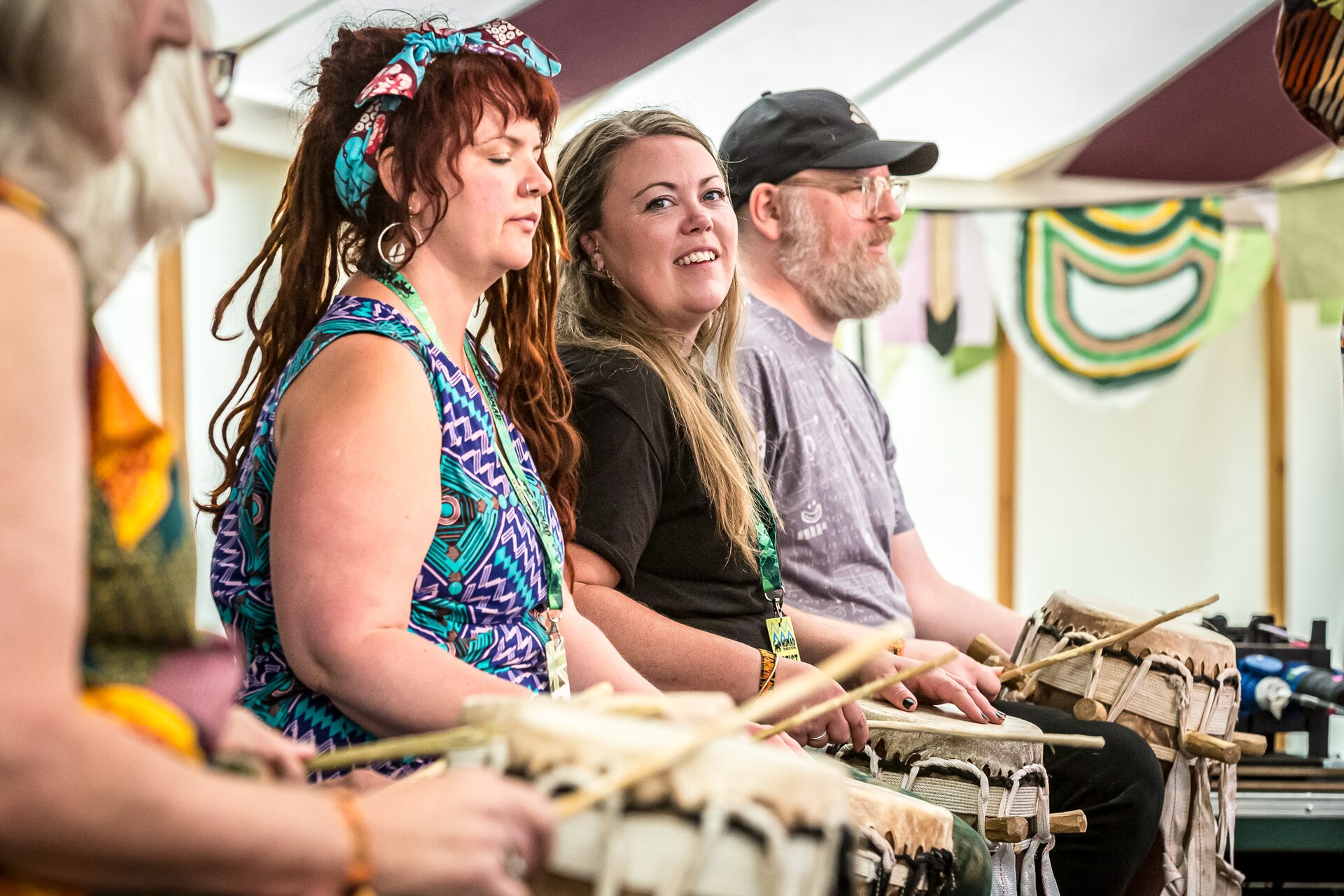
The other thing the ticket buys is the bit WOMAD never puts at the top of the poster: the daytime. This has always been the best family festival in Britain by a distance – children’s workshops that go on all day, the Sunday procession, science tents, storytelling – and it’s one of the few places where taking a seven-year-old improves the weekend rather than complicating it. Kids’ tickets are cheap, and the whole site is built on the assumption that half the audience is there for things other than the headliners.
It’s not the £8 Prom – nothing in British live music touches that – but as full-weekend propositions go in the summer of 2026, it’s one of the sharpest deals on the calendar.
A line-up that asks for a little trust
Here’s the honest bit: most people reading this couldn’t hum a single song by most of the WOMAD 2026 bill. That has always been the deal. You don’t go for the names, you go for the strike rate.
Pause on how odd WOMAD’s position is in 2026. The phrase “world music” was invented in a London pub meeting in 1987, largely as a marketing label to help record shops file the very scene WOMAD had been building since 1982. The label has aged badly – most artists on this bill would rightly bristle at it – but the festival has quietly outlived its own genre tag. What it programmes now isn’t a genre at all. It’s a filter: is this music made with skill and intent, somewhere you probably haven’t looked? That filter has never had more to work with, and the streaming era means a WOMAD discovery no longer vanishes when the weekend ends – you can take the set home.
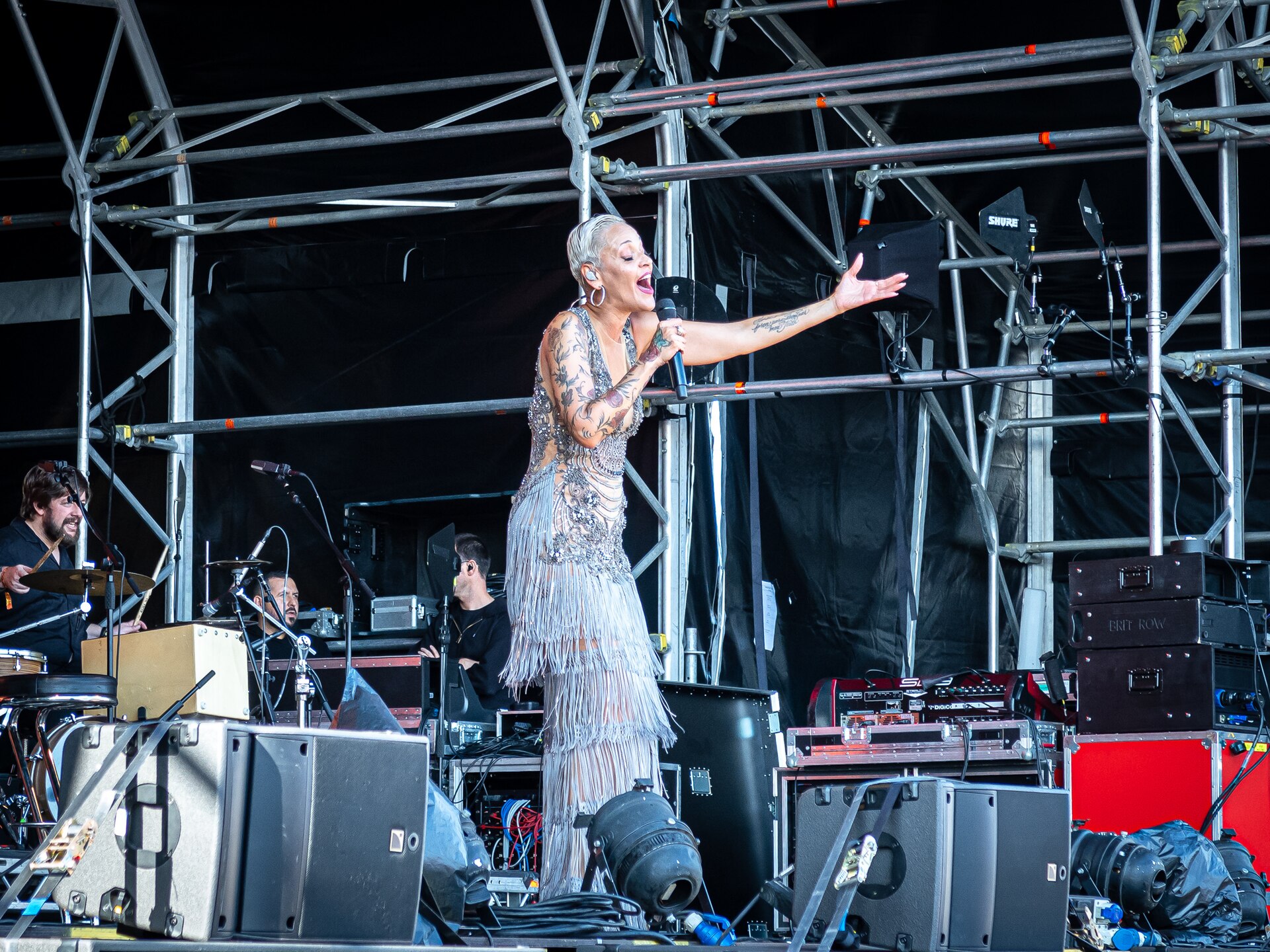
The names that are knowable are good ones. Friday is led by Greentea Peng, the South London neo-soul artist who’s spent five years being the best live act on whatever bill she joins, alongside reggae veteran Barrington Levy and Mádé Kuti, third generation of Afrobeat’s founding family. Saturday brings Daniela Mercury – a genuine superstar in Brazil, the kind of artist who fills stadiums at carnival – plus East London jazz figurehead Alfa Mist and Emma-Jean Thackray, who’s carrying a Mercury nomination. Sunday closes with Oumou Sangaré, the great Malian singer, and José González, whose whisper-quiet folk will suit a Wiltshire dusk about as well as anything could.
And there’s a nice bit of timing in the jazz booking. corto.alto, the Mercury-shortlisted Glasgow outfit, play Sunday – four days before the 2026 Mercury Prize shortlist is revealed on 30 July. British jazz has spent the last few years moving from the margins of these bills to the middle of them, and WOMAD called it earlier than most. If a jazz record makes this year’s list, there’s a decent chance its maker is in a field near Corsham the same week.
Dig past the top line and the bill gets stranger and better. Jupiter & Okwess bring Kinshasa’s heaviest groove to Saturday. Yasmine Hamdan, once of Soapkills and about as influential as Arabic-language electronic music gets, plays Sunday. Uganda’s Nakibembe Xylophone Troupe perform on an instrument so large it takes six players at once, and Mohammad Reza Mortazavi will do things with a tombak that shouldn’t be physically possible. There are Galician singers, Romanian wedding bands and a Palestinian rapper, Tamer Nafar, on the Friday. Nobody sensible plans a schedule around all this. You wander, you gamble, and roughly one act in three flattens you.
The 2026 programme also leans harder into club culture than any previous edition – a full stage in partnership with NTS Radio, and late-night takeovers from Bristol collectives including Jam Jar and Saffron, the music-tech initiative supporting women, non-binary and trans artists. It’s a smart read of who actually buys festival tickets now. The same crowd filling Britain’s listening bars on a Thursday night is precisely the audience WOMAD needs next.
Smaller on purpose is the boldest call in British festivals
The detail that deserves the most attention is one the festival has been careful about: WOMAD is coming back smaller. “We’ve also chosen to return in a more intimate form,” Smith says. “By scaling thoughtfully, we can remain proudly independent, something our audience consistently tells us matters to them.”
I’d go further than the diplomatic phrasing. The arms race for scale is the worst thing in British live music right now. Every festival wants to be bigger, every arena act wants a stadium, every stadium act wants a residency, and the result is a summer of £150 day tickets, hour-long bar queues and headline sets watched through six other people’s phones. A major festival deliberately shrinking – trading gross revenue for atmosphere and control – is the most countercultural move of the season, and hardly anyone has noticed because it doesn’t come with a press release full of superlatives.
There’s precedent for the bet paying off. Green Man has spent years refusing to grow past a size where you can cross the site in ten minutes, and it now sells out before announcing a single act. End of the Road built one of the most devoted audiences in the country on the same principle. Both are consistently better weekends than events three times their size, and both are proof that in the current market, scarcity and character beat capacity. WOMAD arriving at the same conclusion from the other direction – by shrinking rather than by never growing – is new. Nobody of its stature has tried it before.
It also fits the year. With Glastonbury lying fallow, 2026 was always going to redistribute festival-goers around the calendar, and the last weekend of July is now one of the most crowded of the summer – WOMAD, Latitude, Tramlines and WOMAD’s own Wiltshire neighbours all fighting for the same tents. Coming back leaner, with a story to tell and a loyal base that rebooks in hours, is a much better competitive position than coming back bloated. Sheffield has already made the same point at scale: Tramlines sold out all three days in the very summer that closed twenty festivals.
The caveats, because there are some
Getting there is simple enough on paper – Corsham sits between Bath and Chippenham, a short hop from Chippenham station with the M4 nearby – but “near the M4” on a festival Thursday means something different from near the M4 on an ordinary one. Anyone who sat through a Charlton Park Sunday exit knows the drill: leave before the headliner, or long after.
First-year sites are rough. Anyone who tells you otherwise hasn’t done one. Traffic management, water points, sound bleed between stages, how long the showers take at 8am – none of it has been tested at Neston Park, and some of it will go wrong. Veteran WOMAD-goers with two decades of Charlton Park muscle memory should pack patience along with the bunting. It’s also the last weekend of July in England, which means you should plan for a heatwave and a monsoon simultaneously, because the forecasters won’t commit until Wednesday and neither should you. Wellies and sun cream. Both. Every year someone learns this the expensive way at the on-site stalls.
The Thursday programme is also thin – a handful of acts and the NTS stage rather than a full day – so if you’re weighing the three-day ticket against the four, know that Thursday is an arrival day with a soundtrack, not a festival day. And there’s no crossover anchor act this year, no Femi Kuti-meets-Grace-Jones moment to drag in the undecided. Greentea Peng is the closest thing the bill has to a mainstream draw, and she’s still a leftfield booking by big-festival standards.
None of that changes the basic verdict. But it’s worth saying, because the coverage of WOMAD’s return has been almost entirely misty-eyed, and a festival this self-aware deserves honest scrutiny rather than a nostalgia pass.
Why this comeback matters beyond one field
British festivals have had four grim years. Dozens have folded; the ones that survive have mostly done it by getting bigger, blander and more expensive. WOMAD’s return suggests a different route: stop, listen, shrink, move, and trust that an audience which feels real ownership of an event will follow it anywhere. The early evidence – launch-day sellout pace, day splits selling since June – says the trust runs both ways.
Whether the rest of the industry takes the lesson is another matter. The honest answer is that most festivals can’t copy this move. WOMAD could take a year off because it has 44 years of accumulated goodwill, a founder with deep pockets nearby and an audience that treats attendance as identity rather than entertainment. A five-year-old dance festival that pauses is simply gone. But the underlying principle – that an event is a relationship, and relationships survive honesty better than they survive decline – travels a lot further than Wiltshire. Some of the summer’s shakiest events would do better cancelling one bad year than limping through three. Glastonbury is the only other British festival with the standing to do it, and its own 2026 fallow year has reshaped where everyone else went this summer.
It’s the same instinct driving the year UK music took back its own charts: audiences responding to things made with conviction rather than things made at scale. A 44-year-old festival betting its future on intimacy, in a summer when everyone else is betting on size, is about as strong a statement of conviction as the industry will produce this year.
So, the last weekend of July is sitting there, Worthy Farm is empty, and £250 buys you four days somewhere no crowd has ever stood before. What would it take for you to spend a weekend on music you’ve never heard of – and when did you last let a festival surprise you?