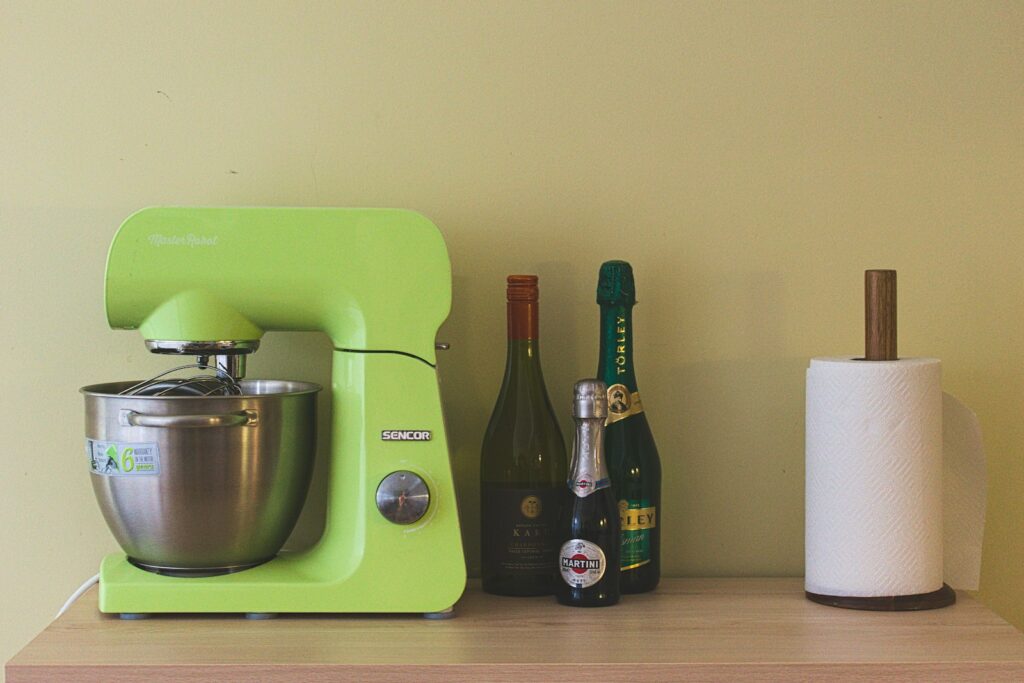
Best Stand Mixer Under £150: Beat the Bake Off Rush – And Let the £449 KitchenAid Wait
The tent goes up next month, and the price of a stand mixer goes up with it. Retailers have a name for it – the Bake Off effect – and it’s been reliable for a decade: the first technical challenge airs, Britain decides en masse that this is the year it learns lamination, and by mid-September the decent machines under £150 are either out of stock or quietly £20 dearer than they were in August. So if you want the best stand mixer under £150, the time to buy it is now, while the tent is still flat-packed in a field in Berkshire and nobody’s crying over a collapsed genoise yet.
In This Article
I’ve spent years testing kitchen kit, and stand mixers are the category where the gap between price and performance is strangest. A £449 KitchenAid Artisan is a lovely object. But it creams butter no better than machines costing a third as much, and the things that actually separate a good mixer from a bad one – planetary action, bowl design, whether the head lifts without a fight – turn up at £120 if you know where to look.
Here’s what to buy before September, what the spec sheets won’t tell you, and why the KitchenAid can wait.
Why August is the month to buy
Stand mixers follow television. It sounds daft, but ask anyone who works in small appliances: the Bake Off launch week does more for mixer sales than Black Friday does. John Lewis has reported baking-kit surges around the series for years, and the pattern at the budget end is always the same – the well-reviewed models under £150 sell through first, because that’s the price most first-time bakers will stomach.
What follows is predictable. Stock thins out, the remaining sellers hold their prices, and the “deals” that appear in late September are usually on the models nobody wanted. Last year I watched a mixer I’d recommended to a friend go from £119 in August to £149 by the first weekend of the series, then out of stock entirely. She bought a worse machine for more money. And that’s the whole argument for reading this in August rather than bookmarking it for later.
There’s a second, less obvious reason to buy now: returns windows. Buy in the next fortnight and you’ll know whether the machine walks across your worktop when it kneads – more on that below – while you can still send it back without a quibble.
What £150 actually gets you (and the wattage con)
First, ignore the wattage. It’s the most prominent number on every box and it’s close to meaningless. A 1,300W motor driving cheap plastic gears will stall on a stiff bagel dough while a well-geared 700W machine ploughs through. Manufacturers know wattage is the only spec shoppers compare, so the cheapest machines often carry the biggest numbers. Treat a huge wattage claim on a £70 mixer as a warning, not a selling point.
What matters instead is duller and harder to print on a box. Planetary action – the beater spinning one way while orbiting the other – is what scrapes the bowl properly, and everything worth buying has it now. Bowl size matters more than people think: 4 litres does a two-tier sponge or a loaf’s worth of dough; the 2.5-litre bowls on the very cheap machines mean doing everything in two batches, which defeats the point of owning the thing. Weight is the sleeper spec. A mixer under 4kg will shuffle across the counter when it kneads, and kneading is precisely the job you bought it for.
Worth pausing on if your worktop is already crowded – our look at kitchen island alternatives is really about the same problem, which is that British kitchens run out of surface before they run out of appetite.
At £150 you can have all of this. What you can’t have is die-cast metal construction, ten-year build quality, or the full attachment ecosystem – pasta rollers, meat grinders – that bolts onto a Kenwood Chef or a KitchenAid. If you’ll use those, you’re shopping in a different price bracket and that’s fine. Most people won’t. Which? makes the same point in its stand mixer testing: several machines around the £100 mark score within touching distance of models costing four times as much on the core jobs of creaming, whisking and kneading.

The best stand mixer under £150: Kenwood Prospero+
The Kenwood Prospero+ (around £130, often £110 on promotion) is the machine I’d tell my sister to buy. It’s compact – properly compact, the footprint of a kettle and a half – with a 4.3-litre bowl that handles a family-sized bake, proper planetary action, and the K-beater, whisk and dough hook all included. Kenwood has been making mixers since 1947 and it shows in the gearing: this is a 1,000W machine that behaves like it, taking a double batch of white bread dough without the motor note changing.
It’s not perfect. The body is plastic, the bowl is on the small side of ideal for big Christmas cakes, and the splash guard is a bit of a faff to clip on with wet hands. At 5.5kg it stays put on the counter, but it hasn’t the planted, immovable feel of a Chef. None of that matters much at this price.
The quiet bonus is the attachment hubs. The Prospero+ takes a blender jug, a food processor bowl and a citrus press on its outlets, and bundles including them regularly appear under £150. For a small kitchen – the sort we covered in our small kitchen storage guide – one machine doing three jobs is worth more than any single spec.
Three more that hold up, and one that doesn’t
The Bosch MUM Serie 2 (about £120) is the continental pick, and in some ways the cleverest design here. It’s light at 3.6kg, which sounds like a flaw – and for heavy dough it is, because it wanders – but the 3.8-litre bowl, the fold-away cable and the fact it slides into a cupboard make it the best choice for anyone who bakes fortnightly rather than weekly. Bosch’s beater geometry is excellent; it gets stiff peaks out of two egg whites, which defeats many bigger machines.
The Swan Nordic (around £100) is the one you buy partly because it’s lovely to look at, and I won’t pretend otherwise – the matte grey version with the wooden-effect trim is the only mixer in this price range you’d leave out on the worktop by choice. Mixing performance is respectable, the 4-litre bowl is a decent size, and the six speeds are sensibly spaced. But the gearbox is audibly plasticky under load, so treat heavy rye dough as off the menu.
The Russell Hobbs Go Create (about £85) is the honest budget option: smaller bowl, noisier motor, entirely adequate cakes. It arrived at mine in that annoying clamshell-style packaging and rattled slightly out of the box, which didn’t inspire confidence, yet it’s creamed butter without complaint for months. For a student heading to halls in September, it’s a sensible pick – it would slot neatly into the budget from our uni room essentials guide.
The one to skip is any of the sub-£50 machines you’ll see stacked up in supermarkets from late August – the Cookworks-tier mixers with 2.5-litre bowls and shrieking motors. They can’t knead, the bowls are too small for a standard sponge recipe, and most end up in the cupboard by November. And a £25 hand mixer will out-bake all of them.
The KitchenAid question
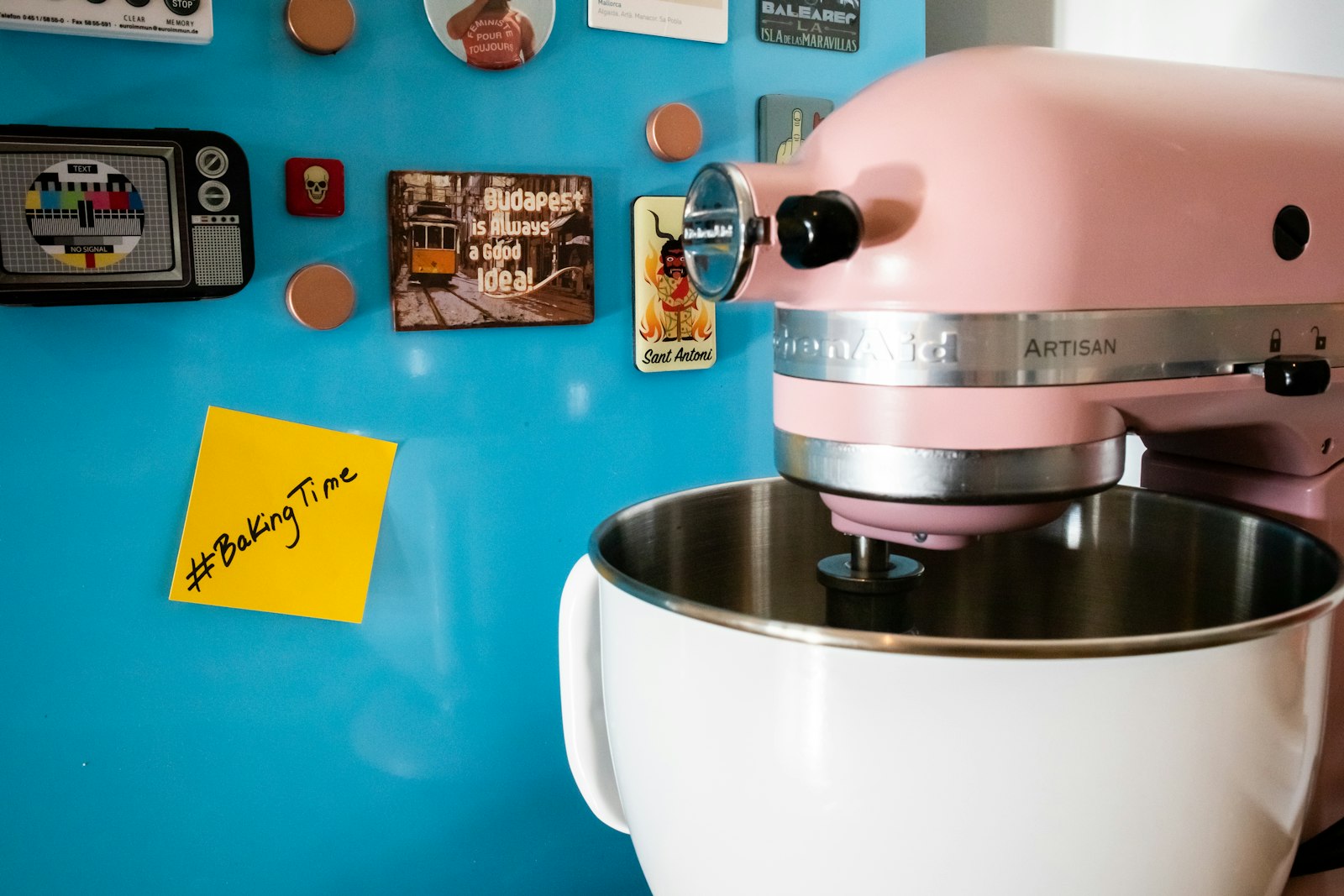
Here’s the contrarian bit, so let me say it plainly: for most British home bakers, the KitchenAid Artisan is the most overrated appliance you can put on a worktop. It’s beautifully made. It will outlive you. But you’re paying £449-plus for durability and styling, not for better cakes – blind bake-offs between it and mid-price machines keep ending in ties, and Which?’s own scores have repeatedly put cheaper machines level with it on performance. The Artisan is a considered buy for someone who bakes twice a week and knows they’ll still be at it in 2036. As a first mixer, bought on Bake Off enthusiasm in September, it’s how people end up with the world’s most expensive fruit bowl stand.
If the £150 ceiling ever lifts for you, the honest upgrade path isn’t the KitchenAid anyway – it’s a used Kenwood Chef. They turn up on eBay and Facebook Marketplace for £80-£150, the motors are famously rebuildable, and the attachment range is wider. Nobody’s Instagram grid features one, which is exactly why they’re cheap.
Or spend £25 instead
One more honest note before the shopping list. If your baking is a victoria sponge a month and mince pies in December, you don’t need a stand mixer at all. A decent hand mixer – the kind you find in Boots or Argos for about £25 – creams butter and whips cream faster than you’d think, washes up in seconds and lives in a drawer. The stand mixer earns its counter space in two situations: bread dough, which hand mixers can’t do, and volume, when you’re baking for a fete or batch-cooking for the freezer.
Be truthful with yourself about which baker you are. The Guardian’s product testers at The Filter make this point regularly: the most common review complaint about stand mixers isn’t performance, it’s “I don’t use it enough”. A machine that matches your actual baking habit – like our pizza oven guide argued about outdoor cooking kit – beats an aspirational one every time.
Where to actually buy one
The obvious answer is John Lewis, and for once the obvious answer is right. The two-year guarantee comes as standard on small appliances, the returns desk doesn’t argue, and the Never Knowingly Undersold promise – reinstated a couple of years back, and covering major online retailers – means you’re rarely overpaying by much. Argos is the better bet at the bottom of the range; it had the Russell Hobbs cheaper than anywhere else when I last checked, and click-and-collect matters when you’re buying something this heavy.
Two places to be careful. Supermarket seasonal aisles will fill with mixers from late August, timed to the series, and they’re almost always the sub-£50 machines this guide just told you to avoid – the stack of boxes by the school uniforms is not a deal, it’s a trap with a wipe-clean finish. And marketplace listings on the big online platforms routinely inflate the “was” price in September so the discount looks bigger; a £119 mixer relisted at “£179, now £139” is a price rise wearing a red sale sticker.
Refurbished is the sleeper option. Kenwood and KitchenAid both shift manufacturer-refurbished stock through their eBay outlet stores with warranties attached, and a refurbished Prospero+ regularly lands under £90. Bake Off enthusiasm produces a wave of barely-used machines every winter too – January is peak season for December’s regretted purchases. MoneySavingExpert tracks the appliance deals actually worth having if you’d rather wait for a price drop, but on this category, waiting past August has a cost of its own.
The pre-September checklist
Buying this month? Four things to check before you pay. Bowl size: 3.8 litres minimum, or you’ll be batch-splitting. Weight: over 4kg unless cupboard storage matters more to you than kneading. Included tools: beater, whisk and dough hook should all be in the box – some budget models sell the hook separately, which tells you what the maker thinks of its kneading. And the returns window: buy from a retailer with a 30-day no-quibble policy, run a bread dough through it in week one, and send back anything that stalls, smells hot or walks.
Then put it somewhere you can reach it. A mixer that lives at the back of a cupboard behind the slow cooker gets used four times a year; one on the counter gets used weekly. If counter space is the sticking point, the butler’s pantry crowd has a point about appliance garages – and the Bosch, at 3.6kg, is the one you’ll actually bother lifting down.
The tent opens in a few weeks. When the first showstopper collapses and half the country opens a shopping app, you’ll already have flour on yours. What’s the first bake going to be?