
Best British Homeware Brands 2026: Where to Buy Pieces That Outlast the Trend Cycle
When Made.com collapsed in late 2022, a lot of people lost a sofa they had already paid for, and the question of which homeware companies you can actually trust stopped being abstract. The best British homeware brands, it turned out, were not the ones with the slickest website or the cheapest flat-pack – they were the ones still standing when something went wrong. Made.com was bought out of administration by Next for a reported £3.4 million, relaunched on Next’s platform in 2023, and the version you buy today is a different operation entirely: the old ten-year sofa warranties were not carried over.
In This Article
- What “British” on a homeware label actually means
- The premium tier: where the money actually goes
- Kitchens and dining: the rooms to invest in first
- Sofas and the warranty question
- Lighting and the small stuff that punches above its weight
- The high street: Dunelm, Habitat and honest value
- The case for buying none of it new
- Buying so it lasts: a few honest rules
For a generation who had furnished entire flats from one trend-led website, it was a useful, slightly painful lesson – a homeware brand is only as good as the company standing behind it when a leg snaps or a cushion collapses. That collapse is part of why this list exists. This is a guide to who is actually worth your money in 2026, organised by what you are trying to do and how much you want to spend, with the honest caveats that most round-ups leave out. Some of these names are heritage institutions, some are scrappy independents, and a few are high-street giants that quietly do the basics better than anyone gives them credit for.
What “British” on a homeware label actually means
Start with the uncomfortable bit, because it shapes everything below. “British brand” and “made in Britain” are not the same thing, and the gap between them is where a lot of marketing lives.
Take Neptune, the Wiltshire company founded in 1996 and now one of the most recognisable names in considered, timber-heavy interiors. Its headquarters, design team and warehousing sit in Swindon. But a good deal of its furniture is designed in the UK and manufactured overseas, much of it in China. That is not a scandal – it is how most of the industry works, and it does not stop a Neptune kitchen being beautifully made. It just means that if buying British is a values decision for you rather than an aesthetic one, you need to read past the brand story and check where a specific item is produced.
The genuinely UK-manufactured pieces tend to be at two ends of the market: heritage lighting and upholstery at the top, and a handful of craft makers in the middle. Everything else is best understood as “British-designed, globally made”, which is fine as long as you are not paying a premium under the impression you are funding a workshop in the Cotswolds. Treat the label as a starting point, not a guarantee, and you will spend better. The easiest place to see a lot of them in one go is London Design Festival each September, where the craft makers show alongside the big names.
The premium tier: where the money actually goes
At the top of the market, you are paying for three things: design that does not date, materials that survive a decade of real use, and a company that answers the phone. Not every premium brand delivers all three.
The White Company, founded by Chrissie Rucker in 1994, built its name on the unglamorous stuff – bedding, towels, candles, the white-and-natural palette that became a national shorthand for “tasteful”. It is reliable rather than exciting, and its linen and bedding are where it earns the price. Heal’s, the Tottenham Court Road institution trading since 1810 and owned since 2001 by the Weston family’s Wittington Investments, sits in a similar bracket but leans more design-led, with a rotating cast of contemporary furniture and lighting. Soho Home, the homeware arm of Soho House, sells the members’-club look – velvet, brass, deep greens – to people who will never get past the door of the actual club, and the quality is generally good if the styling is a little uniform.
Then there is OKA, the British furniture and homeware brand that does maximalist, slightly grand interiors better than almost anyone, and Tom Dixon, whose lighting and accessories are closer to collectable design than household shopping. The honest negative across this tier is markup. You are paying retail-plus for the styling and the showroom, and a similar look can often be assembled from mid-market brands with a bit of patience. The case for spending here is longevity and service, not value. If you want to understand the colour palettes these brands keep pushing, our piece on colour drenching in UK homes covers the trend they are all quietly riding. The same markup logic applies to the shelving craze: our guide to bookshelf wealth explains which pieces from this tier actually earn a spot on the shelves and which are just expensive props.
Kitchens and dining: the rooms to invest in first
If you only spend properly on one part of the house, the data and the decorators agree it should be the kitchen and the table. These are the rooms that take the most punishment and that you look at most, which is why brands like Neptune have built whole businesses on them.
A Neptune or deVOL-style painted timber kitchen is a serious commitment – five figures, fitted – and the appeal is that it reads as furniture rather than units, ages gracefully, and can be repainted rather than ripped out. That repaintability matters more than it sounds, because it is what lets one kitchen survive several changes of taste. It is also the logic behind the move away from glossy open-plan towards softer, zoned layouts, something we explored in our look at the broken-plan kitchen.
For the table itself, solid wood from a brand that will sell you matching pieces years later beats a fashionable shape you cannot extend. Heal’s and Neptune both do this well; so do smaller makers if you are willing to wait. The trap is the trend table – the fluted, curved, heavily veneered design that looks current now and tired in three years. Magazines such as House & Garden have been gently steering readers back towards timber and away from high-shine for a couple of seasons, and on dining furniture that is sound advice. Buy the boring, beautiful one.
Sofas and the warranty question
Sofas are where the Made.com lesson bites hardest, because a sofa is the most expensive soft thing most people buy and the hardest to assess online. This is the category to be most careful in.
Loaf, the independent British brand best known for its deliberately slouchy, sink-into designs, has built a loyal following by being clear about what its sofas are – comfortable, casual, not heirloom-grade joinery – and by staying privately owned rather than chasing the growth-at-all-costs model that sank its rivals. That independence is worth something: the company answering a warranty claim in 2030 is more likely to still exist. The trade-off is that the relaxed, feather-filled look needs plumping and is not for anyone who wants a crisp, structured silhouette.
Whoever you buy from, the practical checks matter more than the brand name. Look for a hardwood frame rather than chipboard, a frame guarantee measured in decades rather than years, and removable, washable covers. Consumer group Which? has long made the point that durability on sofas correlates far more with frame and cushion construction than with price, and that some mid-range models outlast designer ones. Ask the awkward question before you pay: if a cushion collapses in year three, what happens? A brand that answers clearly is worth more than one that just photographs well. If your sofa is heading outdoors, our guide to the best garden sofas applies the same logic to weatherproofing.
Lighting and the small stuff that punches above its weight
Lighting is the category where British design genuinely leads, and where you can buy something excellent without remortgaging. It is also the quickest way to lift a rented or builder-standard room.
Anglepoise is the obvious icon – the spring-balanced task lamp designed by George Carwardine in the 1930s and still in production, a piece of industrial design that has earned its place in the V&A and on a thousand desks. Pooky has carved out a niche doing the opposite end of the same job: well-priced lamp bases and a huge range of shades that let you build a considered scheme without designer money. Tom Dixon sits at the luxury end, closer to sculpture than utility. The point across all three is that a good lamp, a proper shade and a warm bulb will do more for a room than a new sofa, for a fraction of the cost.
The same “small stuff, big effect” rule applies to textiles, ceramics and wallpaper, where Britain has a deep bench of independent studios. This is the tier where buying British actually does often mean buying from a small UK maker, and where your money is most likely to reach the person who designed the thing. It is also, conveniently, the cheapest way to chase a trend without regret – a single bold roll of paper or a run of hand-thrown bowls costs little and is simple to change, which is why interiors writers keep pointing readers towards it. Our pieces on limewash walls and chocolate-brown interiors are both, at heart, arguments for spending small to change a lot.
The high street: Dunelm, Habitat and honest value
Not everything needs to be an investment, and pretending otherwise is how people end up with three cushions and no curtains. For the bulk of a home – the stuff that gets replaced, outgrown or wrecked by children and pets – the British high street is where the sensible money goes.
Dunelm has quietly become the default for a reason. It is a FTSE-listed business with real scale, its own-brand bedding and curtains are decent for the money, and it does the unfashionable basics – storage, blinds, kitchenware – without drama. Habitat is the more interesting case. Once a genuinely influential design retailer, it is now owned by Sainsbury’s and sold largely online and through Argos rather than from its old flagship stores. The design heritage still shows in the better pieces, and the prices are keen, but the in-person experience that made the brand has mostly gone. Garden Trading covers the country-kitchen and outdoor-adjacent end – enamelware, baskets, simple lighting – at mid-market prices.
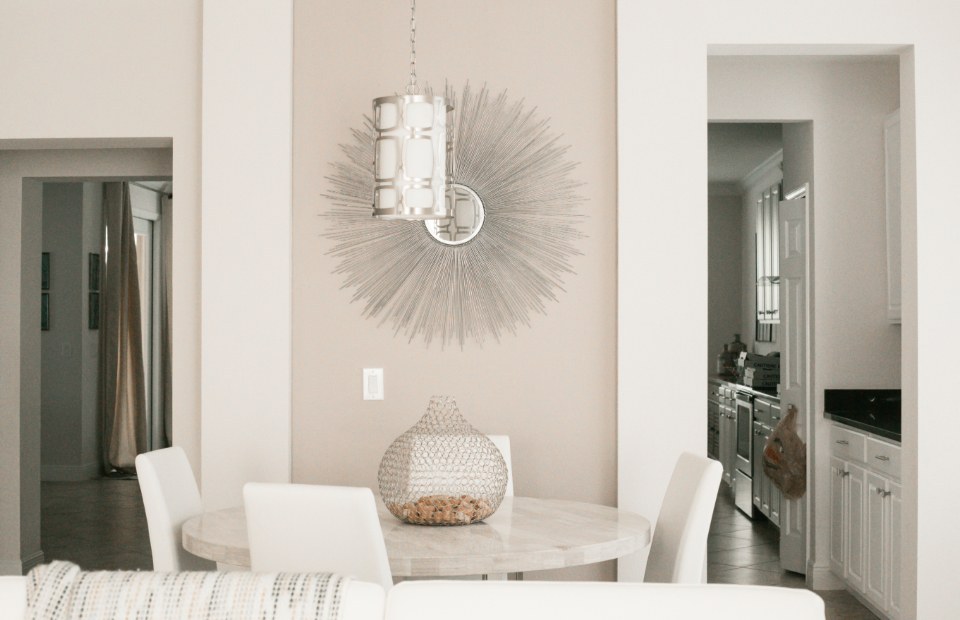
The skill on the high street is knowing what to buy here and what to skip. Bedding, towels, storage, basic glassware and seasonal updates: buy cheap, replace freely. Anything with a frame, a motor or a ten-year job to do: spend up a tier. Mixing the two is not a compromise, it is the whole game – a high-street sofa with a White Company throw and an Anglepoise next to it will read as far more expensive than the sum of its parts. Interiors titles such as Livingetc have made something of a sport of this “high-low” mixing, and it is the single most useful habit to copy from people who decorate for a living: nobody actually furnishes an entire room from one price bracket, and the rooms that try usually look it.
The case for buying none of it new
There is one route this kind of round-up usually ignores, and in 2026 it is the smartest of the lot: buying secondhand. The revival of “brown furniture” – the solid mahogany and oak pieces that were almost unsellable a decade ago – means you can buy a genuinely better-made dining table or chest of drawers at auction or on a resale site for less than a veneered new one from a mid-market brand. The construction on older British cabinetry is frequently superior to anything at the same price today, precisely because it was made when labour was cheaper and chipboard had not been invented.
The catch is effort. You have to measure, collect, occasionally re-wax or re-glue, and accept that the perfect piece arrives on its own schedule rather than yours. But for anyone who cares about both budget and longevity, the best value in British homeware is often a forty-year-old piece that has already proved it will not fall apart. Pair one good vintage anchor – a sideboard, a desk, a leather armchair – with new lighting and textiles, and the room reads as collected rather than bought in a single afternoon.
Buying so it lasts: a few honest rules
A round-up is only useful if it changes what you do at the checkout, so here is the short version of everything above. Separate the rooms you live in from the rooms you pass through, and weight your budget accordingly. Check where a specific item is made rather than trusting the brand’s nationality. On anything structural, read the guarantee before the reviews – a confident, decade-long warranty tells you more about build quality than a hundred five-star ratings. And favour brands that are independently owned or large and stable over fast-growing names burning through investor money, because the second group is where the disappeared warranties come from.
None of this is glamorous, and none of it requires a decorator. It is closer to how the trade actually shops: spend where it shows and lasts, save where it does not, and let a few good lights and textiles do the heavy lifting. Do that and you end up with a home that looks considered rather than catalogue-ordered, and that you are not re-buying in three years. The brands above are a strong starting list, but the principle outlives any of them.
So before your next big homeware order goes through, it is worth asking the only question that really matters: in five years, will you still be glad you bought it – and will the company that sold it still be around to help if you are not?
Not everything in a British kitchen needs heritage pricing, mind. Our test of stand mixers under £150 found the mid-market doing the same job for a third of the money.
It is no surprise so many of these brands are leaning into chocolate brown, this year’s defining interiors shade.