Bookshelf Wealth UK 2026: The Quiet Status Trend Filling British Living Rooms
Bookshelf Wealth UK 2026: The Quiet Status Trend Filling British Living Rooms
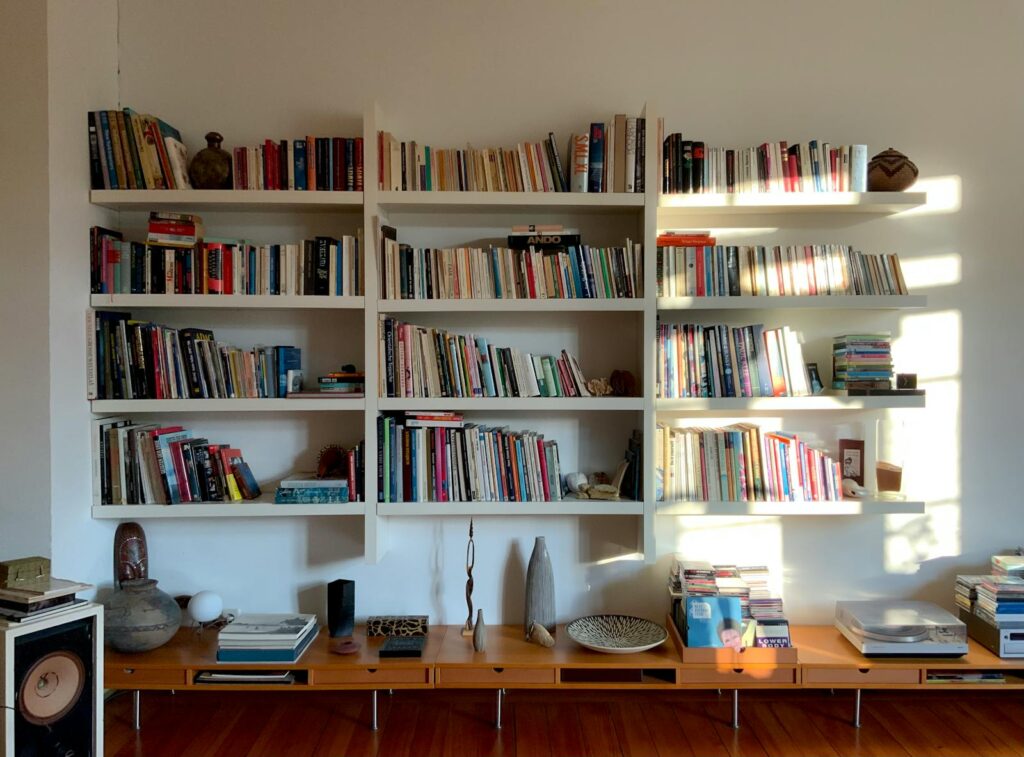
If you have walked into a friend’s living room recently and noticed an absurd number of books on display – not curated, not colour-blocked, just there, stacked horizontally on shelves, piled on side tables, leaning on the mantelpiece – you have already met bookshelf wealth UK style. The trend has spent two years bubbling on TikTok and Instagram, has been blessed by every UK interiors title from Livingetc to House & Garden, and is now landing in British homes properly as the dominant aesthetic for living rooms in 2026.
In This Article
- What “bookshelf wealth” actually means
- Why bookshelf wealth UK style is landing now
- The anti-quiet-luxury argument
- How to do bookshelf wealth without it becoming a stage set
- What to buy (and what to skip)
- What it actually costs
- Where the books actually come from
- The rented-flat problem
- The trend’s natural limit
- Where it goes from here
The short version: visible books are back as a status signal, and the lived-in shelf has replaced the carefully styled vignette. The slightly longer version is more interesting, because bookshelf wealth is doing something specific to British interiors that “quiet luxury” never quite managed.
What “bookshelf wealth” actually means
The phrase was coined by the LA-based designer Kailee Blalock in 2023 and exploded on TikTok in early 2024, where #bookshelfwealth has since racked up tens of millions of views. The aesthetic borrows from country house libraries, university common rooms and the homes of academics who genuinely read – dense rows of hardbacks, framed art leant against the books rather than hung, a brass lamp, a worn rug, an armchair you can fall asleep in.
The key word is lived-in. Bookshelf wealth is anti-staging. You are not meant to arrange books by spine colour or hide their jackets behind beige sleeves. The point is that the room looks like someone has been reading in it for fifteen years, even if you only moved in last spring.
That is also why it is so easy to do badly. A wall of identical leather-bound classics from a discount website fools nobody. The look only works if the books are real, and ideally if you have actually read a few of them.

Why bookshelf wealth UK style is landing now
Bookshelf wealth has landed at exactly the moment when UK homeowners are losing patience with minimalism. We have written before about why chocolate brown interiors are taking over UK homes in 2026, and the underlying pattern is the same: after a decade of pale-everything and Pinterest-perfect surfaces, British homes want to look like someone lives in them.
There is also a generational shift. The early-30s cohort buying their first homes in 2025 and 2026 grew up online and is now consciously building physical, analogue rooms – vinyl on the turntable, a fountain pen on the desk, a paperback on the side of the bath. Books on display fit that mood. House & Garden’s January 2026 trend report singled out “shelves that show their working” as one of the year’s defining looks, and the UK design press has been notably more enthusiastic about bookshelf wealth than its American originators expected.
Then there is the practical layer. The trend toward broken-plan living in British homes has put the wall back into living rooms, which means there is finally something to fill it with. A floor-to-ceiling bookcase that would have looked obstructive in a 2018 open-plan kitchen-living-diner now does useful work as a zone divider in a 2026 broken-plan layout.
The anti-quiet-luxury argument
It is worth being specific about what bookshelf wealth is reacting against. Quiet luxury, the dominant aesthetic of 2023 and 2024, was about expensive things looking inexpensive – cashmere in oatmeal, brass without polish, vases without flowers. The signalling was almost invisible to anyone outside the tent.
Bookshelf wealth flips that. It is loud. A wall of books announces taste, time and a willingness to keep physical objects in an era of dematerialisation. You cannot fake a personal library the way you can fake a Toteme coat – or rather, you can, but the photographs will give you away. The collection has to look mongrel: cookbooks next to poetry next to a battered Penguin Classic next to your old A-Level set texts.
This is also why interior designers are quietly relieved. Quiet luxury rooms were close to impossible to photograph well, because nothing in them had any character. Bookshelf wealth photographs beautifully and reads as personality on Instagram. That is doing a lot of the work behind the trend’s velocity.
How to do bookshelf wealth without it becoming a stage set
The cardinal rule is that the books should be yours. Buying a hundred matching antique volumes from a job lot site is the single most visible mistake. The trend works when the shelves contain things you have actually accumulated – which means it is fundamentally a slow build, not a weekend project.
A few principles that hold up across the better UK examples:
Mix the spines. Hardbacks, paperbacks, art books, cookery books, novels in their original jackets. Uniform spines look like a hotel lobby.
Stack horizontally as well as vertically. A few horizontal piles break up the visual rhythm and create natural plinths for small objects – a ceramic, a framed photograph, a brass paperweight.
Lean art, do not hang it. Framed pictures propped on the shelf in front of books are a defining bookshelf-wealth move. The unhung painting reads as casual confidence in a way that gallery-style framing does not.
Add a lamp. Every serious bookshelf-wealth room has a warm, lowish, ideally brass library lamp doing the lighting. Overhead spots will kill the look instantly.
Keep the dust. Or at least, do not over-polish. The trend is not about wear and tear, but it is about visible use.
One more principle that rarely gets said out loud: prune. A shelf that keeps everything – the airport thrillers, the duplicate copies, the university textbooks you resented at the time – stops saying anything about you. The collections that photograph best belong to people who take a carrier bag to the charity shop twice a year. Keep the books you’d defend in conversation; let the rest go back into circulation for someone else’s shelf.
What to buy (and what to skip)
The shelves themselves are the only piece you should think hard about. Ikea’s Billy bookcase has become the unlikely workhorse of UK bookshelf wealth – cheap, modular, and easy to dress up with trim, paint or a built-in surround. There are now multiple TikTok tutorials walking you through turning a row of Billys into something that reads as a fitted library, and the results are good.
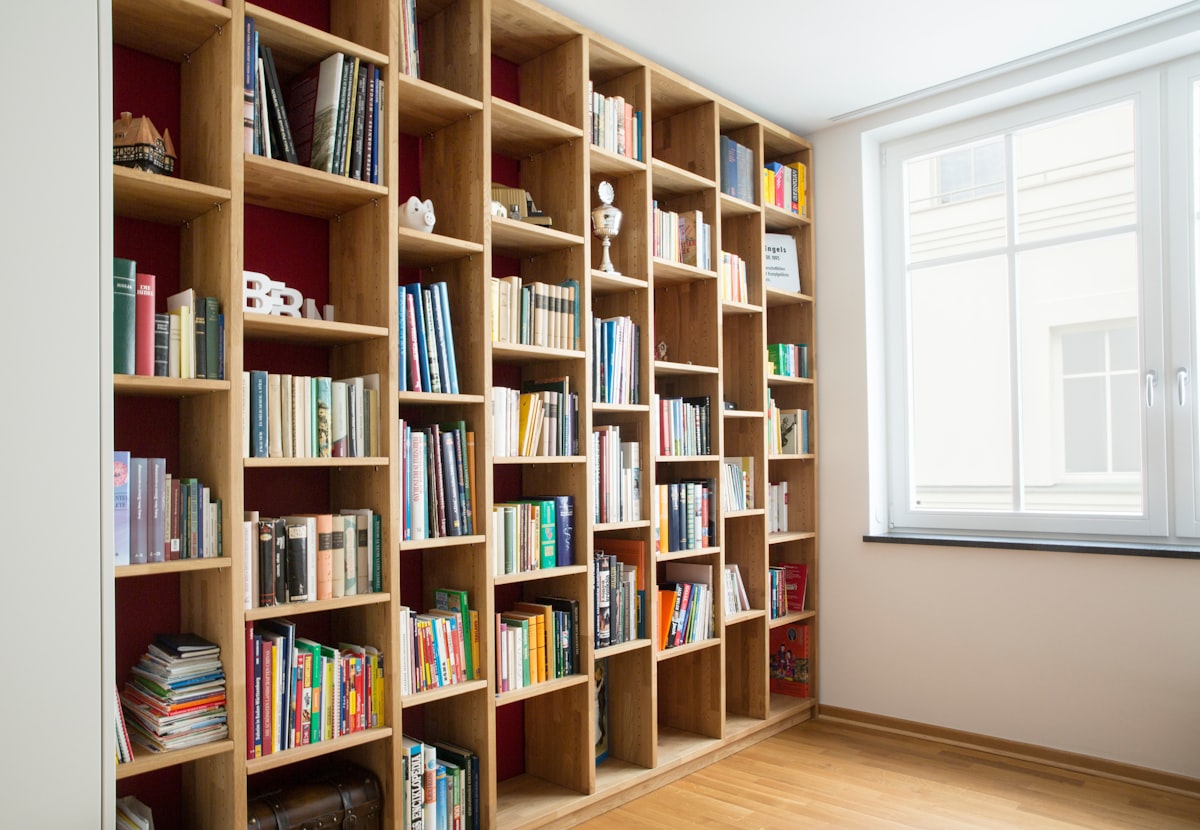
If you want something more permanent, a local joiner will build floor-to-ceiling fitted shelves for less than you might think, and the look is materially better. Painting the shelves the same colour as the wall behind them – rather than leaving them white – is the single biggest upgrade most readers can make to an existing bookcase.
What to skip: faux books, decorative book sets, anything sold as “library decor”. The vintage shops on Portobello Road and the second-hand floor at Hay-on-Wye will give you a more honest collection in an afternoon, and you might actually read what you bring home. Hallway ideas for UK homes covers something similar – the overlooked spaces respond best to objects that have a reason to be there.
What it actually costs
Bookshelf wealth has a reputation as a rich person’s look. That’s strange, because it’s one of the few interiors trends you can build almost entirely second-hand – the money goes on shelving and light, and the books, done properly, are the cheap bit.
| Budget | What you’re buying | What you end up with |
|---|---|---|
| Under £50 | One basic Ikea Billy (prices start around £35 depending on size and finish) plus a first haul of charity-shop paperbacks | A reading corner. Not a wall, but a start that grows |
| Around £150 | Two Billys, a tin of paint to match the wall, a warm bulb for a lamp you already own | A convincing alcove that no longer reads as flat-pack |
| £400 to £600 | Alcove shelving from a local carpenter, or a Billy wall dressed with trim and a plinth | Something guests assume was built in |
| Four figures | Joiner-built, floor-to-ceiling fitted shelves – expect the quote to climb in London | The proper library wall, and the only tier where the shelving will outlast the trend |
The paint matters more than the tier. Shelves painted the same colour as the wall behind them disappear, and the books do the talking – the same logic as colour drenching, applied to storage. White shelves against a coloured wall is the one combination that undoes the whole effect.
Where the books actually come from
The Publishers Association number below is the trend’s real constraint. If the average adult is buying four physical books a year, nobody fills a feature wall with new stock – and at £20 a hardback, nor should they.

Charity shops are still the cheapest way in, with paperbacks typically £1.50 to £3, and the dedicated Oxfam bookshops are noticeably better for hardbacks and older editions. And the stock turns over constantly, which suits a slow build.
Online, World of Books and AbeBooks will fill specific gaps for less than you’d expect. Library withdrawal sales are patchier but occasionally brilliant; ex-library hardbacks arrive with exactly the sort of honest wear this look is built on.
If the shelves need something written this decade, our best summer books of 2026 picks are a reasonable place to start the modern half of the collection.
One warning. eBay is full of job lots sold as decorative books or books by the metre. Avoid them. They’re the fastest way to turn a personal library into a stage set, and everyone who visits will clock it.
The rented-flat problem
Most of the people driving this trend on TikTok don’t own their homes, and fitted shelving is off the table in a rented flat. The freestanding version works fine: a pair of tall bookcases, horizontal piles on the windowsill, stacks doubling as a bedside table. Picture ledges take the leaning-art job without a drilled hole in sight.
And the rented version is often closer to the spirit of the thing than the joiner-built wall. Bookshelf wealth is meant to look accumulated rather than commissioned. A slightly overloaded Billy in a Manchester flat-share does that better than £3,000 of made-to-measure oak.
The trend’s natural limit
Every aesthetic eventually meets its ceiling, and bookshelf wealth has two. The first is that it really does need books, and the average British adult bought four physical books in 2025 according to the Publishers Association – down from a peak of nine in 2008. There simply are not enough books in most homes to fill a feature wall, which is why the trend is fuelling a small renaissance in second-hand bookshops and library clearances.
The second limit is the staging tic. The moment a bookshelf-wealth room becomes recognisably a look – the brass lamp, the leaning Hockney print, the artfully tilted stack – it stops doing what bookshelf wealth is meant to do, which is feel personal. Designers in the UK have started talking about “second-generation” bookshelf wealth, where the books are pushed further forward, the styling is rougher, and the surfaces are less curated. Expect that to be the dominant flavour by the autumn.
Where it goes from here
If you want to read more on the trajectory, the recent House & Garden piece on bookshelf wealth’s UK iteration is the best summary going, and Livingetc has been tracking the spin-offs – “shelfie minimalism”, “library nooks”, the resurgence of the reading chair – for the last six months. The underlying point, though, is simple. After ten years of British interiors being judged on what they removed, 2026 is the year we started judging them on what they kept.
Which is harder, and slower, and far more revealing. Whether bookshelf wealth UK style outlives the year or quietly dissolves into the next thing, the rehabilitation of the lived-in room is the genuinely interesting story.
What is on your shelves right now – and would you actually want a stranger to read the spines?
It pairs neatly with the year’s other big look, chocolate brown interiors.
Shelves full of books also want something living among the spines. Our guide to home office plants covers the low-light options that cope with British rooms and radiators.