
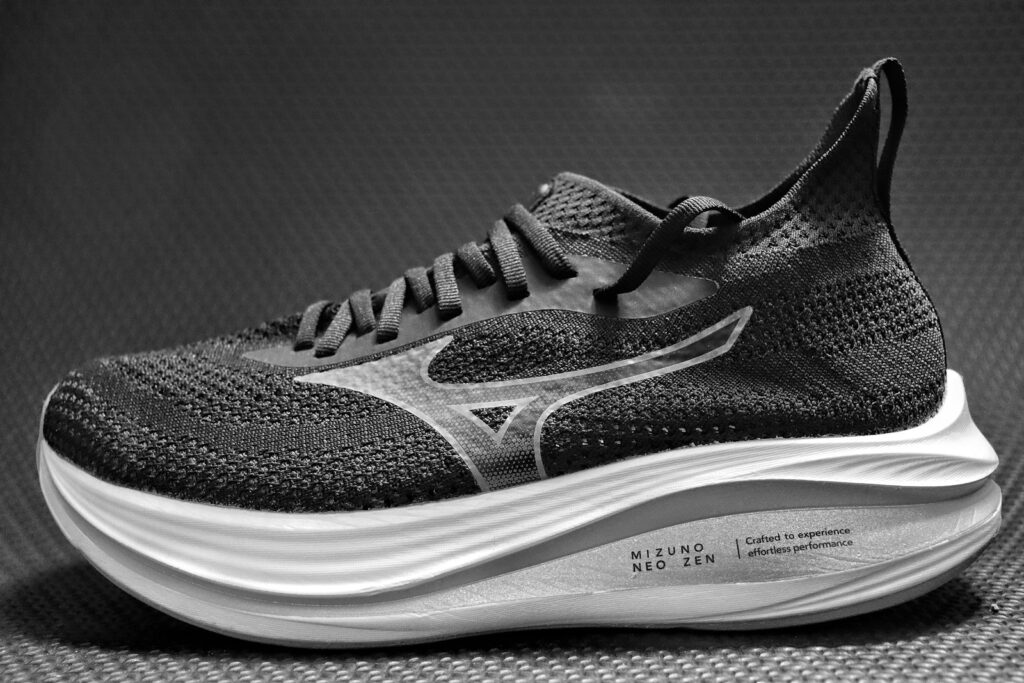
Carbon Plate Running Shoes for the Great North Run 2026: Nike Just Halved the Vaporfly to £128 – and the 4% Was Never Measured at Your Pace
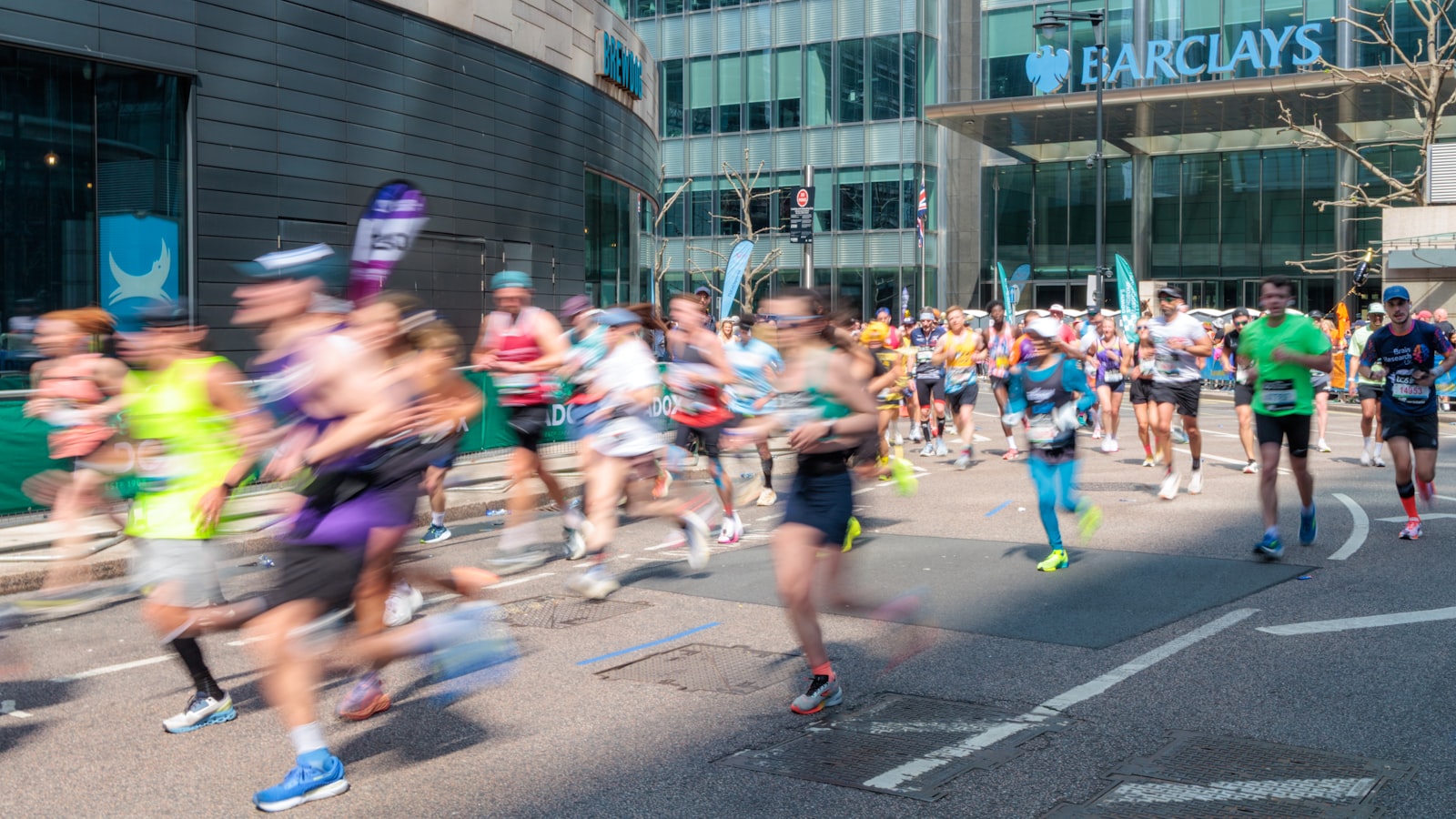
Around 60,000 people will cross the Tyne Bridge on Sunday morning, and a surprising number of them will be wearing £250 racing shoes on feet that have never run faster than nine minutes a mile. Carbon plate running shoes have gone from a curiosity worn by Eliud Kipchoge to the default footwear of the mass-participation start pen in about seven years. And in July, Nike quietly cut the price of its Vaporfly 4 by half, which means the question for anyone lining up at the Great North Run this weekend has shifted from “can I justify it?” to “is there any reason not to?”
In This Article
- The 4% was measured on 18 fast men running at 5:20 a mile
- What carbon plate running shoes actually do at a two-hour half marathon pace
- Five navicular fractures and a lawsuit
- The knock-off shoe that ran exactly as fast
- £128 Vaporfly, £120 Decathlon, £285 Alphafly: what’s actually worth it this week
- Who should race South Shields in their ordinary trainers
There are a few. The famous 4% figure was never measured on anyone running your pace. The injury evidence is thin but real. And one of the more entertaining trials of the last two years suggests a good chunk of what recreational runners feel in these shoes is the label rather than the foam.
None of that means don’t buy them. It means buy them for the right reasons, and know which version of the promise you’re actually getting.
The 4% was measured on 18 fast men running at 5:20 a mile
The number that launched the whole category comes from a 2018 paper in Sports Medicine by Wouter Hoogkamer and colleagues at the University of Colorado. They put 18 high-calibre male distance runners on a treadmill at 14, 16 and 18 km/h in a prototype Vaporfly, then in two of the best racing flats of the day, and measured how much oxygen each shoe cost them. The Vaporfly came out about 4% more economical on average. Nike had already printed “4%” on the shoe before the paper was published, which tells you something about how the marketing and the science were sequenced.
Look at those speeds for a second. 18 km/h is 5:22 per mile. Even the slowest test pace, 14 km/h, is 6:54 per mile, which would get you round the Great North Run in about 1:30. Most people on the Newcastle start line on Sunday will finish somewhere between 2:00 and 2:45. The original evidence simply doesn’t cover them.
A follow-up from Dustin Joubert’s lab at Stephen F. Austin University filled in the gap in 2022, and the picture changes. At 12 km/h (eight-minute miles) a Vaporfly Next% 2 improved running economy by roughly 1.4%. At 9.7 km/h, ten-minute miles, the gain was just under 1%. The shoes still work at slower speeds, but the benefit roughly quarters. That’s partly physics: the plate and the springy PEBA foam return more energy when you load them harder and bounce off the ground faster. At a shuffle, there’s less to return.
And running economy isn’t finish time. A 1% improvement in oxygen cost tends to translate into a slightly smaller improvement in race pace. For a 2:15 half marathoner that’s somewhere in the region of 60-90 seconds. Real, but not the ten minutes people imagine when they hand over £250.
Footwear isn’t the only injury risk worth knowing about this year – padel injuries are now running higher than tennis, and most of Britain’s million new players haven’t noticed.
What carbon plate running shoes actually do at a two-hour half marathon pace
The mechanism matters because it explains who benefits. A super shoe has two ingredients. The first is a thick slab of low-density foam (Nike’s ZoomX, Saucony’s PWRRUN PB, Puma’s Nitro Elite and so on) that compresses and rebounds with far less energy lost than the EVA in a normal trainer. The second is a stiff, curved carbon plate running the length of the sole. The plate isn’t a spring. It works more like a lever, stiffening the shoe so your toes don’t have to bend as much at push-off, which saves a small amount of work at the ankle and calf on every stride.
Both effects are bigger when you’re running fast with a longer stride and a forefoot or midfoot strike. If you land on your heel at a cadence of 160, with a short stride and a lot of ground contact time, the plate barely engages and you’re mostly paying for the foam. Which is still nice. It’s just not carbon.
The other thing the research keeps turning up is how wildly people vary. A 2023 study in Sports Medicine by Melanie Knopp’s group tested Kenyan world-class runners alongside European amateurs and found individual responses ranging from a double-digit improvement in economy to actually getting worse in the super shoe. The word “responder” has crept into running forums for a reason. Some people get 6%. Some get nothing. You can’t tell which you are from a spec sheet, and neither can the shop.
If you’ve done a structured build like the 80/20 zone 2 approach that’s driven this year’s marathon boom, you’ll get more from the plate than someone who’s run three times a week on feel, or turned up to parkrun on Saturdays and called it training. Fitness compounds the effect. It doesn’t replace it.
Five navicular fractures and a lawsuit
The injury question is where I’d want anyone racing on Sunday to pay attention, because the evidence is thin in a specific way: it’s thin because nobody has properly studied it, not because it’s been studied and found safe.
In 2023, Adam Tenforde at Mass General Brigham published a case series in Sports Medicine describing five competitive runners who developed navicular bone stress injuries – the navicular being a small, poorly supplied bone in the midfoot that heals slowly and badly – during or shortly after switching to running exclusively in carbon-plated shoes. Two were junior elite track athletes in Europe; two were endurance athletes in their mid-30s. Five cases prove nothing on their own. But the mechanism Tenforde proposed is plausible: a rigid plate changes where the load goes in the foot, shifting stress from the toes and forefoot into the midfoot and the plantar structures, and a bone that’s suddenly asked to do a job it wasn’t doing before tends to complain.
Since then a former US college runner has filed a lawsuit against Nike claiming foot fractures caused by carbon shoes. That’s a claim, not a finding, and it may go nowhere. But the anecdotal cluster physios describe is consistent with it: midfoot pain, calf and Achilles niggles, plantar fascia flare-ups in people who bought super shoes and then did all their running in them.
That last part is the actual risk. These are racing shoes. The people who get hurt are largely the ones who treat a Vaporfly as a daily trainer because it was expensive and feels nice. If you’ve done your long runs in something ordinary and you pull the racers out for a couple of sharpening sessions and the race itself, the injury evidence is close to zero. If you’ve been running 40 miles a week in them since June, that’s a different conversation. We covered a similar dose problem with Hyrox and its unquoted injury rate a fortnight ago; the pattern with kit is always the same. Tools built for the fittest people on earth get sold to everyone else with the warning label removed.
Shoes are only half the preparation; our guide to running gels for a half marathon covers the fuelling rule most runners get wrong too.
The knock-off shoe that ran exactly as fast
This is my favourite study of the category and it’s the one the brands would rather you didn’t read. In early 2025, a team at the University of Otago published a trial in Footwear Science titled, with admirable directness, “Are super shoes a super placebo?” They took 24 female recreational runners and had each of them run in two pairs of Nike Vaporfly Next% 2. One pair was presented as the elite performance shoe. The other pair was the identical shoe, spray-painted black and described as a knock-off.
Physiologically, nothing separated them. Oxygen consumption, energy cost, joint angles at the hip, knee and ankle – all the same, because it was the same shoe. But 87.5% of the runners preferred the “real” pair. They rated it more comfortable, said the running felt easier and more enjoyable, and thought they’d performed better and were less likely to get injured in it.
You can read that two ways. The cynical reading is that a good part of the £250 buys a feeling. The more generous one, and the one I’d actually argue, is that feeling matters over 13.1 miles. If a shoe makes mile ten feel less grim, you’ll hold pace better through the long drag up to the coast at mile 11, and that’s worth something even if the metabolic gain at your speed is 1%. Placebo is still performance. It’s just cheaper to buy than you’d think.
Here’s the contrarian bit, then. For most people finishing over 2:15, I think the super trainer, not the super racer, is the better purchase. Something like a Saucony Endorphin Speed with a nylon plate, or an Adidas Adios Pro-adjacent trainer with a full PEBA midsole and a softer plate, gives you most of the bounce, most of the feeling, and all of the durability, for £170-ish rather than £280. The full carbon racers exist to shave seconds off elite finish times. At eleven-minute miles they’re mostly a very fast-looking way to spend money.
£128 Vaporfly, £120 Decathlon, £285 Alphafly: what’s actually worth it this week
The price story is the one bit of real news in 2026. The Vaporfly 4 launched at £259.99 last year. In July, Nike cut it to £127.99 for the men’s version and £107.99 for the women’s, and it’s been sitting at £119 to £130 on the price-comparison sites since, with most sizes in stock. That’s a shoe that was the racing benchmark twelve months ago, now cheaper than a lot of ordinary daily trainers. Nobody is entirely sure whether this is Nike clearing stock ahead of a Vaporfly 5, responding to Puma and Adidas eating its share, or something else. I don’t know either. But the discount is real and it’s on the current model, not old stock.
At that price the maths changes. A 1% economy gain for £128 is a much easier sell than for £260, and the durability problem (more on that in a moment) stings less.
The Alphafly 3, Nike’s max-stack marathon shoe, is still £284.99. Unless you’re chasing a time under 1:30, it isn’t the shoe for you. It’s heavier, it’s less stable at slower cadences, and the extra foam that makes it magic at Kipchoge’s pace makes it feel like running on a mattress at yours.
Decathlon’s Kiprun range is the other one to know about. The KD900X.2 is £119.99, the newer KD900X LD £159.99, and the reviews from Women’s Running and Coach are consistent: the LD is a proper carbon racer with a soft, springy midsole that gets within touching distance of the big names, and the .2 is firmer, more durable and very good as a fast training shoe. They don’t have the Vaporfly’s feel. But if the placebo study taught us anything, feel is partly whatever the label says it is.
Two more things before you tap your card. First, World Athletics caps road-racing shoes at 40mm of stack height and one plate, and while the Great North Run doesn’t check this for mass-participation runners, every mainstream super shoe is built to that limit, so you can ignore anyone selling you something taller. Second, these foams wear out. Testing on prototype PEBA shoes found energy return dropped about 2.2% after 450km of use, while a standard EVA trainer lost nothing measurable. The usual advice of 150 to 250 miles of peak performance is roughly right. Do the maths on that: if you’ve bought them in August and trained in them daily, the shoe you race in on Sunday is already past its best.

Who should race South Shields in their ordinary trainers
Not everyone in the start pen on Sunday should be in a plated shoe, and the people who most need to hear that are the ones who bought them last week.
If you’ve never run in them, don’t debut them at the Great North Run. The stiff plate and high stack change how your calves and feet load, and thirteen miles is a long way to find out your Achilles disagrees. Anyone who’s had a stress fracture in the foot, an ongoing plantar fascia problem, or a history of Achilles tendinopathy should be talking to a physio before they race in carbon at all; that’s the group Tenforde’s case series was quietly warning. Heavier runners tend to compress the foam past its sweet spot and get less back from it. And if you’re walking sections, which a good proportion of the field will do and which is a perfectly respectable way to cover the distance (the step-count data says the benefit of moving stops caring how you got there), a plate does nothing for you at walking pace and the narrow, unstable heel is a liability on the camber.
The NHS’s own guidance for new runners is refreshingly unbothered by any of this. Its advice is to get properly fitted for a pair that suits your gait and to build up gradually, which remains the single biggest lever on both your time and your injury risk. A runner who’s trained consistently in £90 Brooks will beat one who’s done half the mileage in £280 Alphaflys every single time. It’s not close.
There’s a decent chance that within a couple of years this whole conversation feels dated, because the foam that makes these shoes work is already trickling into daily trainers at £120, and the plate is turning out to be the less important half of the recipe. In the meantime, the honest position for Sunday is this: if you’ve trained well, run a few sessions in them, and can get a Vaporfly for £128, go for it and enjoy the bounce. If you’ve bought them to make up for the long runs you skipped in August, they won’t.
At least a carbon plate does something measurable under load. The same can’t be said for every piece of kit promising a shortcut – we ran the trial evidence on whether vibration plates actually do anything and the case for passive effort held up a lot worse than the case for a £250 shoe.
Which brings me to the question I’d like answered by anyone reading this on the Metro to Newcastle: when you race in carbon, do you actually feel faster, or do you just feel like someone who should be?