
Padel Injuries Run Higher Than Tennis in 2026: 3 per 1,000 Hours, and Britain’s Million New Players Haven’t Noticed
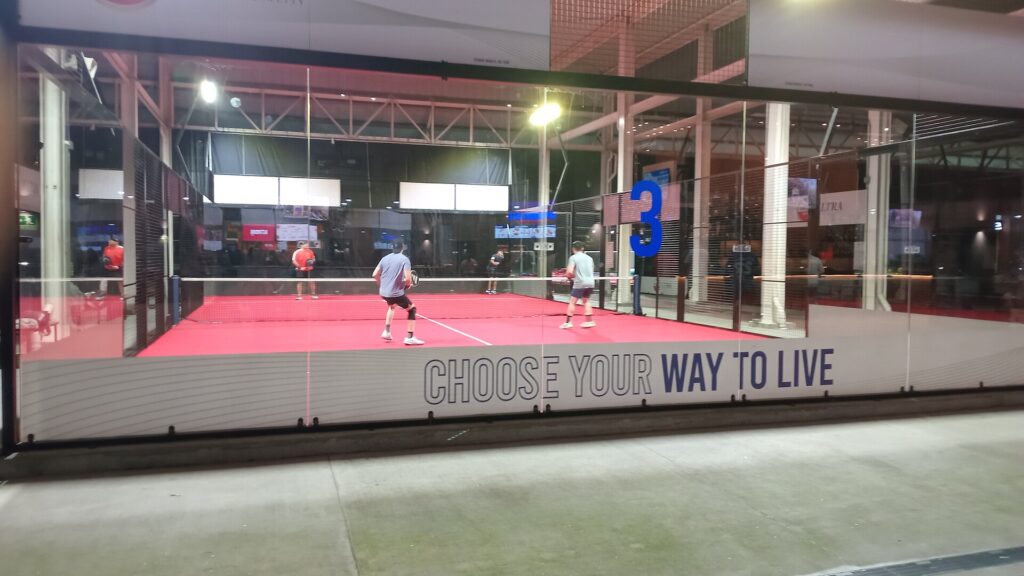
Britain passed a million padel players in May. The number of people who’ve been told by a physio to stop playing for six weeks is not a figure anyone publishes, but spend ten minutes in a clinic waiting room in Wandsworth or Sale and you’ll get a rough sense of it. Padel injuries are now common enough that “padel elbow” and “padel shoulder” have become working shorthand in UK physiotherapy practices, and the best available research puts the sport’s injury rate above tennis.
In This Article
- Three per 1,000 hours doesn’t sound like much until you do the sums
- Padel elbow isn’t the same animal as tennis elbow
- The 350-gram line, and why your expensive racket might be the issue
- Then there’s the glass
- Padel injuries below the waist get less attention and cost more time
- Men and women don’t break in the same places
- What actually helps, and the £75 screening that probably doesn’t
- None of this is an argument against padel
That’s the bit nobody mentions when the courts go up behind the leisure centre.
A scoping review published in March 2026 in Applied Sciences pulled together the padel injury literature – 14 studies, 3,581 players – and the headline numbers are worth sitting with. Roughly 3 injuries per 1,000 hours of play and 8 per 1,000 matches. For comparison, the same review notes tennis runs somewhere between 0.04 and 3 injuries per 1,000 hours. Padel sits at the top of that range and keeps going.
Three per 1,000 hours doesn’t sound like much until you do the sums
Take a fairly typical club player. Two 90-minute sessions a week, most weeks, with a few gaps for holidays and one for a wedding in Yorkshire. That’s about 130 hours a year. At three injuries per 1,000 hours you’d expect roughly one injury every two and a half years, which sounds survivable.
But the prevalence data tells a less comfortable story. One of the studies in the review found 40% of players reported at least one injury in the previous year. A Swedish study of 274 players found 250 of them – that’s 91% – had sustained at least one injury in just the previous six months, adding up to 663 injuries between them. And a survey of 228 padel coaches found 76% had been hurt while coaching.
Why the enormous spread between 40% and 95%? Because “injury” isn’t defined the same way twice across this literature. Some studies count anything that made you stop playing. Others count any ache you’d mention to a GP. The review’s authors are honest about it, flagging “variability in data collection methods, small sample sizes, or the absence of standardized diagnostic criteria” as reasons the figures refuse to line up.
So treat the precision with suspicion. Treat the direction of travel as real.
Padel elbow isn’t the same animal as tennis elbow
Both land in the same place – the outside of the elbow, the extensor carpi radialis brevis tendon, the thing that screams when you turn a door handle. The review found the elbow was the single most commonly injured region in the upper limb across the studies it examined, with the shoulder second, and tendon tissue the most affected tissue type overall.
Where padel differs is how you get there. Tennis loads the elbow through a long lever and a big swing. Padel gives you a short, solid, stringless bat and a court where the ball comes back off glass at odd heights, which means an enormous number of small, fast, wrist-led corrections. The bandeja – that flat overhead you’re supposed to hit with a firm wrist and a shoulder-led swing – is where most recreational players quietly cheat, flicking with the forearm because it’s easier and the ball still goes over. Do that four hundred times on a Thursday night and the tendon starts keeping score.
The good news, sort of, is that this heals. NHS physiotherapy services put spontaneous recovery from lateral elbow tendinopathy at around 80-90% of cases, with about 90% of people fully recovered within a year. The bad news is buried in the same guidance: it can take between six months and two years to improve, and the specific loading exercises need six to eight weeks before you notice anything and three months to actually stick.
Six weeks of doing your exercises and feeling no different is where most people give up. That’s the whole problem.
The 350-gram line, and why your expensive racket might be the issue
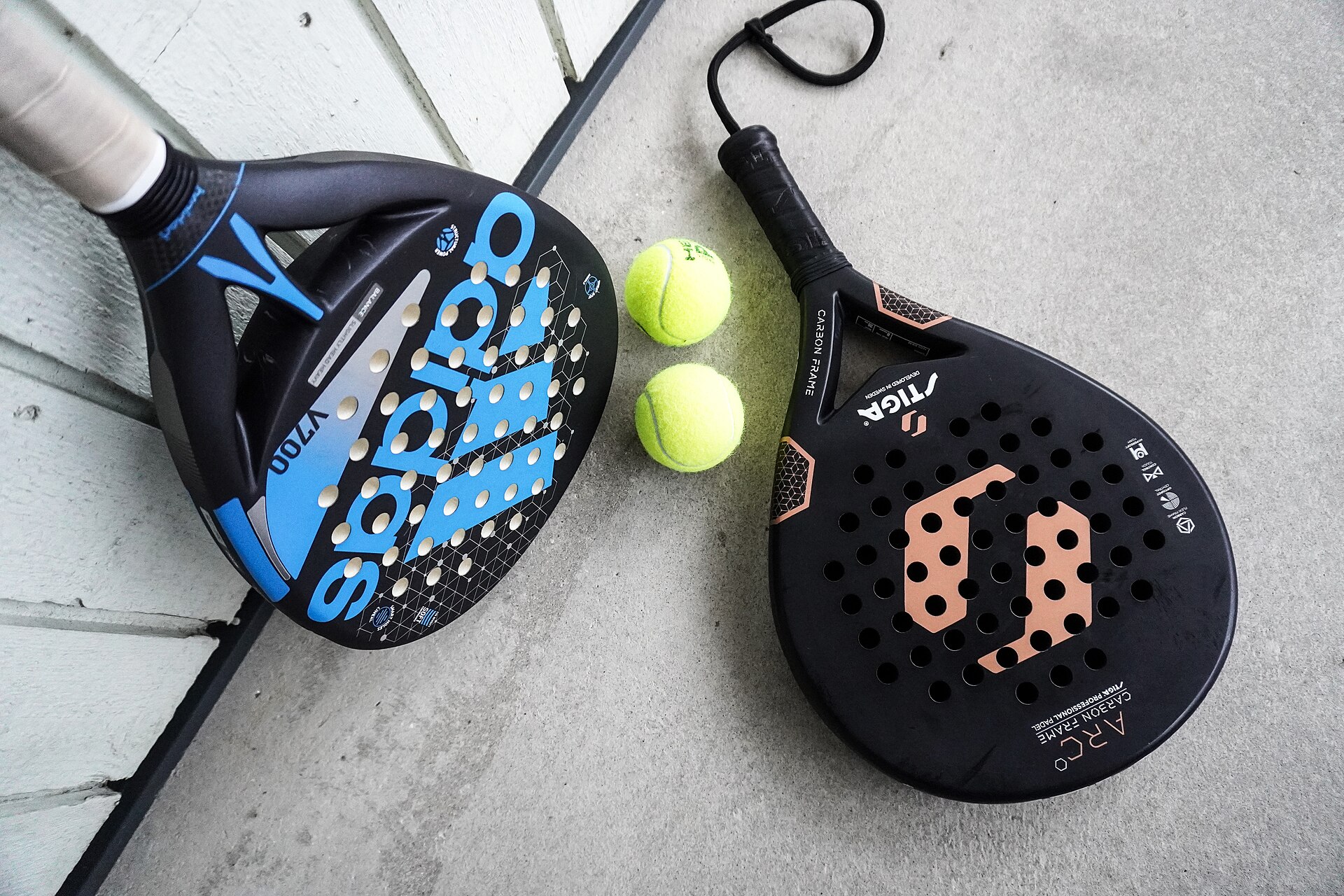
Here’s the finding from the review that I think should be printed on a card and handed out at every venue: injury occurrence is higher in amateur players using a racket weighing more than 350 grams.
That’s it. That’s the intervention. It costs nothing and nobody talks about it, because pro-shop margins live in the £180-£300 carbon range and those rackets tend to be heavy, hard and completely wrong for someone who plays twice a week and has a desk job.
I’d go further than the review does here, and this is opinion rather than evidence. The heavy diamond-shaped carbon bat is a status object in British padel. It gets bought by intermediate players who want to hit a smash like the bloke on Instagram, and it punishes exactly the technique flaws that intermediate players have. A round-shaped, softer, 355g-and-under racket – the sort you find in Decathlon for well under a hundred quid – is a better buy for about 80% of the people currently holding something else. Nobody will tell you this at the club because nobody sells those at a decent margin.
The review also found grip-related differences by sex: female players using soft, round rackets and male players using harder ones each reported particular hand problems more often. Grip size gets similarly ignored. If you’re strangling the handle because it’s too thin, your forearm is doing work your shoulder should be doing.
Then there’s the glass
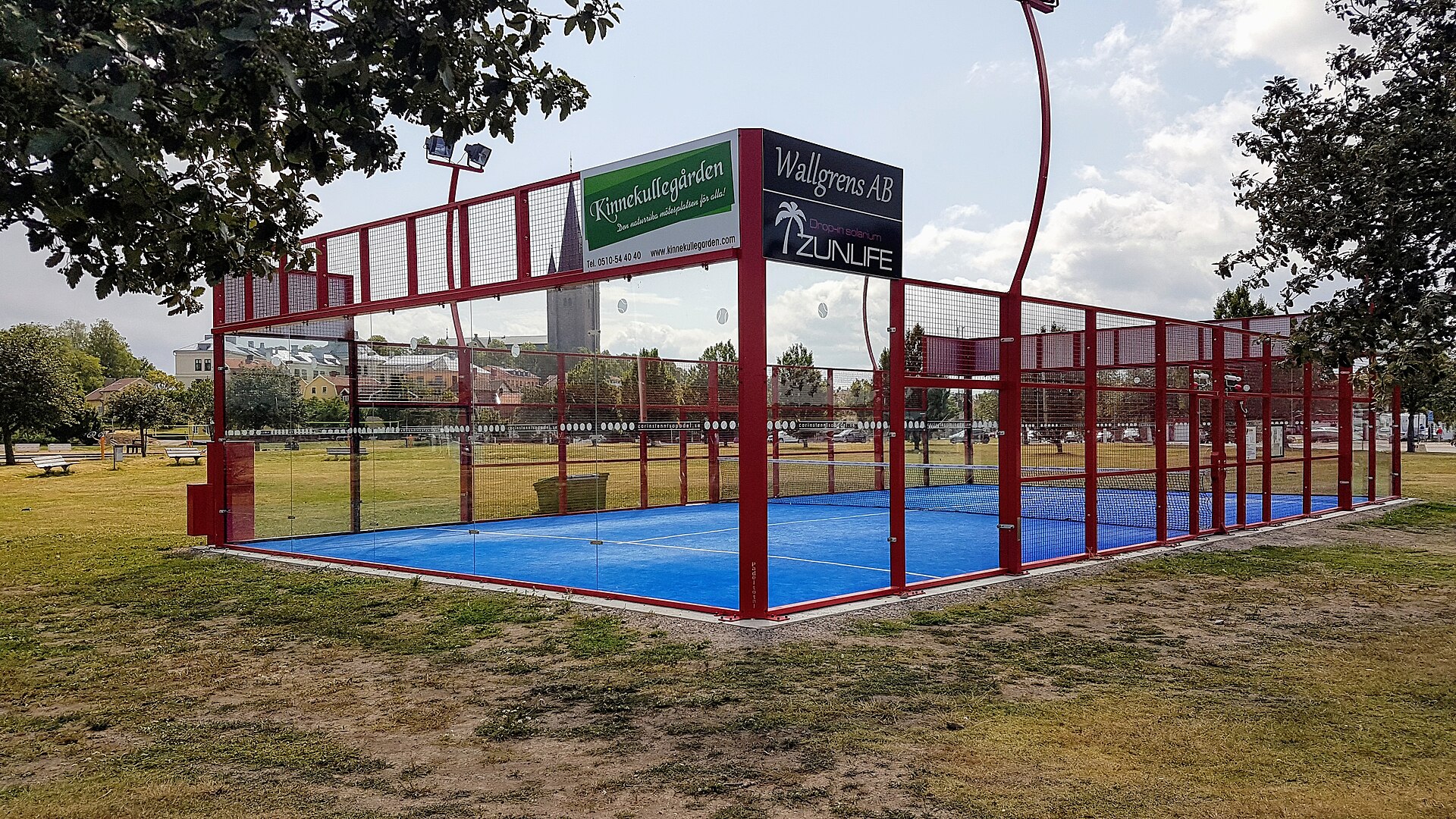
Padel’s walls are the reason the sport is fun and the reason it produces injuries no other racket sport does at the same rate.
A Swedish study included in the review looked at a registry of 255 eye injury patients and found roughly 100 of those cases came from padel, with the ball the most frequent cause. Most were classified as moderate. But 4% of patients had long-term or permanent effects. A separate Italian study looked at 16 players who sustained maxillofacial injuries in a single year – every one of them caused by the racket rebounding off the glass wall.
Nobody in Britain wears eye protection at padel. I’ve played at four clubs this year and seen it exactly once, on a chap in his sixties who’d clearly had a bad experience. Squash went through this – the sport’s governing bodies pushed protective eyewear hard after a run of serious injuries, and it’s now standard at junior level and common among adults. Padel hasn’t had that reckoning yet, partly because the sport is too new and too socially pleasant for anyone to want to be the person raising it.
It’ll happen. It’ll take a high-profile case, probably involving a junior, and then everyone will act as though it was obvious all along.
Padel injuries below the waist get less attention and cost more time
Everyone talks about the elbow. The knee and the ankle are what actually keep people off court for months.
The review found the knee and ankle were the most affected lower-limb joints, with ligament injuries the most frequent type – the anterior cruciate ligament at the knee, the posterior talofibular ligament at the ankle. The Swedish player study found the knee was the most affected region from overuse, while foot and ankle injuries were associated with the greatest pain.
The mechanism isn’t mysterious. Padel courts are small, and the game is built on short, sharp changes of direction, backward scrambles towards the glass and a lot of deceleration on a surface that can be inconsistent depending on how the silica sand has been distributed and when it was last brushed. Almost all the injuries described across the studies were non-contact. That matters, because non-contact means modifiable – conditioning, technique, fatigue and equipment are all things you can change.
The single most useful thing you can do for your knees and ankles isn’t a padel-specific drill at all. It’s having enough lower-body strength that a sudden change of direction isn’t a novel event for your legs. Two sessions a week of squats, split squats and calf raises does more than any warm-up routine. It’s dull, and it’s why so few people do it. Runners have worked this out – it’s the same logic that drives the strength work sitting underneath zone 2 training and the training blocks behind Hyrox.
Men and women don’t break in the same places
The evidence here is a mess, and I’d rather say so than pretend otherwise.
A study of 950 amateur players found men more often reported muscular and ligament injuries at the shoulder plus tendon injuries at the elbow, while women more often reported muscular shoulder injuries, elbow ligament injuries and bone injuries in the wrists and hands. Same study: the elbow was the most affected region in men, the shoulder in women. A 2025 survey of 304 players reported upper-limb ligament and muscle injuries in 44.6% of women against 8.2% of men, which is a gap large enough that you want to see it replicated before building anything on it.
And the review contradicts itself on the headline. Its results section says injury incidence was higher in women while prevalence was higher in men. Its conclusion says incidence was higher in men. The authors also disclose that study selection and data extraction were done by a single reviewer, that the protocol wasn’t registered in advance, and that the methodological quality of many included papers was moderate or low.
Which is to say: the sex differences are probably real in some form, and anyone quoting a specific percentage at you with confidence hasn’t read the paper.
What actually helps, and the £75 screening that probably doesn’t
UK clinics have moved fast on this. Several London practices now offer a padel-specific movement screen – the “padel MOT” and variations on it – typically somewhere around £70 to £120 for an hour.
My honest view: for most recreational players that’s money better spent on four coaching sessions. A screen tells you your left ankle is stiff and your shoulder external rotation is weak. It doesn’t stop you flicking the bandeja with your wrist. A decent coach watching you play for an hour will spot the technique fault that’s actually loading the tendon, and technique is the thing the research keeps pointing at. If you’ve already had a significant injury, or you’re playing four-plus times a week, the screening starts to earn its keep. Below that, it’s a well-designed product solving a problem you don’t have yet.
What the review’s authors do recommend, and what’s free or nearly free:
- Progressive load management – don’t go from once a week to four times a week in a fortnight because a court finally opened near you. Rapid increases in load are directly linked to raised injury risk.
- Strength work for the shoulder and lower limb, done consistently rather than heroically.
- Coaching on deceleration and change of direction, which is the bit nobody thinks of as coachable.
- A structured warm-up, adapted to your level. Five minutes of hitting is not a warm-up.
- Footwear built for multidirectional movement, not running shoes. And check the sand on the court before you play – uneven or thin sand is a slipping hazard the venue should be fixing.
On recovery: the review notes the old R.I.C.E. approach has been overtaken by an emphasis on protection and optimal loading rather than prolonged rest. Doing nothing for three weeks and hoping is not a plan. Nor, for what it’s worth, is the ice bath – the evidence on cold water for recovery is thinner than its popularity suggests.
One more thing worth saying plainly. Elbow straps and clip-on braces sell in enormous numbers and they’re symptom management, not treatment. They can let you keep playing while the tendon stays exactly as unhappy as it was. If you need one to get through a match, that’s information about whether you should be playing that match.
None of this is an argument against padel
The sport got a million British people onto a court, roughly two-thirds of whom also play tennis, in a country where getting adults to do anything twice a week is close to impossible. It’s sociable, the barrier to entry is low, and it’s produced more genuine new participation than any fitness trend of the last five years. We’ve written before about why padel took over Britain, and the appeal is real.
The risk is just that the sport’s growth curve has outrun its safety culture. There were 15,000 players in 2019 and there are a million now, spread across 1,825 courts at 551 venues. Most of those players learned from a mate rather than a coach, most are between 35 and 45, and a good number are coming back to competitive sport after a decade of not doing very much. That’s a population primed for tendon problems, and it’s the same pattern that shows up whenever a low-barrier activity scales quickly – the crowd arriving at reformer Pilates studios has a version of it too.
If you’re one of the million: weigh your racket, watch your bandeja, and do your legs twice a week. That’s most of it.
The question I keep coming back to is the eyewear one. Squash needed a decade and several serious cases before goggles became normal. Padel has more players, more glass and a ball that comes back at you from angles you can’t always see – so what will it take before someone at your club is the first to put a pair on?
Sources: Aguilar-Núñez, D. et al., “Epidemiology, Incidence, Prevalence, and Treatment of Injuries in Padel: A Scoping Review”, Applied Sciences 2026, 16(6), 2680; LTA, “1,000,000 padel players in Britain”, 15 May 2026; NHS Lanarkshire MSK Physiotherapy, tennis elbow guidance.