
How Many Steps a Day Actually Matter in 2026: The 10,000 Target Was a 1965 Advert – and the Lancet Data Stops Paying at 7,000
The number on your wrist was chosen because it looked good on a dial. Not by a doctor, not by a study, but by a Japanese clock company in 1965 that needed a name for a new pedometer. They called it the Manpo-kei, the “10,000 steps meter”, and sixty years later that marketing decision is still telling a nurse in Doncaster she’s failed because she finished the day on 8,400.
In This Article
- Where the 10,000 figure came from (and why it stuck)
- How many steps a day the evidence actually supports
- The Steptember target is 5,500 a day – and it isn’t a cop-out
- Long walks beat scattered steps, and the tracker can’t tell the difference
- Who should ignore the 7,000 figure altogether
- The £300 watch is the least useful part of this
- What I’d actually aim for this autumn
So how many steps a day actually matter? Since July 2025 there has been a proper answer, and it isn’t 10,000. The biggest review ever done on the question, published in The Lancet Public Health, put the point where the health returns flatten out at about 7,000. Below that, every extra thousand steps buys you something measurable. Above it, you’re mostly paying for bragging rights.
That matters this month more than most. September is when Britain’s step-count challenges kick off, the schools go back, the commute restarts and a few million Fitbits get dusted off after a summer of sitting in beer gardens. If you’re going to pick a daily number to chase for the next four months of shortening days, it should be one the evidence supports.
Where the 10,000 figure came from (and why it stuck)
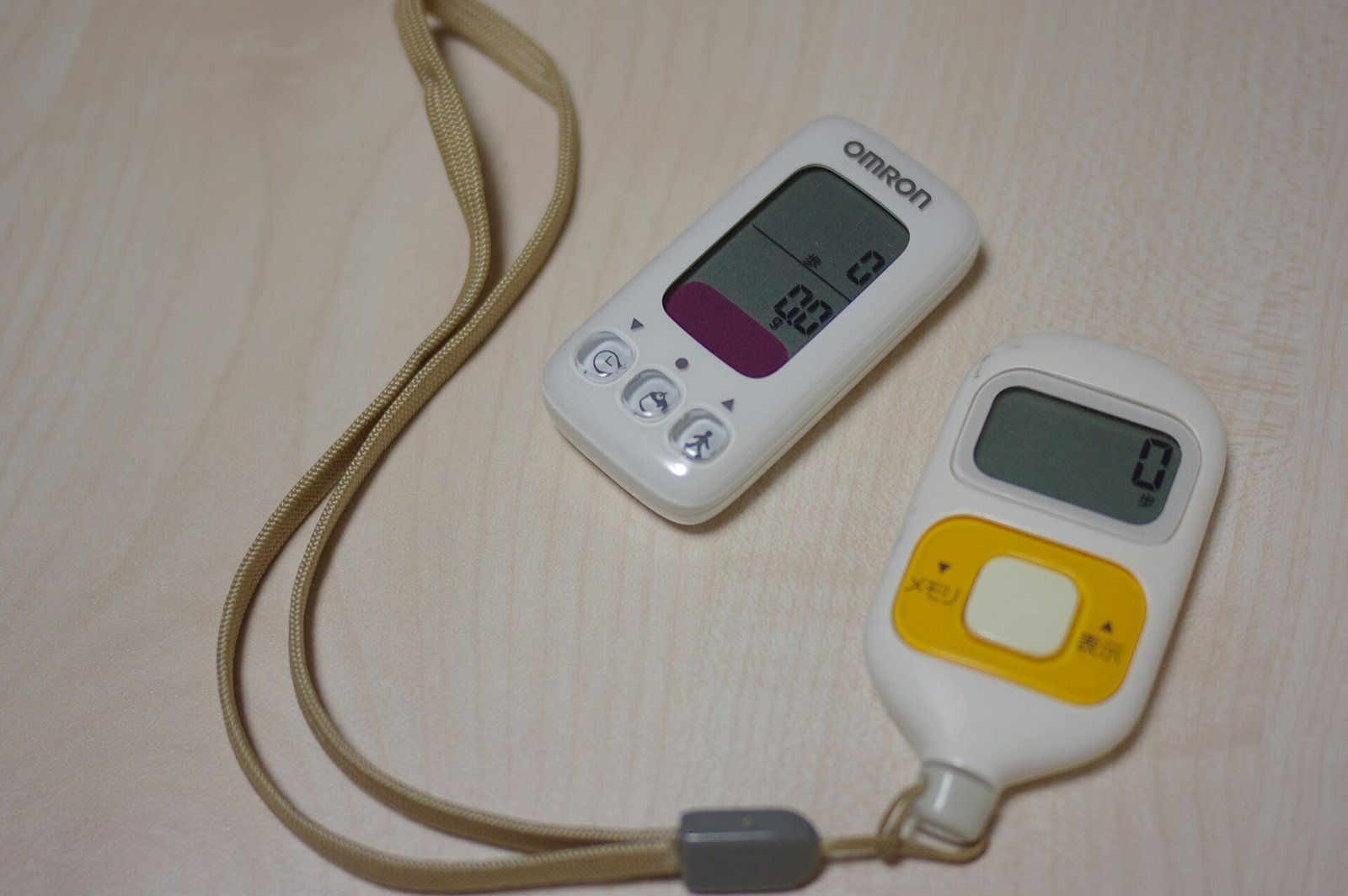
The 1964 Tokyo Olympics had just finished and Japan was in the middle of a national fitness moment. Yamasa Tokei, a maker of clocks and measuring instruments, launched a clip-on step counter and needed a hook. The kanji for 10,000 suggests abundance and completeness, the number is easy to remember, and it fitted the face of the device. That was the whole basis. There were no trials showing 10,000 did anything that 8,000 or 6,000 didn’t, because nobody had run any.
The figure then did what round numbers do. It got copied into pedometer manuals, then into the default settings of Fitbit, Garmin and Apple Watch, then into corporate wellness schemes and NHS leaflets, and by the 2010s it had the status of a medical guideline without ever having been one. Ask most people where it comes from and they’ll guess the WHO. The WHO has never recommended a step count.
And the honest version of the story is that for a long time nobody could check it, because the studies didn’t exist. Wearable accelerometers only became cheap enough to hand out to tens of thousands of people in the mid 2010s. The UK Biobank fitted about 100,000 volunteers with wrist trackers between 2013 and 2015, and most of what we now know about steps and mortality comes from that cohort and a handful like it in the US, Japan and Scandinavia. The data arrived roughly fifty years after the advert.
If you’re chasing other low-effort wellness wins, we’ve also looked at the evidence behind cold water swimming – and who should stay on the beach.
How many steps a day the evidence actually supports
The Lancet Public Health review, led by Professor Melody Ding at the University of Sydney, pulled together 57 studies from more than ten countries, the UK included, and did something the earlier work hadn’t. Rather than looking only at death rates, it mapped step counts against eight separate outcomes: all-cause mortality, cardiovascular disease, cancer, type 2 diabetes, dementia, depressive symptoms, falls and physical function. Then it plotted the dose-response curve for each one, in 1,000-step increments, starting from a baseline of 2,000 steps a day.
The headline number is the one you’ll have seen in the papers. Compared with 2,000 steps, people averaging 7,000 had a 47% lower risk of dying during follow-up. Walking 10,000 gave almost exactly the same figure. Dementia risk fell 38% at 7,000 steps, and going to 10,000 bought only a further 7%. For type 2 diabetes the curve kept sloping a little longer, 22% lower at 10,000 and 27% at 12,000, which is one of the few outcomes where the extra steps carry on paying.
But the shape of the curve is the real finding, not any single point on it. The steepest gains sit between 2,000 and 5,000 steps. The curve is still rising between 5,000 and 7,000. Past 7,000 it goes almost flat for most outcomes, and by 10,000 to 12,000 the confidence intervals get wide enough that the researchers stop drawing firm conclusions.
Professor Steven Harridge, professor of human and applied physiology at King’s College London, was one of the experts asked to comment through the Science Media Centre when the paper came out. His summary was blunt: the paper shows 7,000 steps is enough to cut risk for most of the diseases covered, and 10,000 “does not confer much additional benefit”. Dr Daniel Bailey at Brunel University of London went further, calling the 5,000 to 7,000 range “an important addition to the literature which helps to debunk the myth that 10,000 steps per day should be the target”.
Seven thousand steps, for reference, is roughly 5.5 kilometres or three and a half miles. At a normal pace that’s about 70 minutes of walking spread across the day. A commute with a station at each end, a lunchtime loop and a walk to the shop gets most people there without ever putting trainers on.
The Steptember target is 5,500 a day – and it isn’t a cop-out
The Children’s Heart Surgery Fund runs a September challenge called STEPtember, which asks you to cover 125km over the month. That’s just over 4km a day, or somewhere around 5,500 steps for most adults. The 125 is there because one in 125 babies in the UK is born with congenital heart disease. Age UK and Walking Scotland run step challenges of their own, and every large employer seems to have one now, usually with a leaderboard nobody asked for.
A year ago I’d have said 5,500 sounded a bit soft as a target. Having read the curve properly, I’ve changed my mind.
Sport England’s latest Active Lives survey, published in April, found 24.7% of adults in England doing less than 30 minutes of physical activity a week. That’s around one adult in four whose daily count is likely sitting somewhere between 2,000 and 4,000. For that group, the Lancet data says the jump to 5,000 or 5,500 is the single most valuable step change on the whole chart. It’s worth more, in risk terms, than the jump from 7,000 to 10,000 is for someone already active. Professor Ding’s own line was that even going from 2,000 to 4,000 “is associated with significant health gain”.
So if the corporate challenge or the charity walk gets a sedentary person to 5,500 for a month, it has done the important bit. The people who should feel slightly silly are the ones already on 8,000 who are pacing the kitchen at 11pm to round up.

Long walks beat scattered steps, and the tracker can’t tell the difference
Here is the bit the step-count apps don’t show you. Three months after the Lancet paper, the same Sydney group published a follow-up in the Annals of Internal Medicine that looked at how steps were accumulated rather than just how many. They took 33,560 UK Biobank participants aged 40 to 79 who were all under 8,000 steps a day, and sorted them by the length of their longest daily walk.
Over about eight years, those whose longest continuous walk was 10 to 15 minutes had a 4% rate of major cardiovascular events. Those whose longest walk was under five minutes, the classic pottering-about-the-house pattern, sat at 13%. Among the least active people in the study, those under 5,000 steps a day, the rate roughly halved, from 15% to 7%, just by moving the steps into one sustained bout.
Same steps. Different pattern. Triple the difference in outcome.
This lines up with what physiologists have said for years and what the cadence data in the Lancet review also found: faster stepping over a sustained 30-minute period carried additional benefit beyond raw volume. Your tracker counts a lap of the kitchen island and a brisk mile across the park identically. Your heart doesn’t. If you’re going to hit 7,000, try to make at least 15 minutes of it one uninterrupted walk at a pace where talking is slightly harder than usual. The NHS Active 10 app does this specific job well and is free, which is more than can be said for most of the step-tracking market.
Who should ignore the 7,000 figure altogether
Meta-analyses average across populations, and averages hide a lot. Four groups should read the 7,000 number with a raised eyebrow.
The first is anyone over 60. An earlier Lancet Public Health meta-analysis from 2022, covering 15 cohorts and about 47,000 adults, found the mortality plateau arrives sooner with age: somewhere between 6,000 and 8,000 steps for over-60s, and between 8,000 and 10,000 for under-60s. The 2025 review didn’t overturn that. If you’re 68 and walking 6,500 a day, you’re probably on the flat part of your curve already. If you’re 35, your curve keeps climbing a little longer, and 8,000 to 9,000 is a more defensible target.
The second is cyclists, swimmers and rowers. Dr Andrew Scott, senior lecturer in clinical exercise physiology at the University of Portsmouth, made the point that these activities are simply not captured by steps at all. A 40-minute bike commute registers as almost nothing on a wrist tracker and does more for your cardiorespiratory fitness than 7,000 steps of ambling. Judge yourself on minutes and effort instead, or look at the 80/20 zone 2 approach that the marathon crowd have been using for the same purpose.
The third is desk workers who sit nine hours a day and reckon a lunchtime walk cancels it out. The evidence here is better than it used to be. A University of Sydney analysis of 72,000 UK Biobank participants found that higher step counts reduced mortality and cardiovascular risk at every level of sitting time, with the biggest gains between 9,000 and 10,000 steps for the most sedentary. So the walk helps, and it helps a lot. But that group needed nearer 10,000 than 7,000 to get the same protection as people who sat less. Sitting isn’t fully cancelled by steps; it just costs more steps to offset. The other fix for that group is walking during the work itself, which is where a walking pad under the desk earns its keep.
The fourth is anyone with a diagnosed chronic condition. Dr Bailey was clear that the reviewed studies were in generally healthy people, and the findings can’t be lifted straight across to someone with heart failure, COPD or a joint replacement. If that’s you, the target is whatever your consultant or physio gave you, not a number from a newspaper.

The £300 watch is the least useful part of this
Time for the unpopular bit. The single worst outcome of the 10,000-step era wasn’t the number. It was the idea that you need a device to hold you to it.
Every phone sold in the last decade has an accelerometer and a step counter built in, usually buried in the Health or Fitbit app you’ve never opened. For counting steps it’s about as accurate as a £300 Garmin, and studies comparing wrist and pocket devices generally find the phone slightly undercounts because you don’t carry it everywhere, which for this purpose is a rounding error. The watch adds heart rate, sleep scores and a lot of notifications. It doesn’t add a single step.
And there’s a cost to the watch that doesn’t show up on the receipt. Once a target is on your wrist, a day at 8,400 becomes a failure rather than a good day. I’ve watched colleagues take the long way to the printer, walk laps of a car park in the rain, and feel worse about a Sunday spent with their kids because the ring didn’t close. Turning a walk into admin is the fastest way I know to make someone stop walking.
If a device helps you, keep it. But set the goal to 7,000, or 6,000 if you’re over 60, turn off the daily nag, and stop treating 10,000 as the pass mark. Nobody who invented it ever expected you to.
What I’d actually aim for this autumn
Steps are a useful floor, not a ceiling. They tell you whether you’ve moved at all, which for a quarter of the country is the live question. They tell you almost nothing about whether you’re getting stronger, whether your balance is holding, or whether your grip strength is quietly falling off a cliff in your fifties. The people who’ve started strapping weighted vests on for their park walks have half-understood this: they know walking alone plateaus, they’ve just picked an odd fix.
So the version I’d give a friend goes like this. Get to 7,000 on most days, with one walk of at least 15 minutes at a pace you’d notice. Add two sessions a week of something that loads your muscles, whether that’s a gym, a Hyrox class or carrying the shopping home the hard way. Skip the machines that promise the same result while you stand still – the trial evidence on vibration plates is a lot thinner than the marketing. Stop counting on rest days. And don’t buy a £299 body scan to find out whether it’s working; the fact that you can hold a conversation at the top of a hill you used to stop on is the readout.
The 10,000 figure did one useful thing in sixty years: it got people to count. Now that we have the data the clock company never did, the question for the next four months of dark evenings is simpler. Which is the walk you’ll actually take, the 7,000 you can do every day, or the 10,000 you’ll manage twice and then quietly abandon by Bonfire Night?