

Cortisol Face: What Stress Really Does to Your Skin, and Why the £30 Fixes Won’t Touch It
Researchers at the Karolinska Institutet once kept ten volunteers awake for 31 hours, photographed them, and asked 40 strangers to rate the pictures. The sleep-deprived faces were judged to have more swollen eyes, darker circles, droopier eyelids, paler skin and sadder expressions than the same faces after a normal night (Sundelin et al, Sleep, 2013). Nobody measured anyone’s cortisol. They didn’t need to.
In This Article
- What people mean by cortisol face
- The real version: Cushing's syndrome
- Cortisol face, Cushing's or just a bad week? A quick comparison
- The half that's right: stress really does show up on skin
- The half that's nonsense
- What about ashwagandha, magnesium and the "cortisol cocktail"?
- What's really behind a "cortisol face" most of the time
- A skincare routine for stressed, tired skin
- What's being sold, and what it does
- When to stop self-diagnosing and see a GP
That study is a better explanation for most of what TikTok calls cortisol face than anything you’ll find in a “cortisol-balancing” supplement ad. The trend isn’t pure nonsense. Stress does change skin, and there’s a real, rare medical condition in which too much cortisol reshapes the face. But the version being sold to tired people in their thirties and forties – puffy cheeks and a softer jaw, fixed with a magnesium mocktail – takes a small true idea and stretches it until it snaps.
This guide separates the two halves, and it’s worth doing now. The clocks go back on Sunday 25 October, the evenings shorten, sleep gets worse for a lot of people and the mirror becomes less kind. Expect the cortisol face videos to come back with it.
What people mean by cortisol face
Cortisol is the body’s main glucocorticoid, made by the adrenal glands. It runs on a daily rhythm: it rises sharply in the half hour or so after you wake, then drifts down through the day to its lowest point around midnight. It also spikes whenever your nervous system reads a threat – a deadline, a hard training session, a row, a bad night. In short bursts it’s useful. Kept high for months, it’s a problem.
The TikTok version usually bundles together morning puffiness around the eyes and cheeks, a rounder-looking jaw, redness, dullness and breakouts along the chin. The claim is that these are the visible signature of chronically high cortisol, and that you can reverse them with breathwork, adaptogens, lymphatic massage or cutting out coffee.
Some of those symptoms genuinely are linked to stress. Most of them are also linked to five or six other, more boring things. And one of them – a face that’s actually changed shape – is a medical sign, not a lifestyle one.
The real version: Cushing’s syndrome
There is a condition where excess cortisol visibly changes the face. It’s called Cushing’s syndrome, and the NHS lists a red, round face among its main symptoms, alongside skin that bruises easily, stretch marks on the tummy, hips, breasts and under the arms, and muscle weakness at the tops of the arms and legs. Doctors call the facial change “moon face”.
The most common cause is long-term use of steroid medicines such as prednisolone, which is why anyone on steroids for asthma, arthritis or an autoimmune condition shouldn’t dismiss changes in their face. The body producing too much cortisol on its own is rare: all-cause estimates run to roughly two or three new cases per million people a year, usually from a small tumour on the pituitary or adrenal gland (Medscape).
Put that in perspective. In a country of about 69 million people, that’s somewhere in the low hundreds of new cases a year. The number of people who’ve watched a cortisol face video is not in the low hundreds.
Cortisol face, Cushing’s or just a bad week? A quick comparison
This is the table the trend should come with. It isn’t a diagnostic tool – only a GP and a blood, urine or saliva test can do that – but it shows how different the three pictures are.
| Everyday “tired face” | Stress-flared skin | Possible Cushing’s syndrome | |
|---|---|---|---|
| Timescale | Worst on waking, eases by late morning | Comes and goes with busy or difficult periods | Builds gradually over months and doesn’t ease |
| What you see | Swollen eyelids, dark circles, dull or pale skin | Breakouts, eczema or rosacea flares, redness | Rounder, red face; fat pad between the shoulders |
| Elsewhere on the body | Nothing much | Sometimes itchy or dry patches | Weight gain round the middle with thin arms and legs, purple stretch marks, easy bruising, weak thighs and upper arms |
| Likely causes | Short sleep, alcohol, salty food, lying flat, allergies | Psychological stress weakening the skin barrier | Long-term steroid medicines; rarely a gland tumour |
| What to do | Sleep, less drinking, cold water, time | Gentle routine, treat the condition, look at the stress load | See a GP, and don’t stop prescribed steroids suddenly |
The half that’s right: stress really does show up on skin
There’s solid evidence that psychological stress affects the skin, just not in the way the videos suggest. The clearest early work came from a small 2001 study at the University of California, San Francisco, in which 16 healthy female students had their skin barrier tested during exams, after a long holiday and during a calmer control period. During the stressful stretches their skin repaired itself more slowly after being deliberately disrupted, and the students whose stress levels rose most showed the biggest decline (Garg et al, Archives of Dermatology). Later animal and human work has pointed at cortisol’s role in that process, including a 2018 study in mice linking stress-related barrier damage to an enzyme that activates cortisol inside the skin itself (Scientific Reports).
A weaker barrier means drier, more reactive skin that lets irritants in more easily. That’s why stress is a well-known trigger for eczema, psoriasis, acne and rosacea flares. If your skin gets angrier every time work does, that’s not in your head. Our guide to rosacea triggers lists emotional stress near the top of the self-reported triggers for a reason.
So yes, stress shows. It shows as flare-ups, sensitivity and slower healing. What it doesn’t do in an otherwise healthy person is give you a new jawline.
The half that’s nonsense
Here’s where the trend runs off the rails. A few of the more common claims, taken one at a time.
Myth: a puffy face in the morning means your cortisol is too high. Cortisol is supposed to be high in the morning. It peaks shortly after waking whether you’re stressed or not. Morning puffiness has a simpler cause: you’ve spent seven or eight hours lying flat, so fluid has settled in the soft tissue of your face, especially under the eyes. It drains once you’re upright. If it’s gone by eleven, it was gravity.
Myth: you need to “lower” your cortisol. You don’t want low cortisol. People whose bodies can’t make enough of it have Addison’s disease, which is a serious and potentially life-threatening illness. What you want is a normal rhythm – high in the morning, low at night – and that’s mostly set by when you sleep, when you see daylight and how much recovery you get.
Myth: coffee gives you cortisol face. Caffeine does nudge cortisol up in the short term, especially in people who don’t drink it regularly. There’s no good evidence that a normal coffee habit changes the shape of anyone’s face. Caffeine taken late in the day can wreck your sleep, though, and that will show.
Myth: lymphatic face massage “drains” cortisol face. Massage, rollers and gua sha can move fluid about and reduce puffiness for an hour or so. That’s a styling trick. It has nothing to do with hormones, and nothing a cold flannel won’t also do. We looked at the related trend for lymphatic drainage drops and found the evidence even thinner.
Myth: cortisol-blocking supplements will fix it. This is the most commercially important claim, so it gets its own section.
What about ashwagandha, magnesium and the “cortisol cocktail”?
Ashwagandha is the supplement most often sold for stress and cortisol. Some small, mostly short trials suggest it may reduce self-reported stress and lower measured cortisol a little. But the UK’s Food Standards Agency has been running a formal safety review, after its advisory Committee on Toxicity raised concerns about possible liver and thyroid effects, and there’s currently no UK safe upper limit set for it in supplements (GOV.UK). Denmark has already banned it from supplements. None of that means a capsule will hurt you, but it’s not the harmless skin-adjacent wellness product the ads imply. Our ashwagandha evidence review goes through the trials in detail.
Magnesium has a more modest story. If you’re low in it, topping up may help your sleep a bit, and better sleep will help your face. If you’re not low, the effect is small. Our piece on magnesium for sleep covers which forms have any evidence behind them.
The “cortisol cocktail” – orange juice, coconut water and sea salt – is a sweet, salty drink. It’ll hydrate you as well as a glass of squash would. It won’t touch your adrenal glands. And the salt won’t help if puffiness is the thing you’re trying to fix.
We’ve covered the wider diet and detox side of this trend in cortisol detox: what the evidence says. The short version is the same: there’s no product that resets a hormone system from a sachet.
What’s really behind a “cortisol face” most of the time
If you strip away the hormone talk and look at the evidence, four inputs keep coming up. None of them is glamorous.
Sleep. Beyond the 2013 study, the same Swedish group later found that just two nights of restricted sleep made people’s faces look less healthy, less attractive and more tired to strangers (Royal Society Open Science, 2017). That’s the cheapest, most reliable “treatment” there is, and the NHS guidance for most adults is seven to nine hours. If you track your sleep, bear in mind that wearables are much better at total time asleep than at sleep stages – our look at sleep tracker accuracy explains why.
Alcohol. A survey of 3,267 women across the US, UK, Canada and Australia found that drinking more than eight drinks a week was associated with more under-eye puffiness, more visible blood vessels, more upper-face lines and more midface volume loss (Goodman et al, 2019). It’s a cross-sectional survey, so it shows association rather than cause, but it lines up with what most people see after a big Friday. Alcohol also fragments sleep, which doubles the effect. If you tried Sober September this month and your face looks better, that’s probably not a coincidence.
Salt. A salty takeaway makes your body hold on to water, and some of it ends up around your eyes by morning. It’s temporary and harmless, but it’s exactly the kind of Thursday-morning puffiness that gets labelled cortisol face.
Hormones – just not cortisol. Periods, pregnancy and perimenopause all shift fluid balance, sleep quality and skin. Many women in their forties notice a softer, puffier face that has everything to do with falling oestrogen and very little to do with stress. Our guide to perimenopause skincare covers what changes and what to adjust.
Allergies deserve a mention too. Dust mites, pets and autumn mould spores can all leave you with swollen eyelids in the morning, and an antihistamine will do more for that than any cortisol routine.
A skincare routine for stressed, tired skin
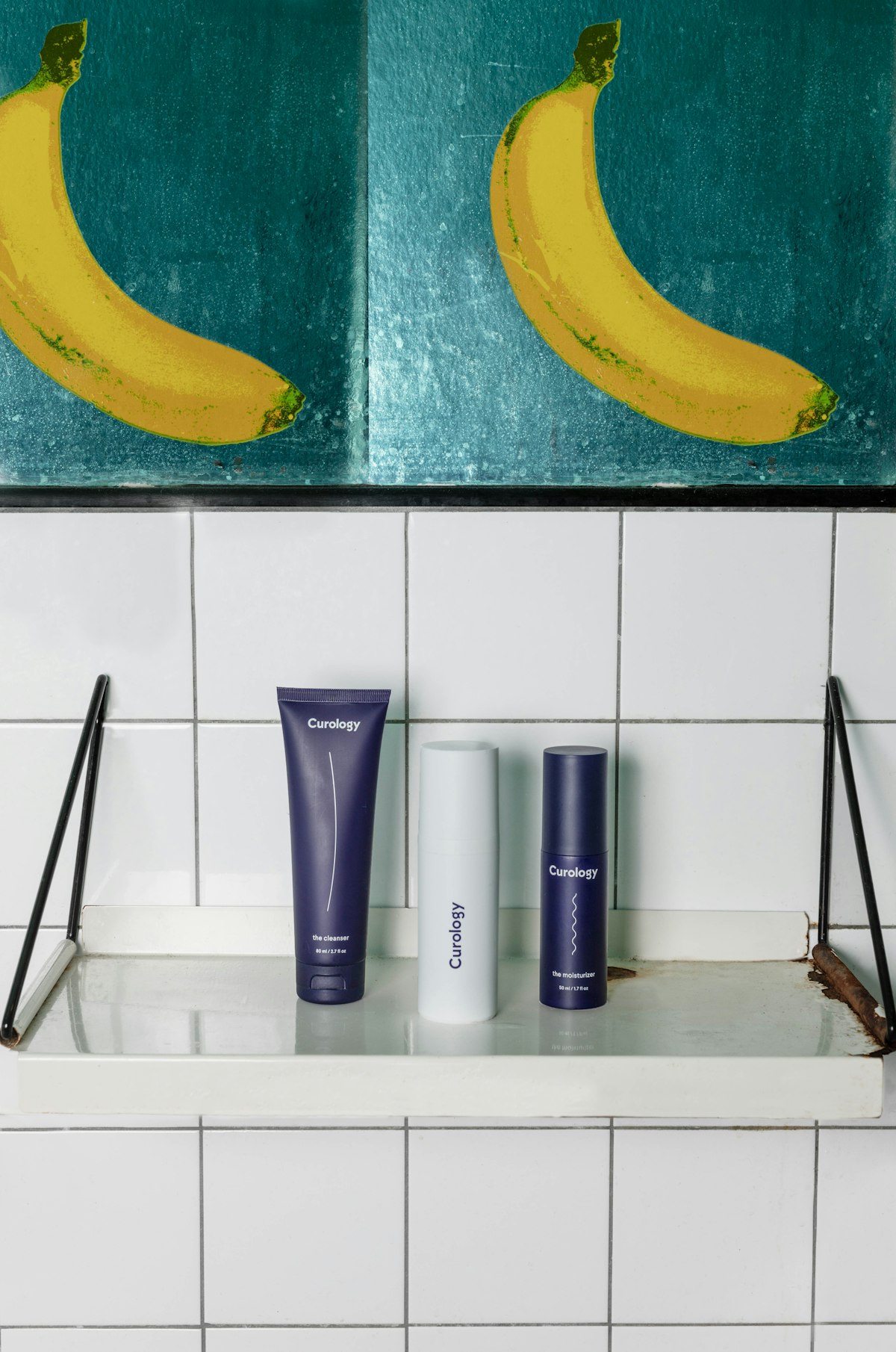
If stress is making your skin worse, the answer is to calm the routine down, not to add more actives. The barrier is already under pressure; a new acid won’t help it.
| Step | What to use | Why |
|---|---|---|
| Cleanse | A gentle, non-foaming cleanser | Harsh foaming washes strip lipids the barrier needs |
| Treat (optional) | Niacinamide or beta glucan; azelaic acid if you’re prone to redness | Calming ingredients with reasonable evidence for barrier and redness |
| Eyes (optional) | A caffeine eye serum, such as The Ordinary Caffeine Solution 5% + EGCG (usually under £10) | Can reduce puffiness for a few hours – a cosmetic fix, not a hormonal one |
| Moisturise | A ceramide cream, such as CeraVe Moisturising Cream (roughly £15-£21 for 177ml at Boots, depending on offers) | Ceramides help rebuild the barrier stress weakens |
| Protect | SPF 30 or higher every morning, even in October | UVA gets through cloud and windows and adds to redness and ageing |
That’s the whole thing. Five steps, two of them optional, most of it available on a Boots meal-deal budget. A ten-step “cortisol reset” routine is more likely to irritate stressed skin than help it.
Movement helps too, with a caveat. Walking, a couple of strength sessions and one harder cardio session a week is a load most people recover from well. Five high-intensity classes on top of poor sleep and a stressful job is the kind of programme that keeps stress hormones high and leaves you looking wrung out.
What’s being sold, and what it does
| Product or habit | What it’s sold as | What it really does | Worth it? |
|---|---|---|---|
| Ashwagandha capsules | A cortisol blocker | May modestly reduce perceived stress; UK safety review ongoing | Not for your face. Speak to a pharmacist first if you take other medicines |
| “Cortisol cocktail” | Adrenal support | Fluid and sugar | No |
| Jade roller / gua sha | Lymphatic drainage | Temporary de-puffing by moving fluid | Fine if you enjoy it; a cold flannel does the same |
| Caffeine eye serum | Eye de-puffer | Short-term tightening and de-puffing | Cheap and harmless; manage expectations |
| Cutting down alcohol | Rarely sold at all | Less puffiness, better sleep, fewer visible vessels | Yes |
| A consistent bedtime | Free | The biggest single change for a tired face | Yes |
When to stop self-diagnosing and see a GP
Book an appointment rather than buying another supplement if you notice:
- your face has become rounder and redder over months, and it doesn’t go down during the day
- weight gain mainly around your middle while your arms and legs stay thin
- new purple or dark stretch marks, especially on your tummy
- bruising without an obvious reason
- weakness getting up from a chair or climbing stairs
- periods becoming irregular with no other explanation
A GP can arrange for cortisol to be measured in blood, urine or saliva. If you’re taking steroid tablets, inhalers at high doses or regular steroid injections, mention them – and don’t stop them suddenly without advice, because that can be dangerous.
For everyone else, the more likely answer is less dramatic and more fixable. You probably don’t have a cortisol problem. You’ve got a sleep, alcohol and workload problem, and the face in the mirror is reporting it accurately. That’s worth listening to. It just isn’t worth £40 of powders.
Stress can show up in your hair as well as your skin. If you’re finding more strands in the brush this autumn, our piece on seasonal hair shedding explains what’s normal and when to get it checked.





Healthy scepticism about TikTok skin trends always welcome. I went down the rabbit hole on this earlier in the year and ended up with three different cortisol-balancing supplements and a face that looked exactly the same. Cutting caffeine and a proper sleep routine made far more visible difference. Genuinely curious though – is there any actual evidence that the adaptogen blends do anything for puffiness, or is it all placebo wrapped in nice packaging?