
Fibremaxxing UK 2026: The Fibre Gap Britain Keeps Ignoring – And Exactly How Much You Need
Walk into any gym café this summer and you will hear people talk about protein the way they once talked about steps. Yet the nutrient most British adults are genuinely short of is not protein at all. It is fibre. The average adult in this country eats under 20g a day against a government target of 30g, and the gap has barely moved in a decade. That shortfall is the reason “fibremaxxing” – the deliberate, slightly obsessive habit of building fibre into every meal – has become one of the more sensible-sounding wellness ideas of 2026.
In This Article
- What fibremaxxing actually means
- The 30g target – and the gap behind it
- What the evidence actually says
- Soluble, insoluble, and the part your gut bacteria want
- Protein got the headlines. Fibre does the quiet work.
- Fibre, appetite and the Ozempic comparison
- A day that gets you to 30g
- Closing the gap without a supplement aisle
- When to go slow – and who should check first
It is a clumsy word for a dull-sounding nutrient, which is probably why it took social media to make anyone care. But underneath the trend is a real and well-evidenced point: most of us are eating roughly two-thirds of the fibre our bodies are designed to handle, and the consequences are not trivial. This is a look at what fibremaxxing actually involves, what the science supports, and where the hype runs ahead of the evidence.
What fibremaxxing actually means
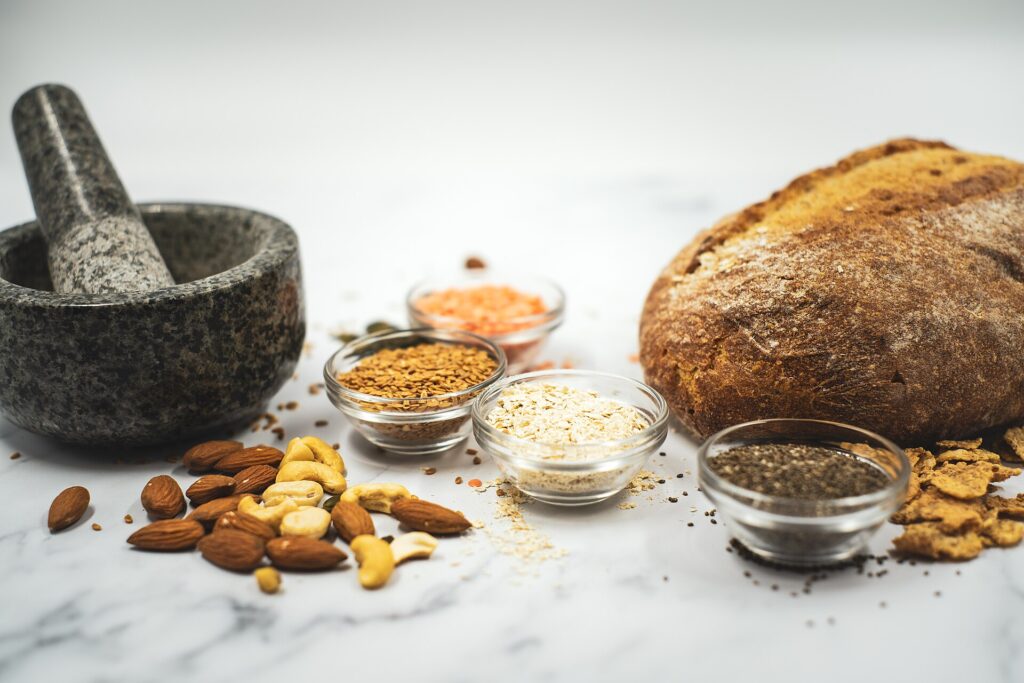
Fibremaxxing is not a diet or a product. It is a behaviour: treating fibre as the thing you build a meal around rather than an afterthought. In practice that means adding pulses to a bolognese, leaving the skin on the potato, choosing the seeded loaf, throwing a handful of frozen peas into almost anything, and front-loading breakfast with oats or wholegrains instead of a refined white starter.
The trend is partly a reaction. After two years of protein dominating every label and feed – protein coffee, protein crisps, protein water – a chunk of the wellness crowd has noticed that the protein panic was largely solved for most people who eat normally, while fibre quietly went unaddressed. The same audience that obsessed over macros and tracked everything through their wellness apps has started pointing the same energy at a nutrient that, for once, almost everyone genuinely needs more of.

The 30g target – and the gap behind it
The UK recommendation is 30g of fibre a day for adults, set by the Scientific Advisory Committee on Nutrition and carried through the NHS Eatwell guidance. According to the NHS, most of us fall well short, with adults aged 19 to 64 averaging around 19g a day. In plain terms, the country needs to lift its fibre intake by roughly a third – an extra 10g per person, every day, more or less indefinitely.
That gap is not evenly spread. People who eat a lot of refined and ultra-processed food tend to sit at the bottom of the range, because the fibre is largely stripped out during processing. The irony is that fibre is cheap. A tin of chickpeas costs less than a single serving of most of the powdered “gut health” supplements being marketed at exactly the people who could close the gap with food for pennies. It is the same pattern seen with electrolyte powders: a real need, repackaged at a markup that the underlying problem rarely justifies.
What the evidence actually says
This is where fibre stops being a wellness fad and starts looking like one of the better-supported recommendations in nutrition. The landmark piece of work is a 2019 review published in The Lancet, commissioned by the World Health Organization, which pooled 185 prospective studies and 58 clinical trials covering nearly 135 million person-years of data.
The findings were unusually consistent for nutrition research. People with the highest fibre intakes had a 15 to 30 per cent lower risk of all-cause and cardiovascular death compared with those eating the least. Incidence of coronary heart disease, stroke, type 2 diabetes and colorectal cancer fell by 16 to 24 per cent. The clinical trials, which are harder to fool than observational data, showed lower body weight, lower blood pressure and lower cholesterol with higher fibre intakes. The authors found the protective effect was strongest between 25g and 29g a day, with signs that more may bring further benefit – which makes the 30g target look, if anything, slightly conservative.
It is worth being precise about what the evidence does and does not say, because that is where most trend coverage gets sloppy. The strongest signal in the data is for fibre from whole foods – wholegrains, vegetables, fruit and pulses – rather than from fibre added to processed products or taken as a supplement. The association is also a dose-response one: across the studies, more fibre tended to mean lower risk across the range studied, rather than a single threshold you tick off and forget. That reframes the 30g figure as a floor worth clearing rather than a ceiling to celebrate.
None of this is new science being hyped into relevance. It is decades-old, boringly reliable evidence that simply never had a catchy name attached to it. Fibremaxxing is mostly a marketing wrapper around advice the NHS has given for years.
Soluble, insoluble, and the part your gut bacteria want
Fibre is not one substance. It is a category, and the distinction matters more than most trend pieces admit. Soluble fibre – found in oats, beans, apples and citrus – dissolves into a gel in the gut. It slows digestion, blunts blood sugar spikes and helps lower LDL cholesterol. Insoluble fibre, the kind in wholemeal bread, wheat bran and the skins of vegetables, largely passes through intact and adds bulk, which is what keeps things moving and reduces constipation.
Then there is the part the current trend is genuinely built on: fermentation. Certain fibres act as food for the bacteria in your large intestine, which break them down into short-chain fatty acids such as butyrate. These compounds nourish the cells lining the colon and appear to play a role in inflammation and metabolic health. This is the mechanism behind the “feed your microbiome” framing you will have seen everywhere – and unlike a lot of gut-health marketing, the basic biology here is sound. The practical takeaway is simpler than the science: variety matters. A diet built on thirty different plants a week will feed a broader range of gut bacteria than one built on the same wholemeal toast every day, however virtuous that toast is. (Feeding the bacteria you already have is a different proposition from swallowing new ones; our piece on whether probiotics actually work covers the capsule side.)
Protein got the headlines. Fibre does the quiet work.
Here is the editorial position, and it is worth stating plainly: for most British adults who are not elite athletes or seriously undereating, the protein anxiety of the last few years has been overblown, while the fibre shortfall has been real and largely ignored. The two nutrients ended up with wildly mismatched reputations. Protein got the supplement aisle, the branded shakes and the influencer deals. Fibre got a vague association with bran flakes and bowel regularity.
That mismatch had consequences. Chasing very high protein intakes often means leaning on processed protein products that are low in fibre, which can quietly make the gap worse. The more useful mental model is not protein versus fibre but protein with fibre: lentils, beans, wholegrains and many vegetables deliver both at once, which is why a plate built around them tends to beat one built around a powder. If you only change one thing about how you eat this year, the evidence points more clearly at fibre than at almost anything else – a less glamorous claim than most of what circulates in the wellness podcast world, but a sturdier one.
This is also why fibremaxxing sits more comfortably alongside genuinely evidence-led habits – the kind of strength work behind the case for creatine for women, or the behavioural shift behind sober summer – than with the supplement-of-the-month churn it superficially resembles.
Fibre, appetite and the Ozempic comparison
One reason fibre has found a new audience is the obvious overlap with the weight-loss drugs that have dominated health conversation for the past two years. Soluble fibre slows the rate at which the stomach empties, which is part of why a high-fibre meal tends to keep you fuller for longer than a refined one of the same calorie count. The fermentation process goes a step further: the short-chain fatty acids produced when gut bacteria break down certain fibres appear to stimulate the same appetite-regulating gut hormones, including GLP-1, that the new injectables target pharmacologically.
That has led to fibre being marketed, predictably, as a “natural Ozempic”. It is worth being clear-eyed about this, because the framing oversells it. Fibre nudges these systems gently and over time; the drugs hit them hard and fast, which is exactly why they produce the dramatic results – and the side effects – that fibre does not. Anyone expecting a bowl of lentils to replicate a prescription medicine will be disappointed. The honest version of the claim is narrower and still useful: a genuinely high-fibre diet supports appetite regulation and steadier blood sugar through the same broad mechanisms, which is a reasonable thing to want whether or not weight loss is the goal. It is a supporting habit, not a substitute for medical treatment, and selling it as the latter is exactly the kind of overreach that gives wellness trends their short shelf life.
A day that gets you to 30g
Targets are easier to believe when you can see them on a plate, so here is a single unremarkable day that lands close to 30g without anything exotic or expensive. Breakfast: a bowl of porridge made with rolled oats, topped with a sliced pear and a tablespoon of mixed seeds – roughly 8g. Lunch: a wholemeal wrap with hummus, salad and a tin of mixed beans stirred through, plus an apple – around 12g. Dinner: a vegetable and lentil curry with brown rice – another 10g or so. A few squares of dark chocolate or a small handful of almonds in the evening nudges it over the line.
Nothing on that list is a health-food novelty. It is porridge, beans, lentils, fruit and wholemeal bread – the cheapest aisles in the supermarket, not the most expensive. That is the quiet argument fibremaxxing makes almost by accident: the single most evidence-backed dietary change available to most British adults is also one of the most affordable, which is not something you can say about most of what trends in wellness. Compared with the running costs of half the supplements jostling for attention this year, a week of hitting 30g barely registers on a shopping bill.
The harder part is consistency rather than knowledge. Most people know roughly what a high-fibre food looks like; far fewer hit the target on a normal Tuesday when work is busy and dinner is whatever is fastest. That is the genuine value of the trend, and of tracking it for a week or two – not the label, but the habit of noticing how often fibre simply gets left off the plate.
Closing the gap without a supplement aisle
Ten grams a day sounds like a lot until you see how it breaks down across meals. A bowl of porridge gives around 3g. A tin of baked beans on wholemeal toast can clear 10g on its own. A pear with the skin on, a handful of almonds, a portion of peas, two slices of seeded bread – each adds a few grams, and they stack quickly.
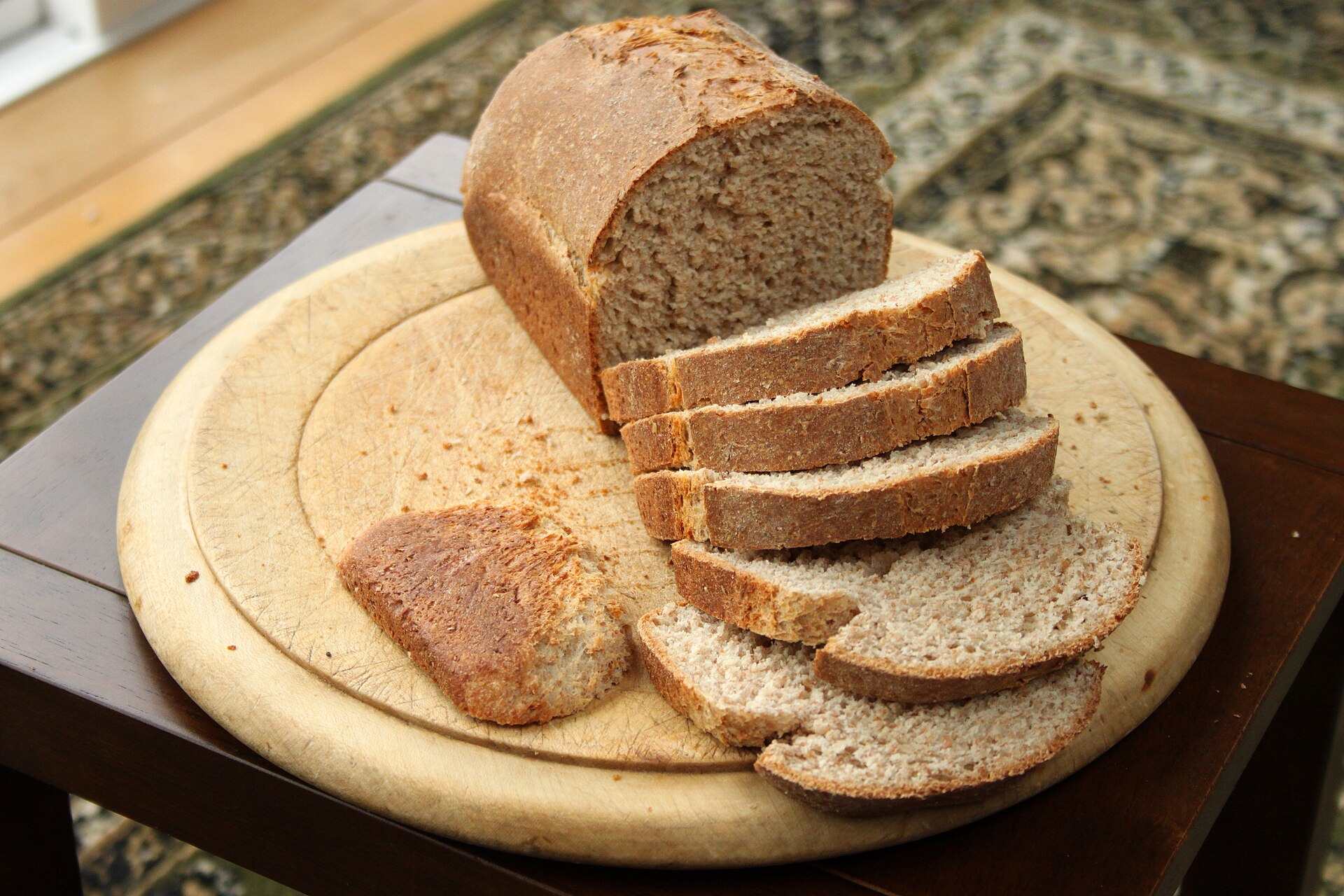
The most reliable moves, roughly in order of impact: switch white bread, rice and pasta for wholemeal or wholegrain versions; add a tin of beans, chickpeas or lentils to soups, stews and sauces; keep the skins on potatoes and fruit; make oats or a high-fibre cereal your default breakfast; and treat nuts, seeds and fruit as the obvious snack rather than the worthy one. The British Heart Foundation makes the same point in blunter terms: small, repeated swaps beat any single dramatic change, because the target is a daily habit rather than a one-off effort.
Whole foods also beat isolated fibre supplements for most people. A psyllium husk capsule can help in specific situations, but it delivers one type of fibre in isolation, whereas a varied plate delivers a mix plus the vitamins, minerals and plant compounds that come bundled with it. The supplement is a patch; the food is the fix.
When to go slow – and who should check first
Fibremaxxing has one obvious failure mode, and it is the reason the trend produces as many complaints as converts: going from 19g to 35g overnight is a fast route to bloating, wind and discomfort. Gut bacteria need time to adjust, and the fermentation that makes fibre useful is the same process that makes a sudden surge uncomfortable. The fix is to build up over a few weeks rather than days, and to drink more water as you go, since fibre works best with adequate fluid.
There are also people who should not simply pile in. Anyone with a diagnosed gut condition such as IBS, inflammatory bowel disease or a history of bowel obstruction should take advice before ramping up, because certain high-fibre and high-fermentation foods can worsen symptoms. Guts UK, the digestive health charity, notes that the right approach for these conditions can be very different from the general population advice, and sometimes means restricting specific fibres rather than maximising all of them. As ever, the trend is a reasonable default for healthy adults and a poor substitute for tailored advice if something is already wrong.
Stripped of the name, fibremaxxing is just the oldest dietary advice there is, finally getting the attention protein has hogged. The interesting question is whether it lasts – or whether, like most wellness trends, it gets quietly abandoned the moment the next nutrient gets a hashtag. So here is the one worth sitting with: if you tracked it honestly for a week, how close to 30g would you actually be?
Read next: if gut health is what’s driving you to fibre, the same crowd is now spooning colostrum into their coffee – here’s what bovine colostrum actually does.