
Why Glastonbury’s 2026 Fallow Year Is Reshaping British Festival Summer
For the first time in eight years, the last weekend of June will arrive in the UK without Worthy Farm at the centre of the conversation. The Glastonbury 2026 fallow year is here, the gates will stay shut, and a country that has built half its summer cultural calendar around the festival is being asked to look elsewhere. The strange thing is how quickly elsewhere is coming into focus.
In This Article
What the Glastonbury 2026 fallow year actually is
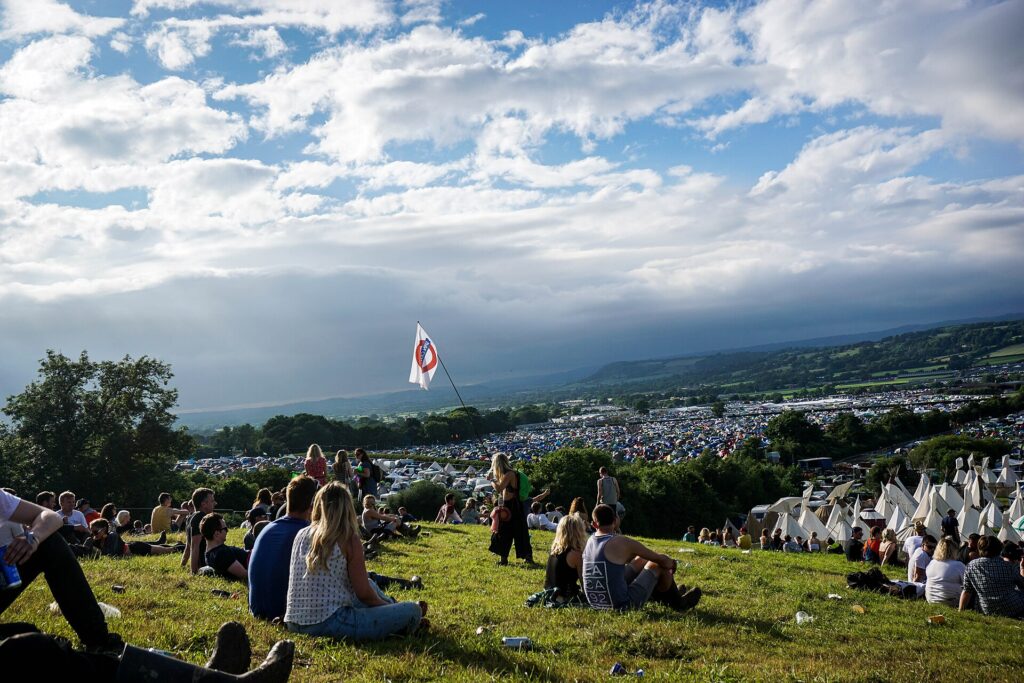
A fallow year, in Worthy Farm terms, means exactly what it says. The site goes back to being a working dairy farm. The cows return to fields normally reserved for stages, bars and tents. The infrastructure is dismantled, the soil gets a chance to recover, and the local roads around Pilton get a summer of peace. Emily Eavis confirmed the pause in 2024 and has been clear since: 2026 was always going to be a pause year, and Glastonbury will return in 2027 across 23-27 June. The festival has done this roughly once every five years for decades, and the last official fallow year was 2018.
The mechanics are easy to explain. The cultural effect is not. Glastonbury has grown into something closer to a national event than a music festival, and removing it from the calendar shifts what a British summer feels like for several million people who never set foot in Somerset.
Why Emily Eavis pressed pause when she did
Eavis has framed the 2026 break around the land and the people who run the festival, not the lineup pipeline. Speaking to NME, she said the fallow year matters because “it gives the land a rest, and it gives the cows a chance to stay out for longer and reclaim their land. And I think it’s quite good not to be seen to be cashing in.” That last line is the editorial one. After seven straight editions, a festival of Glastonbury’s scale starts to look like a corporate fixture rather than a working farm event, and the Eavis family has spent decades resisting that drift.
There is a workforce argument too. A site that takes the better part of a year to build and dismantle puts roughly 2,000 staff and tens of thousands of crew through a punishing cycle. Skipping a year is partly a strategy to keep the people who actually make Glastonbury function from burning out. None of this is glamorous, and Eavis has been careful not to dress it up. It is maintenance, in the most literal sense.
Reading and Leeds inherit the cultural weight
The most obvious beneficiary is the August Bank Holiday twin festival. Reading and Leeds 2026 has booked six headliners (Charli XCX, Chase & Status, Dave, Florence and the Machine, Fontaines D.C. and Raye), plus Kasabian as the first ever Thursday main-stage headliner in Leeds. That is a lineup that would have been competitive in any year. In a Glastonbury-free summer, it becomes the de facto centrepiece of the UK festival calendar, and the booking team clearly knows it.
The new dance arena, The Warehouse, is the more interesting signal. Reading and Leeds has spent two decades shaking the perception that it is a rock festival for teenagers, and a purpose-built dance space pulls it closer to the multi-genre territory Glastonbury occupies. The additions list (Loyle Carner, Declan McKenna, Maisie Peters, Holly Humberstone, Gunna, Violet Grohl and 60-odd others) reads like a curator trying to cover every base a Glastonbury booker would normally cover. None of this is accidental.
The smaller festivals quietly stepping up
Outside the big two, the redistribution gets more interesting. Boardmasters in Newquay has scaled up its booking, with Fatboy Slim, Lily Allen and Kasabian heading a lineup that leans on the coastal-and-cultural identity Glastonbury normally absorbs. Latitude, End of the Road, Green Man and All Points East are all in positions to take a slice of the audience that would otherwise be in Somerset, and most have moved earlier with announcements this year.
The economics matter here. Glastonbury sells around 210,000 tickets in minutes. A material fraction of those buyers are festival-curious rather than Glastonbury-loyal, and they need somewhere to go. The mid-sized British festival sector has been bruised over the last three years, with a steady run of cancellations and tighter margins. A summer without Worthy Farm is the closest thing to a soft subsidy the rest of the industry has had in a long time.
That sector has also been propped up by a recovering live music economy that is still patchy underneath. We covered why UK music venues are closing in 2026 earlier this month, and the same pressures (rising insurance, rates, security and energy costs) apply to outdoor festivals on a much bigger scale. The fallow year is short-term help for that ecosystem, not a fix.
What absence does to a music summer
There is a smaller, more cultural effect that gets ignored in the lineup arithmetic. Glastonbury sets the conversation. The BBC’s coverage shapes which sets get talked about for the rest of the year, which new acts get a career-defining moment on the Park stage, which legacy artists get a Sunday legends-slot reframe. Take that machine away and the discourse goes quiet for a fortnight. It is hard to overstate how much of British music writing is built around the Worthy Farm news cycle in late June.
The records that would normally be released to land in a Glastonbury window are already shifting. Several British acts who would have used the festival as a launch platform have pushed releases into late August and September instead, which is why the autumn release calendar looks unusually crowded. If you are paying attention to the spring run we picked over in the best British albums of 2026, the next wave is being held back deliberately.
The audience adjusts in smaller ways too. The festival wardrobe stays in storage. The standing camping kit does not get bought. The summer of glasto highlights videos, viral sets and surprise guest debates does not happen. None of that is irreplaceable, but it is genuinely missing.
What the 2027 return will need to deliver
The risk in a fallow year is not the year itself. It is the year after. Glastonbury 2027 will arrive with a year of pent-up demand and a country that has spent twelve months noticing what the festival actually contributes. The booking pressure will be immense, and Eavis has already hinted in interviews that conversations with 2027 headliners began long before the 2026 site was cleared.
The bigger question is whether the festival uses the year to make actual changes rather than just rest. The conversation around accessibility, Sunday traffic, food prices and the politics of who plays and who refuses to play has not gone away. A fallow year offers cover to redesign things, and history suggests Glastonbury usually returns slightly different. The 2008 fallow year preceded the addition of the dance corner that became Shangri-La. The 2018 year preceded the meaningful expansion of late-night programming.
For festival-goers planning around it, the practical advice is to commit early to a smaller event rather than wait for a Glastonbury announcement that is not coming. We pulled together what to wear and what to pack for the alternatives in our festival outfits UK 2026 guide, which holds up across most of the lineups that have stepped into the gap.
The Glastonbury 2026 fallow year is, in the end, a quietly British thing. A working farm decides to stop being a city for a year. The rest of the co