
Linen Bedding UK 2026: How To Buy A Set That Survives More Than One Summer
Linen Bedding UK 2026: How To Buy A Set That Survives More Than One Summer
Most British bedrooms are built for cold. Thick duvets, brushed cotton, layers of blankets – all of it tuned for the seven months of the year when the issue is keeping warmth in. Then May arrives, the radiators stop clicking on, and the house starts holding heat in a way nobody planned for. This is the moment good linen bedding UK shoppers wish they had bought in March suddenly becomes a daily problem, and a poorly chosen set bought in a panic in July becomes a year-long regret.
In This Article
- Why Linen Bedding Suits UK Bedrooms Right Now
- What Actually Counts As Real Linen Bedding
- Linen Bedding UK Brands Worth Knowing About
- The Cost Question, Honestly Answered
- How To Choose A Colour That Will Not Date
- Caring For Linen So It Outlives The Trend
- Making Linen Bedding Work In A Small UK Bedroom
I have been writing about UK homes for over a decade and the shift to linen has been one of the few interior trends that has actually held up to the wear test. Cotton percale still has a place. So does sateen. But for a country that is now reliably hitting 30C in three or four weeks of summer, with no air conditioning in 95% of homes, linen has gone from a styling choice to a sleep one. The catch is that not all of it is good, and a lot of what gets sold as linen in the UK is the bedding equivalent of fast fashion.
Why Linen Bedding Suits UK Bedrooms Right Now
Linen is made from flax fibres, which are hollow and naturally absorbent. They wick moisture roughly 20% faster than cotton, and the slightly looser weave allows air to move across the skin instead of trapping it. In an old British house with single-glazed sashes or a poorly ventilated new-build loft conversion, that matters more than it sounds. The same set works in winter too, because the fibres regulate temperature in both directions: cool when you are warm, insulating when you cool down.
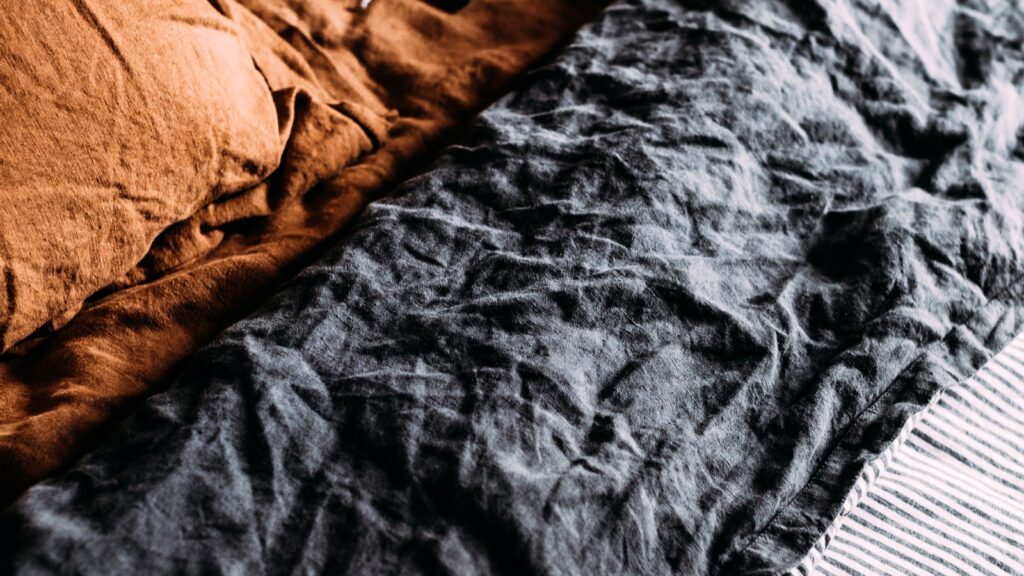
The aesthetic argument is by now well rehearsed. Linen creases. It softens. It earns a patina rather than wearing out, which is the opposite of how most synthetic blends behave. If you have spent any time looking at the editorial bedrooms in House & Garden or Livingetc in the past two years, the bedding has almost always been linen, almost always in muted clay, oat, mushroom or olive, and almost always intentionally rumpled. That look is not styling. That is just what linen does after one wash.
What Actually Counts As Real Linen Bedding
This is where most UK shoppers get caught. The word “linen” is loose. A label saying “linen-feel”, “linen-touch” or “linen-blend” means almost nothing. A genuine linen sheet should be 100% flax linen, ideally European grown (France, Belgium and the Netherlands produce most of the world’s premium flax) and woven at a GSM somewhere between 165 and 200. Below 165 GSM the fabric is too thin and tears at the corners within a year. Above 200 it loses the breathability that is the whole point.
The other test is “stonewashed” or “garment-washed” labelling. Untreated linen is stiff and itchy out of the bag, and softens over twenty or thirty washes. Stonewashing brings it forward to the point that most buyers expect on day one. A premium UK retailer will tell you which it is. A cheaper brand often will not, which usually means the answer is no.
Linen Bedding UK Brands Worth Knowing About
The premium end of the British market has consolidated around a handful of names. Piglet in Bed, based in Wiltshire, sources its flax from the Normandy coast and stonewashes everything before sale. The Linen Works in London does similar at a slightly lower price point. Bedfolk runs a tighter colour palette and is owned by a husband and wife team who used to work in textile sourcing for John Lewis. Soak & Sleep, the most mainstream of the four, has improved its linen line considerably over the past two years and is the easiest place to start if you have not bought any before.
Below that tier, things get more variable. Marks & Spencer’s linen line is honest but thin in weight. The IKEA range is genuine 100% linen, surprisingly good for the price, but the colours are limited and the corners blow out faster than a duvet cover should. Anything sold on Amazon under a brand name you have never heard of, with a four-figure review count and a 14.99 GBP duvet cover, is almost certainly a viscose blend regardless of what the listing claims. Which? has done the testing and the gap between branded and white-label bedding is wider than most buyers assume.
The Cost Question, Honestly Answered
A genuine king-size linen duvet cover from a reputable UK source will cost between 130 and 220 GBP. Add a fitted sheet at 80 to 120 GBP and two pillowcases at 40 to 60 GBP for the pair, and you are looking at a complete set north of 250 GBP, often closer to 350 GBP. That is more than most people expect to spend, and the question is whether it is justifiable.
The honest answer is: it depends on how you treat it. A 300 GBP linen set that is washed weekly at 30C and tumble-dried on low will outlast three or four 80 GBP cotton sets bought from a department store. The fibre simply does not break down the way cotton does. I am still using a Piglet in Bed duvet cover I bought in 2020 and it looks better now than it did the year I got it. Pro-rated over six years, the per-night cost is genuinely lower than the cheap alternative. That is not marketing – it is just how the fibre behaves.
The trap is buying premium linen and then washing it badly. Hot washes shorten its life dramatically. So does fabric softener, which coats the fibres and reduces the absorbency that is the whole reason you bought it. Read the care label, ignore any instinct to bleach it, and it will outlast almost everything else in your house.
How To Choose A Colour That Will Not Date
The mistake most first-time buyers make is going too pale. White linen looks elegant on the day it arrives and yellows visibly within eighteen months no matter how carefully you wash it. The whites that hold up are the slightly off-white shades – oat, ecru, cream – which are forgiving of the inevitable tea stain or makeup transfer.
The colours that have earned their place in the UK market are mid-tones with warmth in them. Clay, terracotta, sage, olive, charcoal, and the dusty pinks that brands keep relabelling. These read as deliberate rather than neutral and they layer well with the wood tones and rattan that have moved into British bedrooms over the past two years. If you are going for that pared-back look that has replaced the all-grey scheme, our piece on why UK homes are finally moving on from cold minimalism goes deeper into the palette shift, and a lot of it starts in the bedroom.
What to avoid: anything described as “millennial pink”, because it dates immediately, and anything navy, because navy linen reads more like hotel laundry than home. Stripes have come back but read better in pillowcases than across a whole duvet.
Caring For Linen So It Outlives The Trend
Three rules cover most of it. First, wash cool. 30C maximum, ideally 20C with a long cycle. Linen does not need heat to come clean, and heat is what shortens its life. Second, line dry whenever you can. UK weather makes this aspirational rather than practical for nine months of the year, but a tumble dryer on the lowest setting with dryer balls is fine if you stop the cycle while the bedding is still slightly damp. Third, iron only the pillowcases if you must. The whole point of linen is the crinkle. A duvet cover that has been pressed flat looks wrong and it is genuinely more work for a worse outcome.
If you tear a corner, mend it. Linen takes a stitch beautifully and a small repair is invisible after two more washes. Most premium UK linen brands now offer a repair service for under 20 GBP per item, which is one of the better signs that the company actually believes in the product. The BBC has covered the broader shift towards repairable household goods in detail, and bedding is one of the categories where it actually works.
Making Linen Bedding Work In A Small UK Bedroom
Linen bedding looks its best on a slightly oversized duvet, because the drape is the thing that sells it. In a small UK box bedroom this means buying a king-size cover for a double bed, which is a trick that high-end interior stylists have been doing for years. The extra thirty centimetres of fabric pools at the sides and reads as luxurious rather than messy.
The rumple is also why linen flatters less-than-perfect rooms. A tired carpet, a wonky picture rail, a wardrobe door that no longer closes properly – all of these read as charm rather than fault when the bed itself looks intentional. If you are working with a tight footprint, the principles in our guide to hallway ideas for UK homes apply equally to small bedrooms: lean into texture and warmth instead of trying to hide the size.
The window for getting this right is now. Most of the UK linen market sells out of its summer colours by mid-June, and the heatwave bookings come too late. If you are going to upgrade once this year, do it before the end of May, on a stonewashed 100% linen set in a mid-tone colour, from a brand you can name and that will repair the corners when they go. That is the version of this purchase that pays back over years rather than months. The version that does not pay back is the panic-bought polyester blend in late July, which feels good for a fortnight, sweats through August, and ends up in the loft by Christmas. Linen, done properly, does the opposite: it gets better the longer you live with it. If you are also rethinking the room around it, there is a case to be made for a warmer palette altogether, and our piece on how dopamine decor is showing up in UK homes applies to bedrooms more than the title suggests.





Bought a Bedfolk set two summers ago and it’s still going strong, but I made the mistake of getting a cheap John Lewis own-brand linen at the same time and that one shredded within a year. The GSM advice in here is spot on. Out of interest – what’s your take on stonewashed vs pre-washed linen for first-time buyers worried about the stiffness?