National Television Awards 2026: Voting Closes Tuesday on the Only TV Prize Britain Still Decides Itself
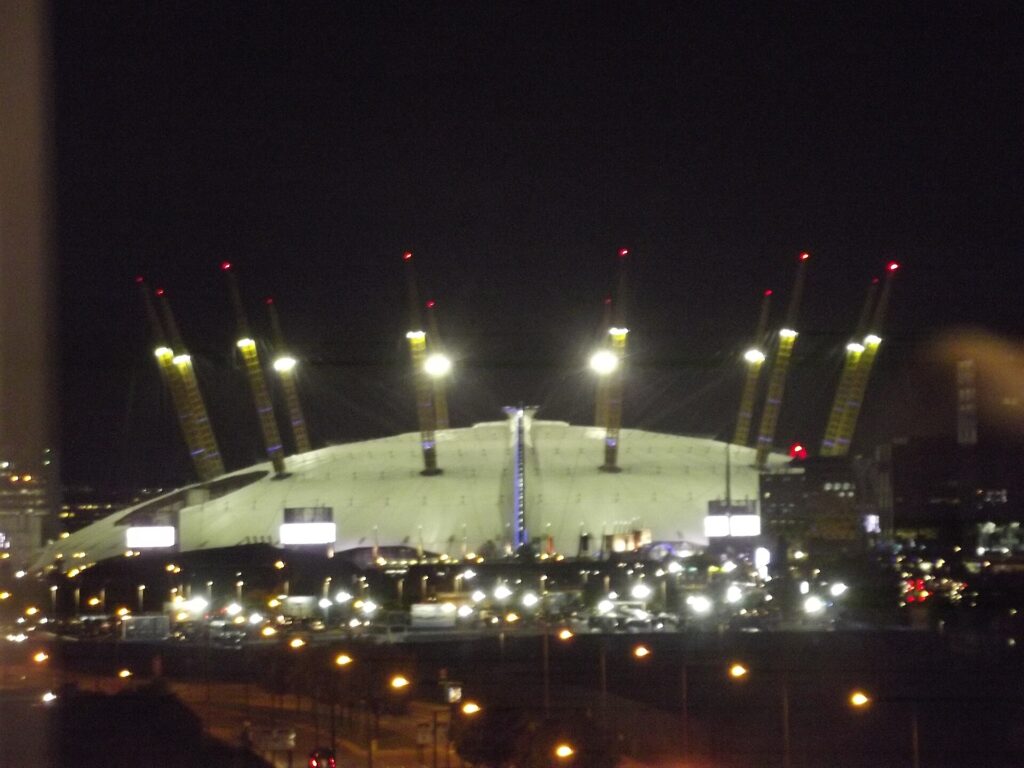
At midday on Tuesday 8 September, voting closes on the National Television Awards 2026 – and with it goes your one chance this year to decide a major British TV prize yourself. No jury of commissioners. No panel of critics comparing notes over a long lunch. Just a free online form and whoever can be bothered to fill it in before the cutoff. The winners are announced that same evening at The O2, which means Britain is still voting while the red carpet is being rolled out.
In This Article
- Five women, and nobody made a song and dance of it
- What’s actually on the National Television Awards 2026 ballot
- The Traitors against the jungle
- The comedy shortlist is a confession
- Attenborough at 100, and the grudge match underneath
- Saturday night in a holding pattern
- Clarkson’s Farm and the category telly finally admitted exists
- Why a free vote beats a jury
- Before the midday cutoff
That timing tells you everything about what the NTAs are. This isn’t an award that deliberates. It counts.
And this year, the count is more interesting than it’s been in a decade.
Five women, and nobody made a song and dance of it
The drama performance shortlist is all female for the first time in the event’s history: Ruth Jones, Sheridan Smith, Vicky McClure, Ella Bruccoleri and Judy Parfitt, who at 90 is competing against women young enough to be her grandchildren. Five nominees, no men, and no campaign behind it. The public simply voted that way in the first round.
That’s the detail I keep coming back to. Industry awards have spent years constructing rules and review panels to nudge their shortlists towards balance, with mixed results and plenty of self-congratulation. The NTA longlist went out to the country, the country sent back five women, and the organisers’ only job was to type up the result. Sometimes the audience is ahead of the industry, and it doesn’t need a working group to get there.
It helps that the five span the full range of what British drama acting is for. Jones is the warm centre of the nation’s most-loved comedy drama. McClure and Smith are the two names commissioners reach for when a series needs carrying. Bruccoleri is the newest face on the list, and Parfitt has been quietly excellent on television since before ITV existed in its current form. If you wanted a single image of where British TV drama is in 2026, this shortlist does the job better than any panel discussion.
What’s actually on the National Television Awards 2026 ballot
The mechanics matter, because they’re the whole point. A public vote over the summer cut the longlists down to shortlists of five, revealed on 18 August. The final round is running now at nationaltvawards.com, it costs nothing, and ITV confirms every new vote is added to the first-round tallies before the midday deadline on 8 September. Joel Dommett hosts at The O2 that night – his sixth time – with the ceremony live on ITV1 and ITVX from 8pm.
The ballot itself is a tour of what Britain actually has on. The five soaps are all present in serial drama, as they always are. Quiz show pits The 1% Club and The Chase against Ant & Dec’s Limitless Win, The Wheel and Richard Osman’s House of Games. Reality competition is a Traitors and I’m A Celebrity family affair, with Race Across The World as the neutral option. New drama includes Heated Rivalry, the streaming romance about two rival hockey players that half the internet watched between Christmas and February.
Nothing here was picked because it says something flattering about the state of television. It’s on the ballot because millions of people watched it, week after week – the viewing habit British TV spent 2026 relearning.
The Traitors against the jungle
Reality competition is where the night’s biggest numbers live, and this year it’s practically a two-family feud. The Traitors and The Celebrity Traitors both made the cut, so did I’m A Celebrity and its South Africa spin-off, and Race Across The World completes the five as the only show without a sibling on the list. Four of the five nominees come from two franchises. That’s either a sign of rude health or a warning, depending on how you squint. ITV’s other autumn reality bet is covered in our Big Brother 2026 review, which asks whether axing the live feed was the right call.
I’d call it a warning. The Traitors is the best programme on the entire ballot – a parlour game that turned into appointment television and dragged millions back to watching one episode at a time, on a schedule, like it’s 2004. The Celebrity Traitors then proved the format could survive famous people, which almost nothing does. But when a genre’s shortlist is two brands plus a travel show, the pipeline behind it looks thin. Reality TV used to mint a new phenomenon every couple of years. It hasn’t minted one since a Scottish castle full of cloaks.
The soaps, meanwhile, carry on in their own sealed ecosystem. Casualty, Coronation Street, EastEnders, Emmerdale and Hollyoaks fill the serial drama category as they always do, with Aaron Thiara, Jeff Hordley and Gareth Pierce among the names up for serial drama performance. Continuing drama never gets the industry’s respect and never needs it; it has the ratings instead, five nights a week, all year round. There’s something fitting about the fact that the awards deciding everything by volume of viewers still reserves a permanent table for the shows that supply most of the volume.
The comedy shortlist is a confession
Look at the five comedy nominees for a moment: Not Going Out, Mrs Brown’s Boys, Changing Ends, Amandaland and Last One Laughing. Two of those started life when Tony Blair was Prime Minister. Lee Mack’s sitcom has been running since 2006. Mrs Brown’s Boys has been critic-proof since 2011 and remains on the ballot even after cancelling its Christmas and New Year specials, with Brendan O’Carroll reported to be dealing with an “unexpected medical issue” – a reminder that there are real people under the jokes, whatever you think of them.
Here’s the unfashionable bit: Mrs Brown’s Boys deserves its place. Not because it’s good – I’d rather watch the test card – but because the NTAs exist to record what Britain watches, and Britain watches it. Sneering at its nomination is sneering at the voters, and that’s the one move this award never makes.
The actual embarrassment in this category belongs to the commissioners. The only genuinely new hit on the list is Last One Laughing, and it’s an Amazon show – a bought-in international format where Jimmy Carr watches comedians try not to laugh. The freshest British entries are Changing Ends, built on Alan Carr’s childhood, and Amandaland, built on Motherland’s bones. Terrestrial TV hasn’t put a brand-new mainstream sitcom on this shortlist in years, and the money currently flows to safe returning hits like Ludwig rather than anything untested. When the public’s five favourite comedies include a 20-year-old sitcom and a streamer’s format import, that’s not a voting quirk. That’s a commissioning verdict.
Attenborough at 100, and the grudge match underneath
The presenter category is the night’s best story. Sir David Attenborough, who turned 100 in May, is nominated for Secret Garden and would win a standing ovation lasting until Friday if his name is read out. Against him: Claudia Winkleman, Alison Hammond, Stacey Solomon – and Ant and Dec, who spent 23 consecutive years winning this award until Gary Lineker took it from them at last year’s ceremony.
So the subplot writes itself. Do the voters hand the Geordies their trophy back, or does sentiment carry the centenarian?
My vote, for what it’s worth, would go to Winkleman. Attenborough is the greatest broadcaster this country has produced and none of it hinges on one more award. But judged purely on the last twelve months of actual presenting – The Traitors, the lot – nobody has been better at the job than Winkleman, and it isn’t especially close. The likelier outcome is that the room stands up for Attenborough and the rest of us get something in our eye.
On the Bake Off front, we have also covered the Nigella Lawson casting.
Saturday night in a holding pattern
The Bruce Forsyth Entertainment Award – the one named after the man who defined the genre – has Gladiators, The Masked Singer, The Graham Norton Show, Michael McIntyre’s Big Show and Would I Lie To You? on its shortlist. Notice what they have in common. A revival, a Korean format, a chat show pushing 20 years, a variety vehicle from 2015 and a panel show from 2007. Entertainment television is running on legacy engines, and the NTA ballot is where you can see the mileage.
None of that makes them bad shows. Would I Lie To You? might be the most reliable half hour on British television, and Norton remains the only chat show host who makes A-listers behave like people at a good wedding. But Saturday night hasn’t produced a genuinely new hit format in years, and the quiz category tells the same story from a different angle: The 1% Club is the youngest thing on it, and that launched back in 2022. Ant and Dec’s Limitless Win, The Wheel, House of Games and The Chase make up the rest – all fixtures, all comfortable, all somewhere between four and seventeen years old.
The public keeps voting for these shows because they deliver, week in, week out. The question the ballot can’t answer is what happens when they stop.
Clarkson’s Farm and the category telly finally admitted exists
New this year: a category for celebrity-led fly-on-the-wall series, where Clarkson’s Farm faces At Home With The Furys, Stacey & Joe, Fletchers’ Family Farm and Mortimer & Whitehouse: Gone Fishing. For years these shows were filed under “factual entertainment” and treated as filler between the dramas. Giving them their own award is the NTAs quietly admitting what the ratings have said for ages – that watching a famous person mend a fence or lose an argument with a sheep is now a central pillar of British viewing.
It’s comfort telly, and comfort is the growth market. These are the programmes you stick on at half nine on a Sunday when you can’t face anything with a body count.
Gone Fishing is the one I’d pick, and the one least likely to win. Two men in their sixties talking about their hearts by a riverbank shouldn’t work as television, and it’s some of the best the BBC has made this decade. But Clarkson’s Farm has an audience the size of a small country, and this is a counting exercise.
Why a free vote beats a jury
The standard criticism of the NTAs is that they’re a popularity contest. Correct. That’s the design. BAFTA measures what television wants to be; the NTAs measure what television is, in actual living rooms, at actual volume. Both measurements are useful, but only one of them can surprise you – no jury would have put Heated Rivalry on a shortlist, and no jury would have produced an all-female acting field without issuing a press release about it first.
The authored documentary category shows the same instinct pointed at graver material. This year’s nominees include Caroline Flack: Search For The Truth, Sharon & Ozzy Osbourne: Coming Home, Jesy Nelson: Life After Little Mix, Sir Chris Hoy: Cancer, Courage And Me and Our Girls: The Southport Families. Whatever wins, the shortlist is a fair record of the stories that actually stopped the country this year – which is exactly what a public vote is for.
There’s a longer piece to be written about what happens when the two systems disagree, because they increasingly do. Shows that dominate the NTAs barely register at BAFTA, and BAFTA’s favourites often live on channels a chunk of NTA voters never open. The gap between the two lists is the gap between television as a cultural project and television as a habit, and it’s widening every year. My own viewing sits awkwardly in the middle – I’ll defend the box set canon all day, and I still know exactly who I’m voting for in quiz show. Most of the country lives in that middle too. The NTAs are the only award that admits it.
Before the midday cutoff
Voting stays open at nationaltvawards.com until 12 noon on Tuesday 8 September, and it’s free. The ceremony follows the same night from The O2, live on ITV1 and ITVX at 8pm, with the results landing a few hours after the last votes do.
One evening, one form, fourteen-odd categories, no gatekeepers. Whether that produces the right winners is beside the point – it produces the true ones.
So, who gets your vote before midday on Tuesday – and which show that didn’t make the ballot would you have fought for?