
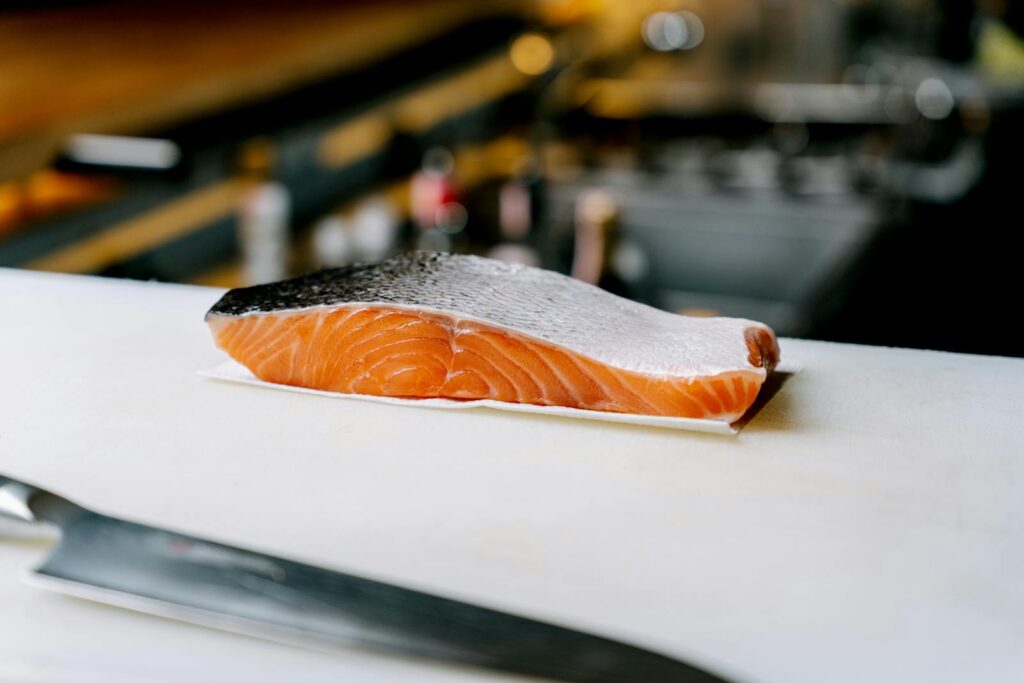
Salmon Weeknight Dinners UK: 6 Fast, Foolproof Ways With a Fillet
Why salmon weeknight dinners UK cooks repeat
Salmon weeknight dinners UK cooks lean on for a reason: a fillet hits the pan, oven or air fryer and is on the plate in under fifteen minutes, with very little fuss in between. It’s the closest thing to a cheat code in the British supermarket fridge – protein-dense, hard to overcook if you stay in the room, and forgiving enough to take whatever you’ve got knocking about. If you can manage rice or a tray of veg, you can manage these.
In This Article
- Why salmon weeknight dinners UK cooks repeat
- What to look for when buying salmon in the UK
- 1. Crispy-skin pan-fried salmon with lemon greens
- 2. Soy and honey glazed salmon traybake
- 3. Air fryer salmon with miso butter
- 4. One-pan salmon with peas, leeks and creme fraiche
- 5. Sesame salmon rice bowls
- 6. Cold-poached salmon with new potatoes and herby yoghurt
- How to know when salmon is properly cooked
- Storing, freezing and stretching the second fillet
- What to ask yourself this week
The trick is having a few reliable formats in your back pocket so you’re not staring at the same fillet twice a week wondering what to do with it. The six ideas below cover oven, hob, air fryer and one no-cook finish. Each is a working weeknight dinner, not a project, and most use ingredients that are already in your kitchen by Wednesday. (If you are still shopping for one, our best air fryer under £100 guide covers the models that fit a fillet without crowding it.)
What to look for when buying salmon in the UK
Most British supermarkets stock farmed Scottish or Norwegian salmon as standard. Both are perfectly good for weeknight cooking. If you want to upgrade, look for the RSPCA Assured logo or, for wild fish, the MSC blue tick. Sainsbury’s, Waitrose and M&S all carry RSPCA Assured Scottish salmon as standard fillets, and Aldi and Lidl run weekly fresh fish offers that often work out cheaper than the big four.
Buy fillets with the skin on if you can – it protects the flesh while it cooks and crisps up beautifully if you treat it properly. Aim for fillets that are roughly the same thickness so they cook evenly. Two fillets will weigh somewhere between 240g and 320g together and feed two adults with a side. If you’re cooking for one, freeze the second fillet flat in a sandwich bag the day you buy it; it’ll thaw in the fridge overnight and be ready for tomorrow’s dinner.
One more practical note: take the fillet out of the fridge twenty minutes before you cook it. Cold-from-the-fridge fish goes rubbery on the outside before the centre warms through. The Guardian’s Felicity Cloake makes the same point in her perfect salmon column, and it’s the single biggest improvement you can make for free.
1. Crispy-skin pan-fried salmon with lemon greens
This is the one to learn first. Pat the skin properly dry with kitchen paper – moisture is the enemy of crispness – and season it heavily with flaky salt. Heat a non-stick or stainless pan over medium-high with a splash of neutral oil until it shimmers. Lay the fillet skin-side down and press it flat with a fish slice for the first thirty seconds so the skin doesn’t curl.
Leave it alone for four to five minutes. Don’t poke it. The skin will release from the pan when it’s ready. Flip, cook for another minute or two depending on thickness, then rest off the heat for a minute. Serve over wilted spring greens or tenderstem broccoli with a squeeze of lemon and a knob of butter melted into the pan juices. Total time, including the greens, is around twelve minutes. If you want more ideas in the same bracket, our 15 minute weeknight dinners UK guide covers a few more in this style.
2. Soy and honey glazed salmon traybake
The lazy option, and by some margin the most popular salmon weeknight dinners UK home cooks repeat. Heat the oven to 200C fan. Mix three tablespoons soy sauce, two tablespoons honey, one tablespoon rice vinegar, a grated thumb of ginger and a clove of crushed garlic in a bowl. Tip half over a tray of broccoli florets, sliced peppers and spring onions, toss, and roast for eight minutes.
Pull the tray out, push the veg aside and lay the salmon fillets in the gaps. Brush them with the rest of the glaze and roast for another nine to ten minutes, until the salmon is just opaque in the middle and the glaze has tightened on top. Serve over jasmine rice or noodles with the pan juices spooned over. The whole thing takes one tray and one bowl. If traybakes are your thing, our guide to easy traybake dinners has more in this format.
3. Air fryer salmon with miso butter
Air fryers and salmon are a near-perfect match. Set the basket to 180C, brush the fillets lightly with oil, season, and cook skin-side down for eight to ten minutes. Don’t bother flipping. The high heat circulating around the fillet gives you something close to a roast finish without heating up the kitchen.
While it cooks, mash a tablespoon of soft butter with a teaspoon of white miso paste and the zest of half a lime. Drop a spoonful onto each fillet straight out of the basket so it melts into the flesh. Eat with rice and quick-pickled cucumber, or with steamed Jersey Royals and salad if you’re leaning into spring – our Jersey Royals recipes guide covers the basics on those if you’ve not bought them before.
4. One-pan salmon with peas, leeks and creme fraiche
This one feels a bit more grown-up but takes about eighteen minutes. Soften a sliced leek in butter in a wide frying pan over a medium heat. Once it’s silky, add a glass of white wine or chicken stock and let it bubble down to almost nothing. Stir in two heaped tablespoons of creme fraiche and a tablespoon of Dijon mustard, then a generous handful of frozen peas.
Nestle the salmon fillets into the sauce, skin-side up, cover, and cook on a low heat for eight to ten minutes until the fish is just cooked through. Finish with chopped dill or parsley and a grinding of black pepper. Serve with new potatoes or buttered tagliatelle. It’s the closest a midweek dinner gets to a Sunday meal without the effort.
5. Sesame salmon rice bowls
If you have leftover rice or a microwave packet, this is on the table in twelve minutes flat. Cube the salmon into rough 2cm pieces, toss with a tablespoon of soy, half a tablespoon of sesame oil and a teaspoon of cornflour. Pan-fry in a hot, oiled non-stick for three to four minutes total, turning once, until the edges caramelise.
Pile onto warm rice with thinly sliced cucumber, shredded carrot, a handful of edamame and a sprinkle of sesame seeds. Drizzle with a quick sauce of two tablespoons mayo, one teaspoon sriracha and a squeeze of lime. It’s the kind of bowl food that makes leftovers feel intentional, and it’s a useful way to stretch one fillet across two people if you’re being careful with the budget.
6. Cold-poached salmon with new potatoes and herby yoghurt
Hot weather, no oven on, no fuss. Bring a wide pan of salted water to the boil, lower in the salmon fillets, take the pan off the heat and clamp on a lid. Leave for ten minutes. The residual heat poaches the fish to a perfect, just-set finish without any of the rubbery edges you sometimes get from active boiling. BBC Good Food’s poached salmon method works on the same principle and is worth bookmarking.
Lift the fillets out, flake or leave whole, and serve cold or just-warm with boiled new potatoes, a heap of watercress or rocket, and a yoghurt sauce made from Greek yoghurt, a small grated garlic clove, lemon, plenty of dill and a glug of olive oil. It’s the kind of dinner that’s nicer than it has any right to be on a warm spring evening, and it makes brilliant lunch the next day. The same poaching trick works beautifully alongside British asparagus during its short season, which runs roughly from St George’s Day to Midsummer.
How to know when salmon is properly cooked
Most salmon failures come from cooking it too long, not too little. The fillet is done when the flesh has just turned from translucent to opaque in the middle and flakes gently when prodded with a fork. The Food Standards Agency suggests an internal temperature of 63C for whole fillets if you want a thermometer-confirmed answer. If you don’t own one, the fork test does the job for weeknight cooking.
Another useful trick: undershoot by a minute or two and let it rest. Salmon keeps cooking off the heat, and a fillet that looks slightly translucent when you pull it from the pan will be perfect by the time everyone sits down. Overcooked salmon goes from rich and silky to dry and chalky in about ninety seconds, so err on the side of less.
Storing, freezing and stretching the second fillet
A two-pack of fillets goes a long way if you plan it. Cooked salmon keeps well in the fridge for up to two days; flake it through pasta with peas and lemon, fold into an omelette, or pile onto sourdough with cream cheese for a fast lunch. Raw fillets freeze well for up to three months, individually wrapped, and thaw overnight in the fridge.
If you’ve bought a fillet on yellow-sticker discount and the use-by is today, freeze it the moment you get home rather than tomorrow. The clock starts when the fish is killed, not when you bring it through the door, so the sooner it goes in the freezer, the better the result a fortnight later.
What to ask yourself this week
Of these six, which one slots into your actual weeknight – the realistic Tuesday where you’ve got fifteen minutes and half a fridge of vegetables, not the imaginary Sunday where you’re going to make a stock? That’s the recipe to learn first, and the one worth repeating until it’s muscle memory.
On the nights when even salmon feels like effort, gnocchi gets dinner on the table faster still.





The miso butter one is going on rotation immediately – had something similar at a friend’s house last month and it’s stupidly good for the effort. Always buy frozen fillets these days from Lidl, the quality jumped a tier in the last year and they thaw in the sink in 20 minutes. Has anyone tried the cold-poached version with hot smoked rather than fresh? Wondering if it would still work.
Frozen salmon convert here too, the cold-water defrost trick is honestly faster than the fridge for weeknights and I’ve stopped feeling bad about not ‘planning ahead’. The miso butter scales up nicely to a tray bake with broccoli underneath if you ever need to feed four without dirtying two pans.