The Rapture BBC Review: Ruth Madeley and India Amarteifio Hand the BBC Its Most Unnervingly Timed Drama of 2026
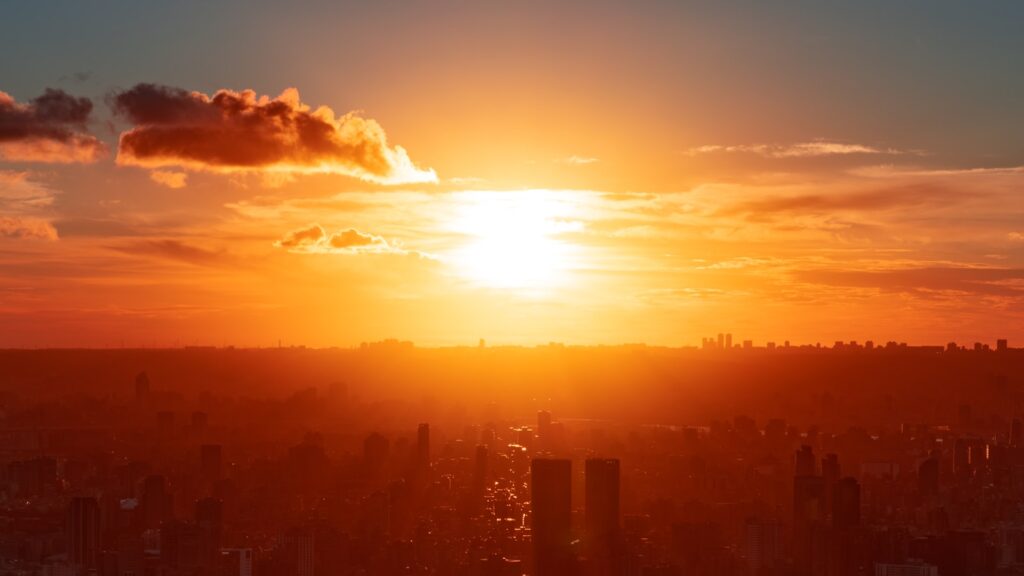
Somewhere in Britain last Sunday night, someone watched a drama about a country cooking in 40-degree heat while their own bedroom sat at 29 degrees and refused to drop. That’s the strange, slightly queasy achievement at the heart of this The Rapture BBC review: the corporation has made a thriller set in a near-future Britain of permanent extreme summers, and then – by accident of scheduling rather than design – released it into the hottest fortnight of 2026. Five episodes, one high-security psychiatric unit, a teenager who draws disasters before they happen, and a forecast that keeps coming true. You don’t watch it so much as sweat through it.
In This Article
It’s the best-timed piece of television the BBC has put out in years. It’s also, in one important way, the worst-released. More on that below.
A thriller wearing a climate drama’s clothes
The set-up sounds like eco-fiction homework and plays like anything but. Dr Gabrielle Fox (Ruth Madeley) is a clinical psychotherapist starting work at a secure unit after a car accident that killed her husband and left her paralysed from the waist down. Her newest patient is Bethany Krall (India Amarteifio), seventeen, detained for killing her mother, and given to producing frenzied, scrawled drawings that she claims show catastrophes before they arrive. The drawings keep being right.
Adapted from Liz Jensen’s 2009 novel by Bryony Kimmings and Rebecca Manley, and produced by Mammoth Screen – the company behind Poldark and The Serpent Queen – the series uses its scorched setting as pressure rather than subject. Nobody lectures you about emissions. The heat is simply there, in every scene, the way rain used to be in British drama: fans that don’t work, shirts stuck to backs, a country that has quietly stopped pretending this is unusual. The Killing Times put it well in its early review: the climate backdrop is “really just the canvas. The real story is one of trauma, guilt and the possibility of redemption”.
And that’s the right call. British television has a poor record with capital-I Issue dramas about the climate – they tend to arrive worthy and leave unwatched. By burying the apocalypse in the production design and keeping the camera on two damaged people in a locked room, The Rapture gets to be about something bigger without ever announcing it.
A 2009 novel the weather caught up with
The source material deserves a word, because the timeline around it has become genuinely eerie. Liz Jensen published The Rapture in 2009, when a Britain of routine 40-degree summers was still a speculative premise – the stuff of literary eco-thrillers rather than Met Office bulletins. Thirteen years later, in July 2022, Coningsby in Lincolnshire recorded 40.3 degrees and the UK issued its first red warning for extreme heat. The gap between Jensen’s imagined Britain and the real one closed within a single option cycle. Mammoth Screen first announced the adaptation back in April 2023, which means this series has spent three years in development while its central conceit quietly stopped being fiction.
Kimmings and Manley have resisted the urge to update the book into a lecture. What they’ve kept is its nastiest, most useful idea: that a warning nobody wants to hear will be treated as a symptom rather than a message. Bethany’s drawings are dismissed precisely because of who she is – a sectioned teenager with a violent past – and the series lets you sit with how convenient that dismissal is for everyone around her. You can read the whole show as a story about credibility: who gets believed, who gets medicated, and how much evidence it takes to overcome a category error about a person.
That’s a sharper piece of climate writing than any montage of flooded streets would be. And it’s why the adaptation works for viewers who’d never pick up the novel.
The double act that carries everything
Strip out the prophecy plot and you’d still have a reason to watch: Madeley and Amarteifio, in a series of two-hander therapy scenes that are the closest thing this year’s British TV has produced to a boxing match. Amarteifio – a long way from the candlelit poise of Queen Charlotte – plays Bethany as a live wire who has learned that being frightening is safer than being frightened. Madeley gives Gabrielle a stillness that reads as control until, scene by scene, you realise it’s suppression.
The wider cast is stacked with recognisable faces doing solid work. Ruth Jones, cast against every Gavin & Stacey instinct, appears as Gabrielle’s own therapist. Iwan Rheon turns up as a washed-up journalist circling the story. Jack Farthing and Stephen Campbell Moore fill out a supporting bench that most Sunday-night dramas would kill for. Radio Times flagged the ensemble when casting was announced last autumn, and the finished series justifies the fuss.
But it’s the central pairing that lingers. There’s a scene in episode three – no spoilers – where the power balance between psychotherapist and patient flips twice in about ninety seconds, and neither actor raises her voice. My other half, who normally scrolls through anything with a “psychological” in the genre tag, put the phone down for that one.
It matters, too, that Madeley isn’t just fronting the series – she’s one of its executive producers, alongside Mammoth’s Damien Timmer. That shows in the details. Gabrielle’s wheelchair is neither ignored nor turned into the story; the accident that put her in it is the source of her guilt, not her limitation. British TV has spent years congratulating itself for casting disabled actors in roles about disability. Handing one the lead in a mainstream 9pm thriller – and a producer credit – is the version that actually moves things forward, and it’s happened with remarkably little fanfare.
Where it wobbles
Honesty time: the middle sags. Once the drawings start coming true and the story leaves the unit – taking in Bethany’s father, a charismatic church leader, and a strand about faith and end-times belief – the series trades its claustrophobic tension for a broader mystery it handles less confidently. The Killing Times noted the narrative “begins to lose momentum during the second episode as the mystery broadens”, and awarded 3.5 stars out of five. That’s about right for the middle stretch, though the final two episodes tighten the screws again.
There’s also a nagging familiarity to some of the furniture. The troubled-genius-patient, the therapist with her own wound, the sceptic slowly converted – if you’ve seen enough of these, you’ll clock certain beats a mile off. The faith strand, built around Bethany’s father and his congregation of end-times believers, is the weakest thread: it gestures at a big idea about prophecy and belief that the running time never quite gives room to breathe. Five episodes is a fashionable length in 2026, but this is a rare case where six would have been the braver commission. The Rapture earns forgiveness through execution rather than novelty.
It’s not a flaw unique to this series. British thrillers in 2026 keep launching brilliantly and finishing adequately – ITV’s The Dark did something similar last month, opening as the strongest crime launch of the year before one structural decision let the air out. The Rapture’s version of that decision is worth its own section.
The Rapture BBC review verdict: right show, wrong release
Here’s the contrarian bit, because everyone else covering this show has praised the BBC for dropping all five episodes on iPlayer on 26 July while broadcasting weekly on Sunday and Monday nights at 9pm. Viewers love a boxset. The completion numbers will look great.
I think it was a mistake.
This is a drama about waiting for a predicted catastrophe to arrive on a known date. The entire engine of the thing is dread deferred. Watched weekly, each episode’s cliffhanger gets seven days to curdle – which is precisely the experience the story is about. Swallowed in one Sunday sitting, the prophecies resolve before they’ve had time to haunt you. British TV spent the last two years rediscovering that appointment viewing builds shows into national conversations – we wrote about that shift earlier this year, and the industry data backs it up. The Rapture is the strongest possible argument for the weekly model, released in the format that suits it least. The BBC, of all broadcasters, shouldn’t be fighting Netflix on Netflix’s terms.
If you haven’t started yet, do yourself a favour: ration it. Two episodes, then stop. You’ll have a better week of television than the boxset crowd had in an evening.
You can already see the two-speed audience forming. Mumsnet’s telly boards are running “TV pace, no spoilers” threads for the Sunday-night viewers, policing plot points against the boxset finishers – a small, telling sign that the show has crossed from being watched into being discussed. That split conversation is exactly what a staggered release creates, and exactly what a clean weekly run would have avoided. When the same drama produces two separate national conversations a fortnight apart, the schedulers haven’t given viewers choice so much as divided the room.
Wales in October, playing the end of the world
A small production miracle worth naming: this vision of a Britain broiling under permanent heat was filmed on location in Wales in October 2025. Every heat-haze shimmer, every sun-bleached exterior, every sweating extra – manufactured in a Welsh autumn, presumably between rain showers. The washed-out palette and oppressive light do so much of the storytelling that it’s easy to forget none of it was real. Credit the directing team of Eva Sigurdardottir and Jennifer Perrott, who shoot heat the way other thrillers shoot darkness – as a pressure that never lets a scene fully relax. It’s a proper piece of craft, and it deserves to be studied by every producer who thinks atmosphere is something you add in the grade.
The irony, of course, is that by transmission the weather had caught up. The series arrived mid-heatwave, in the same fortnight half the country was googling how to cool their houses down. Woman & Home called it “the next TV obsession to get under your skin”, and the phrase is more literal than they intended. Watching a 40-degree Britain from inside a 30-degree one collapses the distance the phrase “near future” is supposed to provide. No marketing team could have bought that.
Where it sits in a crowded August
The competition is real. Ted Lasso’s fourth season landed on Apple TV+ on 5 August, Ludwig returns to BBC One on the 20th alongside Professor T’s fourth run on ITV the night before, and the autumn schedules are already massing behind them. For homegrown drama, though, The Rapture is the one to make time for this month – stranger and more ambitious than The Dark, and anchored by two performances that will both, deservedly, be on awards lists next spring.
It also confirms something quietly encouraging about where British TV is in 2026. This country’s drama output runs on detectives – cosy crime is having its breakout year, and the schedules show it. Yet here’s a five-part literary adaptation with a disabled lead, a Black British co-lead, a genre-bending premise and not a single police procedural bone in its body, and it went straight onto BBC One at 9pm – not shunted to BBC Two or buried on iPlayer. Commissioners talk endlessly about risk. This is what actually taking one looks like, and the fact that it’s held its Sunday slot against the height of summer, when half its potential audience is in a beer garden, suggests the gamble is paying off. It sits oddly alongside the rest of the schedule, which we went through in our run-down of the best British TV dramas of 2026.
One prediction, offered with the usual caveats: Amarteifio wins something for this. BAFTA loves a breakout dramatic turn from an actor previously filed under something lighter, and hers is the kind of performance – contained, physical, occasionally terrifying – that awards voters remember in the spring.
Bethany Krall spends five episodes insisting that people only believe a warning once it’s too late to act on it. Somewhere between the sofa and the fan on full blast, that stops feeling like a plot device. What would it take for a drama like this to feel far-fetched again?
The BBC’s other returning drama of the moment gets the same scrutiny in our Ludwig series 2 review – along with the iPlayer scheduling decision that’s annoyed everyone.
If you’d rather arrive once the whole thing has landed, our best British box sets of 2026 round-up covers what to binge instead.