Art & CultureEntertainment

UK Vinyl Sales 2026: Why The Records Revival Has Quietly Become A Superstar Format

UK vinyl sales 2026 keep arriving with the same headline: another record year, another consecutive run of growth, another reason to declare the revival alive. The numbers hold up. What they hide is more interesting. The format that record-shop owners spent the 2010s rebuilding is now, increasingly, a delivery system for a handful of pop superstars – and the indie collectors and heritage rock buyers who pulled vinyl out of the wilderness are getting squeezed out of the pressing queue.

This isn’t decline. It’s a maturing market doing what mature markets do – concentrating. And if you care about British music as a working ecosystem, not just a chart story, that shift matters more than the topline percentage.

UK Vinyl Sales 2026: The Numbers Behind The Headline

Start with what we know. The BPI’s 2025 figures showed vinyl LP sales up 13.3% year-on-year to 7.6 million units, the 18th consecutive year of growth and the strongest level since the early 1990s. Going into 2026, every official forecast has the line still pointing upward, even if more gently than the runaway curves of 2021 and 2022.

That’s the easy version. Look at the quarterly breakdown and the picture changes. The first half of 2025 grew at roughly half the pace of the equivalent period in 2024. Q2 2025 was actually down 2.8% on the year before. The recovery in the second half was driven, almost single-handedly, by one release: Taylor Swift’s The Life Of A Showgirl, which shifted over 147,000 vinyl units in a single calendar year – the highest figure logged by the Official Charts Company since 1994.

Strip out that one album and the underlying UK vinyl sales 2026 trajectory looks much closer to flat than the headline suggests. That’s the gap between a healthy market and a healthy ecosystem. We’ve quietly slipped from one to the other.

Why The Revival Has Become A Superstar Format

The early years of the vinyl revival were built on heritage rock, indie reissues and a generation of collectors rebuilding lost shelves. Beatles, Bowie, Fleetwood Mac, Radiohead, Oasis – the catalogue did the heavy lifting while contemporary artists trickled in. Independent pressing plants in the UK and Europe could keep up because demand was steady and spread thinly across thousands of titles.

That’s not the 2026 market. Today, the top end of the chart is dominated by major-label superstar campaigns engineered for vinyl-as-merch: multiple variants, exclusive colours, alternate sleeves, signed editions, retailer-specific pressings. Taylor Swift, Olivia Rodrigo, Sabrina Carpenter, Billie Eilish and a small group of UK-signed acts (including the kind of carefully-staged statement records covered in our Jessie Ware Superbloom review) now account for a remarkable share of the units sold. The Life Of A Showgirl alone moved more LPs in 2025 than the combined annual sales of most independent UK labels.

This is the bit nobody at industry conferences quite says aloud. Vinyl in 2026 is functioning less like a music format and more like a luxury merchandise tier – a way for fans of the very biggest artists to spend £40 to £60 on something physical. The format’s growth is real. Whether it’s still music’s growth is a separate question.

The Pressing Plant Bottleneck Nobody Wanted

The visible result is queue length. UK and European pressing plants are now booked out months ahead by a small number of major-label release windows. Indie labels that would once order a 500-unit pressing of a debut album are being quoted lead times of nine months, twelve months, sometimes longer (the Guardian’s music desk has tracked this slow squeeze across several recent pieces). Some have started pressing in the US or Czechia simply to get a slot. Others have given up on physical altogether and gone digital-first.

For an indie label running on tight margins, a long lead time isn’t a scheduling annoyance. It’s an existential one. You can’t take a punt on a buzzy new band if the record won’t be in shops until they’ve been forgotten. You can’t react to a moment. You can’t run a release schedule the way labels did even five years ago. The Quietus and others have been writing about this quietly for a while; the BPI’s own data is starting to confirm it.

This is the cost of a successful revival. The format got popular enough to attract serious capital, and serious capital flows toward the safest, most predictable returns – which means the established stars, not the next ones.

What’s Happening In British Record Shops

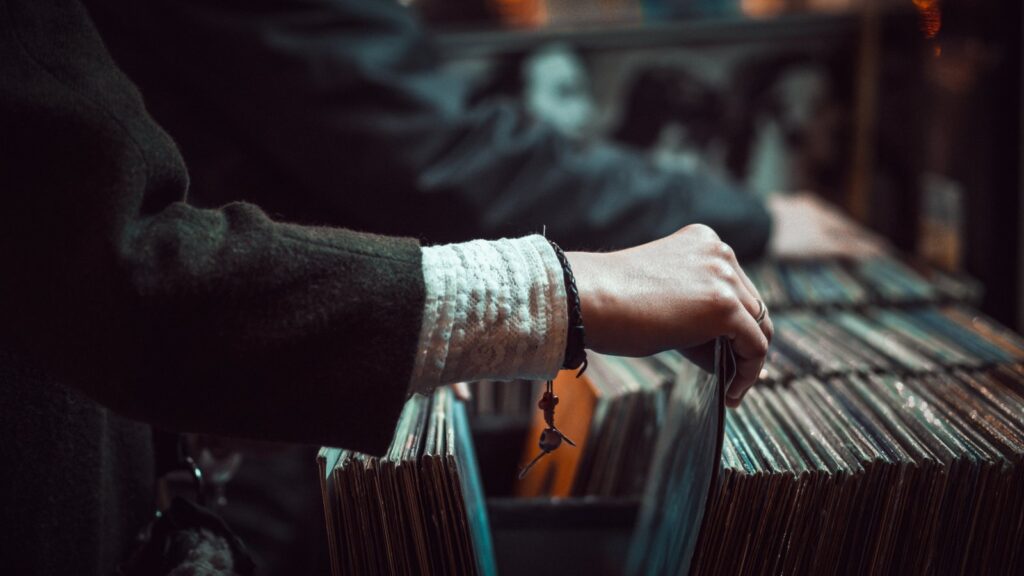
The independent record shop sector is the other tell. Record Store Day 2026 reported strong footfall and another year of growth for the format on paper. Talk to shop owners off the record and the picture is murkier. New release sales of indie albums – the day-to-day churn that pays the rent – are softening. The titles that are flying off the shelves are the ones that everyone’s flying off the shelves: the same Taylor Swift, Charli XCX, Sam Fender, Fontaines D.C. variants that every other shop in the country also has on the wall.

Catalogue is where the real margin still sits. Heritage stock – Bowie, Pink Floyd, Joni Mitchell, Talk Talk, Massive Attack – keeps moving steadily. But it’s also where the supply problems hit hardest, because reissue programmes are increasingly rationed by the same overstretched plants prioritising the big new campaigns.

You can see why: a working independent shop in 2026 is essentially running a heritage business with a thin layer of new release on top. That’s not a failure. It’s a quiet structural change that the headline figures don’t capture.

The Cassette And Hi-Res Streaming Sideshow

If you want a counter-trend, look at cassettes. UK cassette sales have been growing for several consecutive years now, off a tiny base, and 2026 looks set to continue that pattern. The numbers are still small enough to be statistical noise, but the cultural signal is interesting: small indie acts and DIY labels are using cassettes the way they used to use 7-inches, because the format is cheap, fast, and doesn’t require a slot in an overbooked plant. It’s a workaround.

The other workaround is hi-res streaming – and increasingly, dedicated audio-format coverage like our guide to the best British podcasts of 2026, which points to where a lot of the discretionary audio spend is now actually going. Apple Music, Tidal, Qobuz and Amazon now bundle lossless and hi-res audio at no extra cost or close to it, and a quietly growing share of UK listeners are using them as a deliberate alternative to expensive vinyl variants. The argument that vinyl sounds better is genuinely contested in 2026 in a way it simply wasn’t five years ago, and audiophile discussion forums have become a useful early-warning system for where the next generation of buyers is drifting.

None of this kills vinyl. It just means the format no longer holds a monopoly on the “physical or premium audio” instinct.

What This Means For Whoever’s Buying In 2026

If you’re a vinyl buyer in the UK in 2026, the practical takeaways are reasonably clear. Independent record shops still need your custom more than the chains do, and the catalogue and curation difference between a Rough Trade or a Resident Music and an Amazon listing is more obvious than ever. Limited variants from major releases will keep getting more expensive and more numerous; the secondary market for last year’s exclusives is already cooling, so think twice before paying £60 for a colour you’ll never play.

If you care about new British artists – whether that’s chart-bothering pop, the kind of left-field indie that drives our UK Eurovision 2026 entry coverage, or unsigned acts on the verge – the most useful thing you can do is buy their music directly. Bandcamp, label sites, the merch table at gigs – rather than waiting for a vinyl pressing that may or may not arrive on time. That’s where the margin actually reaches the artist.

And if you’re tempted to write off streaming, it might be worth a fresh listen on a hi-res tier. The audio gap with mid-tier turntable setups has narrowed considerably.

The Revival Isn’t Over – It’s Just Different

Calling 2026 the end of the vinyl revival would be wrong. The format is bigger than it’s been in three decades and the cultural attachment to physical music is, if anything, deepening. But the story has shifted. The revival was a recovery; what we have now is a mature, concentrated market with all the dynamics that implies – dominant players, supply bottlenecks, narrowing margins for the long tail.

That’s not a tragedy. It’s just a different chapter, and one worth being honest about. The numbers will keep going up. Whether they keep meaning the same thing is the actual question.

If you’re still buying records in 2026 – which records are doing the work of justifying the format for you, and which ones are just sitting on the shelf?

Oliver Nash

Oliver Nash is a music writer covering new UK releases, live shows and the changing business of music. A former band member who got tired of touring in a Transit van, he turned to writing about music instead. Oliver's pieces cover everything from indie and electronic to mainstream pop, and he takes a working musician's view of new releases - interested in how they're made, what they're trying to do, and whether they pull it off. He lives in Manchester.

Leave a Reply

Your email address will not be published. Required fields are marked *