Trampoline Parks UK in 2026: The £10 Hour, Which Chain Fits Your Family, and the Injury Data the Waiver Hints At
A child is more than twice as likely to suffer a fracture or sprain at a commercial trampoline park than on the trampoline in your garden. That finding, from a study in the BMJ’s Injury Prevention journal, is not something you’ll see on a booking page. And yet millions of British families will file through the airlocked double doors of a retail-park warehouse this year, sign the waiver without reading it, and have a perfectly good time. Both things are true at once. The parks are enormous fun, genuinely good exercise, and one of the few indoor activities that leaves a nine-year-old too tired to argue. They also produce a steady stream of A&E visits, mostly ankles. This guide covers what a session costs in 2026, which chains suit which families, and how to keep your afternoon out of the second category.
In This Article
- From zero to 200 parks in four years
- What a session actually costs in 2026
- The chains, and who each one actually suits
- The injury question the waiver is hinting at
- The NASA claim on the posters is a misquote
- Membership, a garden trampoline, or pay-as-you-go?
- Birthday parties: where the parks make their money
- Toddler mornings, SEN sessions and the adults-only hour
- Getting your money's worth
- Frequently asked questions
- What age can children use trampoline parks?
- How much does a trampoline park session cost?
- Are trampoline parks safe?
- Do parks run sessions for children with additional needs?
From zero to 200 parks in four years
Britain’s first trampoline park opened in 2014. Within four years the industry association counted roughly 200 of them, and the reason is as much about property as bouncing: the parks moved into the big-box units that electrical retailers and DIY chains were abandoning, where ceilings are high, leases were suddenly cheap and the car park was already there. If your local one feels like it used to be a B&Q, that’s because it probably was.
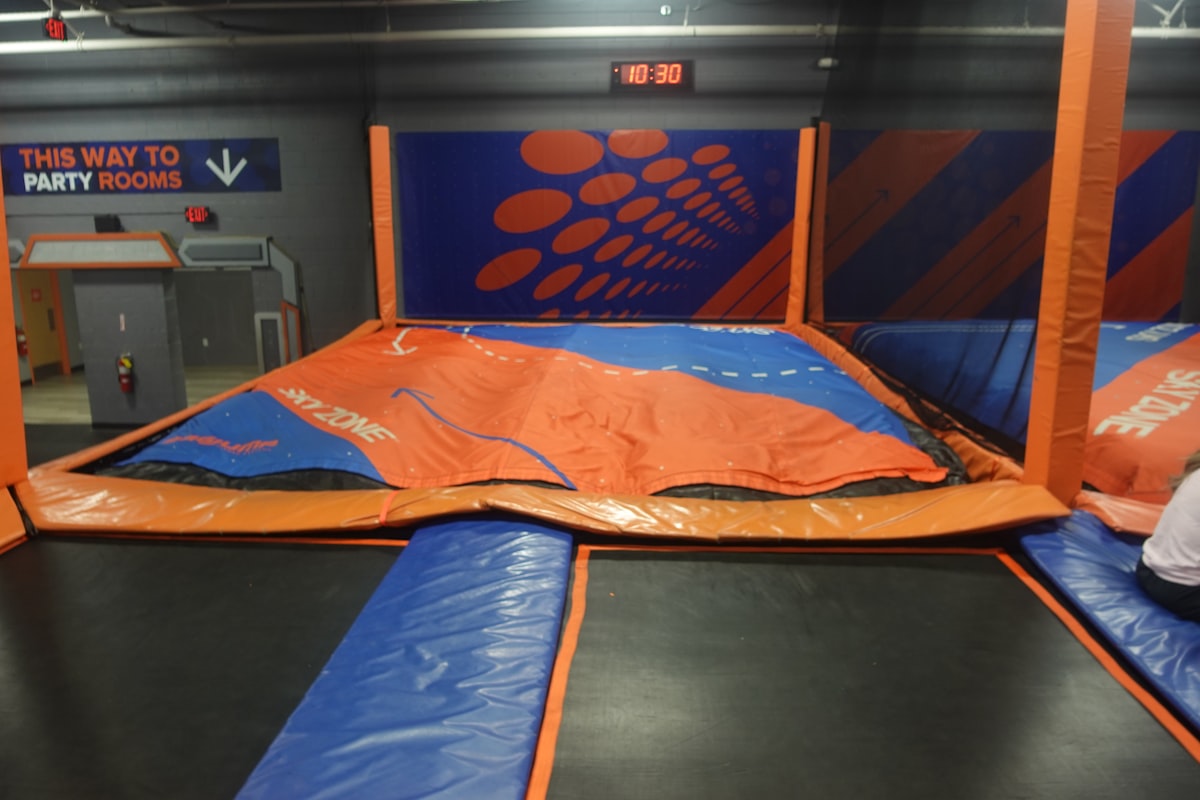
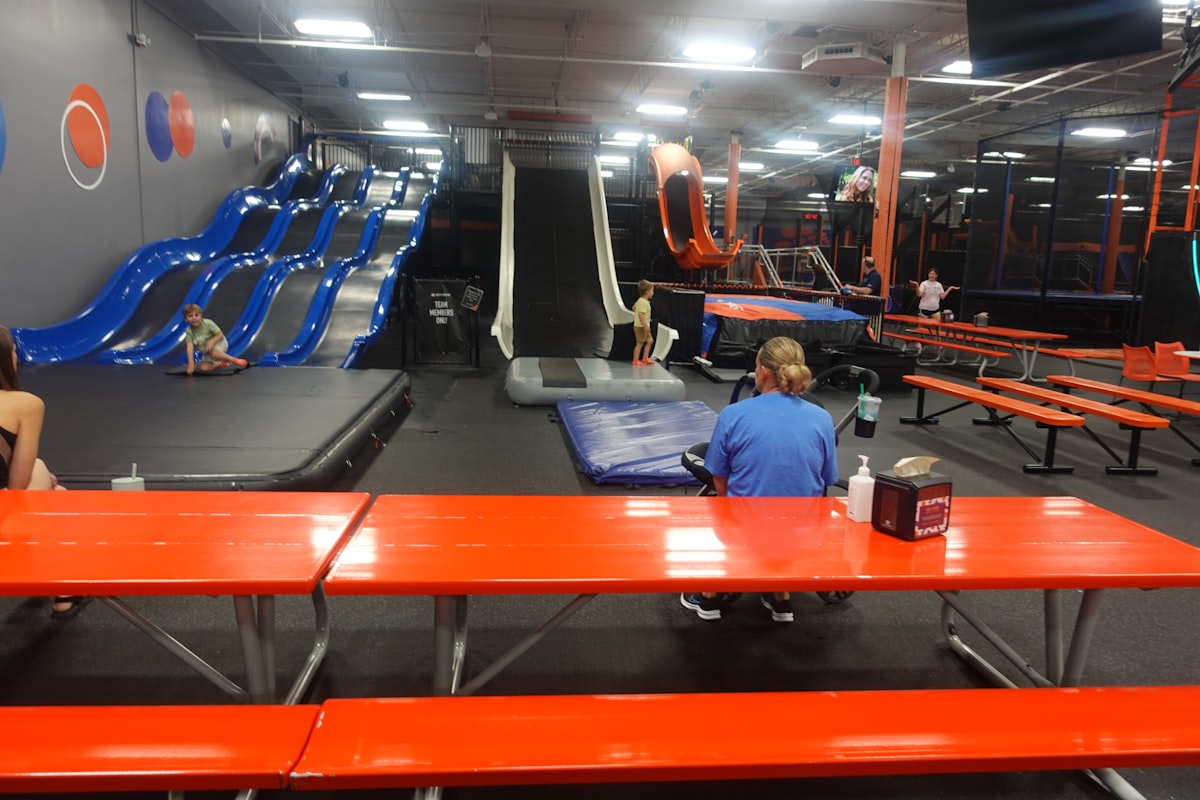
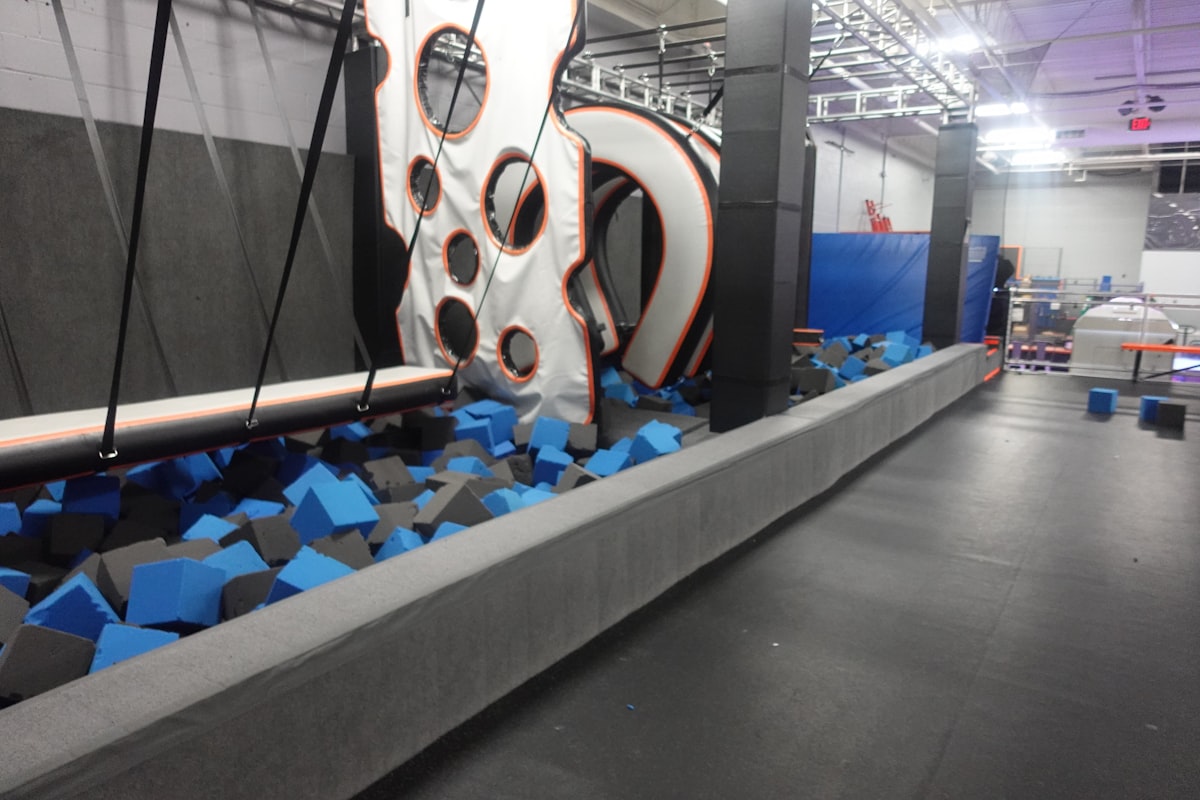
The land grab has since settled into a recognisable high street of chains – Flip Out, Gravity, Oxygen, Jump In, Red Kangaroo – plus plenty of independents. Most now offer far more than trampolines: foam pits, dodgeball courts, slam-dunk lanes, ninja obstacle courses, and in the bigger venues things like aerial riders and electric go-karts. The word “trampoline” is quietly disappearing from the branding. “Adventure park” sells more add-ons.
What a session actually costs in 2026
The standard open-jump session is 60 minutes and costs between £10 and £18 depending on the venue, the city and the time slot. Off-peak weekday sessions can drop under £10 – Flip Out’s Manchester venue has been running £9 jump hours – while a Saturday afternoon in a London park sits at the top of the range. Grip socks are compulsory nearly everywhere and cost £2 to £3. Keep them. Every chain accepts its own socks on return visits, and most accept anyone’s, which makes the second trip cheaper than the first.
| Chain | Typical open-jump hour | What it’s known for | Best suited to |
|---|---|---|---|
| Flip Out | £9-£16 | Biggest UK chain, huge venues, separate under-5 zones | Families with mixed ages |
| Gravity Active | £10-£16 | Climbing walls and e-karting alongside trampolines | Older kids and teens |
| Oxygen Activeplay | £12-£18 | City venues including The O2, aerial Rollglider | London and big-city days out |
| Jump In | £9-£14 | Straightforward trampolining, strong toddler sessions | Under-8s and budget trips |
| Red Kangaroo | £9-£14 | Regional venues, quieter than the big two | Midlands families avoiding crowds |
One warning about the add-ons. The karting, the ropes courses and the arcade zones are priced separately, and they’re where a £12 afternoon becomes a £40 one. The trampolining itself is the value in the building. If the budget is tight, book the jump session and walk past everything else with purpose.
The chains, and who each one actually suits
Flip Out is the biggest, and for families it’s usually the right default. The larger venues run to 200-plus trampolines with properly separated under-5 areas, which matters more than any other feature when you’ve got a toddler and a ten-year-old in the same building. Quality varies between sites – some are franchise-run and it shows in the maintenance – so read recent reviews of your specific venue rather than the chain.
Gravity Active Entertainment has pushed hardest into the “adventure” end, bolting climbing walls and electric karting onto its trampoline floors. It’s the pick for teenagers who’d roll their eyes at a foam pit. Parents on Mumsnet consistently rate its parent-and-toddler mornings and its SEN sessions, which is not a small thing.
Oxygen Activeplay – the chain formerly known as Oxygen Freejumping – runs the flagship venue inside The O2 in London, complete with an aerial Rollglider ride circling the hall. It’s the most polished operation of the lot and priced accordingly. Its Media City venue in Salford, opened in 2025, follows the same premium formula.
Jump In and Red Kangaroo are smaller regional chains that have mostly resisted the adventure-park arms race. Less spectacular, cheaper, and often quieter on weekends. For a first visit with a nervous five-year-old, quieter wins.
The injury question the waiver is hinting at
Every park makes you sign a waiver, and the waiver exists for a reason. The BMJ Injury Prevention study comparing park injuries with home trampoline injuries found children over twice as likely to sustain musculoskeletal injuries at commercial parks. The explanation is partly physics: commercial trampolines are strung far tighter than garden ones, producing a harder, higher bounce and bigger forces through ankles and wrists on a bad landing. Sprained and fractured ankles top the list. Adults, who bring adult weight and teenage confidence, are not exempt – if anything the Saturday-morning dads are the ward’s most reliable customers, a pattern familiar from Britain’s padel injury boom.
The industry’s answer is PAS 5000:2017, a construction and operations standard drawn up by the British Standards Institution with RoSPA and the International Association of Trampoline Parks. It covers everything from padding and wall angles to staffing ratios. Compliance is voluntary, but IATP members have been required to pass an independent inspection since September 2018.
So before you book, ask two questions: is the park an IATP member, and does it comply with PAS 5000? Most decent parks put the answer in their website footer. Silence is an answer too.
On the floor, four rules do most of the work. One person per trampoline, always – double-bouncing launches small children with forces they can’t land. No somersaults on a first visit, whatever the teenager claims. Younger children jump in age-segregated sessions, not open ones. And the last ten minutes of a session produce a disproportionate share of injuries, because tired legs land badly – a fact worth remembering when a nine-year-old lobbies for the two-hour slot.
The NASA claim on the posters is a misquote
Somewhere in nearly every park’s marketing sits the line that NASA found trampolining “68% more effective than jogging”. The source is real – a 1980 NASA-funded study in the Journal of Applied Physiology – but the claim has been mangled in transit. The study measured eight men on a mini rebounder and found that at the same oxygen cost, bouncing produced more biomechanical stimulus than treadmill running. It was about acceleration forces relevant to astronauts recovering bone density, not about burning 68% more calories. Forty-six years later it’s still doing unpaid marketing work.
The honest case for trampolining doesn’t need the embellishment. An hour of it is vigorous exercise by any measure, it’s gentler on joints than pavement running, and it trains balance and coordination in a way children experience as pure play. That’s enough. It doesn’t need to beat jogging in a lab.
Membership, a garden trampoline, or pay-as-you-go?
If your children want to go more than once a month, the arithmetic changes. Most of the big chains sell monthly memberships – typically somewhere between £20 and £30 a month per child for unlimited off-peak jumping, with exact terms varying by venue. Two visits a month at £12 or £14 a session and the membership has already paid for itself, and during the six-week summer holiday it’s not close. The chains rely on the same quiet lapse economics as gyms, though, so set a reminder to cancel when the enthusiasm fades. It will fade.
The other comparison parents make is with a garden trampoline, which runs roughly £120 to £250 for a decent 8ft or 10ft model with an enclosure. Ten to fifteen park sessions and you’d have bought one. But it’s a false choice in practice. The garden trampoline is a different product: softer bounce, no foam pit, no dodgeball, available on a random Tuesday evening in June. The park is the event; the garden one is the routine. Households that can manage both tend to find they don’t compete – and the garden version, for what it’s worth, is the one the injury statistics favour.
Birthday parties: where the parks make their money
Party packages run £15 to £25 a head and typically include a jump session, a private room, food of the beige persuasion and a host to run the show. That sounds steep for a child’s birthday until you price the alternative: hosting twelve eight-year-olds at home, feeding them, entertaining them for two hours and repairing the house afterwards. At £20 a head with someone else holding the clipboard, the park is the bargain. It’s one of the few things in family life that costs less than it should.
The catch is availability. Weekend slots in school holidays go four to six weeks out at popular venues, and the 2pm Saturday slot goes first. Book early or learn to sell a Sunday-morning party as a fun novelty.
Toddler mornings, SEN sessions and the adults-only hour
The open-jump session is only one product on the timetable, and often not the best one for your child.
Toddler sessions – usually weekday mornings – put under-5s on the floor with fewer, smaller jumpers and a parent bouncing alongside. They’re cheaper than open sessions and vastly calmer. SEN and quiet sessions, with reduced capacity and the music turned off, have gone from rarity to standard timetable item at the big chains in the last few years, and Gravity’s are particularly well regarded. And most parks now run adult fitness classes or adults-only evening jumps, which are exactly as much of a workout as the NASA study’s eight volunteers could have told you.
Getting your money’s worth
Book off-peak if you possibly can – a term-time weekday after school costs less and shares the floor with a fraction of the bodies. Fill in the waiver online before you arrive rather than at a kiosk with a queue behind you. Close-fitting clothes, empty pockets, and eat afterwards rather than before. And keep those grip socks somewhere findable.
A trampoline park slots neatly into the expensive puzzle of school-holiday planning – it’s the wet-weather anchor around which cheaper outdoor days can be arranged. For the rest of the summer there’s still time to use Kids Week in the West End, and our guides to cheap UK family holidays and the best seaside breaks for families cover the bigger trips. Planning further ahead, Easter breaks book up earlier every year.
Frequently asked questions
What age can children use trampoline parks?
Most parks admit children from age three, with under-5s restricted to toddler sessions or separate zones. A few set the floor at four or five – check your venue, because it’s the most common cause of doorstep disappointment.
How much does a trampoline park session cost?
£10 to £18 for a one-hour open jump in 2026, plus £2 to £3 for compulsory grip socks on your first visit. Off-peak and toddler sessions cost less.
Are trampoline parks safe?
Safer than the marketing’s critics claim, riskier than the marketing admits. Injuries – mostly ankle sprains – are more likely than on a garden trampoline. Picking an IATP-member park that meets PAS 5000, keeping to one person per trampoline and skipping the somersaults removes most of the avoidable risk.
Do parks run sessions for children with additional needs?
Yes. Quiet SEN sessions with reduced numbers and lower sensory load are now standard at Flip Out, Gravity and most large venues, usually at set weekly times.
The parks that opened in the 2014 gold rush are now a fixture of British childhood, somewhere between the swimming pool and the cinema in the school-holiday rotation. The interesting question is what happens to the buildings next – the chains keep adding karts, ropes and ninja rigs, and at some point the trampolines stop being the point. Enjoy them while they’re still the main event.