PDRN Skincare UK 2026: What Salmon DNA Actually Does For Your Skin – And Why The Serums Oversell It
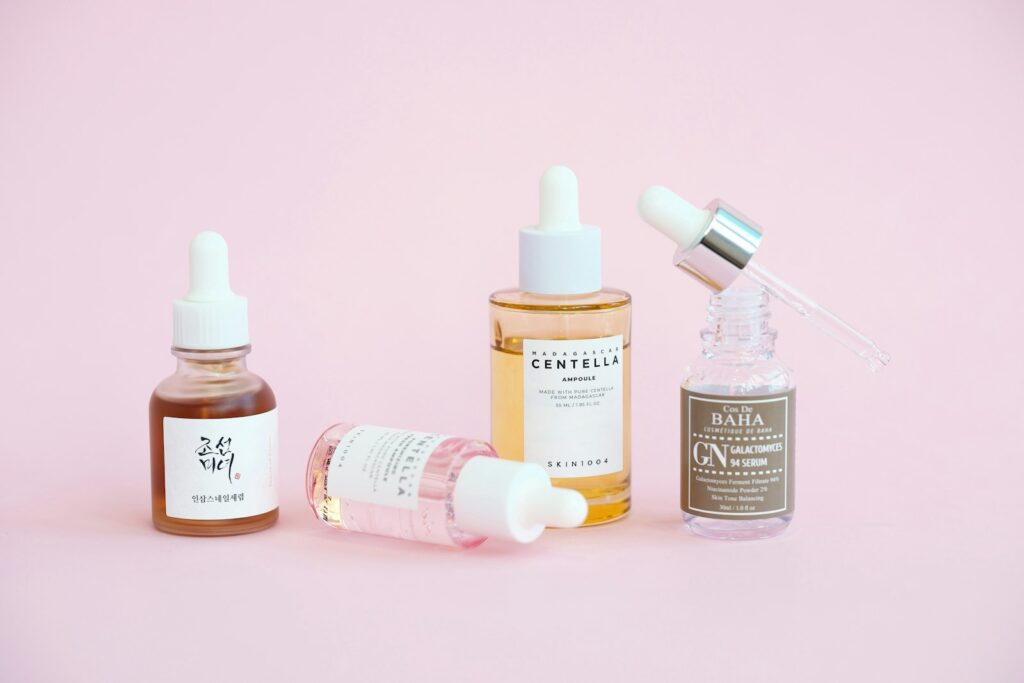
Somewhere between the sheet masks and the snail mucin, the K-beauty aisle started selling fish DNA. And people are buying it by the crate. PDRN skincare – short for polydeoxyribonucleotide, longer for “purified fragments of salmon sperm DNA” – has gone from Seoul clinic curiosity to something you’ll find on the shelf in a Boots near you, usually in a little frosted-glass dropper bottle with a price tag that makes you blink twice.
In This Article
- What’s actually in the bottle
- The evidence everyone quotes – and where it came from
- How salmon DNA ended up in your bathroom
- The needle versus the dropper
- What topical PDRN can realistically do
- How to read a PDRN label without getting fleeced
- Four products that keep coming up
- Medicube PDRN Pink Peptide Serum – around £32
- Rejuran Healer Essence – around £85
- Anua 100+ PDRN Repair Serum – around £28
- VT Cosmetics Reedle Shot PDRN 100 – around £24
- Three months of testing, honestly
- Is it worth the money?
- The vegan and squeamish question
- Who should bother
I’ve been testing these serums since the spring, and I’ve read most of the clinical literature that gets waved around to justify them. The short version is that PDRN is one of the more genuinely interesting ingredients to hit the mainstream in years. The slightly awkward version is that almost none of the good evidence applies to the thing you’re being sold.
Let me explain the gap, because it’s a big one.
What’s actually in the bottle
PDRN is a mixture of DNA fragments, usually pulled from the sperm of salmon or rainbow trout. The fish source isn’t marketing whimsy – salmon DNA is around 90-odd per cent similar to ours, which means the body doesn’t treat it as a foreign invader and mount an immune tantrum. The raw material gets heated and purified until the proteins that might trigger an allergic reaction are stripped out, leaving short chains of nucleotides behind.
Those fragments do two things worth caring about. They act as a signal that tells cells to get on with repairing tissue, and they hand over the raw building blocks – the actual bits of DNA – that skin uses when it’s rebuilding. The proposed mechanism is that PDRN switches on something called the adenosine A2A receptor, which nudges the body toward making new blood vessels and dialling down inflammation. That’s not a cosmetic fantasy. It’s a documented pharmacological pathway, and it’s why the ingredient exists in medicine at all.
The bit the packaging tends to skate over is where all of this was proven.
The evidence everyone quotes – and where it came from
The headline studies for PDRN aren’t about wrinkles. They’re about wounds that won’t close.
The one that gets cited most is an Italian randomised, double-blind, placebo-controlled trial in patients with diabetic foot ulcers. Just over 200 people, half given PDRN and half a placebo, three times a week for eight weeks. By the end, 37.3 per cent of the PDRN group had complete wound closure against 18.9 per cent on placebo – a statistically solid result (published in the peer-reviewed literature on PDRN’s clinical use). That’s a real drug doing a real job in people with a genuinely difficult condition.
Here’s the catch that never makes it onto the box. The PDRN in that trial was injected – into the muscle and around the edge of the wound – not smoothed on as a serum. A 2025 review of PDRN across skin conditions makes the same point repeatedly: the strong outcomes come from injectable protocols, and topical delivery is a separate, far less settled question (reviewed in Applied Sciences, 2025). Injectable PDRN, sold in clinics under brand names like Rejuran, has decent data behind it for skin healing and texture. The serum on your bathroom shelf is trading on that reputation without necessarily sharing the results.
How salmon DNA ended up in your bathroom
PDRN didn’t arrive as a beauty trend. It arrived as a hospital treatment.
Italian researchers were working with it in wound care and vascular medicine decades ago, long before anyone thought to put it in a serum. The regenerative angle – faster healing, better blood flow, calmer tissue – made it obvious fodder for aesthetic medicine, and Korean clinics ran with it. By the late 2010s, “salmon DNA” injections were a fixture on Seoul treatment menus, marketed as a way to improve skin quality rather than freeze movement the way toxin injections do. Rejuran became the brand people name-dropped.
Then the internet did what the internet does. A few dermatologists posted about it, the phrase “salmon sperm facial” turned out to be catnip for algorithms, and a handful of celebrities let slip they’d had the injections. Search interest went vertical. And the moment demand outstrips access to a clinic, the mass-market version appears – which is how a molecule that made its name in diabetic wound trials ended up as a £40 dropper bottle promising you the glow of a Gangnam clinic without leaving your flat.
That journey matters, because the marketing leans hard on the clinical pedigree while quietly changing the one thing that made the clinical results work: how it gets into your skin.
The needle versus the dropper
This is the crux, so it’s worth being blunt. A DNA fragment is a large molecule. Skin is very good at keeping large molecules out – that’s its entire job. When a clinician injects PDRN, they’re placing it exactly where it needs to work, underneath the barrier that would otherwise block it. When you press a pump of serum onto your cheek, most of that molecule is sitting on top of the stratum corneum, going nowhere in particular.
So can a topical PDRN serum get enough active ingredient deep enough to trigger the collagen-and-repair cascade the injectables manage? The honest answer is that nobody has shown it convincingly. There are small manufacturer-run studies suggesting surface improvements in hydration and texture. There’s very little independent, well-controlled work demonstrating that topical PDRN does anything you couldn’t get from a good hyaluronic acid and a barrier cream.
And that’s my one contrarian line for this piece: for most people, a £45 topical PDRN serum is a lovely hydrating essence wearing a lab coat. If you want the results the science actually supports, that’s a conversation with an aesthetic clinic and a needle, not a purchase you make at 11pm on a beauty website.
What topical PDRN can realistically do
None of that makes these serums useless. It makes them ordinary, which is a different complaint.
The formulas I’ve tried do a fine job as hydrators. They’re typically water-light, they layer well under moisturiser, and skin looks plumper and calmer the morning after – the same short-term glow you’d get from any well-made humectant serum. If your skin barrier is having a rough time, a gentle PDRN essence sits comfortably in the same category as the petroleum-based routines we’ve covered before in our guide to slugging, or the water-holding fungal hydrators in our piece on tremella skincare. Pleasant, low-drama, unlikely to cause trouble.
What I wouldn’t do is expect a topical serum to firm sagging, fade deep lines, or rebuild collagen the way the injectable trials describe. That’s asking a moisturiser to do surgery. If redness is your actual concern, the evidence base for something like azelaic acid is far sturdier and the products cost less.

How to read a PDRN label without getting fleeced
If you’re going to buy one anyway – and plenty of you will, because it feels nice and the bottles are gorgeous – a few things separate a serious formula from an expensive placebo.
Check where PDRN sits in the ingredients list. If “sodium DNA” or “polydeoxyribonucleotide” is buried near the bottom, below a parade of thickeners and fragrance, you’re paying for a rumour of an active. Look for a stated concentration or at least a top-five position. Watch the extraction claims too; reputable Korean manufacturers list the fish source and the purification, because removing the allergenic proteins is the whole point. A brand that won’t say where its DNA comes from is a brand I’d skip.
Be sceptical of anything promising “salmon sperm facial results at home”. The at-clinic version involves microneedling or injection precisely because topical application doesn’t replicate it. A serum that borrows the language of the clinical procedure is hoping you won’t notice the delivery method is completely different.
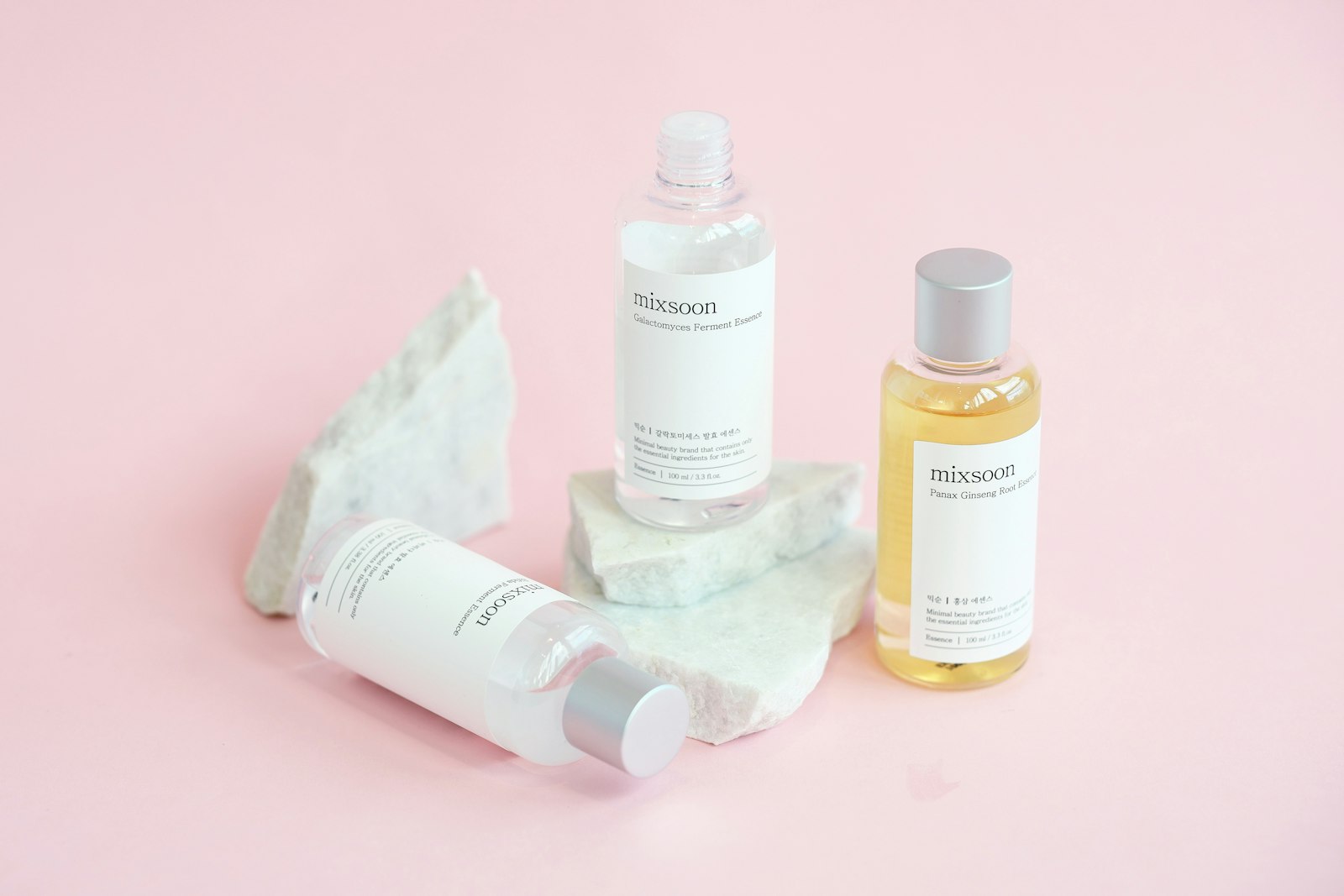
Four products that keep coming up
Since people always ask for names: these are the four that dominate the UK conversation, from our earlier product testing.
Medicube PDRN Pink Peptide Serum – around £32
The gateway drug. It’s the one on every viral shelf edit, and there’s a reason – it pairs salmon PDRN with niacinamide and peptides, so you’re covering three bases at once. The pink tint is cosmetic, not pigment.
Rejuran Healer Essence – around £85
Pricier and more serious. Rejuran is the clinical brand clinics reach for, and its at-home essence is the closest you’ll get to the injectable without a needle. Worth it if you’re post-procedure or have skin that’s been through it.
Anua 100+ PDRN Repair Serum – around £28
Lightweight, layering-friendly, with a proper hit of hyaluronic acid. A good pick if you already use actives and want to slot PDRN in without disrupting everything else.
VT Cosmetics Reedle Shot PDRN 100 – around £24
The vegan option – plant-derived polynucleotides rather than salmon. The tingle is real, so patch test first.
Three months of testing, honestly
I’ve had four of these on rotation since April. Two Korean imports that cost more than I’d like to admit after shipping, one that turned up in that infuriating shrink-wrapped clamshell you need scissors and a grudge to open, and a British-formulated one that came in at a more sensible price.
The pattern was the same across all four. Skin drank them up, looked plumper and a little more even by morning, and behaved itself under makeup. Nothing stung, nothing broke me out, and after a week or two my face looked well-rested in the way a good hydrating routine tends to deliver. That’s a genuine result and I don’t want to be sniffy about it.
But here’s what didn’t happen. No line I’d describe as “deep” shifted. The slight loss of firmness along my jaw that made me curious about the ingredient in the first place stayed exactly where it was. When I stopped using them for a fortnight to see what I’d miss, the answer was: a bit of surface dewiness, and nothing structural. That tracks perfectly with the science. Surface hydration is what a topical can plausibly deliver, and surface hydration is what I got. The regenerative fireworks stayed in the injectable studies where they belong.
The most telling detail? The cheapest of the four, the British one, performed about the same as the imports that cost twice as much. If the active can’t get deep enough to do its clever work, you’re mostly paying for the humectants and the packaging – and those don’t need a premium.
Is it worth the money?
Depends entirely on what you’re comparing it to.
Set a £45 PDRN serum against a plain hyaluronic acid essence that costs a tenner, and the maths gets uncomfortable. Both hydrate. Both plump the surface overnight. One of them has a fish-shaped story and a much prettier bottle. If the story is worth the £35 premium to you, fair enough – skincare has always been part science, part ritual, and there’s no shame in enjoying the ritual. But don’t tell yourself you’re buying the clinical results. You’re buying a nice hydrator and a good yarn.
Now set the same serum against the in-clinic injectable it’s imitating. A course of Rejuran or similar runs into the hundreds, needs a qualified practitioner, and comes with downtime and the occasional bruise. That’s a serious commitment. But it’s also the version with the evidence attached. If firmer, better-quality skin is genuinely your goal and you’ve got the budget, the honest recommendation is to skip the shelf entirely and book a consultation. The serum sits in an odd middle ground: too expensive to be a casual hydrator, too weak to be the treatment it’s dressed up as.
The vegan and squeamish question
Two objections come up constantly, and they’re fair ones. First: it’s fish sperm, which puts it firmly off the table for anyone vegan and gives plenty of other people pause. There are “plant-based PDRN alternatives” appearing now, usually built from other nucleotide sources, but the clinical data behind those is thinner still, so you’d be buying an unproven version of an under-proven ingredient.
Second, the allergy worry. Purified PDRN has the fish proteins removed, which is meant to make a shellfish-style reaction unlikely, but “unlikely” isn’t “impossible”. If you’ve got a serious fish allergy, patch test somewhere discreet and give it a couple of days before you go near your face. I’d say the same about any new active, but the fish origin makes people understandably jumpy.
Who should bother
If you like a good hydrating serum, your barrier could use some support, and you’ve got the budget to spare, a well-formulated topical PDRN is a perfectly nice thing to own. It won’t wreck your skin and it might make it look a bit dewier. Treat it as a hydrator with an interesting backstory, not a treatment.
If you’re chasing the firming and texture results the ingredient is famous for, save the serum money and price up an in-clinic course instead. The needle is where the evidence lives. For at-home devices making similar rejuvenation promises, the same “does the delivery method match the claim?” test applies – it’s why we’ve been cautious about red light therapy at home too.
And if your skin is simply stressed and reactive – post-holiday, post-antihistamine, post-British-summer – you might get everything you need from a solid barrier routine long before PDRN enters the picture, as we set out in our piece on repairing a wrecked skin barrier. The at-home device aisle has the same problem, only louder: four LED face mask ads were banned this year and not one device is registered as a medical device.
The ingredient is real. The medicine is real. It’s the leap from the clinic to the serum bottle that’s been quietly oversold, and now that you can see the join, the only question left is whether a nice hydrator is worth forty-odd quid to you – fish and all. So, would you put salmon on your face if it were labelled plainly?
Whatever active you are layering, the base layer that matters most in July is sun protection, so be clear on the difference between an SPF moisturiser and a proper sunscreen.
Related reading: Our CoolSculpting review for UK readers.