Best Car Jump Starter Under £100 Before the Clocks Go Back: Why an £84 Clarke Out-Started a £180 Noco
A jump starter that says 1,200A on the box and a jump starter that actually gets a cold diesel going are not always the same product. In the most useful test I found for the best car jump starter under £100, the cheapest unit in the line-up recorded more successful starts than one costing more than twice as much.
In This Article
- The best car jump starter under £100 starts with the test, not the amps
- What 1,200A buys, and what it doesn't
- The cheaper route nobody mentions
- Do you need one if you've got breakdown cover?
- The cold affects the pack too
- Using one without wrecking anything
- Jump leads versus a pack: the real running costs
- Where a jump starter fits among the other autumn buys
- What I'd buy, in order
- The five-minute check before you buy anything
That’s worth knowing now rather than in January. The clocks go back on 25 October, the mornings get darker, and the batteries that have been quietly dying since the summer pick a frosty Monday to finish the job.
The AA logged more than 270,000 breakdown call-outs in January 2026 and around 255,000 in February, and it described flat batteries as the most common cause of winter breakdowns. Cold weather cuts what a battery can deliver while a cold engine asks for more. An ageing battery that coped fine in August simply can’t do both.
The best car jump starter under £100 starts with the test, not the amps
I haven’t tested these myself, so I’m leaning on the two independent tests I trust most for this. What Car? ran a group test using a 2010 Volvo XC90 D5, a 2.5-litre diesel, with the battery deliberately flattened to 12.3V. Each pack was used in rotation until it ran out, and the testers counted how many starts it managed. That’s a far more honest measure than the peak-amp number printed on the box, because peak amps only tell you what a pack can deliver for a fraction of a second.
The winner was the Clarke JSM1200, at £83.76 when tested. It had a 1,200A peak rating, a 12Ah battery and the highest number of successful starts of anything on the table. It wasn’t flawless: it gave overheat warnings after each start and went completely dead once the battery was exhausted, which is a nuisance if you forgot to charge it.
Second on starts was the Ring UltraBoost 1500, with 20. It costs £109.99, which puts it just outside the budget, and the build quality is better. But one USB output and a price tag above the Clarke made it a hard sell for most people.
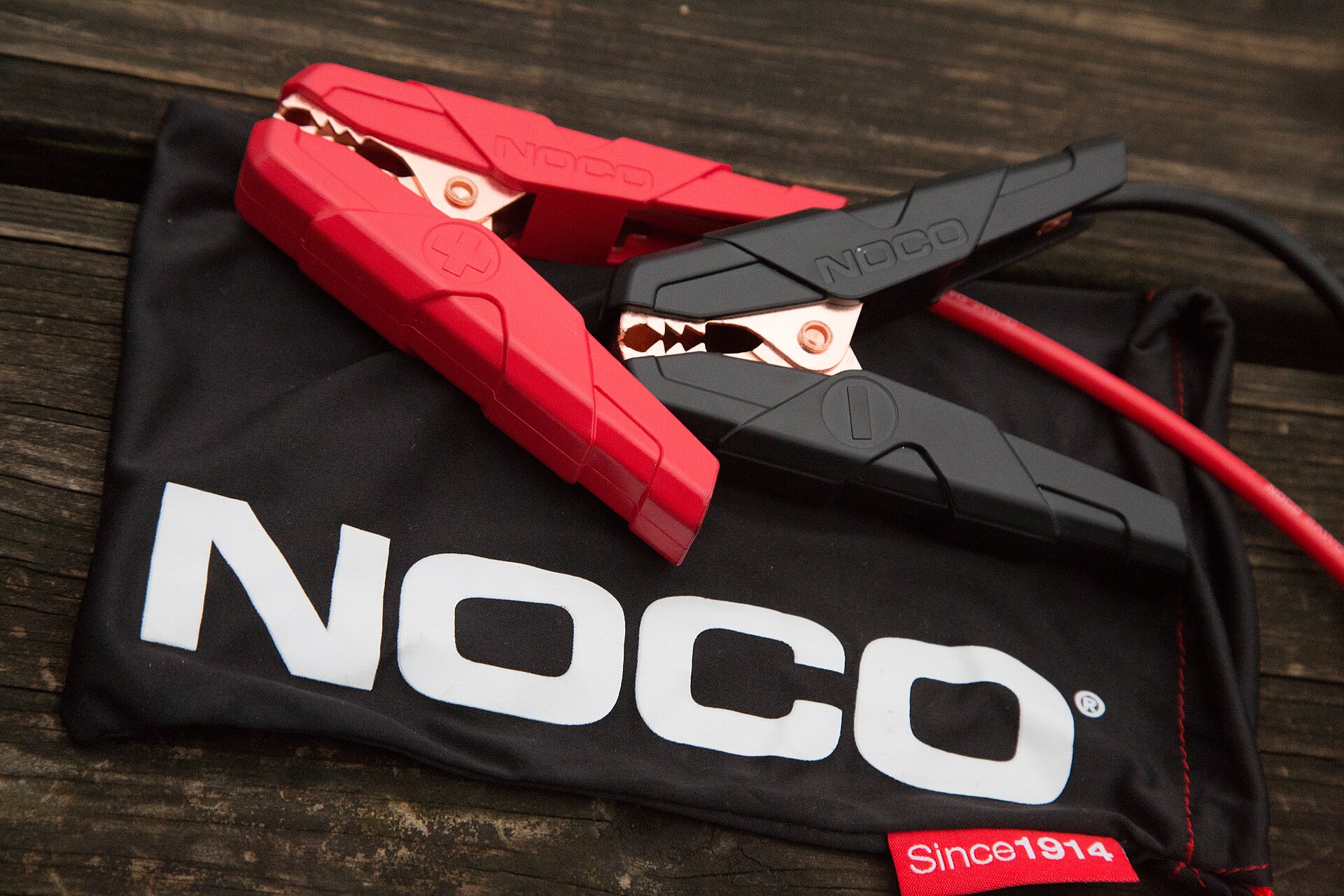
Then there’s the one I’d skip. The Noco Boost XL 1500A, at £180, managed only 15 starts in the same test and has clamps that take about 10kg of force to open. Lovely thing. Just not £96 lovelier than the Clarke if all you’ve got is a Corsa and a school run.
What 1,200A buys, and what it doesn’t
Peak amps matter up to a point, and the point is your engine. What Car? gives typical limits of roughly 4.5 to 6.0 litres for petrol engines and 3.0 to 4.5 litres for diesels on packs in this class. A family hatchback sits well inside that. A big V6 diesel SUV does not, and for that you’d be looking at something like the Ring JumpStart Pro 3000, which is rated for unlimited petrol and a 13-litre diesel, and is far too big and expensive for most drivers.
Past the engine-size check, a bigger number stops helping. A 1,200A pack with a small, tired battery inside will lose to an 800A pack with a healthy 10Ah cell. That’s roughly what the Sealey RoadStart 800 did in the What Car? test: at £99.54 it was described as impressive for the money, although the LED indicators were inconsistent and the port cover is awkward.
Only two packs in that test sit under £100, the Clarke and the Sealey. Pick the Clarke on starts, and the Sealey if you can find it cheaper or you like the layout.
The cheaper route nobody mentions
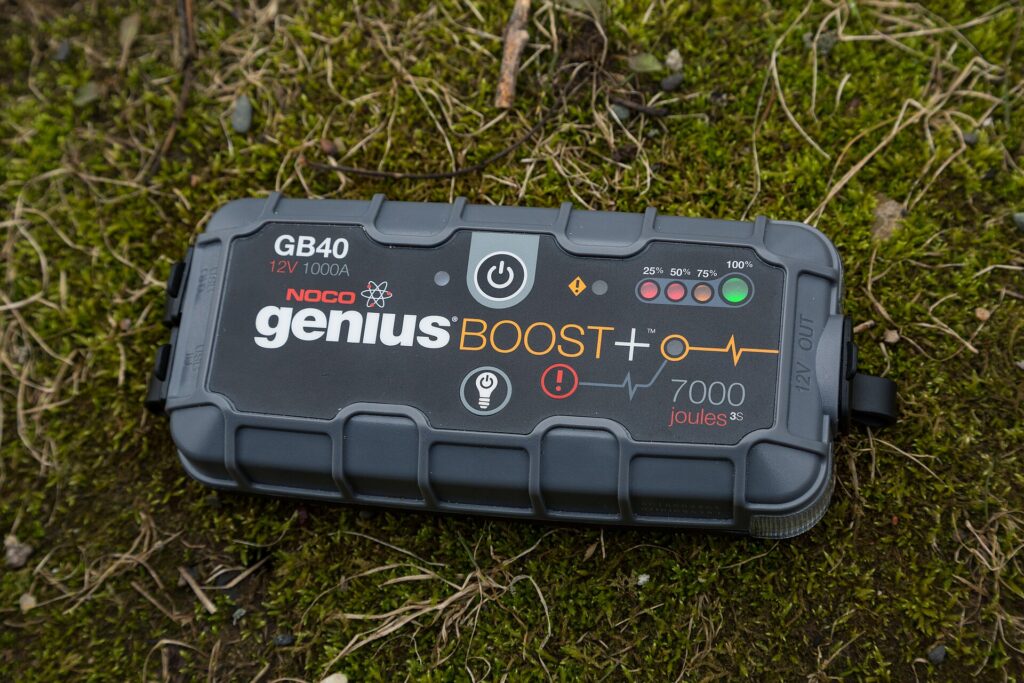
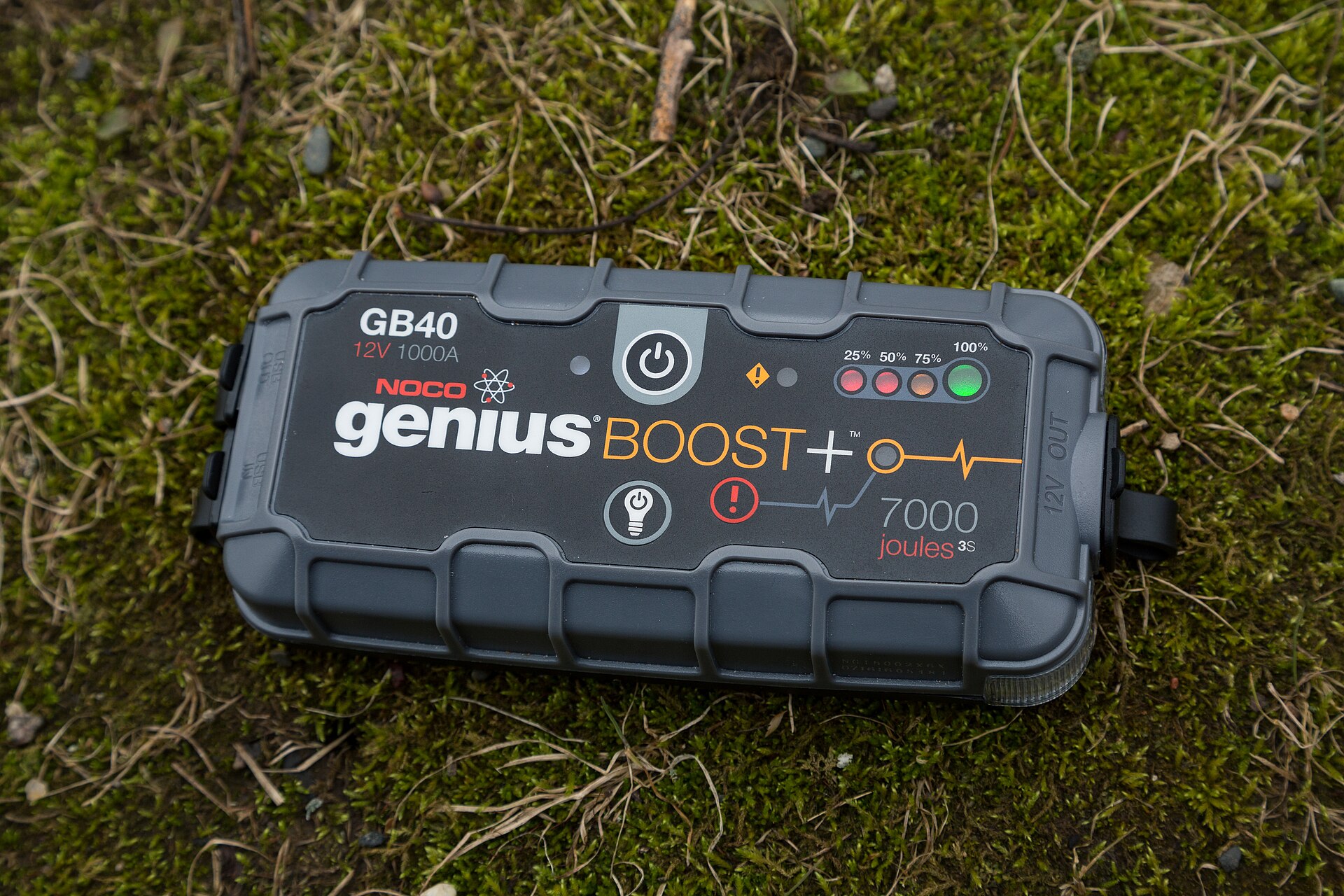
Car Magazine ran a separate test and came to a different conclusion on price. Its budget pick was the Noco Boost Plus GB40, a 1,000A pack that it said made it feel as though there was no flat battery at all. It also rated the Gooloo GE1200 as versatile for the money at around £80 RRP, with the catch that its battery life was inferior to the others.
Read those two verdicts side by side and a pattern shows up. The GB40 is the sensible small-engine choice, Car Magazine says it’s less useful for larger engines, and The Gooloo is cheaper but the battery fades faster, which matters because a jump starter spends most of its life sitting in the boot doing nothing.
Which brings up the thing the box never says. A jump starter that has self-discharged to nothing over the summer is a fancy paperweight. Most packs ask you to top them up every few months – check the manual on yours – and if you’re the sort of person who won’t do that, none of this advice helps.
Do you need one if you’ve got breakdown cover?
A lot of people don’t. If you have breakdown cover that comes out within an hour or so, and you only drive locally, the patrol will jump-start you for nothing. A jump starter earns its place in a few situations: you drive somewhere with no signal, you do the school run at 7.30am with children in the back, you park on a street where a patrol van can’t easily reach you, or you’re simply fed up with waiting in a dark car park in November.
For those drivers, £84 is cheap, and waiting with a toddler and a flat battery feels longer than any clock says.
But here’s the bit people skip. A jump starter gets you going once. It doesn’t fix the battery. If your car needed a boost this week, it’ll need one again next week unless the battery is replaced or the cause is found, whether that’s a short trip habit, a parasitic drain or a dying alternator. Treat the pack as the thing that stops you being stranded, not the thing that solves the problem.
The cold affects the pack too
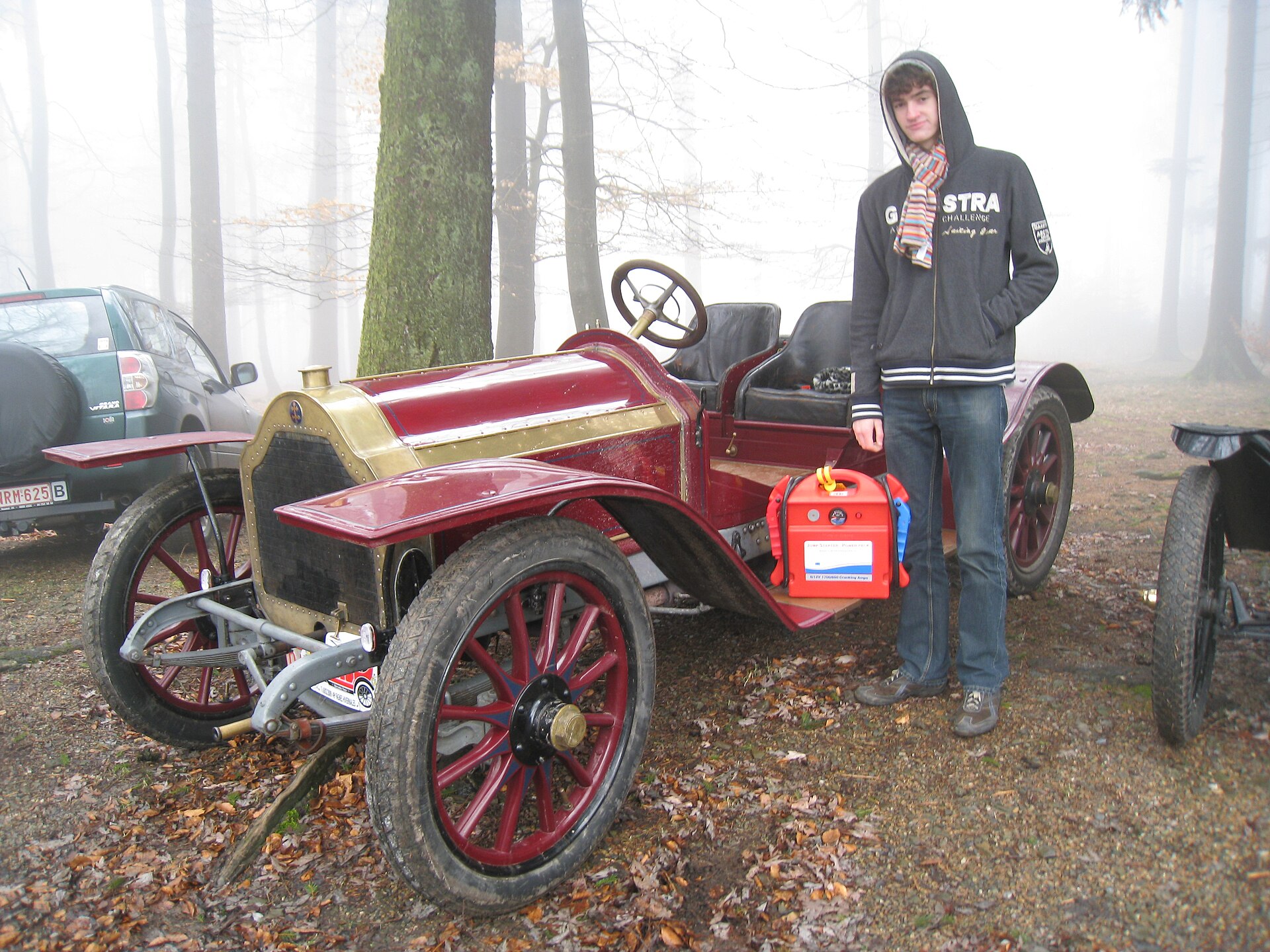
Here’s something the box rarely mentions. The lithium cells inside these packs don’t love the cold either. As far as I know, a pack that’s been sitting in a boot overnight at around freezing will deliver less than the same pack at room temperature, which is the opposite of what you want on the one morning you need it. I’m not quoting a test here, it’s general battery behaviour, so check what your pack’s manual says about operating temperature.
The practical fix costs nothing. If you’re nursing a marginal battery through a cold snap, bring the pack indoors the night before. It’s also why the engine-size limits matter more in winter than the spec sheet suggests: a diesel that’s marginal on paper will be more marginal at minus two.
Some people keep the pack in the glovebox rather than the boot, partly for reach and partly because the cabin stays a little warmer. It’s a small thing, but small things count when it’s dark and your hands are cold.
Using one without wrecking anything
Follow the instructions that came with your pack, because they differ. In general the order is: switch everything in the car off, connect the clamps to the battery or the jump point the handbook shows, wait for the pack’s light to say it’s happy, then try to start the engine. Don’t crank for more than a few seconds at a time, give the pack a rest between goes, and take the clamps off once the engine is running.
Don’t leave it connected. And once the engine’s running, give the car a proper drive of 20 to 30 minutes if you can. A short hop to the corner shop won’t put back what the start took out.
Jump leads versus a pack: the real running costs
Traditional jump leads are cheaper still, often under £15, and they work perfectly well – provided another car turns up and its owner doesn’t mind. That’s the catch. Leads need a donor vehicle, a bit of knowledge about which terminal goes where, and a willing stranger. A pack needs none of those.
A second point goes against the leads. Modern cars with start-stop systems and battery management can be fussy about being connected to another vehicle’s electrics. Check your handbook before reaching for the leads, and if the manual mentions a dedicated jump point under the bonnet, use it. A pack with reverse-polarity protection (look for it on the spec list) takes most of the risk out of getting the clamps wrong.
The ugly truth about both: neither beats a battery that’s tested before winter. As far as I know, plenty of garages and tyre fitters will check a battery for little or nothing, and I’m guessing that costs less than the cheapest pack here, but ring and ask. If it comes back marginal, replace the battery first.
Where a jump starter fits among the other autumn buys
It isn’t a standalone purchase, really. If you’re already sorting out winter, the sensible neighbours are a warm-air plan for the house and a charged power bank in the glovebox. We’ve covered the first in our look at why every 2kW heater costs the same to run, and the second in the guide to the best power bank for flights, which doubles as an emergency phone charger when the car’s dead.
If you’re driving away for October half-term, the case gets stronger. A flat battery on a motorway services car park at 6pm in the rain is a bad way to start a family break, and our October half-term breaks piece is full of places where a mobile signal comes and goes.
The clocks going back also bring on the darker-mornings problem we covered in the SAD lamp evidence round-up. The same dark morning makes you more likely to leave headlights, heated seats and phone chargers running in a car that then sits cold for hours.
What I’d buy, in order
Four options, and a clear order between them.
The Clarke JSM1200 at about £84 is the one to buy if you’ve got a typical petrol or diesel car and want the best result from What Car?’s testing. It had the most successful starts, and that’s the number that matters. Charge it before you put it in the boot and set a reminder to recharge it.
The Noco Boost Plus GB40 is the pick if you’ve got a small petrol car and care more about build quality and a clean design than raw staying power. Car Magazine called it the budget choice, and I’d agree for a small engine. For anything big, look elsewhere.
The Sealey RoadStart 800 at £99.54 is the middle-of-the-road option. It’s fine. It isn’t thrilling, and the awkward port cover is the sort of thing that annoys you on a cold morning with gloves on.
And the Noco Boost XL at £180? Skip it, unless you’ve got a bigger engine and a stronger reason. The clamps that need serious force are a bad trait when your hands are numb, and the fewer starts in the same test makes it a poor deal.
Prices move, especially around Black Friday, so it’s worth reading our guide to when waiting beats buying before you spend. But a jump starter is the sort of purchase where waiting until the end of November is a risk in itself, so I’d buy a sensible pack now and not hold out for a saving of a tenner.
The five-minute check before you buy anything
Look at your battery. If it’s the original battery and the car is getting on a bit, a hard frost could be what finishes it. Check the date on the battery label, take it to a garage for a proper test, and ask whether it holds a charge under load.
Check your engine size against the pack’s stated limits. Make sure it has reverse-polarity protection and clamps that grip firmly. Charge it, put it somewhere you can reach without unloading the whole boot, and set a reminder in your phone for February.
Prices in this article are the ones recorded in the What Car? and Car Magazine tests and may have moved since, so check the current price before you order.
So here’s the question I’d want answered before winter: how old is the battery in your car right now, and when did anyone last test it?
Sources: What Car? – Best compact jump starters 2026; Car Magazine – the best car jump starters tested; London World – AA winter breakdown figures.