
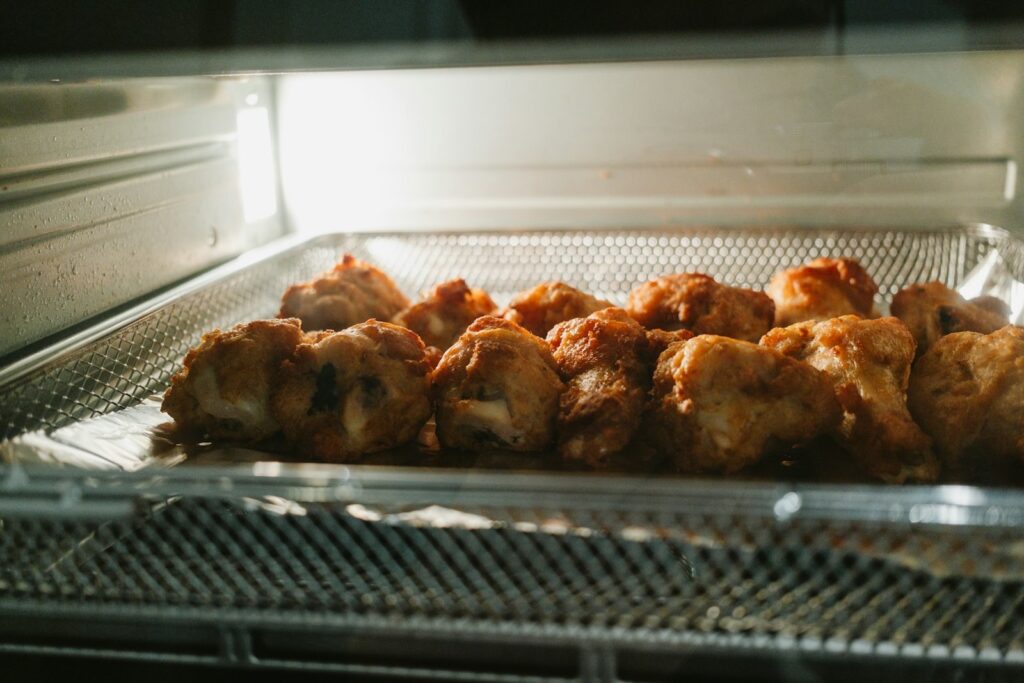
Best Air Fryer Under £100 in October 2026: What Which? Measured, the Dual-Drawer Sweet Spot and the Gas Oven Catch Nobody Mentions
Which? put a roast chicken in an air fryer and a built-in oven and metered both. The air fryer did it for 14p. The oven did it for 30p, took 23 minutes longer, and produced drier meat. That’s the whole air fryer argument in one test, published on 3 September, ahead of the Ofgem cap that set the electricity unit rate at 26.32p from 1 October. So if you’re shopping for the best air fryer under £100 this month, the case for buying one has never been easier to make.
In This Article
- What Which? measured, at the rate you’ll actually pay from October
- The gas oven catch
- What your money buys under £100
- Capacity is the spec that matters. Wattage isn’t.
- The under-£100 shortlist at a glance
- Four things I’d skip
- Three air fryer myths worth dropping
- Payback: when a £70 air fryer pays for itself, and when a £250 one never does
- What I’d actually buy
The case for buying the right one is a different matter. And there’s a catch in the running-cost maths that almost nobody selling you an air fryer will mention, because it only applies to the millions of British kitchens that cook on gas.
What Which? measured, at the rate you’ll actually pay from October
The test used a Morphy Richards Health Fryer against a Bosch Serie 2 built-in electric oven, with everything metered in the lab rather than estimated from the wattage label. Four foods: a 1.3kg chicken, 320g of frozen chips, a single jacket potato and a small sponge cake. The air fryer won every round on cost and every round on results bar the chips, where both appliances produced the usual mix of pale and burnt.
For a different route to quick, crisp results, see the best pizza oven under £300.
Their figures were at the July cap of 26.11p per kWh. At October’s 26.32p the difference is a rounding error, so I’ve left them alone. The chicken used 0.54kWh in the air fryer against 1.157kWh in the oven. The jacket potato: 0.392kWh against 1.084kWh, or 10p against 29p. The cake: 6p against 19p. The chips: 8p against 23p.
Roughly a third of the energy, then, for the same food. Which? worked out that a weekly roast chicken done this way saves about £8 a year. That’s not a number that sells appliances. But add a jacket potato most weekdays, chips twice a week, the odd tray of sausages, reheating Friday’s pizza instead of putting the oven on for a single slice, and a household that moves its everyday cooking across is looking at somewhere between £30 and £60 a year. I’m estimating, not measuring, but it’s the same order of magnitude that Energy Saving Trust’s own figures point to: 14p for a 600g chicken breast in the air fryer, 20p in an electric oven.
And one wrinkle in your favour. VAT comes off domestic electricity from 1 October for six months. Ofgem’s 26.32p already reflects that, which is why the electricity unit rate rose less than 1% while gas jumped 8.7%, according to MoneySavingExpert’s breakdown of the new cap. Anything you move from gas to a plug is moving in the right direction this winter.
The gas oven catch
Here’s the bit that gets left out. Every “air fryer vs oven” test you’ll read, including the Which? one, compares an air fryer with an electric oven. Sensible, because that’s the like-for-like comparison. But a large share of British kitchens have a gas cooker, and from October a unit of gas costs 7.97p against 26.32p for electricity. Gas is under a third of the price per kWh.
A gas oven is less efficient than an electric one – more heat goes up the flue and out of the door seal – so it burns more kWh to do the same job. Nobody I trust has published a metered figure for a modern gas oven doing that Which? chicken, so this is rough maths rather than lab data. If the gas oven uses roughly twice the energy of the electric one, that’s around 2.3kWh of gas, which at 7.97p comes to about 18p. The air fryer did it for 14p.
Four pence. That’s the saving.
Make of that what you will, but it’s why I’d tell anyone with a gas cooker to buy an air fryer for speed and for the crispy skin, not for the bill. The 23 minutes you get back on a chicken is real. The £8 a year mostly isn’t. If you’ve been sold one purely as an energy-saving device and you cook on gas, you were sold a story. Our energy-saving gadgets piece last month found the same pattern with several other plug-in “savers”: the maths only holds if you were on the dearer fuel to begin with.
What your money buys under £100
Prices in this category move weekly – Argos, Currys and Amazon take turns undercutting each other and a “was £129” sticker means very little – so treat these as the bracket each machine lives in rather than a quote. They’re right at the time of writing and may not be by the weekend.
£40 to £55: the single-drawer basics. Tower, Salter, Russell Hobbs and the Argos own-label all sell a 4L-ish single drawer with a dial or a basic digital panel at this money. They work. The non-stick wears within a couple of years, the timers are optimistic, and the basket holds enough chips for two people if you’re honest and one if you’re greedy. Russell Hobbs’ 4L Rapid Digital is the one I’d pick from this bracket for a one-person flat; it’s compact and it heats evenly, which is more than I can say for a £39 unit I bought from a supermarket middle aisle in 2024 that cooked one side of everything.
£60 to £80: where the Ninja AF100UK sits. This is the 3.8L single-drawer Ninja, listing anywhere from £59 to £79 this week depending on the retailer. It’s the machine most people mean when they say “a Ninja”, and it’s very good: fast to heat, even, and the basket survives the dishwasher. But 3.8L is small. Which? had to cook one jacket potato at a time in a basket about this size. For a couple it’s the right buy. For a family it isn’t, whatever the badge says.
£80 to £100: the dual-drawer sweet spot. This is where the value actually is right now, and it’s where I’d send anyone feeding three or more. The Tower Vortx 9L Dual (T17088) has two independent 4.5L drawers with a sync function so chips and chicken finish together, and it usually sits just under £100, dropping into the £80s in sales. The Lakeland Dual Basket does the same job for similar money and has Lakeland’s three-year guarantee behind it, which matters more than any spec on a product with a heating element and a fan. Cosori’s Pro LE is the best single-drawer at this money if you’d rather have one big 4.7L basket than two smaller ones. And the Salter VertiCook – a stacked, vertical dual-zone that takes up the worktop footprint of a kettle – is Ideal Home’s pick under £100 at an RRP of £99.99, and it’s the one I’d choose in a small kitchen, where the worktop is the scarce resource, not the money.
What you don’t get under £100 is the Ninja Foodi Dual Zone (AF300UK, currently £143 to £150) or the FlexDrawer at £185 and up. And here’s my contrarian position for the day: for cooking results, you don’t need them. The £143 Ninja and the £90 Tower produce indistinguishable chips. What the extra fifty quid buys is a nicer control panel, better build, a longer reliability record and the brand. Those are fine reasons to spend it. Better food isn’t one of them.
Capacity is the spec that matters. Wattage isn’t.
Every listing leads with the wattage. 1,500W, 1,700W, 2,400W. It’s the least useful number on the box. A higher-wattage machine heats up faster and draws more per minute, so total energy per meal ends up roughly the same. Which? measured the whole cooking cycle including preheat, and the 0.54kWh for a chicken is what you should expect from any of them, give or take.
Capacity, on the other hand, decides whether the thing gets used. Which? noted the manufacturer of its test unit recommended filling the basket only halfway and a maximum of 500g of chips – two or three portions. Overfill it and the bottom layer steams instead of crisps, which is exactly the “some undercooked” result they got. So a 4L single drawer feeding four people means two batches, and the moment you’re batch-cooking, the energy saving over an oven collapses. Two air fryer rounds of chips at 8p each is 16p against 23p in the oven; three rounds and you’ve lost.
This is why the dual-drawer sub-£100 models make more sense than a premium single. Two 4.5L baskets is 9L of cooking space, which handles a family of four’s midweek dinner in one go and keeps the saving intact.
The litre figures are also quoted generously. A “9L” dual is two 4.5L drawers, not one 9L cavity, and you can’t cook a whole chicken across two drawers. If a roast is the point, look for a single drawer of 5.5L or more, or accept the oven’s still the tool for Sundays. It usually is anyway, because you’ll want the potatoes and the Yorkshires in the same heat. Our kitchen island alternatives piece touched on this: the air fryer has quietly become the third appliance in most British kitchens, not a replacement for the first two.
The under-£100 shortlist at a glance
| Bracket | Example machines | Capacity | Best for | Watch out for |
|---|---|---|---|---|
| £40 to £55 | Russell Hobbs 4L Rapid Digital, Tower, Salter | About 4L, single drawer | One person, occasional use | Non-stick wears within a couple of years |
| £60 to £80 | Ninja AF100UK | 3.8L, single drawer | A couple | Too small for a family |
| £80 to £100 | Tower Vortx 9L Dual, Lakeland Dual Basket, Cosori Pro LE, Salter VertiCook | Two 4.5L drawers, or one 4.7L basket | Three or more people, or a small worktop (VertiCook) | Two drawers cannot take a whole chicken |
Prices move weekly, so treat the brackets as a guide rather than a quote. Our heated clothes airer test found the same pattern: the cheap end works, and the money buys capacity and build.
Four things I’d skip
The under-£100 bracket is thick with features that exist so the listing has more bullet points.
Viewing windows. The glass fogs within two minutes and shows you a lit-up basket of steam. You’ll open the drawer anyway. Skip.
“Ten-in-one” cooking modes. Air fry, roast, bake, grill, reheat, dehydrate, and so on. They’re all the same fan and the same element at a different temperature and time. A machine with a temperature dial and a timer does all ten. The dehydrate setting is the one people cite, and I’ve met precisely one person who has used it more than once, to make dog treats.
App control. There’s nothing to control remotely. You have to be there to put the food in.
Self-stirring paddles. Tefal’s ActiFry made its name on this a decade ago and it’s clever for chips. It’s also one more moving part, one more thing to wash, and it gets in the way of anything that isn’t chips. The shake-halfway method costs nothing.
The one “feature” worth paying for is a basket with a removable crisper plate and no rivets or handles inside the drawer where food gets trapped. That’s a two-year difference in how long the non-stick lasts and how much you resent cleaning it.
Three air fryer myths worth dropping
“It will cut my bill noticeably.” On electric, it saves pennies per meal, and the saving disappears if you batch-cook. On gas, it barely moves the needle at all.
“Higher wattage means better cooking.” It means faster preheating and a higher draw per minute. Total energy per meal ends up roughly the same, so capacity is the number to compare.
“I can replace the oven.” Not for a family roast. If you are heating the house anyway this winter, our smart thermostat guide and electric blanket test are where the larger savings sit.
Payback: when a £70 air fryer pays for itself, and when a £250 one never does
Which? made the point directly: the air fryers it tests run from £30 to £285, and the initial outlay matters more than the marketing admits. Run the numbers on the household I described earlier – say £45 a year saved by moving most weekday cooking off an electric oven.
A £69 Ninja AF100UK pays for itself in about 18 months. A £95 Tower dual takes just over two years. A £185 FlexDrawer takes four. A £285 machine takes over six, by which point the non-stick’s gone and you’ve bought another one. And that’s on electric. On gas, with the saving nearer £10 a year, none of them pay back within their working life – which, again, is fine if you bought it for the cooking, and not fine if you bought it for the bill.
Retailers know the cap landed on 1 October and they price the “energy-saving” category to catch the worry. The £20 spread on the AF100UK between the cheapest and dearest retailer when I checked tells you how much room there is. If a model you want is at the top of its bracket today, it will often be at the bottom of it somewhere within a fortnight.
Amazon’s Black Friday build-up starts in mid-November, and air fryers are the category it discounts hardest. If you can wait, the sub-£100 duals reliably drop into the £60s then. If you can’t, the difference over ten weeks of use is a few pounds either way – not worth eating oven chips over.
What I’d actually buy
One or two people, small kitchen: the Ninja AF100UK at whatever it’s listing for under £70, or the Salter VertiCook if worktop space is tighter than the budget.
Three or more: a dual drawer under £100. The Tower Vortx 9L for the sync function, or the Lakeland for the guarantee. Don’t pay the Ninja premium for the AF300UK unless the extra fifty quid is nothing to you.
Anyone on gas: buy for the crispy skin and the 23 minutes back. Ignore every energy claim on the box.
And everyone: measure the worktop first. The dual-drawer models are roughly 40cm wide and 30cm deep and they don’t fit under a standard wall cupboard with the drawer open. The number of air fryers living in cupboards and coming out once a fortnight is the real reason the energy savings never show up on the bill. The best air fryer under £100 is the one that’s plugged in on a Tuesday. Same logic as the dehumidifier advice we ran in August: the appliance only saves money when it’s actually running.
So which is it in your kitchen – a machine that replaced the oven on weeknights, or one that’s been in the cupboard since the January it was bought?