Cold Water Swimming Benefits in 2026: The Sea Is at Its Warmest This Week, the Mood Evidence Rests on 13 Swimmers – and Who Should Stay on the Beach
The sea off Cornwall is 16 or 17 degrees this week. It’ll be lower by the end of the month and it won’t be this warm again until next August, which makes the second week of September the moment more people get in for the first time than any other. And it’s the moment the cold water swimming benefits conversation goes into overdrive: the WhatsApp group that’s been “meaning to” all summer, the colleague who came back from a Devon holiday talking about dopamine, the Instagram reels of women in bobble hats laughing in a grey harbour at 7am.
In This Article
So it’s a fair time to ask what’s actually been proven. I’ve read the studies – all of them, because there aren’t many – and the honest position is stranger than either the evangelists or the sceptics would like. The physiology is real and well documented. The mental health claims rest on a handful of very small trials, one of which had 13 people in it. And the risks, which almost nobody in the bobble-hat videos mentions, are the one part of this with large, unambiguous numbers behind them.
What the cold water swimming benefits evidence actually looks like
Start with the review everyone cites. In 2022, a team led by Didrik Espeland at the Arctic University of Norway went through 104 studies on voluntary cold water immersion and published their findings in the International Journal of Circumpolar Health. Headlines at the time ran with “cold water cuts bad body fat” and “swimming boosts immunity”. The paper itself says something quite different. Its authors found plenty of measurable physiological effects but concluded the health question was still open, because most of the studies were tiny, often single-sex, and used wildly different water temperatures, immersion times and even salt content. Their title has the phrase “a continuing subject of debate” in it. That’s not the language of a settled science.
Since then the picture has filled in a bit, but not by much. A 2025 study in the journal Lifestyle Medicine tracked 13 regular female sea swimmers in the UK and found their anxiety scores dipped in the hours after a swim. Thirteen women who already swim, already like it, and already believe in it. Another 2025 trial, this time in Physiology and Behavior, put 13 healthy volunteers in 10-degree water for ten minutes, three times a week, and reported better processing speed and fewer sleep complaints after four weeks. And a Bournemouth University group scanned 33 people’s brains before and after a five-minute dip at 20 degrees, finding changes in connectivity between networks tied to attention and emotion.
Thirteen, thirteen, thirty-three. None of them had a proper control group doing something equally novel and sociable in warm water. That matters, because the most plausible explanation for why people feel better after sea swimming is that they’ve just done something hard, outdoors, with friends, before breakfast. You’d get a decent chunk of that from a brisk walk along the same beach, and the walking evidence comes from studies with tens of thousands of participants rather than a swimming club’s worth.
But – and this is the bit the sceptics skip – “not proven” isn’t the same as “not real”. The effect on mood in the first hour is one of the most consistent findings across every one of those small studies, and it matches what basically every regular swimmer will tell you unprompted. A systematic review and meta-analysis on cold water and mental health has been registered and is under way. Until it lands, the fair summary is: probably something there, almost certainly smaller and less specific than the reels suggest.
The physiology nobody argues about
Here’s where the science is on firmer ground, and it’s the part that should shape how you get in.
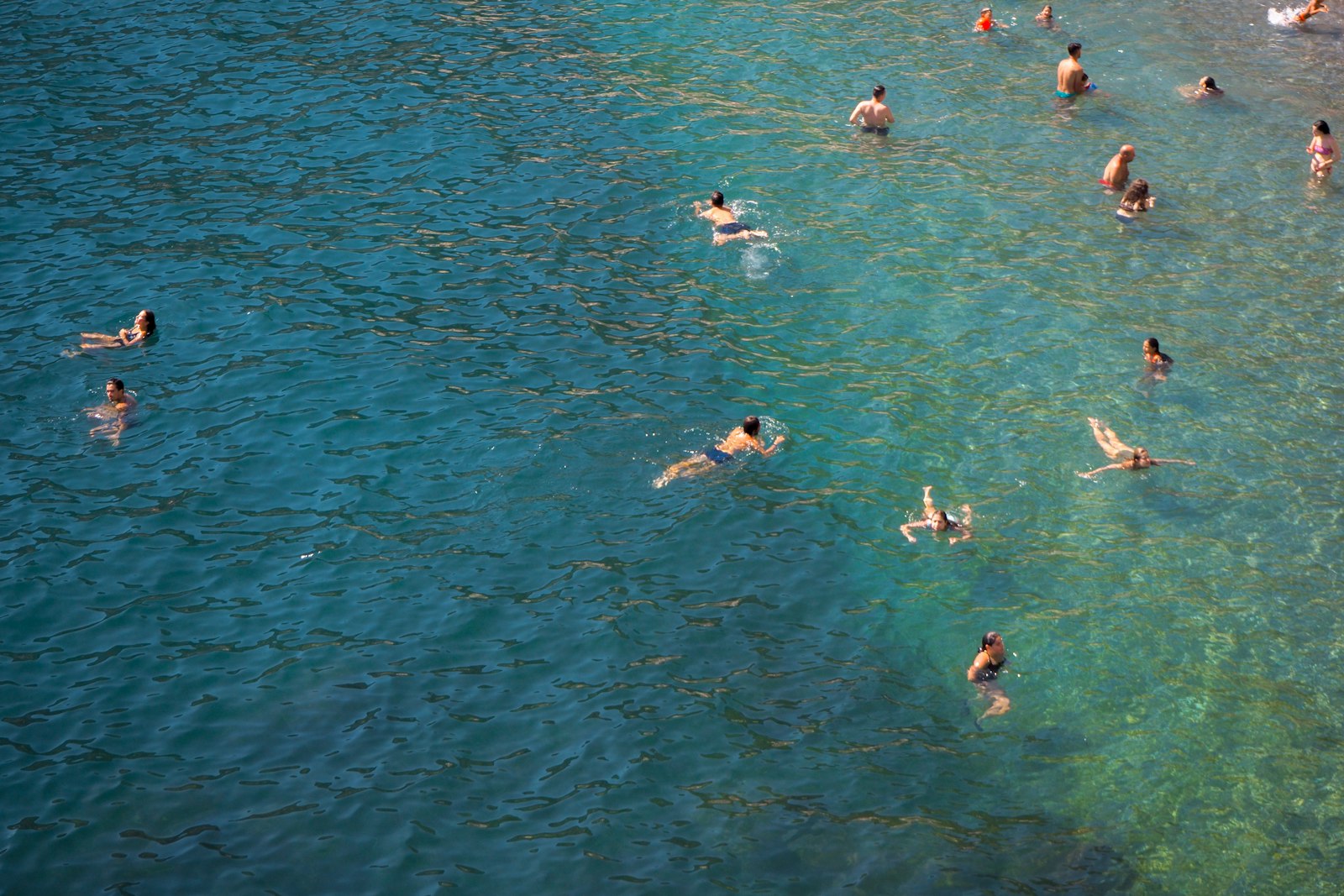
Professor Mike Tipton’s lab at the University of Portsmouth has spent decades documenting what happens in the first two minutes of immersion in water under 15 degrees. There’s an involuntary gasp. Breathing rate shoots up and you can’t hold your breath, which is the mechanism behind most cold water drownings: a wave hits your face during the gasp and you inhale seawater. Heart rate climbs, blood pressure climbs, and if you have an underlying heart problem this is the window in which it shows itself. Tipton’s group described a phenomenon they call autonomic conflict, where the cold shock (which revs the heart up) and the dive reflex from face immersion (which slows it down) fire at the same time and can trigger an irregular rhythm.
The good news is that this response habituates quickly. Portsmouth’s own research found that as few as four to six short immersions of around three minutes blunt the cold shock response noticeably, and that the reduction lasts months – one study measured it still present seven to fourteen months later. The respiratory part of the response calms down more than the cardiac part, which is why regulars stop gasping long before their heart rate stops spiking.
That’s the actual case for starting in September rather than January. The sea is as warm as it gets, which means your first handful of immersions – the ones that train the response – happen at 16 degrees rather than 8. By the time the water drops through the autumn you’ve done your habituation. The Boxing Day dippers doing the reverse, going from nothing to a 7-degree North Sea in one go, are doing the single most dangerous version of this hobby.
Who should steer clear (or at least ask first)
The RNLI defines cold water as anything under 15 degrees, and points out that the average sea temperature around the UK is 12 degrees. Even in September, most of the coast north of the Bristol Channel is below the threshold at which cold shock kicks in.
Four groups should think hard before joining a club:
Anyone with a diagnosed heart condition, uncontrolled high blood pressure or a history of arrhythmia. This isn’t hedging. The cold shock response is a cardiovascular stress test you take with your face in the water, and the autonomic conflict Tipton describes has been put forward as an explanation for otherwise unexplained drownings in fit swimmers. Talk to a GP first, and if the answer is a cautious yes, start in a lido at 20 degrees rather than the sea.
People with asthma. The gasp reflex and the hyperventilation that follows are a reliable trigger. Plenty of asthmatics swim in cold water happily, but they carry their inhaler to the water’s edge and they don’t go alone.
Anyone who’s been drinking. August was the deadliest month in the water in 2025 and alcohol shows up in a depressing share of the coroner’s records. Sober September, as it happens, is a decent month to take this up – we covered what a dry month actually changes last week.
And people with Raynaud’s or peripheral circulation problems, for whom the after-drop – the continued fall in core temperature for 20 minutes or so after you get out – is harder to recover from and hangs about in the fingers for hours.
None of that means don’t. It means the “just get in, it’s amazing” advice is written for 30-year-olds with normal hearts, and a lot of the people taking it up this month aren’t.
202 deaths, most of them nowhere near a beach
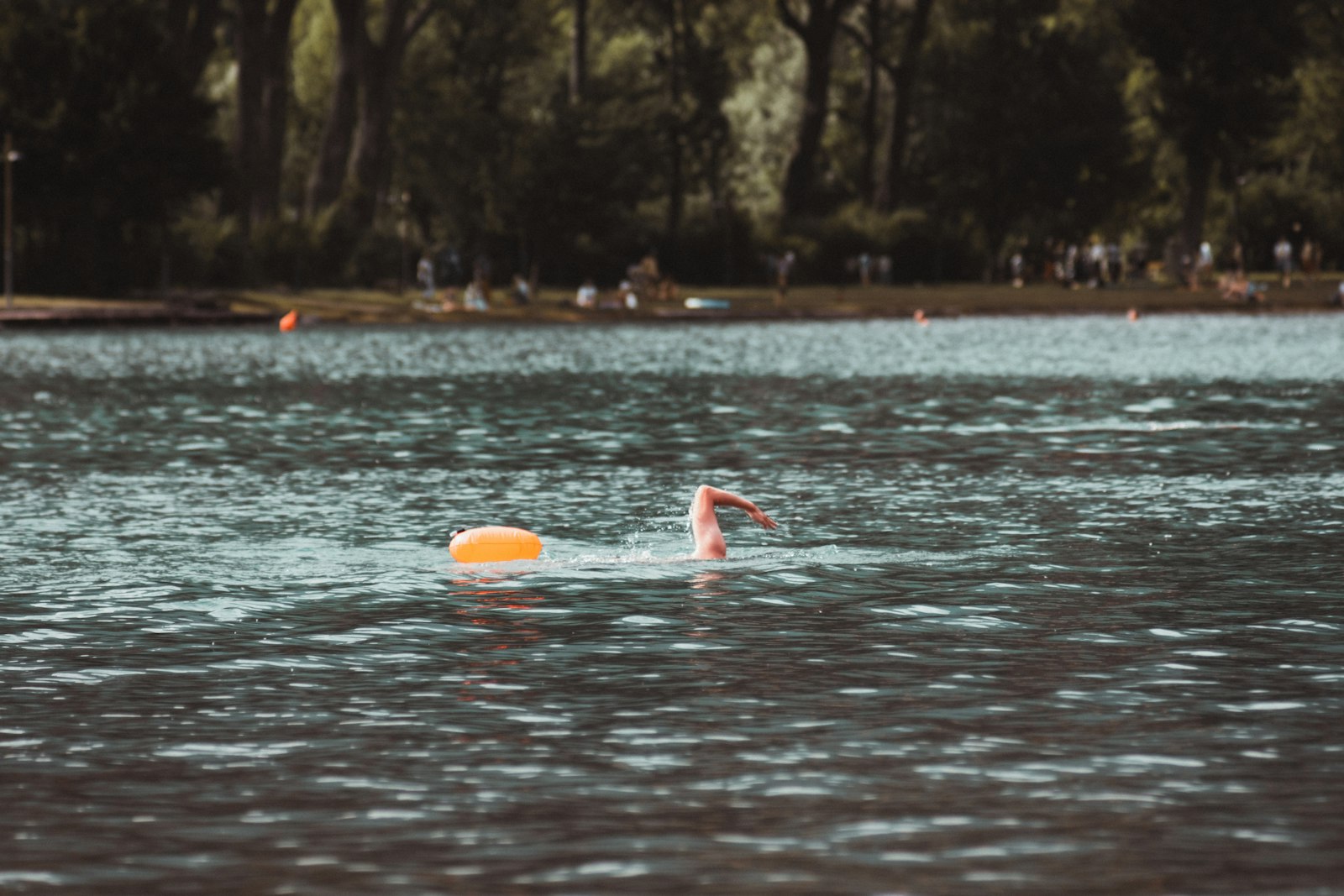
The National Water Safety Forum’s figures for 2025 came out in May: 202 accidental water-related deaths across the UK, with a further 201 cases still awaiting a cause from coroners, so the final number will be higher. Inland water – rivers, lakes, reservoirs, quarries – accounted for 57 per cent of them, a pattern that has held every year since 2019.
That’s the figure to hold in your head if you’re tempted by the reservoir or the river pool rather than the sea. Inland water is colder than the coast in September (no thermal lag from a summer’s worth of sun-warmed ocean), it’s often deeper than it looks two metres out, there’s no lifeguard, and there’s rarely anyone within shouting distance. Sea swimming with a club at a lifeguarded beach in the warmest month of the year is a very different risk profile from a solo dip in a Peak District reservoir, and the two get lumped together as “wild swimming” in a way that does the safer version a disservice.
The RNLI’s advice if you get into trouble is Float to Live: lean back, ears in the water, arms and legs out, and wait for your breathing to come under control before you try to swim anywhere. It works because it buys you the 60 to 90 seconds the cold shock takes to pass. It’s worth practising in a lido on purpose – a few of the best ones stay open through September – so it’s the thing your body does automatically rather than the thing you try to remember while gasping.
The £400 ice bath and the case for the actual sea
My contrarian position, for what it’s worth: the garden ice bath is the worst possible way to spend the cold water money.
The inflatable tubs that went everywhere in 2024 and 2025 – the ones that look like a large bin bag with a lid and cost anywhere from £90 to £400 – strip out every part of cold water swimming that has any evidence behind it beyond the physiology. There’s no daylight, no social group, no exercise, no sense of having gone somewhere. What’s left is a two-minute cold shock in a bucket, and while that will train your gasp reflex nicely, the mood studies were all done on people in the sea or a lake, outdoors, with others. Even the Bournemouth brain-scan study used a pool. Nobody has shown that sitting in a bin of hose water in Stevenage does the same thing to your anxiety scores, and I’d bet a fair sum it doesn’t. It’s the same trap as the sauna blanket we wrote about last month – the Finnish evidence was built on a ritual, and the product sells you the temperature without the ritual.
The sea, or a lido, or the lake at a supervised open water venue, costs between nothing and about £8 a session. The club I’ve been going to since June charges £3 and includes a flask of tea afterwards. That is where the money should go.
What a sensible first month looks like
Given all that, here’s how I’d do it if I were starting this week, which is roughly how I did do it three months ago, minus the mistakes.
Pick a lifeguarded beach or a supervised open water venue, and go with a group – the Outdoor Swimming Society lists clubs by region, and most of them have a September intake of nervous newcomers. Go in slowly to the waist and stay there until the gasping stops. Don’t dive. Don’t put your face in for the first couple of sessions; that’s the dive reflex you’re avoiding while your heart adjusts. Keep the first four or five immersions to two or three minutes – that’s the habituation dose, and it’s enough. Time in the water isn’t a competition, whatever the man in the tow float tells you.
Get out before you feel cold, not after, because of the after-drop. Have dry clothes laid out in the order you’ll put them on, starting with the top half, and a hat. A hot drink helps more than you’d think. And skip the hot shower for 20 minutes or so; it pulls warm blood to the skin while your core is still falling.
Buy nothing. The neoprene gloves and booties and the changing robe the size of a small tent can wait until October, when you’ll know whether you’re still doing this. The one thing worth spending on early is a bright tow float, about £15, which does nothing for the cold but makes you visible to the paddleboarder who isn’t looking.
And be honest about the mood effect. It’s there – I’m not going to pretend I don’t come out of the water feeling better than I went in, and I’ve yet to meet anyone who doesn’t. But it’s the same afterglow you’d get from most hard, outdoor, sociable things, and it’ll be another year or two before anyone can tell you how much of it is the cold and how much is the company. If you’re doing it for the company, you’re probably doing it for the right reason.
If the evidence has you persuaded, the practical questions come next: where to swim, how to check a spot is safe and what kit you actually need are all in our UK wild swimming guide, and the tub-at-home alternative gets its own scrutiny in our look at ice bath benefits.
The sea’s going to lose a degree a week from here until Christmas. If you’ve been putting it off since June, what would it take to get you in this Saturday – and would you still go if the dopamine turned out to be mostly the tea afterwards?