
Electric BBQ UK 2026: Why The Quiet Plug-In Has Taken Over Balconies And Small Gardens
The Saturday afternoon scene on UK balconies is shifting. The pop of a charcoal chimney starter, once a fixture from Easter to October, is being replaced by something quieter: the low hum of a fan and the click of a digital thermostat. The electric BBQ in the UK in 2026 has stopped being a compromise for people who can’t have anything better and become, in a lot of cases, the actively preferred option. Flat-dwellers are the obvious story. But it isn’t just renters. House owners with neighbours in spitting distance, parents who don’t want a glowing hazard at toddler height, and anyone who has tried to light charcoal at 7pm in a Manchester drizzle have quietly made the switch too.
In This Article
- Why the electric BBQ has stopped being the embarrassing option in 2026
- What an electric BBQ actually does well
- The Ninja Woodfire: the unit that broke the category open
- The Weber Lumin and Lumin Compact: the grown-up option
- The Everdure Force E and the premium argument
- The cheap-and-cheerful end: Char-Broil All-Star and George Foreman GGR50B
- What the lease actually says and why it matters
- How they actually cook: a week of testing
- The verdict: which one should you actually buy
This piece is about why that is, what the better units in the category actually do well, where they still fall short of a proper gas or charcoal grill, and which model is worth your money depending on what your garden, balcony or flat roof can take.
Why the electric BBQ has stopped being the embarrassing option in 2026
For most of the last two decades, “electric BBQ” meant a £40 George Foreman-style hotplate with grill ridges and a drip tray. It cooked sausages, sort of. Nobody pretended it was a real barbecue. Two things changed.
The first is leasehold rules. According to the Guardian’s running coverage of UK leasehold, the proportion of new-build flat blocks with explicit no-flame clauses in their lease has continued to climb. Charcoal and gas are out in almost any block built since 2020. Insurance underwriters started pricing in the risk of balcony fires after a run of high-profile incidents, and managing agents passed the rules down. If you live in a flat, you very probably can’t legally light anything. Electric is the only door left open.
The second is the hardware. Three brands in particular – Ninja, Weber and Everdure – have pushed the category into territory it didn’t occupy five years ago. Real grill temperatures of 260C and above. Pellet-fed smoke boxes for a genuine wood flavour. Insulated lids that hold heat the way a kettle does. The result is a unit that can sear a ribeye properly, not just warm it through. People who tested one expecting the old hotplate experience tend to be the most surprised converts.
What an electric BBQ actually does well
Before getting into individual models, it’s worth being honest about the category’s strengths. Electric BBQs win on three things and they’re the three things that matter most to the people now buying them.
They are clean. There is no ash. There is no greasy black underside to scrub. You wipe the plate, empty a small drip tray, and you are done in under five minutes. For anyone who has tried to dispose of warm charcoal in a wheelie bin without setting the recycling alight, the appeal is immediate.
They are quiet, in two senses. The unit itself makes very little noise – a small fan, the click of a relay – so neighbours aren’t hearing your dinner. And they barely smoke. The pellet-fed models produce a thin, controlled blue smoke for flavour, nothing like the white cloud a charcoal kettle pumps out. If you have a shared courtyard or a balcony three feet from someone else’s bedroom window, this is the difference between getting away with grilling on a Tuesday and getting a strongly worded WhatsApp from the chair of the residents’ association.
They are predictable. A thermostat-controlled grill at 220C stays at 220C. There is no fiddling with vents, no waiting forty minutes for coals to settle. You preheat for ten to fifteen minutes and you cook. For midweek use, that’s the entire game.
What they don’t do is the dramatic charcoal sear, the deep smoky crust, or the temperature spike a hardwood lump fire produces when you fan it. Anyone telling you a £400 electric grill matches a Big Green Egg is selling something. It doesn’t. But for 80% of what most British households actually grill – chicken thighs, salmon, halloumi, burgers, a few skewers – the gap is much smaller than the snobbery suggests.
The Ninja Woodfire: the unit that broke the category open
The Ninja Woodfire (OG701UK) is the one almost everyone in this space has either bought or considered. It’s been on sale since 2023 and has held its position through what now feels like a saturated market. Real grill temperatures up to roughly 260C, a small pellet hopper that feeds a smoke box for actual wood flavour, an air-fry basket for chips and roast veg, and a footprint small enough to fit on a one-metre balcony. Around £350 at full RRP, regularly discounted to £270 – 290 in spring sales.
What it does well: the pellet smoking is a proper feature, not a gimmick. Half a cup of cherry or apple pellets produces a genuine smoke ring on chicken thighs cooked low and slow. The air-fry function is the part that earns its place on a small balcony – it replaces an oven for anyone who hates heating up the kitchen in July. The build quality is solid, the controls are simple, and the cleaning is honestly close to a sandwich press.
Where it falls short: the grill plate is small. You’ll fit four burgers comfortably, six at a push, but you are not feeding eight people in one session. The smoke flavour, while real, is gentler than a charcoal kettle with wood chunks would produce. And the unit is plastic on top, which makes it feel cheaper than the price tag suggests. If you have the patience for batch cooking, it’s the best £300-ish electric BBQ on the UK market in 2026. If you regularly entertain six or more, look at the next two.
The Weber Lumin and Lumin Compact: the grown-up option
Weber arriving in the electric category was the moment that signalled the shift was permanent. The Weber Lumin (around £549) and the smaller Lumin Compact (around £429) are unapologetically built like Weber’s gas units – powder-coated steel cart, porcelain-enamelled cast iron grates, lid thermometer, the works. There is no air fryer. There is no pellet smoke box. What there is, is a proper kettle-style grill that happens to plug in.
The case for it is straightforward. It looks and feels like a real barbecue. The cast iron grates take a sear mark properly. The lid holds heat well enough to do indirect cooking – a small roast chicken at 180C for an hour comes out as good as anything from a kitchen oven, just with a crisper skin. There is a Weber-branded smoke box accessory that sits on the grate and produces decent smoke from chips, though it requires a bit of attention.
The honest negatives: it’s heavy and not really portable, even the Compact. It’s expensive for what is, fundamentally, a 1600W electric grill. And the temperature ceiling, while genuinely useful, is below what a Lumin gas equivalent would hit. If you want a unit that will still feel like a proper barbecue ten years from now and you have the storage space for it, the Lumin is the buy. If you live in a one-bed flat, look at the Ninja or the Char-Broil.
The Everdure Force E and the premium argument
The House & Garden coverage of the Everdure range is fair: this is the option you buy when you’ve decided you want the most premium product in the category and you don’t want to think about it again. The Everdure Force E (around £799) is built around a thick cast aluminium body, twin heating zones, and a much more sophisticated thermostat than anything else here. The design, by Heston Blumenthal’s collaborator team, is genuinely good-looking – matt black, soft-edged, the kind of object you don’t mind leaving uncovered on a roof terrace.
The cooking performance backs the price. The dual zone is the feature most reviewers come back to: searing a steak at full heat on one side while finishing vegetables at 160C on the other is the sort of trick most £300 units can’t do. The heat-up time is shorter than the Lumin. The interior is genuinely well-insulated, which means more efficient running and less wasted heat in summer.
Whether it’s worth twice the Ninja price is harder to argue. The honest answer: only if you grill at least twice a week through the summer and have a setting where the design matters. If it lives on a small balcony nine months of the year under a cover, the Ninja or the Weber will deliver 90% of the experience for half the spend. For an architect’s roof terrace in Hackney, the Force E earns its place.
The cheap-and-cheerful end: Char-Broil All-Star and George Foreman GGR50B
Under £200, the field thins out fast. The Char-Broil All-Star (around £179) is the unit most people end up with at this price. A 2200W heating element, lidded design, fold-down side shelves and a pedestal stand that brings it to proper cooking height. It is honest about what it is. The temperature ceiling is lower than the Ninja or the Weber, the lid seal isn’t as good, and the grill grates are aluminium rather than cast iron. But for a renter who needs something that genuinely cooks – not just warms – chicken, sausages and veg, it does the job.
The George Foreman GGR50B (around £99 – 130) is the unit Which? testers tend to land on as the budget pick. It will not impress you. It will not produce a smoke ring. But for a one-bedroom flat with a Juliet balcony and a brief in the lease that says no flame, it is the easiest entry point and the easiest to store – it tucks into a tall cupboard between uses.
One thing to skip: any unboxed brand under £80 sold on Amazon with five-star reviews and no UK service address. The Which? team have flagged repeatedly that this end of the market has failure rates measured in months, not years, and the warranty path tends to vanish along with the seller account. The savings are not worth it. If your budget genuinely caps at £80, a Lidl seasonal grill in spring is the safer bet.
What the lease actually says and why it matters
Before any of the above is useful, you need to know what your lease or tenancy permits. A frustrating reality of UK flat life is that the wording varies. Some leases ban open flame only, which leaves electric explicitly fine. Some ban “any cooking apparatus on the balcony”, which is harsher and might catch even an electric grill. The London Fire Brigade’s guidance, which most managing agents now reference, is that electric BBQs are markedly safer than gas or charcoal on balconies but not risk-free – the main hazards are tipping units, trailing flexes, and grease fires.
The practical checklist before buying: read your lease clause on cooking and flame, ask your managing agent in writing whether an electric unit is permitted, and check whether your block has a residents’ WhatsApp where you can clear it socially before turning up with a Weber on a Saturday. The legal answer and the neighbour answer are different problems and both matter. Renters should also check their tenancy specifically – some let agents disallow grills full stop, regardless of fuel.
For house owners, the question is different. Smoke from a charcoal kettle drifting into a neighbour’s open window is one of the most common sources of formal complaint to UK environmental health teams in summer. An electric BBQ does not eliminate this but it cuts it dramatically. If you’ve had a polite-but-pointed knock on the door before, that alone might justify the switch.
How they actually cook: a week of testing
I spent the last fortnight running the Ninja Woodfire, the Weber Lumin Compact and the Char-Broil All-Star side by side on the same balcony, cooking the same things. A few honest takeaways for anyone weighing them up.
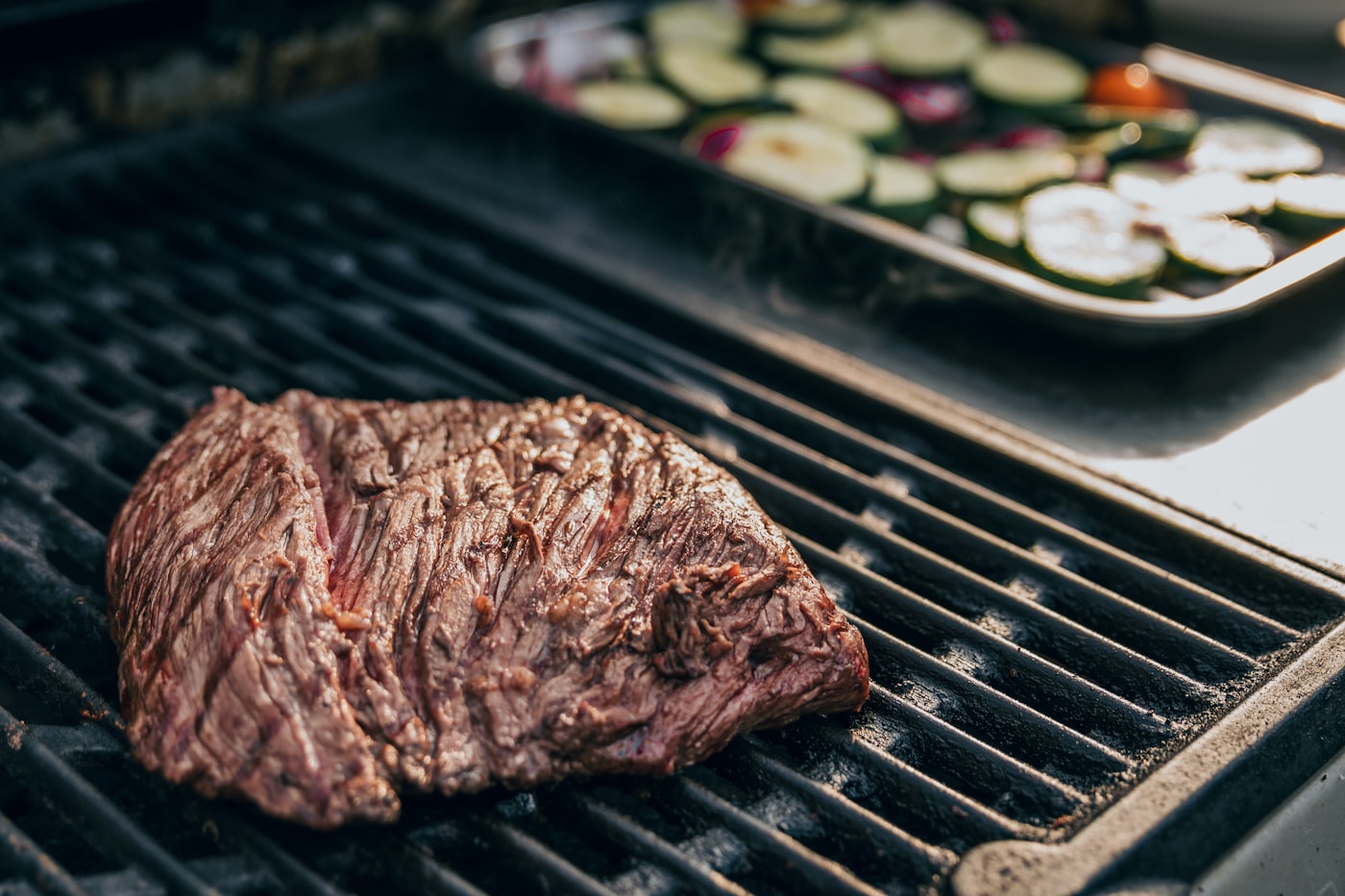
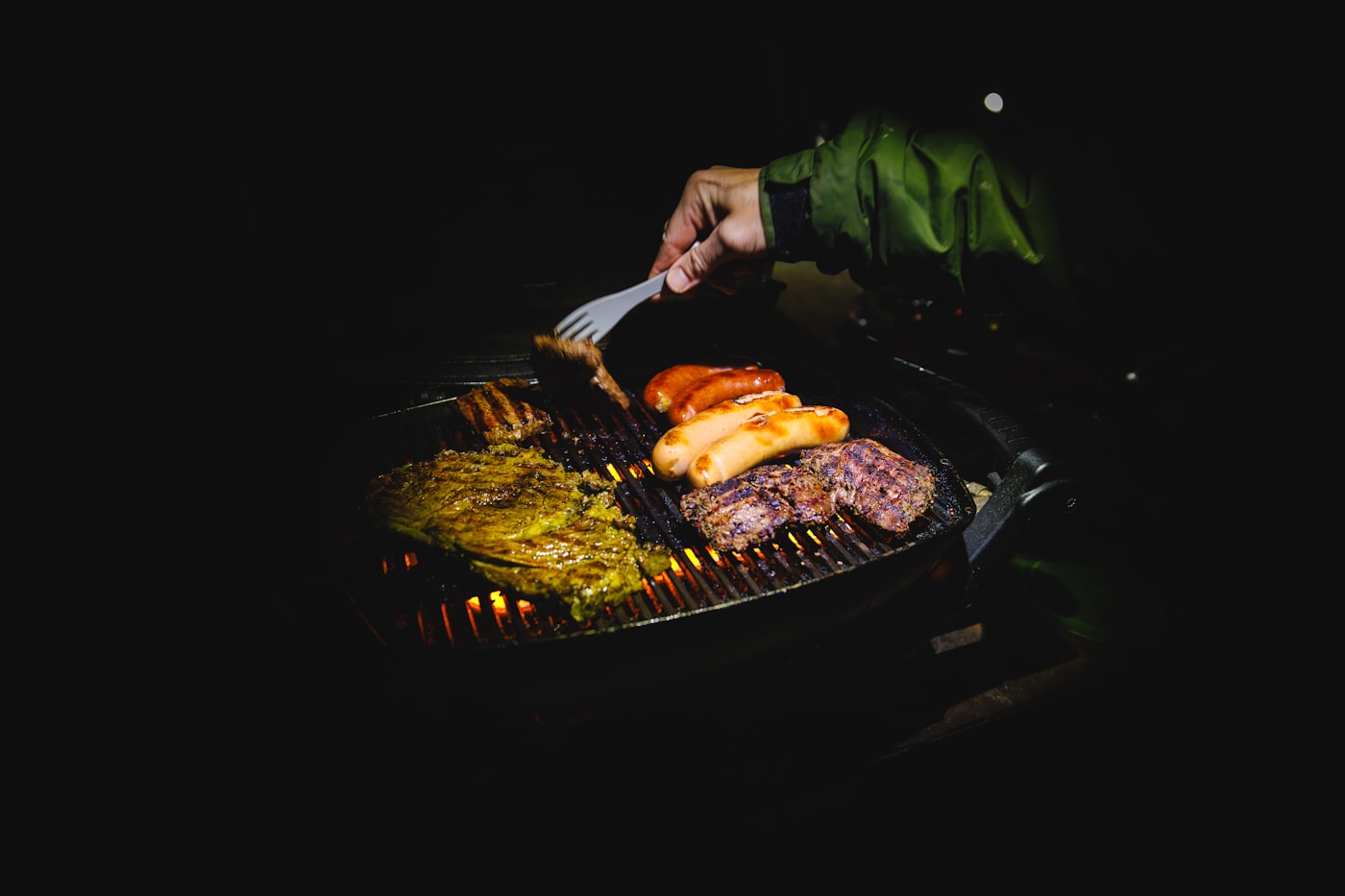
Burgers (Aberdeen Angus, 150g, medium): all three did them well. The Ninja produced the most flavour thanks to the smoke box. The Weber gave the best sear mark. The Char-Broil was the slowest to preheat but cooked perfectly evenly once it got there. None of them came close to a charcoal Big Green Egg burger and none of them needed to.
Chicken thighs (skin on, marinade): the Ninja’s low-and-slow with apple pellets won this one by a margin. The skin crisped properly and the smoke flavour came through clearly. The Weber did a perfectly respectable job. The Char-Broil’s lid seal let some heat escape and the result was a touch drier.
Whole sea bass (rosemary, lemon, foil): a fair test for indirect heat. The Weber walked it. The lid held temperature beautifully. The Ninja was fine but the grill plate is too short to lay a bass flat. The Char-Broil overshot the target temperature twice and the fish was slightly overdone.
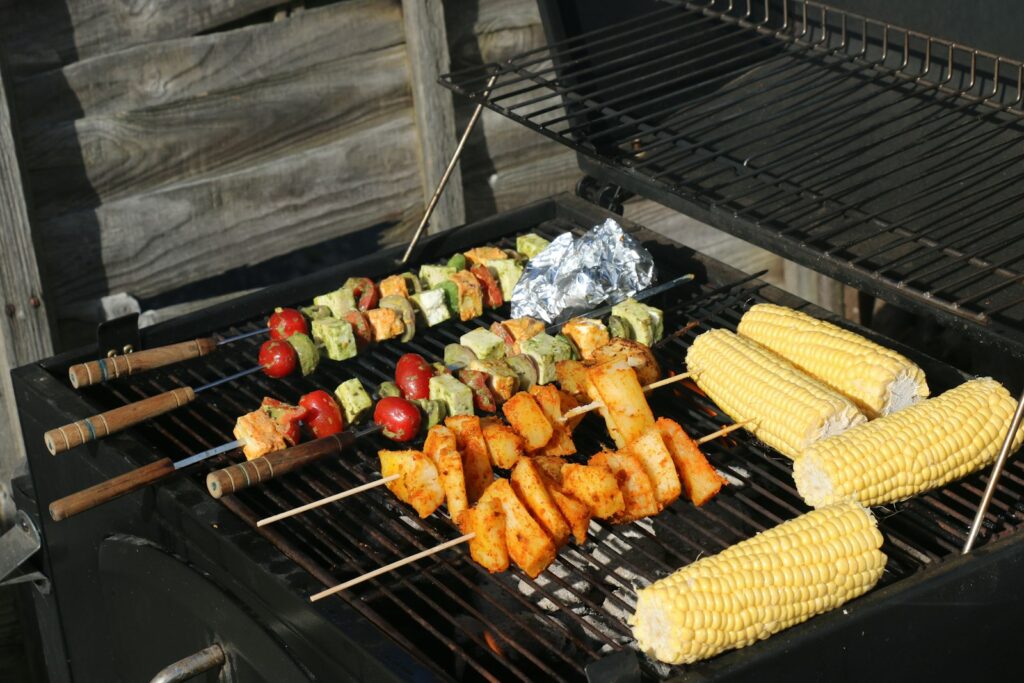
Halloumi and vegetable skewers: all three handled this without issue. This is the easiest test in the category and any electric BBQ over £150 should pass it. If the unit you’re testing struggles with halloumi, return it.
The verdict: which one should you actually buy
If you have a one-bed flat or a small balcony and the budget is around £300: buy the Ninja Woodfire. The pellet smoking and air fryer make it a genuinely multi-purpose unit, and the footprint is honest about flat life. It’s the unit most likely to still be in regular use a year after purchase. If the smoker side of it is not the draw, a straightforward air fryer under £100 does the indoor half of that job for a third of the price.
If you have a small garden or roof terrace, the budget is £450 – 600, and you want something that feels like a proper barbecue: buy the Weber Lumin Compact or full Lumin. It will outlast the others. The cast iron grates and the Weber aftermarket support are reasons to spend the extra. Pair it with one of the better UK garden sofas of 2026 and you have a finished outdoor setup.
If you regularly entertain, have the space, and the design genuinely matters: the Everdure Force E is the honest answer. It is overkill for most. For the right buyer, it is the right buy.
If your budget is sub-£200: the Char-Broil All-Star is the floor of usable. Below that, the George Foreman GGR50B will technically work but you will not enjoy it as much. Don’t buy the £60 Amazon mystery brands.
One last note. Electric BBQs sit alongside two adjacent trends that have made small outdoor spaces work harder this year. The first is the rise of compact outdoor pizza ovens in the UK in 2026, which solve a different problem with similar logic. The second is the broader shift towards quieter, less-cluttered outdoor living – the same instinct that has driven the “no big light” trend in UK living rooms in 2026 applies outdoors too. People want less stuff, but better. Even people who’ve spent the last decade telling renters that real BBQ means charcoal are starting to make exceptions, and the renter’s smart home kit of 2026 increasingly assumes an electric grill in the mix.
So if you’ve been holding out because the early electric models were embarrassing, this is the year to look again. The categ
A plug-in BBQ pairs naturally with a bit of sound outside. If you are kitting out the patio, our guide to the best Bluetooth speaker for the garden tested six against British weather and a £180 budget.
And if the ambition runs past burgers, we’ve also tested the best pizza ovens under £300 for the same sort of outdoor space.