
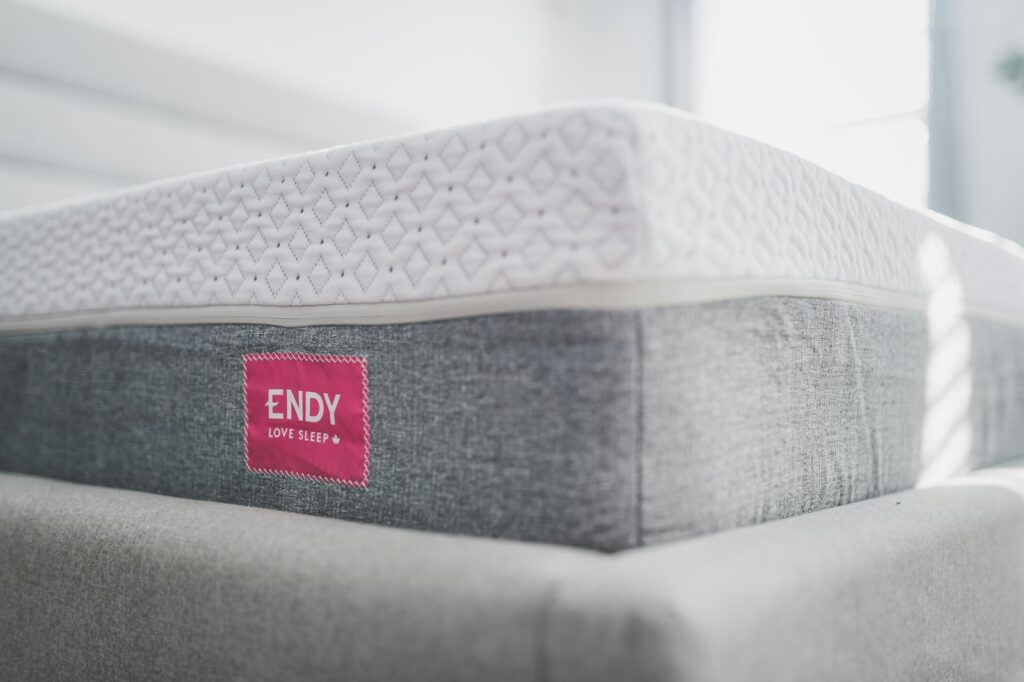
Best Mattress in a Box UK 2026: What a ‘Half Price’ Bed Really Costs Before Black Friday – And Four Honest Picks From £250
On 22 May this year, in front of a High Court judge, Emma Sleep admitted it had broken UK consumer law. The countdown timers, the “high demand” warnings, the discounts that expired at midnight and were back by breakfast – the company behind Britain’s most heavily advertised bed-in-a-box accepted that its urgency messaging created false pressure on shoppers, and gave legally binding promises to the Competition and Markets Authority to stop.
In This Article
- A sale with a court order attached
- How the never-ending discount works
- What a fair price looks like in 2026
- The best mattress in a box from £250 to £900
- The four picks side by side
- Check the size before you check the price
- Firm, medium or soft: the label barely means anything
- Five things the product page says that you can safely ignore
- The trial is the actual discount
- How to actually use the trial
- Should you wait for Black Friday?
Four months on, the emails haven’t slowed down. They’ve just changed their wording.
Mid-September is the quiet stretch before the loudest shopping season of the year, and if you’re after the best mattress in a box UK retailers currently sell, the next ten weeks will bring an “autumn event”, a Halloween offer, an “early Black Friday” and then the real thing. So this seems like the right moment to explain what the never-ending mattress sale actually is, what a fair price looks like in 2026, which boxed beds hold up once you strip away the theatre, and whether waiting for Black Friday is worth losing sleep over. Because the strange truth of this story is that the mattresses themselves are mostly fine. It’s the price tags you can’t trust.
A sale with a court order attached
The CMA opened its file on Emma Sleep back in 2023, as the first case in its push against so-called dark patterns – the little design tricks that hurry you towards checkout. What it found will surprise nobody who has ever idly browsed for a mattress and then been chased across the internet for a month. Countdown clocks that implied a deal was about to vanish when it wasn’t. “Selling fast” claims that didn’t reflect demand. Discounts framed against prices that told you very little about what anyone actually paid.
In May, Emma settled the urgency-messaging part of the case with a consent order in the High Court. The undertakings are blunt: no more misleading timers, no more false scarcity, and no more “limited time” sales where a substantially similar deal carries on after the deadline passes. There’s a penal notice attached, which means directors risk contempt of court if the company slips back into old habits. A separate strand of the case – the argument over what counts as a genuine “was” price in the first place – is still being fought, and won’t be resolved for a while yet.
None of this was a first offence, either. The Advertising Standards Authority ruled against Emma back in 2022 over a flash sale countdown clock that simply restarted when it hit zero. And in April this year Australia’s Federal Court ordered Emma Sleep companies to pay A$15 million in penalties – roughly £7.5 million – for misleading claims about sale prices. Same playbook, different hemisphere.
To be clear about what this doesn’t mean: it doesn’t make Emma’s mattresses bad. Plenty of people sleep happily on them, and the Original remains a competent bit of foam. But it does mean the industry’s favourite marketing device – the enormous discount from an enormous number – has now been picked apart by regulators on two continents. Worth remembering as the autumn emails start.

How the never-ending discount works
The mechanics are simple. A mattress is listed at £999. It sells at “50% off” – £499 – during the January sale, the Valentine’s sale, the spring refresh, Easter, both May bank holidays, the summer event, back to school, the August bank holiday, Halloween, Black Friday and Boxing Day. In the gaps between named events, there’s usually a voucher code doing similar work.
If a product is discounted for most of the year, the discount is the price. The £999 is doing all the psychological heavy lifting – it exists so that £499 feels like a win rather than what it is, which is simply what the mattress costs.
You can watch this in real time if you’re bored enough. Put a mattress in your basket, close the tab, and note the “ends tonight” email that arrives over the next few days – mine once landed at 6.04am, which is a strange hour for a sale to be ending. Then note the near-identical offer the following week under a different name.
Consumer law does require reference prices to be genuine, which is exactly the ground the CMA and Emma are still contesting in court. But until that shakes out, the practical advice doesn’t change: treat the crossed-out number as decoration. Judge the cash price, and nothing else.
What a fair price looks like in 2026
Strip out the theatre and boxed mattress pricing settles into fairly stable bands. These are the numbers I’d sanity-check any autumn “deal” against, based on what these beds have actually been selling for since the spring. Prices below are for a double, at the time of writing.
Under £300 gets you a basic foam or entry-level sprung mattress that will do a perfectly decent job in a spare room, a first flat or student digs – if that’s the mission, our uni room essentials guide covers the rest of the kit. Dreams and Bensons both start their doubles around the £200-£250 mark, and Ikea’s own-brand foam and hybrid options mostly live in this band too.
£300 to £550 is the sweet spot, and where most people should be shopping. This is where the Nectar Memory Foam and Emma Original actually trade, whatever their crossed-out prices claim. A “£900 mattress” on sale at £450 in this bracket isn’t a bargain. It’s a £450 mattress.
£550 to £900 buys the premium hybrids – proper spring counts, thicker builds, better edges. Simba’s Hybrid Pro has been selling around the £899 mark against a £1,499 list price, and that gap tells you everything about how seriously to take list prices.
Above that, returns diminish fast. Which? tracks mattress deals month by month and its testers have made the same point for years: price and comfort correlate far more loosely than the brochures suggest.
The best mattress in a box from £250 to £900
Four picks, chosen as much for honest pricing as for foam. Each has a genuine flaw listed, because every mattress does.
The anti-sale option: Ikea. Ikea doesn’t really do the perpetual discount dance – the price in September is the price it was in March, and its doubles run from roughly £250 to £400. Buy it, sleep on it, and if it’s wrong you’ve got 90 nights to swap it. The flaws: the cheaper foams are firm and basic, the in-store collection is a faff involving a trolley and a warehouse aisle, and nobody will pretend these compete with a £900 hybrid. But as a known quantity at an honest price, it’s the least stressful purchase on this list.
The value pick: Nectar Memory Foam, around £399-£499. A deep, sink-in memory foam feel, and the longest trial in the business at a full year. The flaws: memory foam runs warm in summer, the hug isn’t for everyone – front sleepers and restless types often hate it – and Nectar plays the same forever-sale game as everyone else, so apply the same scepticism to its “was” prices that you’d apply to Emma’s. And if the opposite is your problem once the clocks go back, our electric blanket guide covers the £35 fix.
The awkward one: Emma Original, around £350. Yes, really. The product was never the problem – it’s a balanced all-foam mattress that has scored well with reviewers for years, and at £350 it’s decent value. The flaws: the edges are soft, foam is foam in a heatwave, and you now know exactly how much salt to take the marketing with. Ignore every timer, judge the cash price on the day.
The upgrade: Simba Hybrid Pro, around £899. For people who can’t get on with pure foam, the layered springs give it a more traditional, responsive feel with better cooling than solid foam slabs. The flaws: it’s heavy to rotate, the price gap to the standard Hybrid is hard to justify on feel alone, and that £1,499 list price deserves a raised eyebrow.
And one to skip: the £1,500-plus flagship “cooling” models that every brand now pushes at the top of the range. The temperature-regulating covers and graphite-infused layers are real technologies with modest effects, and they’re solving a problem a £15 cotton sheet and an open window solve better. Spend the difference on literally anything else.
The four picks side by side
Prices are the cash price for a double at the time of writing, not the crossed-out number. Trial lengths are as advertised; check the returns page for the small print before you order, because it changes.
| Mattress | Cash price (double) | Type | Trial | Best for | The catch |
|---|---|---|---|---|---|
| Ikea foam / hybrid range | £250-£400 | Foam or pocket-sprung hybrid | 90 nights | Spare rooms, first flats, people who hate sales | Firm, basic foams at the bottom of the range; you collect it yourself |
| Nectar Memory Foam | £399-£499 | All memory foam | 365 nights | Side sleepers who like a hug | Runs warm; restless sleepers feel stuck in it |
| Emma Original | Around £350 | All foam | 200 nights | Balanced feel at a fair cash price | Soft edges; the marketing, obviously |
| Simba Hybrid Pro | Around £899 | Springs plus foam | 200 nights | People who find pure foam dead and hot | Heavy; hard to justify over the standard Hybrid |
If I had to buy one this week for my own bed, it’d be the Emma Original, and I say that having spent the first third of this article explaining why its owners were in court. The bed is good and the cash price is fair. That’s the whole test.
Check the size before you check the price
This is the bit that catches more people out than any discount. A UK double is 135cm by 190cm. A UK king is 150cm by 200cm, a super king 180cm by 200cm. A European double is 140cm by 200cm and a European king 160cm by 200cm – and several boxed brands, Ikea most obviously, sell European sizes under familiar-sounding names. A 140cm mattress on a 135cm frame overhangs by two and a half centimetres each side, which sounds trivial until the fitted sheets don’t fit and the bed frame’s side rails leave a ridge under the mattress edge.
So measure the frame, not the old mattress. And measure the bedroom door and stairwell while you’re at it if you’re buying anything that doesn’t come rolled in a box – a full-size sprung mattress from a high street shop won’t bend round a tight Victorian landing, and the delivery drivers will not try very hard.
One more thing on the box itself. A rolled mattress arrives compressed and needs anywhere from a few hours to a couple of days to reach full height. Don’t judge firmness on night one. And get it out of the plastic within a day or two of delivery – most brands warn that leaving a compressed mattress sealed for weeks can stop the foam recovering properly, and it’ll void the warranty.

Firm, medium or soft: the label barely means anything
One more thing the sale banners won’t tell you: firmness isn’t standardised. There’s no agreed scale, no independent body checking, nothing. One brand’s “medium-firm” is another’s “firm”, and the same mattress genuinely feels different under a 9-stone sleeper than under a 15-stone one, because how far you sink determines how hard the bed feels. The label describes an average body that may not be yours.
A rough guide that holds up better than the labels: side sleepers usually want more give at the shoulder and hip, so err softer. Back and front sleepers tend to do better on firmer builds that keep the spine level. Heavier sleepers should treat every firmness rating as one notch softer than advertised. And check what the mattress will sit on before blaming the mattress – wide-gapped slats or a tired old divan base will make a £900 hybrid feel like a £200 one.
While we’re at it, ignore the word “orthopaedic”. It’s a marketing term, not a medical standard – no regulator defines it, no clinical threshold sits behind it, and it usually just means “firm, plus £100”.
Five things the product page says that you can safely ignore
“Was £999.” Covered above. The only number that matters is the one you’ll actually pay, and what that number was last month.
“Award-winning.” The bedding industry hands out a lot of awards, and several are voted for by the brands’ own customers or given by publications the brands advertise in. Which? Best Buy status is the one worth a second look, because their lab testing is independent and they don’t take advertising. Everything else is a sticker.
“Seven-zone support” and “3,000 pocket springs.” Zoning and spring counts are real engineering, and beyond a certain point neither is something you can feel. A well-made 1,000-spring hybrid will outperform a badly made 3,000-spring one. The count is a marketing number, not a comfort number.
“Cooling gel” and “graphite-infused foam.” These do move heat around a little. They don’t beat a cotton sheet, a lighter duvet and a window, and if summer heat is the actual problem, the fixes that work in a heatwave cost a fraction of a “cooling” mattress.
“Recommended by sleep experts.” Ask which ones, and who paid them. A mattress can’t fix a sleep problem that isn’t caused by the mattress – if you’re waking at 3am every night, that’s a different conversation, and a £900 hybrid won’t change it.
The trial is the actual discount
The genuinely consumer-friendly thing the bed-in-a-box industry introduced was never the discounting. It was the trial period. Emma and Simba give you 200 nights, Nectar a full 365, and even Ikea’s 90-night exchange covers the basics. If the mattress is wrong, they collect it and refund you, and most returned mattresses go to charity partners rather than landfill.
This matters more than any sale price, because a mattress is the one purchase you can’t evaluate in the shop. Lying on a bed for four minutes in a showroom under strip lighting, fully dressed, tells you almost nothing about night 40. Firmness perception changes with room temperature, with the base it sits on, and with the person lying next to you – and if that person is the reason you’re sleeping badly, that’s a different article, because one in six British couples has quietly given up sharing a bed altogether.
So flip the logic. Don’t ask “how big is the discount?” Ask “how long do I get to change my mind, and how painful is the return?” Read the trial small print for the bits that bite: some brands require you to keep the mattress a minimum number of nights before returning, and a few charge collection fees. That fine print is worth more of your attention than the countdown clock ever was.
How to actually use the trial
Most people never return a mattress, not because it’s right but because returning things is tedious and by night 30 they’ve stopped noticing. Use the trial properly and it becomes the best consumer protection you’ll get on a purchase this size.
Give it three weeks before deciding anything. New foam feels different from old foam, and your back has spent years adapting to the sagging thing you just got rid of. The first week of any new mattress is unreliable evidence.
Then keep it simple: note how your lower back and shoulders feel in the first ten minutes after waking, for a fortnight. Not how you feel at bedtime – that’s tiredness talking. If you’re consistently stiff in the mornings after a month, the mattress is wrong, and no amount of “it’ll soften up” will fix it. That’s what the trial is for. If you own a wearable, its sleep score is a shaky guide to sleep quality, so trust your back over the app.
And put the return date in your calendar the day the mattress arrives. Every brand counts the trial from delivery, not from when you got round to unboxing it.

Should you wait for Black Friday?
For the boxed brands: no, and the reason is the whole point of this article. Their Black Friday price and their mid-September price are usually the same price wearing different hats. Last year’s “biggest ever” mattress discounts were, for the most part, the same 40-55% off that ran through the summer, with a slightly louder email. If you need a bed now, buy it now. If the bed you’ve chosen does drop further in November, several brands will honour a price-match within a window of the order – ask, because it’s rarely advertised.
The high street is different. Ex-display and clearance stock at Dreams, Bensons and the independents gets genuinely marked down over big retail weekends, because floor models take up space and the winter ranges are arriving. A slightly shop-soiled £800 hybrid at £450 is an actual discount in a way that a perpetual online “50% off” isn’t. You can also still haggle in a bed shop, which feels almost quaint in 2026, but works – especially on a Tuesday afternoon when the place is empty.
Otherwise, the boring toolkit beats the sale calendar: check a price-history tracker before you believe any saving, sign up for the newsletter code (usually 5-10% off), go through a cashback site, and buy when your back complains rather than when an email tells you to. If the bedroom’s getting a wider autumn refresh anyway – and this is the fortnight Britain starts spending on the colder months ahead – the money you don’t hand to a fictional discount goes a long way on the bedding on top or the floor beneath the bed instead.
The mattress industry spent a decade training us to wait for the sale. The courts have now confirmed what light sleepers suspected all along: the sale was never really on. So the only question that matters this autumn is the one no banner will ask you – what was this bed selling for last month?