
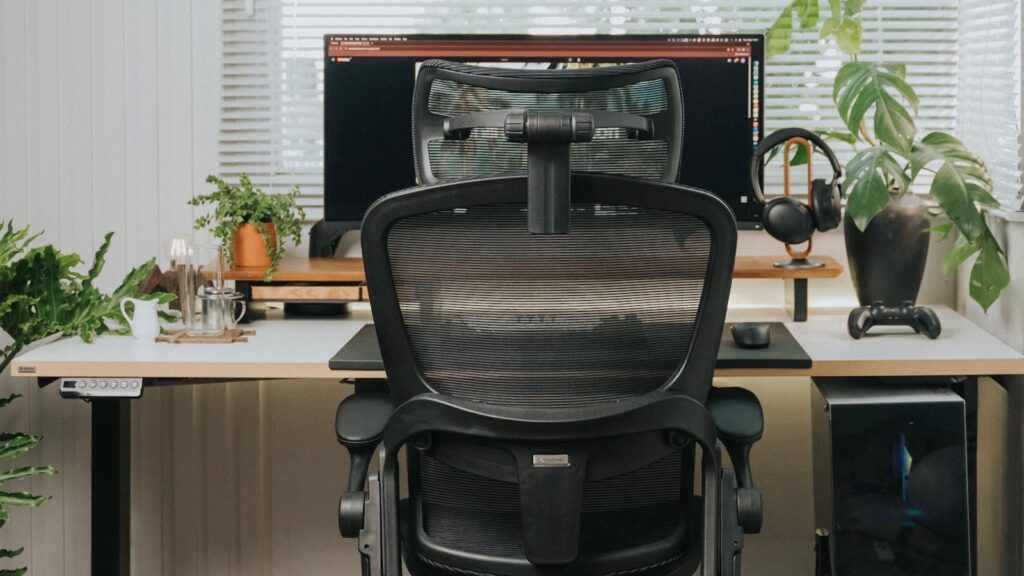
Best Office Chair UK 2026: A Home Worker’s Guide Under £400
If you’ve spent the last few years sitting through eight-hour days on a kitchen stool or a hand-me-down dining chair, you’re not alone – and your lower back is probably paying for it. The best office chair UK 2026 buyers can pick up under £400 has changed considerably from what was on offer even two years ago, and choosing the right one is the single biggest upgrade most home workers can make. This is a practical guide to what to look for, what to skip, where the £400 line sits between “fine for a year” and “still good in five”, and which specific models are worth shortlisting right now.
In This Article
- Why the best office chair UK 2026 buyers should care about is one built for full days
- What £400 actually buys you in 2026
- The five things that actually matter on the spec sheet
- Six office chairs under £400 worth shortlisting in the UK right now
- Best office chair for back pain UK
- Best office chair for tall people UK
- The mistakes most UK home workers make
- How to set up your new chair properly
- Common questions
- The bottom line
We’ve written a lot recently about the small ergonomic tweaks home workers should be making (a decent laptop stand, a standing desk converter, an ergonomic keyboard and a sensible dual monitor setup come up over and over). But those upgrades only really work if you’re sitting on something that holds you in roughly the right shape to begin with. The chair is the foundation. Get this part wrong and the rest is mostly cosmetic.
Why the best office chair UK 2026 buyers should care about is one built for full days
A cheap task chair from a high-street office shop is fine for an hour of admin. It is not built for the eight-to-ten hour days that are now standard for hybrid and home-based workers in the UK. The NHS is fairly clear about the toll prolonged sitting takes – according to its guidance on sitting and posture, unsupported sitting for long stretches contributes meaningfully to lower-back pain and stiffness, and the most useful intervention is changing posture often and supporting the spine properly when you do sit.
A good chair makes that easier. A cheap chair quietly punishes you for trying. The difference between a £79 swivel chair from a flat-pack furniture shop and a £350 chair built for full-day use is not really the price tag – it’s the cushion density, the lumbar mechanism, the way the seat pan slides, and whether the armrests hold a proper typing posture or collapse the moment you lean. After eight hours, you can feel every one of those things.
The Chartered Society of Physiotherapy has been clear in its workplace posture advice that no chair, however expensive, replaces movement. But a chair that fits properly removes the friction that stops you doing the rest of the work right. That is what you are buying when you spend £350 instead of £79.
What £400 actually buys you in 2026
Under £400 is a useful price point because it sits above the cheap end (where chairs are essentially disposable) and below the £700-£1,200 territory occupied by Herman Miller, Steelcase and Humanscale. The £200-£400 band in 2026 is where you find the bulk of the genuinely usable home-office chairs.
At the lower end – around £200 – expect a basic mesh-back chair with adjustable lumbar, height-adjustable armrests and a fixed seat depth. Perfectly serviceable for someone of average height with a fairly ordinary frame.
Around £300, you start to see seat-depth adjustment (so the front of the cushion isn’t pressing into the back of your knees), better recline mechanisms and meaningfully better materials. Foam that holds its shape over time. Mesh that doesn’t sag after a year.
Pushing towards £400 brings forward-tilt seats (useful if you spend a lot of time leaning over a keyboard), 4D armrests that adjust in every direction, and warranties that actually cover the chair beyond a single year. Which? has consistently found in its office chair testing that the gap between a one-year and a five-year warranty often correlates more closely with real build quality than the spec sheet does.
The five things that actually matter on the spec sheet
Most chair specs on a product page are noise. These are the five features that genuinely decide whether you can sit in a chair for a full working day without wanting to stand up after twenty minutes.
Lumbar support is the headline. You want adjustable, not fixed. Adjustable lumbar lets you move the support up and down to match the curve of your back – everyone’s lumbar sits at a slightly different height. Fixed lumbar is a guess that’s usually wrong for tall and short users alike.
Seat depth is the most overlooked. The front of the seat should leave a two-to-three-finger gap behind your knees. Too deep, and you slouch forward to stop the cushion pressing in. Too shallow, and your thighs aren’t supported. Adjustable seat depth solves this; fixed seats only really work for the user the chair was designed around.
Armrests should be height-adjustable, ideally width and angle too (so-called 4D). The goal is for your forearms to sit roughly parallel to the desk with your shoulders relaxed. If the armrests force your shoulders up or your elbows out, they’re a downgrade dressed as an upgrade.
Recline tension matters because nobody sits perfectly upright all day. A chair that lets you lean back fifteen to twenty degrees, with adjustable resistance, is one you’ll actually use comfortably. Stiff or non-adjustable recline is a faff you’ll quickly stop using.
Casters and base sound boring but determine whether you can move smoothly on whatever floor you have. Chairs sold for hard floors come with softer rubberised casters. Chairs sold for carpet have harder ones. The wrong combination is loud, slow, and chews up the floor.
Six office chairs under £400 worth shortlisting in the UK right now
You don’t have to memorise every model on the UK market. The shortlist below covers the bands most home workers should be looking at, with the trade-offs spelled out rather than glossed over. Prices reflect what the chairs are commonly listed at on John Lewis, Wayfair UK, Amazon UK and the brand’s own UK sites at the time of writing – expect them to drift £20-£40 either way around Black Friday, Prime Day and back-to-school.
| Chair | Typical UK price | Best for | Watch-out |
|---|---|---|---|
| Sihoo M57 | £170-£200 | The under-£200 starting point. Adjustable lumbar, decent mesh. | Armrests are 2D, not 4D. Seat depth fixed. |
| Sihoo Doro C300 | £280-£330 | Best all-rounder for most home workers. Self-adjusting lumbar, 5D arms. | Quite tall – not ideal for users under 5’4”. |
| Autonomous ErgoChair Pro | £330-£400 | Tall users and anyone who wants a forward-tilt option. | Assembly fiddly; mesh feels firmer than rivals. |
| Flexispot BS11 Pro | £280-£340 | Petite to average users. Genuinely usable headrest. | Plastic finish on the base looks cheaper than it is. |
| Hbada P5 | £260-£320 | Hybrid workers who want a smart-looking chair for video calls. | Lumbar adjustment range is narrow. |
| Herman Miller Aeron (secondhand) | £400-£600 used | The long game. A ten-year-old Aeron outlasts most new £400 chairs. | Sizing matters (A, B, C) – do not buy without checking. |
Worth flagging: the Sihoo Doro C300 is the chair that comes up most often in UK home-worker forums and YouTube reviews for a reason. It is not glamorous, but it gets the basics right and the after-sales support has improved noticeably in the last year. The Aeron secondhand route is the smartest single move if you have the patience to watch eBay UK and Facebook Marketplace for a few weeks – size B in good condition is the usual sweet spot.
Best office chair for back pain UK
If you already have lower-back issues, the spec list narrows quickly. You want adjustable lumbar with a meaningful range of movement (not a small bump in the backrest), seat-depth adjustment, and a recline that locks at a few angles rather than just fully open or fully shut. The Sihoo Doro C300 and the Autonomous ErgoChair Pro both meet this brief at the lower end of the budget. The Flexispot BS11 Pro is the quieter recommendation for shorter users with back pain – its lumbar sits a little lower than rivals and suits anyone under 5’6” better than the taller Doro.
None of these chairs are medical devices. NHS England’s back pain guidance is firm that posture support and regular movement matter more than any single product. If symptoms persist beyond six weeks, see a GP or self-refer to NHS physiotherapy services rather than spending more on chairs.
Best office chair for tall people UK
Anyone over six foot quickly finds that most mid-range chairs run out of seat height, headrest range or backrest length. The Autonomous ErgoChair Pro is the easiest recommendation here – its backrest is genuinely tall enough to support shoulders rather than just the lumbar. The Sihoo Doro C300 also works for users up to about 6’3”. Anything taller and you are honestly better off saving for a secondhand Herman Miller Aeron in size C, where the proportions are designed for it from the start.
The mistakes most UK home workers make
The biggest mistake is buying for the showroom photo. Glossy gaming-style chairs with deep bolsters look the part on Instagram. They are almost universally awful for typing posture – the bolsters dig into your hips when you lean forward, and the high backs encourage slumping rather than supporting.
The second mistake is skipping the trial period. Most reputable UK retailers (John Lewis, Wayfair, Autonomous direct) offer 30-day returns. Use them. A chair that feels fine in the first hour can be unbearable by hour seven, and you genuinely cannot know which is which without sitting in it for a proper working day.
The third is treating the chair as a one-off purchase you’ll never replace. Chairs wear out. Foam compresses, mesh sags, gas lifts lose pressure. A £350 chair used eight hours a day for five years works out at around 17p per working hour. That is a sensible run rate. Trying to make a £79 chair last the same five years is a false economy your back will collect interest on.
The fourth is buying without thinking about the rest of the desk. A great chair paired with a laptop sitting flat on the desk still cooks your neck. If you are about to spend £300 on a chair, budget another £30-£60 for the supporting pieces – a laptop stand, an external keyboard, and if your spare room gets hot in summer, a sensible plan for home office cooling so you actually want to sit at the desk in July. The same logic applies at the wrist: a vertical mouse costs a fraction of what a chair does and sorts an ache no amount of lumbar support will reach.
How to set up your new chair properly
Spending a Saturday afternoon on the unboxing and adjustment is worth it. Set the seat height so your feet sit flat on the floor and your knees are at roughly ninety degrees. Set seat depth so there’s a two-finger gap behind your knees. Move the lumbar support up or down until it sits in the small of your back, not under your shoulder blades. Adjust the armrests so your forearms float just above the desk, shoulders relaxed.
If you take calls all day, an office headset stops you tilting your head between the screen and a phone pinned against your shoulder – another quiet contributor to neck pain that no chair can fix on its own. And if your laptop screen is small, a portable monitor at the right height does more for your posture than most chair upgrades.
Then do the most important thing of all: get up every thirty to forty-five minutes anyway. Some readers handle this by parking a walking pad under the desk and switching to slow-walking calls rather than fully standing. Even the best webcam-friendly home office won’t fix the fact that bodies were never designed to sit in any single position, however ergonomic, for ten hours. The chair is there to make sitting better, not to make standing unnecessary.
Common questions
Is a mesh or padded office chair better for UK summers? Mesh wins on airflow once spare rooms start hitting 25-28°C, which happens for a few weeks every UK summer. Padded chairs feel cosier in winter but become noticeably sweaty in heatwaves. For year-round use in a typical British home, mesh is the safer choice.
Are gaming chairs ever a good idea for home working? Not really. The shape that suits a teenager hunched over an Xbox does not match the posture you want for eight hours of typing. A few high-end gaming brands (Secretlab in particular) build chairs that work fine for office use, but you are paying a brand premium for a shape designed for a different job.
How long should a £300-£400 office chair actually last? Three to seven years of daily use is the realistic range. Mesh stretches and gas lifts weaken first. Most decent brands now sell replacement parts – a new gas lift is usually £15-£25 and adds another couple of years.
Do I need a separate footrest? If your feet do not sit flat on the floor at the correct seat height, yes. £15-£25 from John Lewis or Argos covers it. Skipping this undoes most of the work the chair is doing for your posture.
Where is the best place to buy an office chair in the UK? John Lewis and Wayfair UK for returns peace of mind, Autonomous and Sihoo direct for the latest models, eBay UK and Facebook Marketplace for secondhand premium chairs. Avoid generic Amazon listings from sellers you do not recognise – warranty claims on those are a known headache.
The bottom line
The best office chair UK 2026 buyers can find under £400 is the one that fits their specific body, suits their floor, and has a long enough warranty to outlast the next two laptops. There’s no single right answer for everyone. For most home workers, a Sihoo Doro C300 or an Autonomous ErgoChair Pro will do the job for the next four or five years. For shorter users with back pain, a Flexispot BS11 Pro is the quieter pick. For taller users, an Aeron secondhand is the smartest single spend on this list. There is a clearly wrong answer, which is sticking with the dining chair you’ve been using since lockdown.
What’s your current setup – have you upgraded your home office chair since 2020, or are you still working from whatever happened to be closest to the desk?





Spot on about the GBP 400 ceiling – everything below GBP 200 is plastic with delusions and everything over GBP 600 is paying for the brand. Have you tried any of the second-hand Herman Miller resellers? Curious if it is worth the punt.